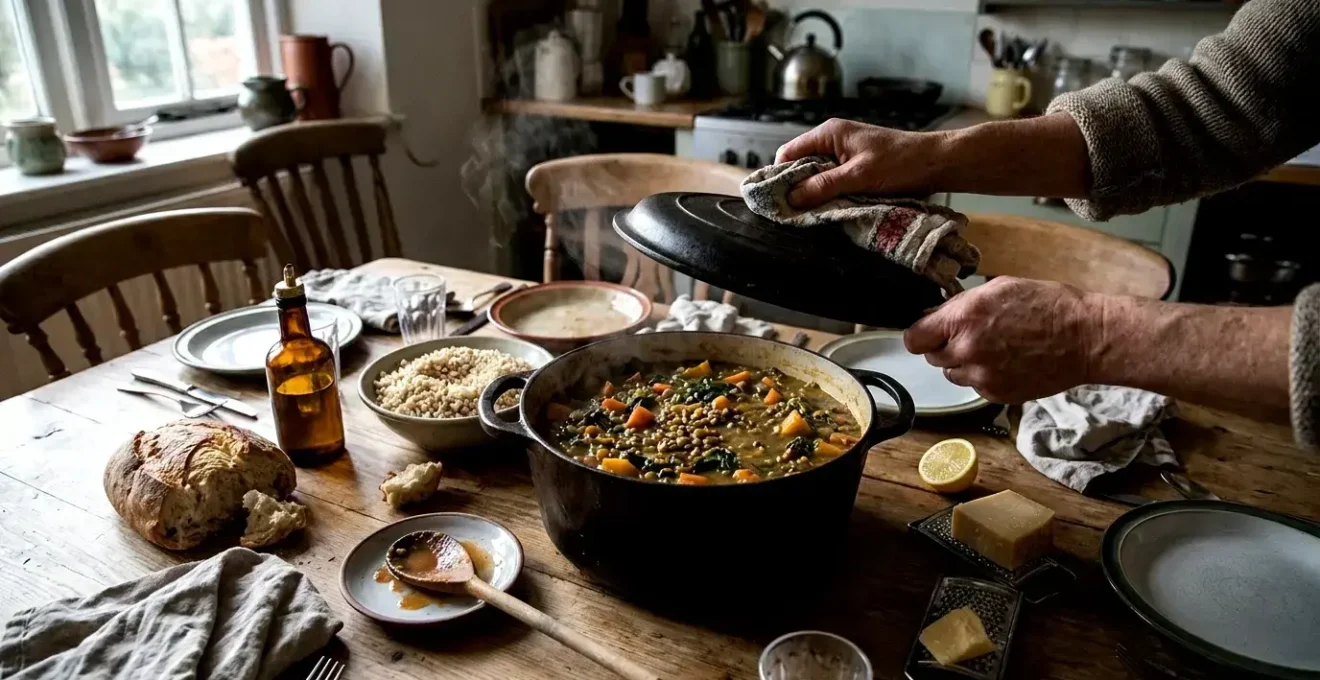
A hearty dinner should leave you comfortably satisfied, not wishing you had eaten half as much. The difference often comes down to how a meal is built. Generous vegetables, filling pulses, satisfying protein and well-cooked grains can create the same comforting experience as a rich casserole without relying on large quantities of cream, cheese or butter.
Consider a bubbling lentil stew with sweet carrots, softened onions, mushrooms and a spoonful of olive oil. It has warmth, texture and depth, yet its richness comes largely from ingredients and cooking techniques rather than added saturated fat.
The secret is to balance substance, flavour and portion size. That means choosing ingredients that work together, building savoury depth, controlling liquid and adding enough fat to make food enjoyable without overwhelming it. These principles also make it easier to improvise dinners from ordinary English supermarket ingredients, prepare meals ahead and avoid the familiar disappointment of a supposedly healthy dish that still leaves you hungry.
How to make a hearty meal without unnecessary heaviness
- Combine vegetables, a meaningful protein source and fibre-rich grains or pulses for a substantial, varied meal.
- Develop richness through browning, spices, tomatoes, mushrooms and a modest amount of unsaturated fat rather than relying on cream.
- Choose a cooking method that suits your evening, serve comfortable portions and store leftovers safely.
- Why Doesn’t a Hearty Meal Need Large Amounts of Cream or Cheese to Feel Satisfying?
- How Can You Build a Hearty One-Pot Meal From Vegetables, Pulses and Grains?
- Stew, Curry or Traybake: Which Hearty Meal Works Best for a Busy Night?
- Which Habits Can Make a Hearty Dinner Feel Too Heavy Afterwards?
- When Should You Batch-Cook a Hearty Meal for the Week Ahead?
- How Can You Combine Protein, Fibre and Fat for More Lasting Energy?
- How Can You Build a Balanced Plant-Based Bowl From Four Simple Components?
- What Makes a Healthy Recipe Easy Enough to Cook Again and Again?
Why Doesn’t a Hearty Meal Need Large Amounts of Cream or Cheese to Feel Satisfying?
A hearty meal does not need to be rich in cream or cheese because satisfaction comes from several elements working together: sufficient food volume, protein, fibre, appealing textures and well-developed flavour. A thick lentil stew can provide substantial physical fullness while mushrooms, browned onions and seasonings create the savoury richness usually associated with heavier dishes.
There is an important distinction between feeling physically full and finding a meal satisfying. Physical fullness is influenced by factors including the volume of food and its composition. Sensory satisfaction comes from taste, aroma, texture and the experience of eating. Warmth can make a dish particularly comforting, although temperature alone does not guarantee lasting satiety.
Protein contributes to the first part of this equation. A systematic review and meta-analysis of randomised trials on protein and appetite, published in 2020, found that protein consumption increased fullness and reduced hunger in short-term interventions involving healthy adults. Evidence concerning longer-term appetite effects was less conclusive.
For flavour, try building a stew around browned onions, mushrooms, tomatoes and smoked paprika. These ingredients contribute sweetness, savouriness, acidity and aromatic depth without requiring a dairy-based sauce. A spoonful of miso can supply additional savoury flavour, although its salt content should be considered.
The most useful substitution technique is to identify what cream or cheese actually contributes:
- For body: blend a ladleful of cooked lentils or beans and stir it back into the pot.
- For richness: finish with a little olive oil, tahini or nut butter.
- For saltiness: add a few chopped olives or a small grating of hard cheese.
- For brightness: finish with lemon juice or fresh herbs to balance deeper flavours.
Removing every source of fat is rarely necessary. A completely fat-free vegetable stew can taste thin, particularly when its other flavours are mild. A measured amount of oil provides a pleasant mouthfeel and helps carry flavour.
The aim is not to eliminate cheese or cream entirely. It is to let them act as optional finishing ingredients while vegetables, pulses and carefully developed flavour provide the substance of the meal.
How Can You Build a Hearty One-Pot Meal From Vegetables, Pulses and Grains?
Build a hearty one-pot meal by choosing one grain, one pulse, two or three vegetables and one flavour base. Cook ingredients in the order they need, adding firm vegetables and longer-cooking grains before delicate greens or tinned pulses. Adjust the liquid gradually so the finished dish feels substantial rather than watery.
This flexible approach is particularly useful when the fridge contains a few leftover vegetables and the cupboard holds tins of chickpeas, lentils or beans. Rather than following a rigid recipe, work with a repeatable combination of ingredients.
As an illustrative starting point for a medium-sized pot serving roughly three to four people, try one mug of dry pearl barley, two drained tins of beans, approximately three to four generous handfuls of chopped vegetables and enough stock or water to cook the barley. Adjust according to the grain’s packaging instructions, pan size and preferred consistency. This is a cooking template, not a prescribed nutritional ratio.
Onion, garlic and smoked paprika make a straightforward flavour base. Other combinations include ginger with curry spices, or tomatoes with rosemary and thyme.
The sequence matters because ingredients soften at different rates. Start by gently cooking onions and other aromatics in a little oil. Add carrots, parsnips or other firm vegetables, then stir in grains and cooking liquid. Once the grain is approaching tenderness, add drained tinned beans, courgettes or peas. Spinach and other delicate leaves generally belong near the end.
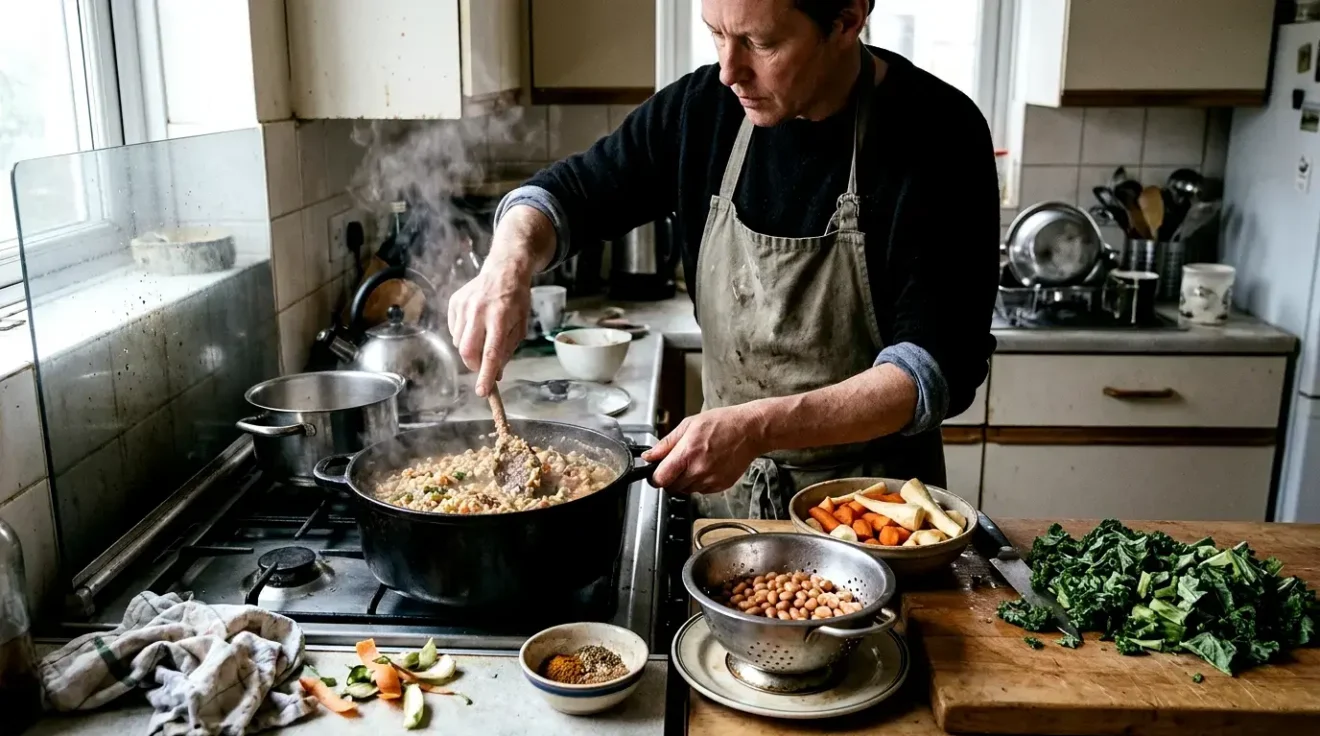
Dried pulses require particular care. Their soaking and cooking needs differ from those of tinned pulses, so follow the instructions appropriate to the variety. Dried kidney beans, for example, need correct boiling and cooking to make them safe. Do not simply add untreated dried beans alongside quick-cooking vegetables and expect everything to finish together.
Season in layers: lightly at the beginning, again as the stew develops, and finally after tasting. Stock cubes and seasoned sauces may already contain substantial salt, so taste before adding more.
Judge doneness using three simple checks: the grain should be pleasantly tender, the cooked pulses should hold their shape, and the stew should lightly coat a spoon. If it becomes too thick before the grain is cooked, add liquid in small amounts. If it is too thin, simmer uncovered or mash some of the pulses.
Your five-step one-pot dinner checklist
- Choose your structure: write down one grain, one pulse, two or three vegetables and a flavour base.
- Arrange ingredients by cooking time: make a short sequence showing which ingredients go in first, middle and last.
- Prepare the cooking liquid: check grain instructions and mark a sensible initial liquid quantity, keeping extra available.
- Test before serving: confirm the grain is tender, the pulses are properly cooked and the sauce coats a spoon.
- Finish deliberately: taste, adjust the seasoning and record one improvement for the next batch.
Once the cooking order becomes familiar, changing barley for another suitable grain or chickpeas for lentils becomes much easier. The resulting dish can then be adapted into either a stew or a curry without rebuilding the recipe from scratch.
Stew, Curry or Traybake: Which Hearty Meal Works Best for a Busy Night?
A traybake is often the simplest option when you want minimal hands-on cooking, while stews and curries work particularly well when you can prepare food ahead or leave it gently simmering. The best choice depends on how much attention you can give the meal, whether you need leftovers and how substantial you want the finished dinner to feel.
All three formats can make balanced, hearty meals. Their differences become clearer when compared by cooking effort, texture and practical usefulness rather than flavour preference alone.
| Practical factor | Stew | Curry | Traybake |
|---|---|---|---|
| Hands-on preparation | Chopping, initial cooking and occasional stirring | Preparing aromatics, spices and sauce, then occasional stirring | Chopping, seasoning and spreading ingredients across a tray |
| Attention during cooking | Usually moderate to low once simmering, with checks | Usually moderate to low once the sauce is established | Usually low, with occasional turning or checking |
| Reheating | Typically excellent for suitable recipes | Typically excellent for suitable recipes | Possible, but roasted textures may soften |
| Washing-up | Often one main pot | Often one main pan, plus a pan if serving rice | One tray, unless a separate grain or sauce is prepared |
| Best situation | Cooking ahead or making leftovers | Batch cooking with flexible spices and ingredients | Low-attention cooking when the oven is available |
A stew is especially forgiving when using root vegetables, beans and grains. The ingredients cook together, and the liquid helps create a cohesive dish. It also allows you to adjust thickness shortly before serving.
A curry offers similar convenience but creates variety through its spice base. A chickpea and spinach curry can feel quite different from a tomato-and-bean stew even when both rely on inexpensive store-cupboard ingredients. Coconut milk or cream can be used when desired, but a tomato-based sauce or blended pulses can also provide body.
The traybake wins on simplicity. Place vegetables and an appropriately prepared protein source on a tray, add seasonings and roast until everything is thoroughly cooked. However, roasted vegetables alone may not provide the substance you want from a full dinner. Adding chickpeas, suitable grains or potatoes solves that problem, although some combinations require separate cooking.
Choose according to your evening: a stew or curry suits a predictable schedule and planned leftovers; a traybake suits an evening when you can prepare the ingredients quickly and let the oven do much of the work. None of these methods makes food safe to leave cooking completely unattended.
For the most versatile weekly routine, alternate between a batch-friendly simmered dish and a freshly roasted dinner. That gives you convenience without relying on the same textures every evening.
Which Habits Can Make a Hearty Dinner Feel Too Heavy Afterwards?
A hearty dinner can feel uncomfortably heavy when portions become larger than intended, rich toppings accumulate or the meal is eaten shortly before bedtime. High-fat preparations may also contribute to prolonged fullness or discomfort for some people. The most practical correction is to serve a comfortable portion and keep rich additions measured and optional.
One common trap is assuming that a vegetable-rich meal can be eaten in unlimited quantities. A lentil stew may contain plenty of nutritious ingredients, but a very large serving still supplies additional energy and occupies more stomach volume. Returning for another portion before checking whether you are comfortably full can turn a satisfying dinner into an uncomfortable one.
Another issue is the cumulative effect of additions. A stew may begin with olive oil, then receive cheese, cream, buttered bread and a generous drizzle of finishing oil. No single ingredient needs to be prohibited, but combining several rich elements changes the overall character of the meal.
Timing also matters. Large, rich meals shortly before lying down can worsen symptoms for people prone to indigestion or acid reflux. Individual tolerance differs, so a dinner that feels perfectly comfortable to one person may not suit another.
There is also a less obvious consideration: sodium. Ready-made curry sauces, stock cubes and prepared seasoning mixes can contribute considerable salt even when the vegetables and pulses are cooked from scratch. Check labels and taste before adding salt. Feeling thirsty after a salty meal is not necessarily evidence of a digestive problem, but it may be a useful reason to review the seasoning.
A simple serving strategy can help:
- Plate a portion that looks satisfying rather than automatically filling the largest available bowl.
- Add a fresh contrast, such as lemon-dressed greens or a crisp salad.
- Serve cheese, cream, extra oil or chutney separately so each person can choose their amount.
- Eat at a comfortable pace and allow time to notice fullness before taking seconds.
Heaviness should not be confused with satisfaction. A balanced meal may leave you pleasantly full without causing the sluggish feeling associated with eating beyond comfort. Persistent or significant digestive symptoms, however, should not simply be attributed to portion size.
Getting portions right also makes leftovers more predictable. When you know roughly how much of a hearty dish you enjoy eating, planning the next batch becomes less wasteful and more practical.
When Should You Batch-Cook a Hearty Meal for the Week Ahead?
Batch-cook a hearty meal when you expect several busy days, have a recipe that stores and reheats well, and can divide it into portions you genuinely want to eat. Stews, dals and bean chillis are particularly suitable because their flavours often develop after cooking. Delicate vegetables, cooked grains and fresh garnishes may be better prepared separately.
The ideal batch-cooking schedule depends on your week rather than a fixed Sunday routine. If you have several evenings with limited cooking time, making extra servings during a quieter period can be useful. If your plans change regularly or you dislike repeated meals, a smaller batch may be more successful.
A lentil and tomato stew is a good candidate because it can be reheated and served with different accompaniments. The same base might appear with potatoes on one evening, a freshly prepared grain on another, and extra vegetables later in the week. This changes the eating experience without requiring another complete recipe.
By contrast, a fully assembled grain bowl may lose its appeal during storage. Fresh leaves wilt, roasted vegetables soften and cooked grains can become clumped or mushy. Keep these components separate where possible, adding dressings and delicate herbs just before serving.
Food safety matters as much as convenience. Cool cooked food promptly, divide larger quantities into smaller shallow containers to help them cool, and refrigerate or freeze them without unnecessary delay. Follow appropriate storage guidance for the ingredients and dishes involved. Reheat leftovers until steaming hot throughout.
Within 1 hour
The ideal cooling period for cooked rice before refrigeration, according to the Food Standards Agency. Its rice-specific advice also recommends consuming refrigerated cooked rice within 24 hours and reheating it no more than once.
Food Standards Agency guidance on storing and reheating rice
Rice deserves special attention because Bacillus cereus spores can survive cooking, and unsafe storage may allow bacteria to multiply. Reheating does not necessarily remove toxins already formed. These precautions are particularly relevant if you are preparing several rice-based dinners ahead.
A useful compromise is the half-batch method: cook a generous quantity of sauce, beans or stew base, but prepare rice, barley or other accompaniments in smaller fresh portions when needed. Freeze portions that will not be eaten within an appropriate refrigerated storage period.
Batch cooking should make the next meal easier, not force you to eat the same dinner repeatedly. A well-chosen base offers flexibility, leaving you free to adjust ingredients and accompaniments according to appetite.
How Can You Combine Protein, Fibre and Fat for More Lasting Energy?
Combine a substantial source of protein, fibre-rich vegetables or whole grains, and a modest amount of unsaturated fat to create a balanced meal that can help manage hunger between eating occasions. Each component contributes something different: protein supports fullness, fibre adds dietary substance, and fat supplies energy, flavour and texture. The result should feel sustaining rather than excessively rich.
A bowl containing only white rice and a small quantity of vegetables may feel less satisfying than one containing rice, beans, varied vegetables and a tahini dressing. That does not mean every carbohydrate-based meal causes an energy slump. Meal size, food composition, activity and individual responses all influence how someone feels afterwards.
The easiest method is to check a meal for three visible elements:
- Protein: lentils, beans, chickpeas, tofu, eggs, fish or other suitable protein foods.
- Fibre: vegetables, wholegrain cereals, pulses and other fibre-containing plant foods.
- Fat: a modest serving of olive oil, nuts, seeds or a dressing containing unsaturated fats.
Some ingredients fulfil more than one role. Lentils and beans contribute both protein and fibre, so a lentil stew with vegetables and barley already covers much of this framework. A small amount of olive oil may be all that is needed to round out the texture and flavour.
The NHS guidance on increasing dietary fibre recommends a daily fibre intake of 30 g for adults and identifies pulses, vegetables and wholegrains as useful sources. The guidance also reports average adult intake at approximately 20 g per day, highlighting the opportunity to include more fibre-rich foods.
30 g
Recommended daily fibre intake for adults in UK government dietary guidance, as presented by the NHS. This is an overall daily target, not a requirement for an individual dinner.
National Health Service dietary fibre guidance.
However, increasing fibre too quickly can cause bloating or discomfort, particularly for people unaccustomed to pulses and whole grains. Gradual changes, suitable fluid intake and cooking pulses properly can help make the transition more comfortable.
Protein-rich foods may help with short-term satiety, but no particular three-ingredient combination can guarantee stable blood glucose or prevent tiredness after every meal. It is more useful to focus on overall dietary balance than to treat a dinner formula as a metabolic shortcut.
Once the balance is right, you can use the same principle in a different format: a warm plant-based bowl that looks fresh and colourful while offering the comfort of a substantial dinner.
How Can You Build a Balanced Plant-Based Bowl From Four Simple Components?
Build a balanced plant-based bowl from four components: a wholegrain or starchy base, a meaningful serving of plant protein, a generous variety of vegetables and a flavourful dressing containing some fat. Combining warm cooked elements with fresh textures makes the bowl feel like a complete dinner rather than a collection of separate side dishes.
The formula works with common ingredients from English supermarkets. Brown rice, pearl barley, potatoes or wholewheat couscous can provide the base. Chickpeas, lentils, tofu or tempeh supply protein, while seasonal vegetables contribute colour, texture and variety.
Choose vegetables prepared in more than one way. Roasted squash and carrots create sweetness and warmth; fresh cucumber, shredded cabbage or leafy greens offer contrast. The difference between soft, crisp and chewy elements makes the eating experience more engaging.
The dressing is especially important. A bowl of plain grains and vegetables can taste dry or incomplete even when its ingredients are nutritious. Tahini mixed with lemon juice and water, an olive oil and mustard dressing, or a suitable plant-based yoghurt sauce adds flavour and richness without requiring a heavy coating.
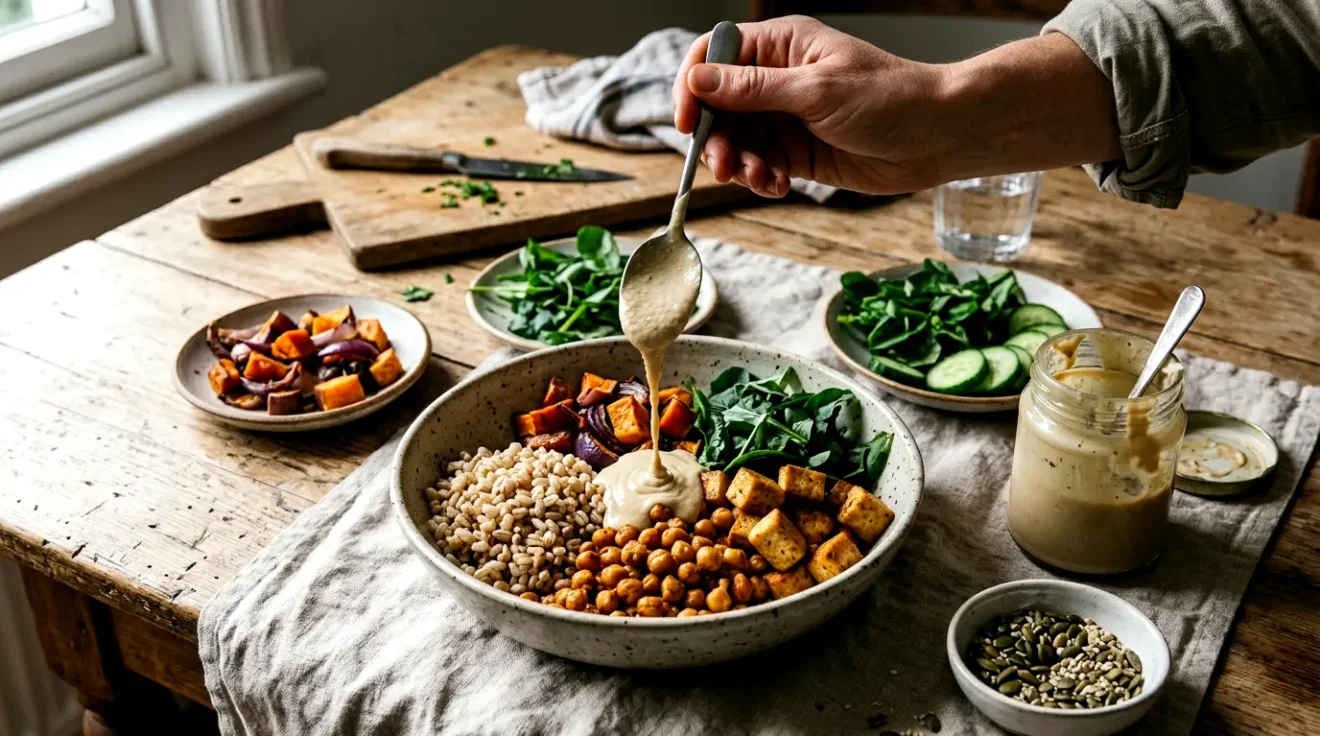
One frequent weakness of plant-based bowls is treating protein as a garnish. A tablespoon of chickpeas scattered over a large bowl of rice and vegetables is not equivalent to a substantial serving. Use a proper portion of pulses or tofu, adjusting the quantity to your needs and the rest of your diet.
The framework can also be adapted to how much preparation time you have available.
| Component | Quick evening bowl | Batch-prepared bowl |
|---|---|---|
| Starchy base | Freshly prepared couscous | Freshly cooked barley or appropriately stored grains |
| Protein | Drained tinned chickpeas | Cooked lentils or prepared tofu |
| Vegetables | Fresh tomatoes and quickly sautéed spinach | Roasted root vegetables with fresh leaves added before serving |
| Dressing | Lemon and olive oil | Tahini dressing stored separately |
For a warm winter dinner, try barley, chickpeas, roasted carrots and kale with a lemon-tahini dressing. In warmer weather, a suitable cold grain base with cucumber, tomatoes, beans and a herb dressing provides a different experience using the same four-part structure.
The principles of the UK’s Eatwell Guide support a varied eating pattern containing vegetables, starchy carbohydrates, protein foods and small amounts of unsaturated oils. Its proportions describe overall dietary balance, rather than imposing an exact formula on every individual meal.
Once you have a few favourite combinations, the next improvement is to make them effortless to repeat. A genuinely useful recipe should work even when the cupboard is imperfect and your enthusiasm for cooking is low.
Key takeaways for everyday cooking
- Turn successful dinners into flexible ingredient formulas instead of depending on exact shopping lists.
- Prefer recipes with one main pan, familiar ingredients and cooking times that tolerate small adjustments.
- Keep a few reliable store-cupboard combinations available for evenings when fresh ingredients or cooking energy are limited.
What Makes a Healthy Recipe Easy Enough to Cook Again and Again?
A healthy recipe becomes easy to repeat when it uses familiar ingredients, requires little specialist equipment and tolerates substitutions without losing its appeal. The most useful everyday recipes have a short preparation sequence, forgiving cooking times and ingredients that overlap with other meals. Convenience matters because nutritional intentions only help when the food actually gets cooked.
A beautifully photographed recipe may sound appealing but become impractical if it requires several unfamiliar spices, separate sauces, precise timing and ingredients that spoil before the next cooking session. A simpler vegetable and lentil stew may offer more long-term value because it can adapt to what is already available.
Use a practical friction test before adding a dish to your regular rotation. Count how many separate pans it requires, how many stages need close attention and whether any ingredient must be prepared hours in advance. Also consider whether the recipe creates leftovers that you will actually enjoy.
A meal with one pot, a flexible vegetable selection and a familiar seasoning base is generally easier to repeat than one involving several delicate components. This does not mean complicated recipes are inherently unhealthy; they simply demand more planning and attention.
Another useful test is whether the recipe survives substitutions. If a lentil stew works with carrots instead of squash, spinach instead of kale and barley instead of another suitable grain, it becomes a dependable formula rather than a single fixed dish.
For example, convert a favourite stew into the following template:
- One principal pulse: lentils, chickpeas or beans.
- One optional grain or starchy accompaniment.
- Two or three available vegetables.
- One flavour direction, such as smoky tomato, herb and garlic, or mild curry spices.
- One finishing touch providing acidity, freshness or modest richness.
This template can produce several dinners without requiring a new recipe search each time. It also encourages sensible ingredient overlap: a tin of chickpeas can be used in a curry, a grain bowl or a vegetable stew, while carrots and onions can serve several dishes.
Keeping two or three store-cupboard-only versions is particularly valuable. Tinned tomatoes, pulses, dried grains, frozen vegetables and familiar seasonings can form a substantial dinner when fresh produce is limited. Frozen vegetables are often a practical alternative when reducing waste and preparation time matters.
The UK Government guidance on the Eatwell Guide provides a useful foundation for considering variety and balance across the diet. A repeatable recipe does not have to include every food group in fixed proportions, but the wider pattern of meals should provide a range of foods and nutrients.
Most importantly, keep flavour in the equation. A meal that is nutritious but consistently disappointing will not become a regular favourite. Browning vegetables, varying spices, adding contrasting textures and using a small amount of suitable fat can make simple recipes genuinely enjoyable.
For your next dinner, choose one familiar protein, two vegetables and a suitable grain or starchy base. Cook them using a method you find manageable, season carefully and adjust the richness to taste. Save the combination if it works. Over time, a small collection of flexible meals can provide more comfort, variety and consistency than an ever-growing folder of complicated recipes.
Can a hearty meal be healthy without being low in calories?
Yes. A healthy meal does not need to be especially low in calories. What matters is its contribution to your overall diet, including sufficient energy, protein, fibre and a variety of nutrients. A hearty dinner can contain substantial carbohydrates and some fat while remaining balanced. Portion sizes should reflect individual appetite, needs and activity rather than a universal calorie limit.
Which vegetables make a stew feel thicker without adding cream?
Potatoes, squash, carrots and other vegetables that soften during cooking can give a stew more body. Cooking and mashing some of these ingredients creates a thicker consistency. Blended lentils or beans are another effective option, adding both texture and nutritional substance without needing a cream-based sauce.
Can frozen vegetables and tinned beans make a balanced dinner?
Absolutely. Frozen vegetables and tinned beans are convenient ingredients for substantial meals. Beans contribute protein and fibre, while frozen vegetables help provide variety without requiring frequent shopping. Choose appropriate portions, check sauces and seasonings for excess salt, and combine them with a suitable grain or starchy food and a small amount of healthy fat.
How can you stop a bean or lentil stew from becoming too thick when reheated?
Beans, lentils and grains can continue absorbing liquid during storage. Add a little water or suitable stock while reheating, stirring until the original consistency returns. Heat the dish thoroughly until steaming hot throughout and avoid repeated cooling and reheating of the same portion. Keeping grains separate from the stew base can also help preserve texture.
What can make a hearty meal more enjoyable without adding extra cheese or butter?
Try building flavour through browned onions, roasted vegetables, mushrooms, tomatoes, spices and fresh herbs. Lemon juice or a small amount of vinegar can brighten rich flavours, while toasted seeds or nuts add texture. A modest drizzle of olive oil or a spoonful of tahini can provide richness without turning it into the main ingredient.