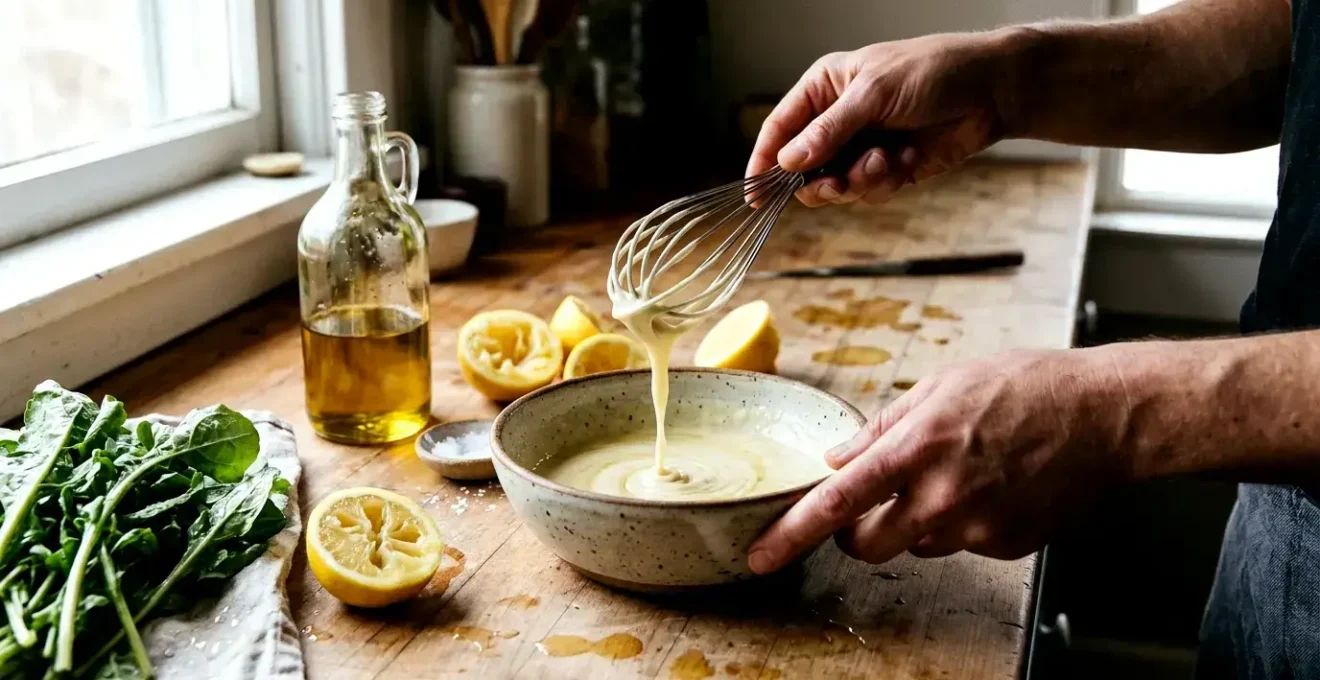
A bowl of cooked lentils, sliced tomatoes and cucumber can taste surprisingly unfinished, even when every ingredient is fresh. Add a little olive oil, squeeze over some lemon and season carefully, however, and the same ingredients begin to taste like a dish rather than a collection of separate components.
The difference comes from the combination of richness and acidity. Olive oil gives vegetables and grains a smoother mouthfeel, while lemon juice brings freshness and contrast. Neither needs to dominate. A well-balanced dressing makes the ingredients themselves more enjoyable.
There is no need for a complicated sauce or a fixed recipe. The useful skill is recognising when a dressing needs more brightness, richness or seasoning, then adjusting it to suit what is in the bowl.
Whether preparing a quick green salad, leftover roast vegetables, a chickpea lunch or a substantial grain bowl, olive oil and lemon offer a versatile Mediterranean-style starting point. With the right timing and a few simple checks, they can bring flavour together without sacrificing freshness or texture.
Olive oil and lemon dressing: the essentials
- Combine olive oil, lemon juice and a little salt, then adjust by tasting a dressed ingredient rather than relying entirely on measurements.
- Dress delicate salad leaves immediately before serving, but give grains and sturdy vegetables time to take up the flavours.
- For a satisfying meal, combine the dressing with vegetables, a substantial grain or starchy base and an appropriate protein source.
- Why Does Olive Oil and Lemon Make Plain Vegetables Taste More Complete?
- How Can You Make an Olive Oil and Lemon Dressing Without Following a Strict Recipe?
- Lemon, Vinegar or Lime: Which Acid Works Best With Different Salads and Bowls?
- Which Mistakes Make Olive Oil and Lemon Dressing Taste Unbalanced?
- When Should You Add Olive Oil and Lemon to Avoid a Soggy Salad?
- Olive Oil, Nuts or Seeds: Which Healthy Fat Works Best for Different Meals?
- When Should You Add Sauces and Crunchy Toppings to Keep Their Texture?
- How Can You Build a Balanced Grain Bowl That Works as a Complete Meal?
Why Does Olive Oil and Lemon Make Plain Vegetables Taste More Complete?
Olive oil and lemon make vegetables taste more complete because they contribute different sensations that work together. Oil adds richness, distributes flavour across the mouth and softens the eating experience. Lemon adds acidity and freshness, preventing that richness from feeling heavy. Together, they create contrast and depth without hiding the vegetables’ natural flavour.
Consider a raw carrot. On its own, it offers sweetness, crunch and a mild earthy flavour. Olive oil adds a silky coating and richness, while lemon brings a sharper, more refreshing edge. Combining both creates a broader range of sensations than either ingredient provides separately.
Fat also interacts with flavour perception in ways that are more complex than simply making food taste richer. Experimental PubMed research on fat and flavour perception in food emulsions shows that fat content and viscosity can influence aroma release and perceived flavour intensity. Although that study examined model emulsions rather than olive oil and lemon on vegetables, it helps explain why changing a food’s fat content and texture can alter how it tastes.
Lemon contributes another dimension. Its acidity contrasts with the sweetness of carrots, the mildness of cucumber and the richness of cooked vegetables. The result is often described as brighter or fresher, although the ideal amount depends on the ingredients.
Timing matters too. Allowing thinly sliced raw vegetables to sit briefly in a lemon dressing can soften their texture and make them taste more seasoned. This is a light marinating effect, not cooking, and it varies with the vegetable, its thickness and the amount of salt and acid present.
Try a simple comparison using four pieces of cucumber or carrot:
- Taste the first piece completely plain.
- Coat the second with a little olive oil.
- Add a few drops of lemon to the third.
- Dress the fourth with olive oil and lemon together.
Notice how the fourth piece feels in the mouth, how its natural flavour changes and whether the acidity remains pleasant. A pinch of salt can then reveal another layer of seasoning. Salt increases the perception of certain flavours, while oil and lemon contribute different sensory qualities.
Once those contrasting effects become familiar, making a dressing becomes less about following a recipe and more about balancing the ingredients already on the plate.
How Can You Make an Olive Oil and Lemon Dressing Without Following a Strict Recipe?
You can make olive oil and lemon dressing without measuring by starting with enough oil to coat your ingredients, adding lemon gradually and tasting as you go. Whisk or shake the mixture until it looks temporarily unified, then test it on a salad leaf or vegetable. Adjust until the flavour is bright, smooth and balanced.
Begin with olive oil in a small bowl or clean jar. Add a modest squeeze of fresh lemon juice, a pinch of salt and whisk vigorously. The mixture should become slightly cloudy as droplets disperse through the oil. Shaking a closed jar works just as well for a quick dressing.
The useful checkpoint is how the dressing behaves on food. A lightly emulsified mixture is easier to distribute across leaves and grains than separately poured oil and lemon. However, an oil-and-lemon emulsion without an additional stabilising ingredient is temporary and can separate again, so shake or whisk it just before serving.
The dressing should coat rather than drown the ingredients. If the bottom of the bowl contains a large puddle after tossing, reduce the amount used next time or mix it more thoroughly before adding.
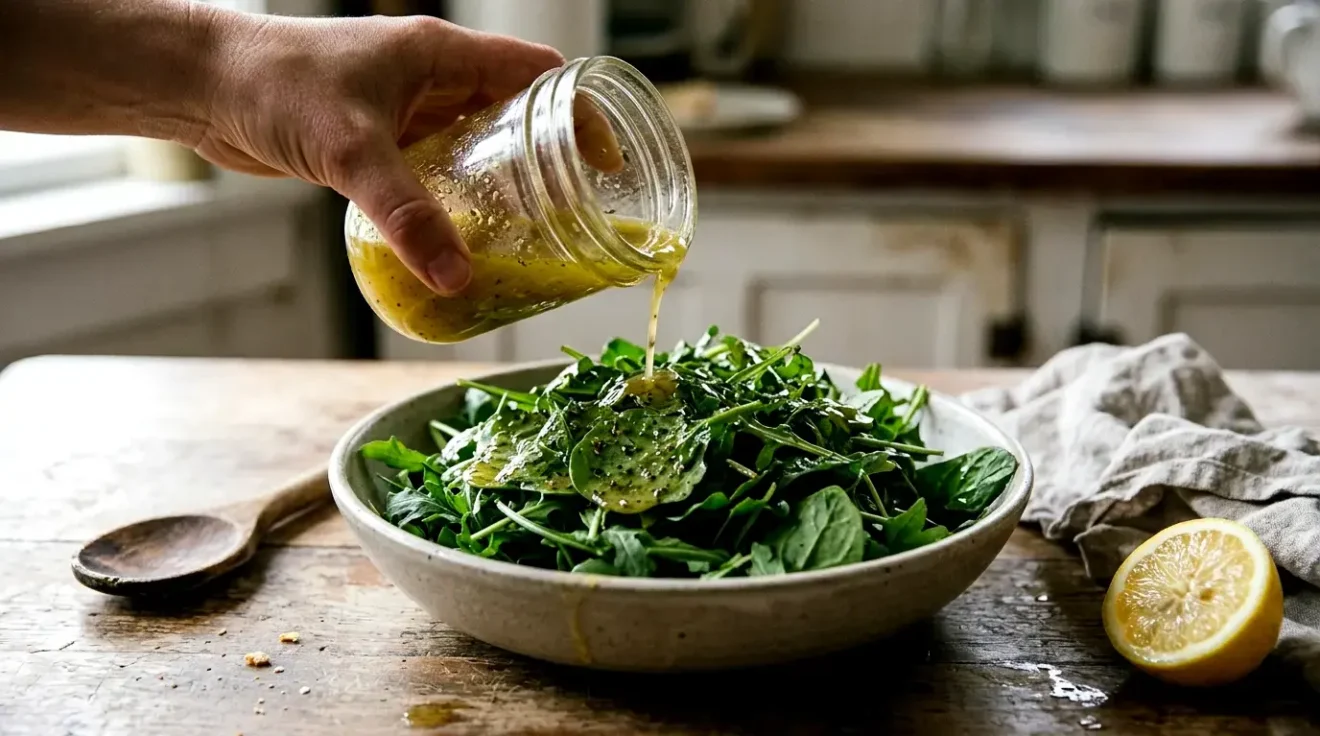
Different foods need different balances. Peppery rocket or bitter chicory may benefit from extra acidity, provided the dressing does not become harsh. Plain potatoes and cooked grains often appreciate a little more oil because they can otherwise feel dry. Tomatoes already contribute moisture and natural acidity, so they may need less lemon than expected.
The following guide replaces a strict ratio with practical taste cues.
| Food or situation | What to adjust | What to look for |
|---|---|---|
| Rocket or chicory | Try a little more lemon | Bitterness feels balanced without excessive sourness |
| Cooked potatoes or grains | Add oil gradually | Ingredients feel moist but not greasy |
| Tomatoes or cucumber | Start with less dressing | Fresh flavour remains clear and liquid does not accumulate |
| Dressing tastes too sharp | Add some oil and reassess the salt | Acidity becomes pleasant rather than dominant |
| Dressing feels heavy | Add lemon in small increments | Richness gains freshness without turning sour |
If a dressing becomes too sharp, more oil can reduce the perceived intensity of the acid. A small amount of water may soften the overall concentration, but it can also thin the dressing. Salt can improve the flavour balance without actually neutralising the acidity. Make each adjustment separately so the effect is easy to judge.
A five-step dressing check before serving
- Choose a small vessel. Set out a bowl or jar with enough room to whisk or shake without spilling.
- Combine the base. Add olive oil, a little lemon juice and salt, producing a visibly mixed dressing.
- Check the texture. Whisk or shake until the mixture becomes cloudy and temporarily unified, then check that it can coat a leaf.
- Taste on an ingredient. Dress one leaf or vegetable piece and identify whether it needs more oil, lemon or seasoning.
- Confirm the final coating. Toss a small portion and check for even coverage without a substantial puddle at the bottom.
This flexible approach is especially useful when switching between different vegetables and grains, but it also makes choosing the right acidic ingredient much easier.
Lemon, Vinegar or Lime: Which Acid Works Best With Different Salads and Bowls?
Lemon works particularly well with Mediterranean-style vegetables, herbs and fish, while lime suits salads featuring avocado, coriander or beans. Vinegar can bring a more assertive character to robust leaves, roasted vegetables and pickled ingredients. None is universally better: the right choice depends on the flavours you want to emphasise and the strength of the acid.
Lemon juice combines acidity with a recognisable citrus aroma. Its familiar freshness makes it a natural partner for tomatoes, cucumber, parsley, chickpeas and olive oil. It can brighten mild ingredients without introducing the additional flavour notes found in many vinegars.
Lime has a different aromatic character. Its green, citrusy notes work particularly well with coriander, avocado and salads influenced by Mexican or Southeast Asian cooking. It is not inherently sweeter than lemon, and its apparent sharpness varies with the fruit and the surrounding ingredients.
Vinegar offers an especially broad range of possibilities. White wine vinegar brings a relatively clean acidity, cider vinegar adds fruit-derived flavour notes, and balsamic vinegar contributes sweetness and a darker, richer character. Vinegar is therefore not one interchangeable flavour category.
A 2018 study recorded in the CNR research on acidic salad seasonings and consumer preferences compared verjuice, lemon juice and white wine vinegar. In the tested salads, white wine vinegar received higher overall liking scores than the other seasonings. That finding describes preferences in a particular sensory study; it does not prove that vinegar is always preferable to lemon.
For everyday cooking, the following pairings provide useful starting points rather than fixed rules.
| Acid | Good starting pairings | Flavour consideration |
|---|---|---|
| Fresh lemon juice | Tomatoes, cucumber, parsley, chickpeas, fish, courgettes | Fresh citrus aroma and bright acidity |
| Fresh lime juice | Avocado, black beans, coriander, chilli, rice bowls | Green citrus notes that complement aromatic herbs |
| White wine vinegar | Chicory, leafy salads, roast vegetables, lentils | Clear vinegar acidity with its own characteristic aroma |
| Cider vinegar | Cabbage, apples, carrots, grain salads | Fruity notes that suit sweet and earthy ingredients |
Substituting lime for lemon in a grain bowl usually works, but the same volume may not create the same flavour balance. Taste after adding a little, then increase gradually. The same applies to vinegar, which can vary substantially in acidity and flavour.
The ingredient matters less than the final balance. A sharp lemon can require less juice than a milder one, and a vinegar with noticeable sweetness may behave differently from a plain white wine vinegar.
Once the acid is chosen, the next challenge is preventing it from overwhelming the olive oil, seasoning and natural taste of the ingredients.
Which Mistakes Make Olive Oil and Lemon Dressing Taste Unbalanced?
The most common olive oil and lemon dressing mistakes are using too much lemon, forgetting salt, pouring the ingredients separately over the salad and choosing an oil that overwhelms delicate vegetables. These errors produce sharp, greasy or uneven bites. The simplest safeguard is to mix the dressing first, then taste it on an actual ingredient before serving.
Excess lemon is particularly noticeable with mild vegetables. Instead of making cucumber or lettuce taste fresh, the acid becomes the main flavour. The mouth may feel puckered, and the natural sweetness of the vegetables becomes harder to appreciate.
To detect this, dress one leaf and taste it. A spoonful of dressing can seem pleasantly powerful on its own but become unsuitable once combined with delicate produce, or vice versa. Testing it on the intended ingredient provides a more useful reference.
Salt is another common omission. Although olive oil and lemon provide richness and acidity, a small amount of salt often helps the flavours taste more defined. Without it, the oil can seem flat and the lemon disproportionately sharp. Season gradually, particularly when the bowl contains salty ingredients such as feta, olives or capers.
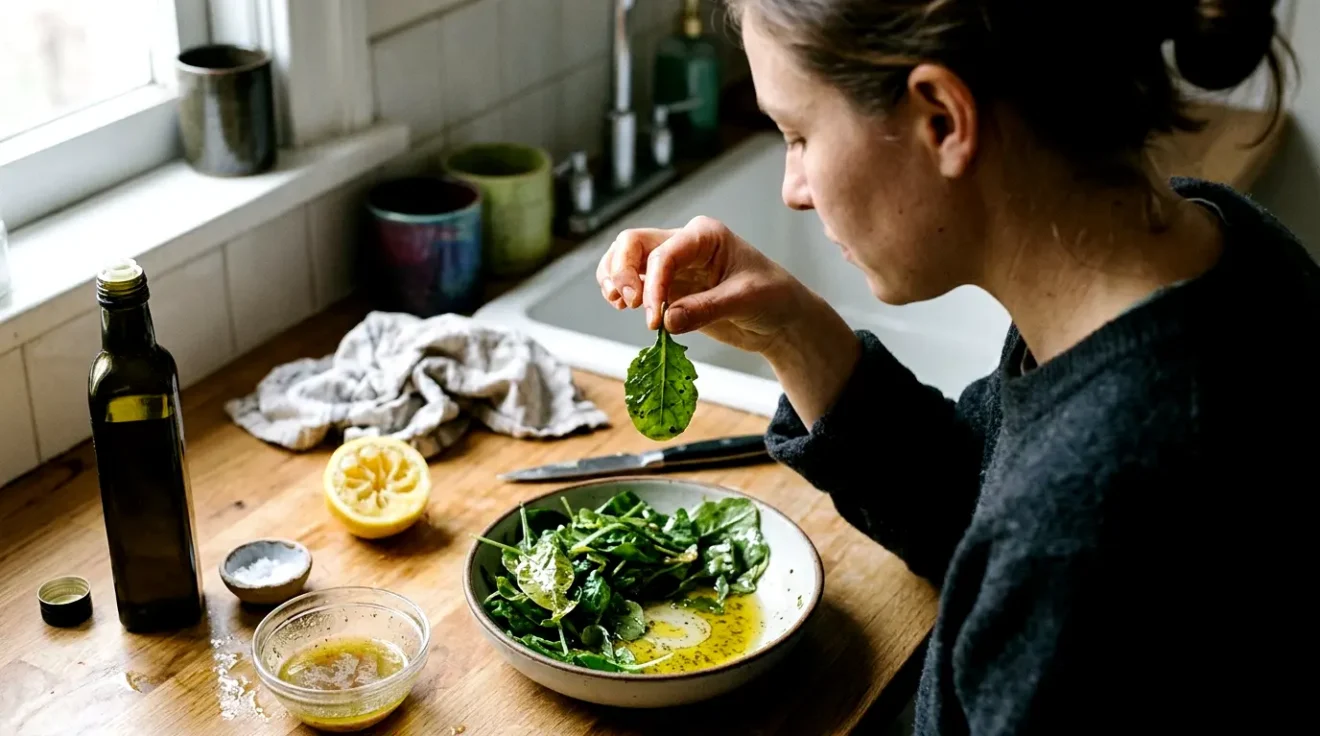
Pouring oil and lemon separately across a finished salad creates a different problem. Some leaves receive mostly oil, while others collect concentrated lemon juice. Mixing the dressing in a small bowl first helps distribute both components, even if the mixture gradually separates.
Olive oil choice also matters. Extra-virgin olive oils differ in fruitiness, bitterness and pepperiness. A strongly peppery oil may be delicious with roast peppers, chickpeas or bitter leaves but overpower mild lettuce. A gentler oil can be more suitable when the vegetables have subtle flavours.
The correction depends on what has gone wrong:
- Too sour: add olive oil gradually, then check the seasoning again.
- Too oily: add a little lemon and toss thoroughly before making another adjustment.
- Too bland: check the salt before assuming more lemon is needed.
- Unevenly coated: remix the dressing separately and add it gradually while tossing.
- Too bitter or peppery: use a milder olive oil or pair the dressing with more robust ingredients.
Adding more ingredients is not always the answer. When the vegetables are already heavily dressed, a better correction may be to add undressed vegetables or redistribute the existing dressing across a larger portion.
Even a perfectly seasoned dressing can spoil a salad if it is added too early, making the timing of the final toss just as important as the flavour balance.
When Should You Add Olive Oil and Lemon to Avoid a Soggy Salad?
Add olive oil and lemon to delicate salad leaves immediately before serving, ideally after washing and thoroughly drying them. Sturdy vegetables, pulses and grain bowls can often be dressed earlier because they tolerate moisture better. The right timing depends on the ingredients, their water content and how long they will sit before eating.
Fresh leaves are particularly vulnerable to wilting after dressing. Moisture, salt and acidic ingredients can change their texture and encourage liquid to accumulate in the bowl. Salt can draw water from vegetable tissues through osmotic effects, although salad wilting involves several processes and cannot be attributed to osmosis alone.
The University of Illinois Extension guidance on preparing lettuce recommends drying leaves before dressing and tossing with dressing just before serving. Its guidance also notes that dressed lettuce can wilt quickly.
Dry leaves are a crucial starting point. Water remaining after washing can dilute the dressing, make it adhere less effectively and collect at the bottom of the bowl. A salad spinner or a clean kitchen towel helps remove that excess moisture.
For delicate lettuce, lamb’s lettuce and similar greens, keep the dressing separate until the meal is ready. Toss gently, serve immediately and avoid leaving the bowl standing in a warm kitchen.
Sturdier ingredients behave differently. Thin courgette ribbons can benefit from a brief period with lemon and oil when a softer texture is desirable. Tomatoes can develop a seasoned liquid that becomes part of the dish. Cooked grains, lentils and chickpeas generally tolerate advance dressing better than fragile leaves.
| Salad type | Suggested timing | Texture goal |
|---|---|---|
| Delicate green leaves | Immediately before serving | Crisp and lightly coated |
| Cucumber and tomatoes | Shortly before eating | Fresh, with limited liquid release |
| Courgette ribbons | A few minutes ahead if softening is wanted | Flexible but not limp |
| Cooked lentils or chickpeas | Can be dressed ahead and checked before serving | Evenly seasoned, not waterlogged |
| Grain bowls | Dress grains ahead; add tender leaves later | Moist grains and fresh vegetables |
After tossing, check the bottom of the bowl. A small amount of dressing is normal, but substantial pooling can indicate excess dressing, water left on the produce or moisture released while the salad stands.
For batch preparation, keep dressing in a separate sealed container and add it to individual portions at mealtime. Cooked grains can be seasoned in advance, while delicate greens remain separate. Refrigerate perishable prepared ingredients appropriately rather than leaving dressed meals at room temperature for extended periods.
Once texture is under control, another decision becomes relevant: whether olive oil alone provides the richness needed or whether nuts and seeds would contribute something more interesting.
Olive Oil, Nuts or Seeds: Which Healthy Fat Works Best for Different Meals?
Olive oil works best when you want richness distributed throughout a dish, while nuts and seeds add concentrated flavour, texture and substance. These ingredients serve different purposes rather than competing for the same role. A salad may need only a little oil, whereas a grain bowl can benefit from oil in the dressing and a modest crunchy topping.
Olive oil has the advantage of spreading across vegetables, grains and pulses. Every bite can receive some richness, which helps a dish feel cohesive rather than divided into separate ingredients.
Nuts behave differently. Toasted almonds, walnuts or hazelnuts bring crunch and distinctive flavours. Their fat is contained within a solid food, so the eating experience alternates between softer, dressed ingredients and more substantial crunchy bites.
Seeds offer another option. Pumpkin seeds provide a firm bite, sesame seeds bring a nutty character, and sunflower seeds add texture without requiring much preparation. Toasting can intensify their flavour, provided they are not allowed to burn.
For a bowl containing warm bulgur wheat and roasted courgettes, olive oil can coat the grains while toasted pumpkin seeds provide contrast. For a simple tomato and cucumber salad, a light oil dressing may be sufficient without any additional topping.
| Fat source | Best practical role | Example |
|---|---|---|
| Olive oil | Coating, richness and flavour distribution | Green salad or lentil dressing |
| Nuts | Crunch, distinctive flavour and substance | Walnuts over roasted vegetables |
| Seeds | Small crunchy additions and nutty flavour | Pumpkin seeds over a grain bowl |
| Oil with nuts or seeds | Even coating plus contrasting texture | Lemon-dressed bulgur with toasted almonds |
All three choices contribute dietary fat, and portions matter. Oils, nuts and seeds are energy-dense, although their nutritional compositions differ. Replacing some dressing oil with a measured topping may change both texture and energy intake, but there is no universal calorie saving without considering the quantities used.
In UK healthy eating guidance, the NHS Eatwell Guide to healthy eating identifies olive oil as an unsaturated fat and recommends using unsaturated oils in small amounts. It also places food variety and overall dietary balance ahead of relying on a single ingredient.
The most useful choice is functional: add oil when the dish feels dry, nuts when it needs substantial crunch, and seeds when a smaller textured finishing element would improve it.
The next step is sequencing those components correctly, because even a carefully chosen crunchy topping loses much of its appeal when it spends too long in dressing.
When Should You Add Sauces and Crunchy Toppings to Keep Their Texture?
Add olive oil and lemon dressing before crunchy toppings, then scatter nuts, seeds, croutons or roasted chickpeas over the finished dish immediately before serving. Dressing needs contact with the main ingredients to distribute flavour, whereas crunchy toppings benefit from staying relatively dry. Keeping those jobs separate preserves both flavour and texture.
A useful assembly order is to prepare the vegetables or grains, mix the dressing, toss the main ingredients and add crunchy elements last. This way, the dressing reaches the parts of the dish that need seasoning without soaking ingredients intended to provide contrast.
Different toppings respond differently to moisture. Toasted nuts and seeds often retain their bite longer than bread-based croutons or thin crisps. Roasted chickpeas may also soften as they absorb moisture, particularly if they have been seasoned or coated before roasting.
There is no fixed waiting period that works for every topping. Size, roasting level, surrounding moisture and room conditions all influence how quickly texture changes.
For example, imagine preparing a lunch bowl with cooked quinoa, cucumber, tomatoes, chickpeas and toasted sunflower seeds. The quinoa and chickpeas can be combined with lemon dressing ahead of time, while the cucumber, tomatoes and seeds can be added nearer to eating. This keeps the grains seasoned without forcing the fresh ingredients and crunchy topping to sit together in moisture.
Packed lunches become much easier when the ingredients are stored in a practical order:
- Place cooked grains or sturdy vegetables in the main container.
- Keep delicate leaves and other moisture-sensitive vegetables separate where practical.
- Carry olive oil and lemon dressing in a small leakproof container.
- Pack croutons, toasted nuts or seeds in another dry container.
- Combine, toss and finish with the crunchy topping when ready to eat.
If separate containers are not practical, placing crunchy toppings on top of relatively dry ingredients may help during a short journey, but it is less reliable than keeping them apart.
Temperature also matters for some meals. Allow freshly cooked ingredients to cool appropriately before packing, refrigerate perishable lunches and follow safe storage practices. Texture planning should never replace proper food handling.
With these habits in place, it becomes easier to assemble a larger meal in which every ingredient has a purpose, rather than simply collecting attractive salad components in one bowl.
Key takeaways before building a complete bowl
- Choose the grain, vegetables and protein first; use olive oil and lemon to connect their flavours rather than compensate for missing ingredients.
- Season sturdy ingredients while they can absorb flavour, but keep delicate leaves and crunchy toppings for the final assembly.
- Evaluate the finished bowl for dryness, sharpness and seasoning before adding extra ingredients or dressing.
How Can You Build a Balanced Grain Bowl That Works as a Complete Meal?
Build a balanced grain bowl with a substantial grain or starchy base, a generous variety of vegetables, a protein source and a modest olive oil and lemon dressing. The dressing connects the flavours, while the other ingredients provide different nutrients, textures and substance. Add crunchy toppings if wanted, then adjust the final seasoning rather than automatically adding more sauce.
Start with a grain that suits the meal. Bulgur wheat provides a pleasantly chewy base, brown rice brings a familiar texture, and quinoa offers another versatile option. Wholegrain choices can contribute fibre as part of an overall balanced diet.
Next, combine fresh and cooked vegetables. Raw cucumber or tomato adds moisture and freshness, while roasted peppers, courgettes or carrots bring deeper flavours and softer textures. Varying the preparation methods gives the bowl more contrast.
A protein source helps broaden the meal’s nutritional composition. Chickpeas, lentils, beans, eggs, fish, tofu or chicken are all possible choices depending on dietary preferences. Pulses are particularly convenient for plant-based bowls because they can supply protein and fibre while pairing naturally with olive oil and lemon.
Consider a simple, illustrative Mediterranean-style bowl made with:
- Cooked bulgur wheat as the base.
- Chickpeas for a plant-based protein contribution.
- Roasted courgette and peppers for sweetness and softness.
- Chopped cucumber and parsley for freshness.
- Olive oil, lemon juice and a little salt to bring the flavours together.
- Toasted pumpkin seeds as an optional final topping.
The olive oil and lemon dressing performs a different role here than it does in a leaf salad. Warm, freshly cooked grains can take up some dressing, while chickpeas and vegetables become coated in its flavour. Dressing the cooked grain component while still slightly warm can be useful, provided the meal is handled and stored safely.
The finished bowl should not feel oily, sour or dry. If it tastes flat, check the salt and consider a little lemon. If the grains feel dry, add a modest amount of dressing. If the individual components taste unrelated, season them more deliberately before combining.
For a practical final check, ask whether the bowl contains:
- A substantial base that provides energy and body.
- Vegetables offering freshness, variety and contrasting textures.
- A meaningful protein-containing ingredient.
- Enough dressing to connect the ingredients without soaking them.
- A balance of soft, firm and, if desired, crunchy textures.
This is a practical meal-building framework, not a requirement to achieve perfect nutritional balance in one sitting. The NHS Eatwell Guide advises considering dietary balance over a day or week. Individual needs, portion sizes and the rest of the diet also matter.
Olive oil and lemon cannot make every bowl nutritionally complete by themselves. Their main contribution is to make a sensible combination of ingredients taste coherent and enjoyable, encouraging variety without requiring a complicated sauce.
For the next meal, try combining one cooked grain, one pulse, two vegetables and a freshly mixed olive oil and lemon dressing. Taste a forkful, make one small adjustment and finish with any crunchy topping at the table. That simple process can turn everyday ingredients into a satisfying meal with very little additional preparation.
Can olive oil and lemon dressing be made ahead of time?
Yes. You can mix olive oil and lemon juice ahead of serving and keep the dressing in a clean, sealed container in the refrigerator. It may separate or become cloudy as the oil cools, so allow it to return to a pourable consistency and shake or whisk before use. Prepare sensible quantities, follow food-safe storage practices and avoid leaving perishable additions unrefrigerated.
Can bottled lemon juice replace fresh lemon?
Bottled lemon juice can provide acidity when fresh lemons are unavailable, but its flavour may differ from freshly squeezed juice. Check the product ingredients, add it gradually and taste before serving. Fresh lemon also allows you to add a little zest for extra citrus aroma without considerably increasing acidity.
How can you make olive oil and lemon dressing taste creamier without adding mayonnaise?
Whisking vigorously or shaking the dressing creates a temporary emulsion that can feel slightly thicker and more cohesive. For a more stable, creamy result, a small amount of mustard or another suitable emulsifying ingredient may help, although that changes the original two-ingredient base. The dressing should still be adjusted to suit the food rather than judged on thickness alone.
Does olive oil and lemon dressing work with warm vegetables?
Yes. Warm roasted carrots, courgettes, potatoes and peppers can work well with olive oil and lemon. Tossing them with a little dressing after cooking distributes the flavour without requiring a separate sauce. Taste first, because roasted vegetables may already contain oil and seasoning. Add lemon gradually to preserve their natural sweetness.
Can an olive oil and lemon salad be a full meal rather than a side dish?
Yes, when the other ingredients make the salad substantial and nutritionally varied. Combine vegetables with a suitable grain or starchy ingredient, include a protein source such as lentils, chickpeas, eggs or fish, and use the dressing in a moderate quantity. Olive oil and lemon provide flavour and some dietary fat, but the overall meal composition determines its nutritional contribution.