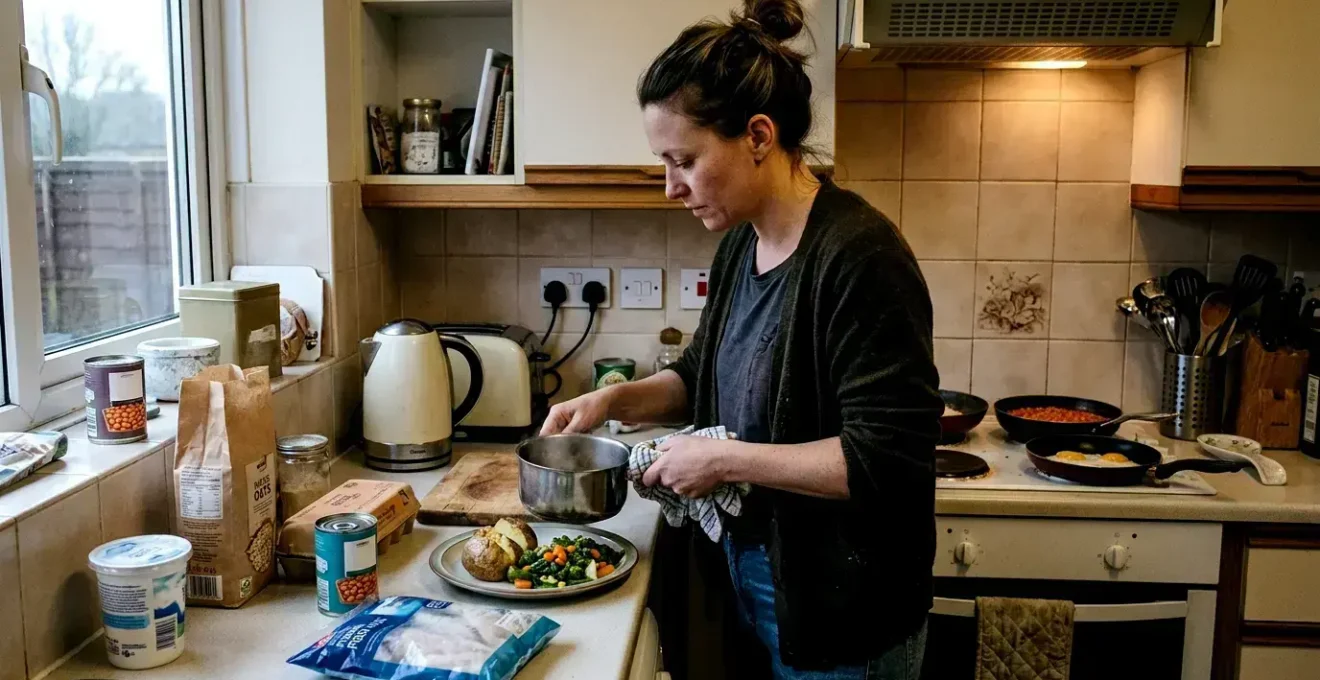
A physically demanding week rarely comes with a convenient meal schedule. A long shift, an evening gym session, several hours of walking or a succession of busy days can leave little time to cook. When meals become smaller, irregular or less substantial, the effects may become noticeable just when the next day’s effort begins.
Eating to support physical resilience means matching regular food and fluid intake to the demands of your week. That involves getting enough overall energy, including carbohydrates and protein in ordinary meals, drinking regularly and keeping reliable food available when time is limited. It does not require specialised recovery products or an elaborate nutrition programme.
For active adults in England, affordable supermarket staples such as potatoes, oats, eggs, beans, fish, milk and frozen vegetables can provide a practical foundation. The aim is not to make every plate nutritionally perfect. It is to establish a sustainable pattern that supports everyday activity, recovery and the body’s normal functions, even when work or exercise disrupts the usual routine.
Everyday eating habits that support demanding weeks
- Eat consistently enough to match your physical workload rather than trying to compensate for several poorly fuelled days with one large meal.
- Build satisfying meals around carbohydrates, protein and fruit or vegetables, with fluids available throughout the day.
- Prepare food selectively before your busiest days, using quick standby meals and safely stored portions to prevent missed meals.
- Why Can Under-Eating Make an Active Week Feel Progressively Harder?
- How Can You Build a Recovery Meal From Normal Supermarket Ingredients?
- Long Walk, Gym Session or Manual Work: What Should Your Next Meal Prioritise?
- Which Recovery Mistakes Can Leave You Feeling Drained the Next Day?
- When Should You Increase Meal Preparation Before a Run of Active Days?
- When Should You Make a Meal More Substantial Before a Long Gap Without Food?
- When Should You Batch-Cook a Hearty Meal for the Week Ahead?
- How Can Planning Meals Ahead Save Time Without Making Your Week Too Rigid?
Why Can Under-Eating Make an Active Week Feel Progressively Harder?
Under-eating can make an active week feel progressively harder because repeated shortfalls in energy intake leave less fuel available for physical activity, recovery and normal bodily functions. The effects may become more noticeable across successive demanding days, particularly when carbohydrate intake is also inadequate. However, fatigue alone cannot establish that insufficient food is the cause.
Consider a hypothetical week involving physically demanding work from Monday to Friday. On Monday, breakfast is rushed and lunch is smaller than usual. Tuesday brings another long shift without a proper afternoon meal. By Wednesday, the same pattern has continued, although the person still manages their normal tasks.
Thursday’s workload might feel unexpectedly difficult, and Friday’s usual activities may require greater effort. This progression is plausible when under-fuelling persists, but it is not an inevitable timeline. The consequences depend on the size and duration of the shortfall, the individual’s circumstances, and other factors such as sleep and illness.
The IOC consensus statement on relative energy deficiency in sport, published in the British Journal of Sports Medicine in 2023, explains that inadequate energy availability exists on a continuum. Some temporary responses are adaptable, while sustained problematic under-fuelling can affect health and performance. Its evidence primarily concerns athletes, so the findings should not be treated as a direct study of everyday manual workers.
One tiring day is different from a developing pattern. Missing lunch once, sleeping badly or completing an unusually strenuous session can leave anyone tired. More persistent warning signs deserve closer attention, especially when several occur together:
- Activities that usually feel manageable repeatedly become more difficult.
- Recovery between comparable physical efforts seems to take longer.
- Evening hunger increases after several days of small or missed meals.
- Normal meals no longer seem sufficient for the amount of activity being completed.
These observations are prompts to review routines, not diagnostic criteria. Fatigue, appetite changes and slower recovery can have many explanations.
A familiar mistake is eating lightly to stay productive. Someone may skip breakfast to start work earlier or rely on a small salad during a physically active shift. Although this saves time initially, it may leave total intake poorly matched to daily demands. A very large dinner does not necessarily recreate the opportunities to fuel earlier activity.
More consistent meals and accessible snacks are usually a more practical starting point than attempting to compensate intermittently. If physical demands increase, food intake may need to increase too.
Food is only one part of recovery. Persistent or unexplained fatigue, significant weight changes, recurrent illness or a sustained decline in performance warrants professional assessment rather than attributing everything to under-eating. Once adequate intake becomes a priority, the next question is how to build meals that make it achievable.
How Can You Build a Recovery Meal From Normal Supermarket Ingredients?
A practical recovery meal can be assembled from three everyday components: a carbohydrate source to help replenish energy, a protein-rich food to support tissue maintenance and repair, and fruit or vegetables for dietary variety. Include a drink, particularly after activity. Ordinary supermarket ingredients can fulfil these roles without specialist powders, expensive products or complicated recipes.
The/live-well/eat-well/food-guidelines-and-food-labels/the-eatwell-guide/ » target= »_blank »>NHS Eatwell Guide provides a useful foundation for choosing these foods. It encourages starchy carbohydrates, varied protein sources, fruit and vegetables, and regular fluid intake. Importantly, dietary balance is assessed across a day or week rather than demanding a perfect combination at every meal.
For a straightforward recovery meal, start with a starchy base such as potatoes, rice, bread or oats. Add eggs, fish, beans, lentils, yoghurt or another protein source. Complete the meal with vegetables or fruit, choosing frozen or tinned options when convenience matters.
The difference between a snack and a substantial meal often comes down to whether it provides enough food for the circumstances. A slice of toast might temporarily reduce hunger but may be insufficient after several hours of demanding activity. Toast with eggs, fruit and a glass of milk provides a broader combination of nutrients and may be more satisfying.

These combinations illustrate how the same basic principle can fit different schedules and budgets.
| Meal | Main ingredients | When it works well |
|---|---|---|
| Fish, beans and toast | Tinned fish, beans, wholemeal toast and tomatoes | For a quick savoury meal with little cooking |
| Eggs and potatoes | Scrambled eggs, boiled potatoes and frozen peas | For a filling hot meal after an active day |
| Yoghurt and oats | Plain yoghurt, oats, berries and milk if needed | For a simple breakfast or meal when cooking time is limited |
Portion sizes should reflect appetite, overall dietary needs and the activity completed. A yoghurt bowl may work as a full meal for one person but need additional food for someone finishing a demanding shift.
Repeatability matters more than perfection. Frozen vegetables, dried oats and cupboard staples are useful precisely because they remain available when fresh shopping or cooking is difficult.
Once this simple structure becomes familiar, it can be adapted to different activities. A long period of steady movement may create different practical fuelling needs from a short gym session, even though the same everyday ingredients remain useful.
Long Walk, Gym Session or Manual Work: What Should Your Next Meal Prioritise?
The next meal should reflect the duration, intensity and timing of your activity rather than its label alone. Long periods of walking or manual work may require particular attention to overall energy and carbohydrate intake, while demanding strength sessions also make adequate protein important. If another active period follows soon, eating between efforts becomes especially useful.
A four-hour walk and a physically demanding shift can both involve sustained energy expenditure, despite looking very different from a structured workout. Conversely, a short, gentle walk may require no special adjustment beyond normal meals.
The following guide offers practical priorities rather than fixed nutritional prescriptions.
| Activity pattern | Meal priority | Practical example |
|---|---|---|
| Long walk or extended outdoor activity | Replenish energy, include carbohydrates and protein, and replace fluids | Jacket potato with beans, cheese and vegetables |
| Demanding gym session | Include protein alongside sufficient overall energy and carbohydrate | Chicken or tofu with rice and mixed vegetables |
| Full day of manual work | Ensure the day’s total food intake matches the sustained workload | Substantial pasta or potato-based meal with protein and vegetables |
| Short, gentle activity | Continue normal balanced eating unless hunger or other circumstances justify more | Usual planned meal |
| Two demanding activities close together | Refuel between efforts, considering energy, carbohydrate, protein and fluids | Rice with eggs and vegetables, or a substantial sandwich with fruit and yoghurt |
These examples also help answer a common question: does every walk require extra food? No. What matters is how much additional activity took place, how it fits into the day and whether usual meals cover the resulting needs.
If someone takes a short walk after lunch and eats dinner as usual, there may be little reason to change anything. If that same person spends most of the afternoon walking over difficult terrain, the energy demand and next-meal priorities could be different.
A more complicated situation occurs when activities overlap. Imagine a gym session before work followed by an afternoon spent moving equipment. Breakfast after the gym is not simply a recovery opportunity; it also helps prepare for the second physically demanding period.
In that situation, waiting until the evening to eat adequately may leave a substantial gap during which more energy is needed. A practical meal between activities, followed by an accessible snack if necessary, can make the schedule easier to manage.
Hydration also depends on the circumstances. The general NHS reference of 6 to 8 cups or glasses of fluid daily is a starting point for ordinary conditions, not a fixed ceiling for prolonged exertion or hot environments. Actual requirements vary with activity, heat and individual circumstances.
Normal meals can support many everyday activities without precise nutrient calculations. Problems are more likely when the food available is consistently too little, too late or poorly matched to repeated demands. That makes recovery mistakes worth examining as patterns rather than isolated food choices.
Which Recovery Mistakes Can Leave You Feeling Drained the Next Day?
Recovery can be undermined by meals that are too small, long gaps without food, inadequate hydration and inconsistent eating during busy periods. A substantial dinner may help, but it cannot change the fact that earlier activity was completed with limited fuel. Next-day fatigue can also reflect poor sleep, illness or other factors, so food routines should be reviewed without assuming a single cause.
One common pattern is eating a good breakfast, skipping lunch during the busiest hours and arriving home extremely hungry. Although dinner may contain nutritious foods, most of the day’s physical demands have already passed without regular opportunities to eat.
Another is treating a large evening meal as a reward for completing an exhausting day. Enjoying food after work is not inherently a problem. The distinction is whether evening eating complements adequate intake across the day or repeatedly substitutes for meals that were missed when they were needed.
Redistributing food across demanding hours can be more useful than continually relying on late compensation. A packed lunch, a sandwich between shifts or a yoghurt-and-oats breakfast may help make the pattern more consistent.

Fluid intake deserves similar attention. Someone working outdoors, walking for several hours or moving continuously around a workplace may drink less than intended simply because water is inconvenient to access. Even when meals are reasonable, inadequate hydration can contribute to feeling unwell or fatigued.
Instead of changing everything after one difficult morning, use a short review of the previous day:
- Check total intake. Were meals noticeably smaller than usual despite greater physical demands?
- Check timing. Was there a long gap without food during the most active hours?
- Check fluid access. Did you have practical opportunities to drink throughout the day?
Choose the most obvious issue to address first. For example, if lunch was consistently missed, organising an accessible midday meal is a more specific intervention than buying supplements or redesigning the whole diet.
Observe the pattern over subsequent days, while also considering sleep, stress and workload. A single morning cannot establish whether a change has worked, and persistent symptoms should not be self-diagnosed as a nutritional problem.
The most effective practical adjustment is often preventive. When next week’s workload is already visible, preparing a few reliable meals beforehand can reduce the likelihood of repeating the same gaps.
When Should You Increase Meal Preparation Before a Run of Active Days?
Increase meal preparation when several demanding days are approaching, cooking time will be limited or previous busy weeks have repeatedly led to missed meals. Preparation is most useful when it removes predictable barriers to eating adequately. It does not have to mean cooking every meal in advance; stocking dependable ingredients or preparing a few components may be sufficient.
Three situations are particularly good reasons to prepare more food than usual:
- Consecutive physically demanding days: several long shifts, exercise sessions or outdoor commitments leave limited recovery time.
- Reduced cooking opportunities: late finishes, travel or family commitments make normal meal preparation harder.
- Repeated missed meals: past schedules show that food tends to become an afterthought when the week gets busy.
The days before a demanding period are useful because shopping and preparation can happen before fatigue and time pressure become substantial obstacles.
There are two reasonable levels of preparation. Partial preparation might mean cooking a pot of rice or potatoes, checking that eggs and tinned beans are available, and keeping frozen vegetables ready. Full preparation involves assembling complete meals that can be refrigerated or frozen for later.
Choose according to the real schedule. A couple of busy evenings may only require a stocked cupboard and one prepared dinner. A longer run of shifts with unpredictable finishing times may justify several complete portions.
An English NHS Foundation Trust’s resource on healthy eating on a budget offers practical meal preparation ideas and affordable recipes. Its five-bean chilli with brown rice demonstrates how familiar cupboard ingredients can form a batch-cooked meal suitable for freezing. This is practical guidance, rather than evidence that meal preparation independently improves physical recovery.
Preparation can also become counterproductive when it is excessively rigid. Cooking a large quantity of meals without checking the schedule may lead to unwanted leftovers, food waste or frustration when plans change.
For many households, a short list of dependable alternatives is more useful than a complete weekly menu. Eggs on toast with fruit, jacket potatoes with beans, or a quick rice-and-vegetable meal can provide workable fallbacks.
Five practical steps to prepare for your next active week
- Mark the physically demanding days on your calendar and produce a short list of the meals most likely to be difficult.
- Check which carbohydrates, proteins and fruit or vegetables you already have, creating a shopping list of missing essentials.
- Choose two dependable meals that can be assembled quickly and write down their ingredients.
- Prepare one useful component or complete meal in advance, labelling any stored portions with their preparation date.
- Set aside an accessible lunch or snack option for the day most likely to involve a missed meal, then check that it is ready before the day begins.
This approach provides five simple, observable outcomes without requiring hours of Sunday cooking. Each action deals with a specific obstacle: schedule uncertainty, unavailable ingredients, limited cooking time, storage or missed eating opportunities.
Preparation helps when it reflects real circumstances rather than an ideal routine. One of the most important circumstances to anticipate is a long period without reliable access to food.
When Should You Make a Meal More Substantial Before a Long Gap Without Food?
Make a meal more substantial when you expect several hours without food, particularly if that period includes physical work, extended travel or other energy-demanding activity. A meal containing carbohydrate, protein and enough overall food may help you manage the gap more comfortably. The appropriate amount depends on your needs, the activity involved and your access to food later.
A long gap is not defined by one universal number of hours. Consider three questions together: how long will food be unavailable, how active will you be, and how reliably do you notice hunger while occupied?
Someone sitting through a journey may have different needs from a person spending the same number of hours moving equipment or walking outdoors. Equally, someone who becomes distracted and forgets to eat may benefit from planning food access even before obvious hunger develops.
Making a meal more substantial does not simply mean increasing its volume. A very large serving of low-energy vegetables may feel filling initially but may not provide enough energy for an extended demanding period. Including starchy carbohydrates and protein creates a more useful foundation.
For example, compare a small bowl of vegetable soup with a meal of soup, wholemeal bread, eggs or beans and a piece of fruit. The second option includes additional energy-providing foods and a broader range of nutrients.
Carbohydrate-rich foods such as oats, potatoes and wholegrain bread can form the base of a substantial meal, while eggs, yoghurt, pulses or fish contribute protein. Fibre-rich foods may help with fullness, but the overall quantity of food must still suit the individual.
A common failure occurs when time pressure leads to skipping the meal entirely. The person then tries to compensate with a much larger meal later. When practical, a modest but well-composed meal before leaving may be more manageable than either skipping food or eating an excessively large portion.
There is also a comfort consideration. An unusually heavy meal immediately before strenuous movement can feel uncomfortable for some people. Where possible, allow suitable time for digestion and carry accessible food if the gap turns out to be longer than expected.
For long periods away from home, portable options such as sandwiches, fruit and appropriately stored yoghurt can reduce dependence on uncertain meal breaks.
The goal is dependable access to adequate food, not eating as much as possible in advance. When several long gaps are expected across the week, a batch-cooked meal can provide a practical alternative to repeatedly assembling food at the last minute.
When Should You Batch-Cook a Hearty Meal for the Week Ahead?
Batch-cooking is especially useful when physically demanding days end at unpredictable times or leave little energy for preparing dinner. A hearty batch meal should contain enough carbohydrate and protein to function as a satisfying meal, not simply a large quantity of light food. Prepare portions according to realistic demand, refrigerate them promptly and freeze those you will not use soon.
For example, someone finishing three late shifts may benefit from having a bean chilli, chicken casserole or lentil-and-potato stew ready to reheat. The advantage is practical: the main cooking and ingredient decisions have already been handled.
Batch-cooking is less useful if finishing times are predictable, fresh cooking is enjoyable and sufficient time is already available. It should solve an identifiable problem rather than become another obligation.
To make a batch meal substantial, consider its structure before increasing the quantities. A vegetable-only soup may need bread and a protein-rich accompaniment. A stew built around beans or meat, potatoes and vegetables can provide a more complete foundation, with portions adjusted to individual needs.
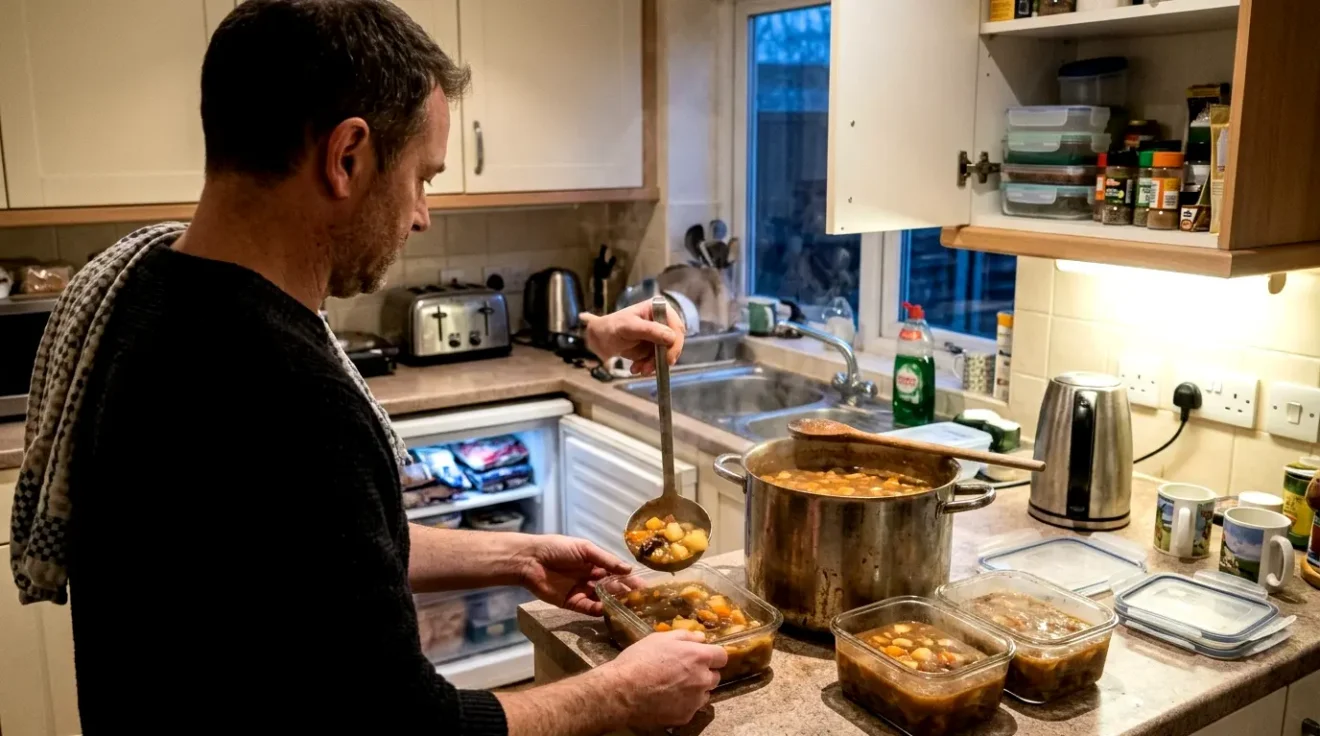
Repetition does not have to mean eating an identical plate several times. The same chilli might be served with rice on one evening and a jacket potato on another. A stew might be accompanied by bread or additional vegetables. These simple variations make use of the prepared base without requiring an entirely new recipe.
Storage is just as important as the recipe itself. The Food Standards Agency guidance on cooking and reheating food advises cooling leftovers and refrigerating them within two hours, eating refrigerated leftovers within 48 hours or freezing them, and reheating until steaming hot throughout.
48 hours
The Food Standards Agency’s general recommended period for eating refrigerated leftovers. Freeze portions that will not be eaten within this period, subject to any stricter food-specific instructions.
Food Standards Agency, Cooking your food.
Leftovers should also be reheated only once. Stirring food during microwave reheating helps avoid cold areas. Cooked rice requires particular care and should follow the stricter guidance applicable to rice, rather than relying only on the general rule for leftovers.
Suppose a batch produces six portions but only two will be needed within the next couple of days. Refrigerating the portions for immediate use and freezing the others is more sensible than leaving everything in the fridge for the entire working week.
Plan storage before cooking. Check how many meals are genuinely required, whether suitable containers are available and how much freezer space remains. Freezing extends usability when food has been handled safely, but it does not reverse problems caused by improper cooling or storage.
A useful batch meal reduces work on busy evenings while remaining appealing and safe to eat. Combined with a few convenient alternatives, it becomes one element of a flexible meal plan rather than the only acceptable dinner for several days.
Key takeaways for a sustainable eating routine
- Choose your most demanding days first: those are the meals where advance decisions provide the clearest practical benefit.
- Keep prepared meals interchangeable with simple cupboard-based alternatives, so a changed schedule does not derail the whole plan.
- Review what was eaten, missed or wasted before planning the following week, and adjust only what is necessary.
How Can Planning Meals Ahead Save Time Without Making Your Week Too Rigid?
Flexible meal planning saves time by reducing repeated shopping decisions and ensuring suitable food is available when schedules become demanding. Instead of fixing every breakfast, lunch and dinner, plan the meals most vulnerable to time pressure and keep a few alternatives available. This provides structure for active days without forcing the entire week into an inflexible menu.
The main benefit is not necessarily faster cooking. It is spending less time asking what to eat, checking cupboards, making unplanned shopping trips or discovering that the ingredients for a substantial meal are missing.
A simple approach is to identify two or three busy evenings and choose a dependable dinner for each. Leave less demanding days open to whatever food is available, what needs using and what everyone feels like eating.
For example, a hypothetical weekly arrangement might include a batch-cooked chilli on Monday, jacket potatoes with tuna and vegetables on Wednesday, and a quick egg-and-rice meal on Friday. Tuesday and Thursday remain flexible. These are practical options, not a prescribed weekly diet.
Standby meals are essential to flexibility. A short list of alternatives means a delayed train, longer shift or change in appetite does not require a complete rethink.
Useful standby combinations include pasta with lentils and vegetables, wholemeal toast with eggs and tomatoes, or a jacket potato with beans and cheese. Their value lies in familiar ingredients, straightforward preparation and the ability to adjust portions.
It also helps to keep some ingredients interchangeable. Frozen vegetables can accompany rice, pasta or potatoes. Eggs can become part of breakfast, lunch or dinner. Tinned beans can be used in a chilli, served with toast or added to a potato-based meal.
A flexible plan should account for storage, household preferences and realistic appetite. It should not encourage cooking extra meals that are unlikely to be eaten.
At the end of each week, review three practical observations: whether energy and recovery felt adequate, which meals were missed or difficult to arrange, and whether prepared food was wasted.
If lunches repeatedly disappear during demanding shifts, the next plan may need a more reliable packed meal. If dinners are easy but breakfasts are regularly missed, preparing breakfast ingredients may deliver greater value than batch-cooking more evening meals.
This creates a simple feedback loop: notice the difficulty, adjust one part of the plan, and review the result. Over time, the routine can become better matched to actual work and activity patterns without becoming more complicated.
For the next demanding week, start by selecting the two meals most likely to be missed or rushed. Choose one reliable option for each, check that the ingredients are available, and keep a quick alternative ready. A small, repeatable adjustment is often a more sustainable starting point than reorganising every meal at once.
Do you need protein supplements to recover from everyday physical activity?
Not necessarily. Everyday foods such as eggs, fish, beans, lentils, milk and yoghurt provide protein and can contribute to nutritional needs. Whether supplements are useful depends on individual circumstances, including dietary intake and activity demands. A supplement is not automatically a substitute for adequate overall food intake.
Can carbohydrates help you cope with consecutive active days?
Carbohydrates provide an important source of energy for physical activity. Including suitable portions of potatoes, rice, oats, pasta or bread may help maintain adequate energy intake during demanding periods. The amount required varies with activity, overall diet and individual needs. There is no single carbohydrate portion appropriate for every active adult.
Is it necessary to eat immediately after every workout?
No universal immediate post-workout meal is required for every activity. The intensity and duration of exercise, overall nutritional intake and timing of the next demanding session all matter. After strenuous activity, particularly when further exertion is scheduled soon, arranging an accessible meal containing carbohydrates and protein can be practical.
What if tiredness continues despite eating regularly?
Persistent fatigue should not automatically be attributed to nutrition. Sleep, illness, stress, medication, workload and other health factors may contribute. If tiredness remains unexplained, becomes worse or interferes with normal activities, seek advice from an appropriate healthcare professional, such as a GP.
Can healthy eating during busy weeks still be affordable?
Yes. Tinned pulses, oats, potatoes, eggs, frozen vegetables and other familiar staples can support varied, substantial meals without relying on specialised products. Meal preparation may also help reduce unplanned purchases and food waste when it reflects how much food the household will realistically use. Food safety and adequate overall intake remain priorities.