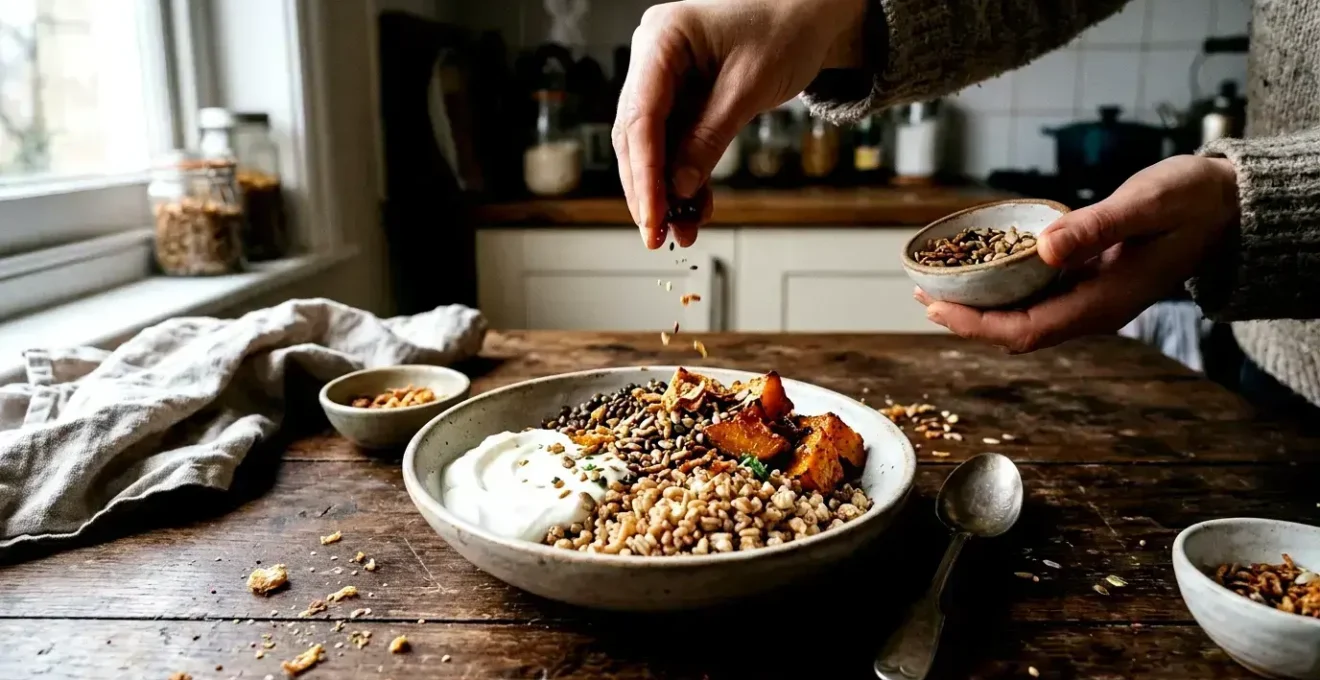
A bowl of brown rice, lentils and steamed vegetables can taste perfectly pleasant yet become surprisingly unappealing halfway through. The ingredients are nutritious, the seasoning is right, and nothing is badly cooked. What is missing may simply be something to crunch, something creamy or something that offers a little resistance to the teeth.
Texture contrast makes healthy meals more interesting by combining different sensations in the same dish. A spoonful of yoghurt alongside tender roasted squash, followed by crisp toasted seeds, creates an experience that a uniformly soft bowl cannot provide.
There is no need for elaborate recipes or expensive ingredients. Ordinary supermarket staples such as carrots, cabbage, oats, lentils, yoghurt and pumpkin seeds can create satisfying contrasts with minimal extra preparation.
The real skill lies in choosing complementary textures, cooking them properly and bringing them together at the right moment. Once those habits become familiar, the same nutritious ingredients can support many different meals without feeling repetitive.
Texture contrast: the essentials
- Build meals around three sensations: something creamy, something tender or chewy, and something crisp.
- Keep crunchy ingredients away from steam, excess moisture and wet dressings until serving.
- Prepare grains and vegetables ahead, but store crisp toppings separately so leftovers remain enjoyable.
- Why Can a Meal With Good Flavour Still Feel Boring Without Texture Contrast?
- How Can You Add Three Contrasting Textures to a Grain Bowl Without Extra Complexity?
- Nuts, Seeds or Crunchy Vegetables: Which Topping Best Complements a Soft Dish?
- Which Cooking Mistakes Turn Crisp Ingredients Soft Before Serving?
- When Should You Add Sauces and Crunchy Toppings to Keep Their Texture?
- When Should You Add Dressing, Herbs and Crunchy Toppings to a Grain Bowl?
- Which Three Mistakes Stop Roasted Vegetables From Developing Crisp Edges?
- What Makes a Healthy Recipe Easy Enough to Cook Again and Again?
Why Can a Meal With Good Flavour Still Feel Boring Without Texture Contrast?
A well-seasoned meal can still feel boring when every bite has a similar texture. Taste is only one part of eating: chewing resistance, creaminess, crispness and even the sound of food breaking contribute to the experience. Changing those sensations can make familiar ingredients more engaging without changing the underlying recipe.
Consider two bowls containing identical quantities of lentils, brown rice and roasted carrots. In the first, everything is soft and mixed together. In the second, the lentils remain tender, the carrots have browned edges and raw shredded cabbage adds a clean crunch.
The flavour profiles might be similar, yet the second bowl offers more variety as it is eaten.
Food scientists distinguish several sensory influences on eating behaviour. A systematic review and meta-analyses on food texture and satiation examined how physical food characteristics affect consumption and acceptability.
37 studies
The scientific review identified 37 individual studies examining changes in food texture and their effects on consumption and acceptability. Its findings suggest that physical characteristics can affect satiation, but they do not establish that every combination of textures makes meals more enjoyable.
Obesity Reviews, 2021, systematic review and meta-analyses.
Satiation means the process that leads someone to stop eating during a meal. It differs from satiety, which concerns how full someone feels afterwards. Neither should be confused with sensory-specific satiety, where enjoyment of a repeatedly consumed sensory experience can decline during eating.
Texture monotony may contribute to the subjective feeling that a dish is becoming tiresome, but it is not possible to diagnose that feeling from a particular bite.
For an informal kitchen experiment, eat a few mouthfuls of a familiar soft dish, then add a little grated carrot or toasted seed. Notice whether the extra bite changes your enjoyment. This is a personal preference test, not a scientific assessment.
Texture can also help avoid the instinct to solve every disappointing meal with more cheese, salt or bottled sauce. Adding cucumber, radish or lightly toasted seeds changes the eating experience without necessarily increasing sodium. Nuts and seeds still contribute energy, so portion size matters.
The NHS guidance on reducing salt in your diet advises adults to limit their total salt intake to 6 g daily and recommends flavouring food with herbs, spices, garlic, pepper or lemon instead of additional salt.
These recommendations do not prove that crunch reduces salt consumption. They do support the broader principle that improving food does not always require more salty ingredients.
Once that distinction becomes familiar, improving an ordinary grain bowl becomes a matter of choosing a few contrasting components rather than starting another complicated recipe.
How Can You Add Three Contrasting Textures to a Grain Bowl Without Extra Complexity?
Use a simple three-part framework: a creamy component, a tender or chewy component, and a crisp topping. Start with cooked grains, add vegetables or legumes, and finish with yoghurt, avocado or another creamy element alongside something crunchy. Most ingredients can be prepared ahead, leaving only the final topping to add when eating.
This approach works because the components have different jobs. The grains provide a familiar base, the tender ingredients create substance, and the creamy and crisp additions prevent the bowl from feeling uniform.
For example, combine cooked pearl barley, roasted chickpeas and carrots, mashed avocado, and a small scattering of toasted seeds. The same barley could appear the following day with lentils, yoghurt and shredded red cabbage.
The method stays consistent even when the ingredients change.
| Texture | Everyday ingredients | Purpose |
|---|---|---|
| Creamy | Plain yoghurt, mashed avocado, tahini dressing | Adds smoothness and moisture |
| Tender or chewy | Roasted vegetables, chickpeas, lentils, cooked grains | Gives substance and satisfying bite |
| Crisp | Toasted seeds, shredded cabbage, radishes, cucumber | Provides a fresh or brittle contrast |
The textures need not come from three additional ingredients. Roasted vegetables can have tender centres and crisp edges, while grains provide chewiness. That means a prepared base may already supply much of the contrast.
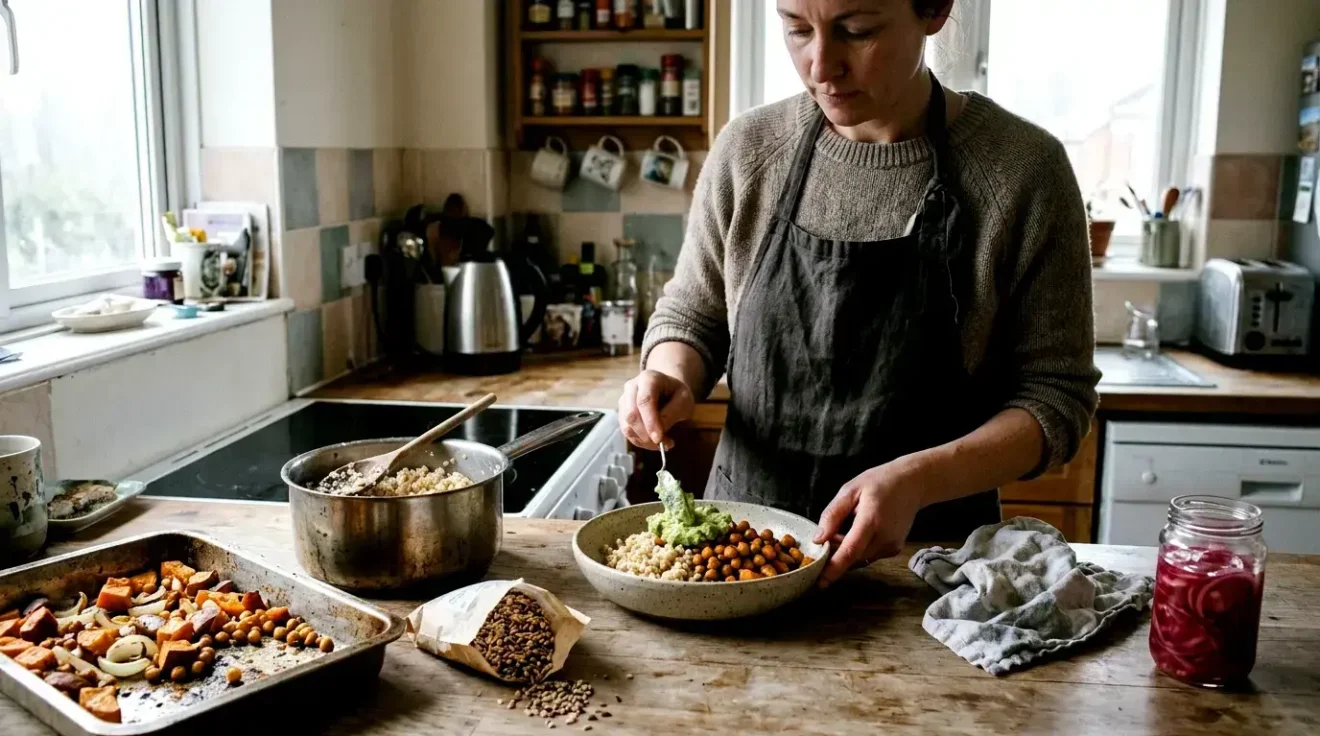
Batch cooking makes the system particularly practical. Prepare a pan of grains and a tray of vegetables during one cooking session, then divide them into suitable portions. When it is time to eat, choose a creamy addition and whichever fresh or toasted topping is available.
UK supermarkets also offer shortcuts such as toasted mixed seeds, pickled vegetables and crispy shallots. They can save preparation time, although packaged products deserve a quick label check.
- Toasted seeds: look for plain varieties without unnecessary added salt or oil.
- Pickled vegetables: compare salt and sugar information, particularly when using generous portions.
- Crispy shallots: check ingredients and nutrition labels, since packaged varieties may contain substantial added oil and salt.
Ready-prepared ingredients are conveniences, not automatic nutritional upgrades. A handful of freshly shredded cabbage may achieve the same practical goal at a lower cost.
Once the basic bowl is assembled, the most useful next decision is which crunchy ingredient genuinely complements its softer flavours.
Nuts, Seeds or Crunchy Vegetables: Which Topping Best Complements a Soft Dish?
Nuts work especially well with earthy, roasted flavours; seeds provide a smaller, concentrated crunch for neutral grains and legumes; and raw vegetables add freshness, water and bite to rich or creamy dishes. The best choice depends on the flavour of the base, how long the topping must remain crisp, your nutritional priorities and the food already available.
For a warm lentil and squash bowl, chopped toasted walnuts or pumpkin seeds reinforce roasted flavours. In a yoghurt-based chickpea salad, cucumber or radish brings a fresher contrast. Sesame or sunflower seeds suit mildly seasoned rice and barley without dominating them.
There is no universal winner. The aim is to supply a sensation the dish is missing.
| Criterion | Nuts | Seeds | Raw crunchy vegetables |
|---|---|---|---|
| Staying crisp | Generally hold their structure well when kept dry | Hold dry crunch, but small seeds soften when coated | Remain crisp when fresh, but cut surfaces can release water |
| Flavour | Distinctive, often rich and roasted | Usually mild to nutty | Fresh, peppery, sweet or mildly bitter |
| Nutrition | Fibre, fats and some protein; energy-dense | Unsaturated fats, fibre and some protein; energy-dense | Water, fibre and varying vitamins; generally less energy-dense |
| UK budget considerations | Speciality nuts can be costly; buy only what you use | Basic sunflower or pumpkin seeds can be economical across multiple meals | Seasonal cabbage, carrots and other ordinary vegetables can provide inexpensive volume |
These are qualitative shopping comparisons rather than measured UK price rankings. Prices vary between retailers, pack sizes and seasons.
Moisture determines how long the contrast survives. Toasted nuts and seeds generally retain their initial structure better than finely sliced vegetables when stored separately. However, chopped cucumber, tomato or salted raw vegetables may release liquid into the base, changing both the dressing and the other ingredients.
For a packed lunch, store chopped vegetables in a separate compartment, drain excessively wet ingredients and combine everything when ready to eat.
The nutritional trade-off matters too. According to NHS guidance on eating a balanced diet, pulses provide fibre and protein, while nuts contribute useful nutrients but should be eaten in moderation because they contain substantial fat and energy.
A small handful of nuts or seeds is therefore a sensible starting point for a crunchy accent rather than a large layer. By contrast, a fistful of shredded cabbage or sliced radishes adds more vegetable volume without the same energy concentration.
Those visual portions are practical kitchen cues, not nutritionally equivalent measurements. The right amount depends on the complete meal and the person eating it.
For additional variety, choose toppings by both taste and texture: earthy dishes with toasted nuts, mild grain bowls with seeds, and rich creamy meals with crisp vegetables.
Even a well-chosen topping will disappoint if the cooking and storage process destroys its crispness before it reaches the table.
Which Cooking Mistakes Turn Crisp Ingredients Soft Before Serving?
The main mistakes are trapping steam around hot food, preparing crisp toppings too early, adding wet dressing before serving and packing warm ingredients into closed containers. Moisture moves into dry, brittle surfaces and reduces their crunch. Prevent this by allowing cooked components to cool appropriately, keeping toppings separate and assembling the meal shortly before eating.
Think of freshly roasted chickpeas. Their surfaces may be pleasantly crisp when they leave the oven, but closing them immediately inside a warm container traps moisture. As that moisture condenses, the surface becomes softer.
Stacking hot roasted vegetables can produce a similar result. Even when their edges browned successfully in the oven, steam from neighbouring pieces can soften those surfaces.
A practical improvement is to spread crisp cooked ingredients on a clean tray or wire rack rather than piling them together. Allow steam to escape while following appropriate food-safety cooling times.
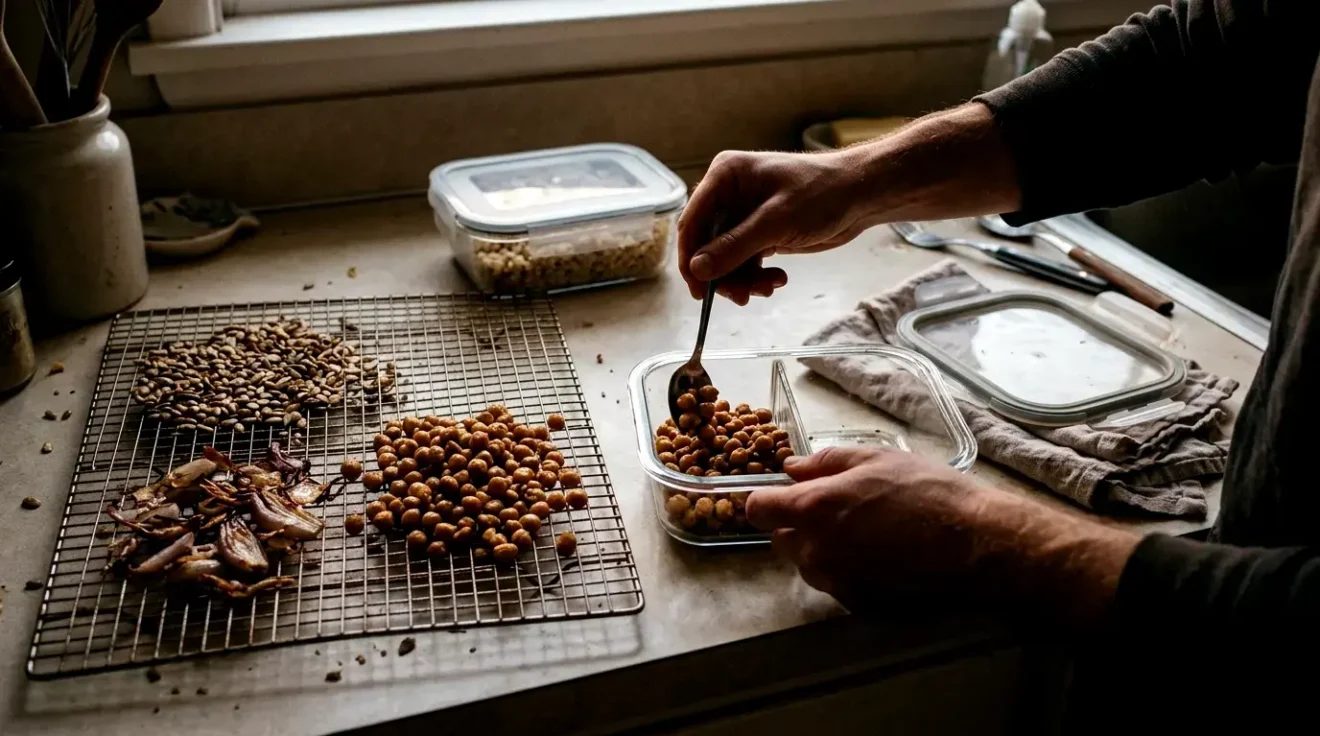
Another frequent mistake is to put every component into the bowl before making the dressing. Once a liquid sauce coats toasted seeds, their crisp surface can soften. Salted or dressed vegetables may also release moisture, leaving a watery layer beneath the salad.
Instead, dress the softer base first and add crunchy components afterwards. When practical, reserve the topping until the meal is actually being eaten.
For batch cooking, texture preservation must remain separate from food safety. The Food Standards Agency advises refrigerating cooked leftovers within two hours, consuming refrigerated leftovers within 48 hours or freezing them, and reheating leftovers until steaming hot throughout. Leftovers should only be reheated once.
The agency’s guidance on cooking and storing leftovers addresses microbiological safety, not how long roasted vegetables remain crispy.
Do not leave cooked grains or vegetables at room temperature indefinitely while waiting for perfect crispness. Divide large quantities into smaller portions or shallow containers to support prompt cooling, then refrigerate within the recommended period.
Five actions for a crunch-preserving meal-prep routine
- Spread cooked toppings apart: place roasted vegetables or chickpeas in a single layer. Check that they are not stacked in a steaming pile.
- Cool cooked leftovers promptly: portion hot food into suitable shallow containers and refrigerate within two hours. Check the time between cooking and refrigeration.
- Separate dry and moist components: place toasted seeds or nuts in their own container. Check that no dressing is touching them.
- Keep dressing apart: transfer sauce into a small leakproof pot. Check that the packed grain base is not soaking the crunchy topping.
- Assemble immediately before eating: add the crisp topping after the sauce and softer ingredients. Check that it still has a distinct bite.
These steps address different problems: safe cooling limits bacterial risk, while separation and final assembly help preserve the sensations that make the meal enjoyable.
With storage under control, the next improvement is learning precisely when sauces and toppings should meet the finished meal.
When Should You Add Sauces and Crunchy Toppings to Keep Their Texture?
Add sauces to the soft base before adding crunchy ingredients. Warm sauces can be spooned onto grains or legumes during plating, while thick dressings are best introduced shortly before serving. Dry toppings such as toasted nuts, seeds or crispy onions should go on last, ideally immediately before the first bite, to minimise moisture absorption.
The distinction is not simply between wet and dry ingredients. It is between surfaces that benefit from moisture and surfaces that lose their intended texture when wet.
Warm lentils can absorb a little lemon dressing and become more flavourful. That same dressing poured directly over toasted pumpkin seeds can soften their surface.
Rather than mixing everything together, spoon the sauce onto the grains or lentils, fold it gently through the base and then position the crisp ingredients above it.
This method also allows the sauce to enhance the softer components without turning the entire bowl into a single uniform mixture.
| Component | Best practical timing | Reason |
|---|---|---|
| Warm sauce | During plating, directly onto the suitable base | Coats grains, legumes or vegetables |
| Thick yoghurt or tahini dressing | Shortly before serving | Adds creaminess while limiting contact with crisp toppings |
| Fresh crunchy vegetables | Near serving time | Helps maintain their fresh bite and limits released moisture |
| Toasted nuts, seeds or crispy shallots | Immediately before eating | Minimises exposure to moisture |
For an office lunch, a divided box or a collection of small reusable containers offers an effective alternative to packing everything in one compartment. Put grains and cooked vegetables together if appropriate, use a separate pot for the dressing and keep the crisp topping dry.
At lunchtime, dress the grains, add any fresh vegetables and finish with the crunchy layer. A few seconds of assembly can preserve a contrast that would otherwise disappear during the journey.
Safe temperature control still matters. Perishable components, including cooked grains, cooked vegetables and dairy-based sauces, should be kept appropriately chilled during transport. An insulated lunch bag with suitable frozen ice packs can help, but a bag alone does not guarantee safe refrigeration.
There is no universal safe number of hours for a particular lunch bag. Performance depends on the starting food temperature, insulation, ice packs, surrounding temperature and how often the bag is opened.
If refrigeration is available at work, transfer perishable food to the fridge promptly. Otherwise, use suitable cooling equipment and avoid leaving it warm for extended periods.
When a topping becomes limp despite being packed separately, inspect the storage arrangement. A dry compartment directly against a still-warm food container may be exposed to heat and condensation. The exact cause can also be moisture already present in the topping.
Grain bowls benefit from a particularly deliberate version of this order because grains absorb liquid readily while herbs and toasted toppings respond poorly to prolonged heat and moisture.
When Should You Add Dressing, Herbs and Crunchy Toppings to a Grain Bowl?
Dress cooked grains while they are slightly warm if the bowl will be eaten soon, then add cooler tender ingredients, fresh herbs and finally the crunchy topping. Warm grains can absorb flavourful dressing, but residual heat may wilt delicate herbs and soften toasted seeds. Separating these finishing layers keeps the bowl tasting fresh and texturally varied.
Imagine freshly cooked bulgur wheat with lemon and olive oil. When gently tossed together, the grains take on the dressing’s flavour. Adding flat-leaf parsley and toasted sunflower seeds at the same stage, however, may leave the herbs wilted and the seeds less crisp by the time the dish reaches the table.
The solution is a simple assembly sequence:
- Start with the grains. Cook the barley, bulgur, rice or other grain and allow excess steam to escape.
- Dress the base. Mix a suitable dressing through slightly warm grains when serving soon.
- Add tender ingredients. Fold in cooked vegetables, beans or lentils, allowing excessively hot components to cool as needed.
- Finish with fresh herbs. Scatter parsley, mint, coriander or other suitable herbs over the cooler surface.
- Complete the bowl with crunch. Add toasted seeds, chopped nuts or crisp vegetables at the last moment.
The sequence is easy to remember: grains, dressing, tender ingredients, herbs, crunch.
It is not necessary to worry about whether the herbs or crunchy topping are placed first if both are added at serving temperature. The important distinction is keeping these delicate finishing ingredients away from prolonged contact with hot, wet grains.
For a bowl containing roasted sweet potato, chickpeas and pearl barley, one approach is to mix the barley with a little lemon dressing, add the chickpeas and sweet potato, then finish with chopped parsley and toasted pumpkin seeds.
A spoonful of plain yoghurt on the side adds a creamy contrast without coating the crunchy surface.
Batch preparation requires a slightly different approach. If making grain bowls ahead, cool the cooked grains promptly and keep them refrigerated. Dressing and herbs may be included during preparation when their quality remains acceptable, although delicate herbs will generally look fresher if added later.
Dry crunchy toppings are the component worth separating most consistently. They can travel in a small pot and be scattered over the bowl after the base has been reheated, if reheating is appropriate.
When reheating cooked grain leftovers, follow safe storage and reheating practices rather than relying on appearance or smell alone. Rice in particular requires careful handling because improper cooling and storage can allow harmful bacteria to grow.
Warm-grain dressing is therefore a technique for prompt serving, not a reason to leave prepared bowls standing unrefrigerated.
That final topping becomes even more rewarding when the cooked vegetables underneath have developed their own crisp, caramelised edges.
Which Three Mistakes Stop Roasted Vegetables From Developing Crisp Edges?
Three common mistakes prevent roasted vegetables from becoming crisp: crowding too many pieces onto one tray, using an insufficiently heated cooking surface, and leaving too much surface moisture on the vegetables. All three interfere with effective browning. Give pieces space, preheat the oven properly, dry the vegetables and use enough oil to coat them lightly.
Roasting depends partly on moisture escaping from the vegetable surface. As water evaporates, the surface can become hot enough to brown more effectively. When steam accumulates around closely packed pieces, vegetables often soften before their edges develop the desired colour and texture.
The first mistake is overcrowding the roasting tray. A heaped tray of carrots, parsnips or squash releases moisture into a confined space. Instead of creating crisp edges, the vegetables can become soft and damp.
Arrange pieces in a single layer with visible gaps. If a batch will not fit comfortably, divide it between two trays. This is often more effective than squeezing everything onto one.
The second mistake is inadequate preheating or an unsuitable oven position. Putting vegetables into a cold oven or onto a cold tray delays the onset of effective surface browning.
For sturdy roasting vegetables, heat the oven thoroughly before cooking. Preheating a suitable empty metal tray on an upper shelf can encourage faster surface cooking when the vegetables make contact.
Use an oven-safe tray and handle it carefully, as hot oil and surfaces can cause burns. Avoid adding wet vegetables to very hot oil, which may splatter. Oven characteristics differ, so adjust shelf position if the vegetables brown too quickly.
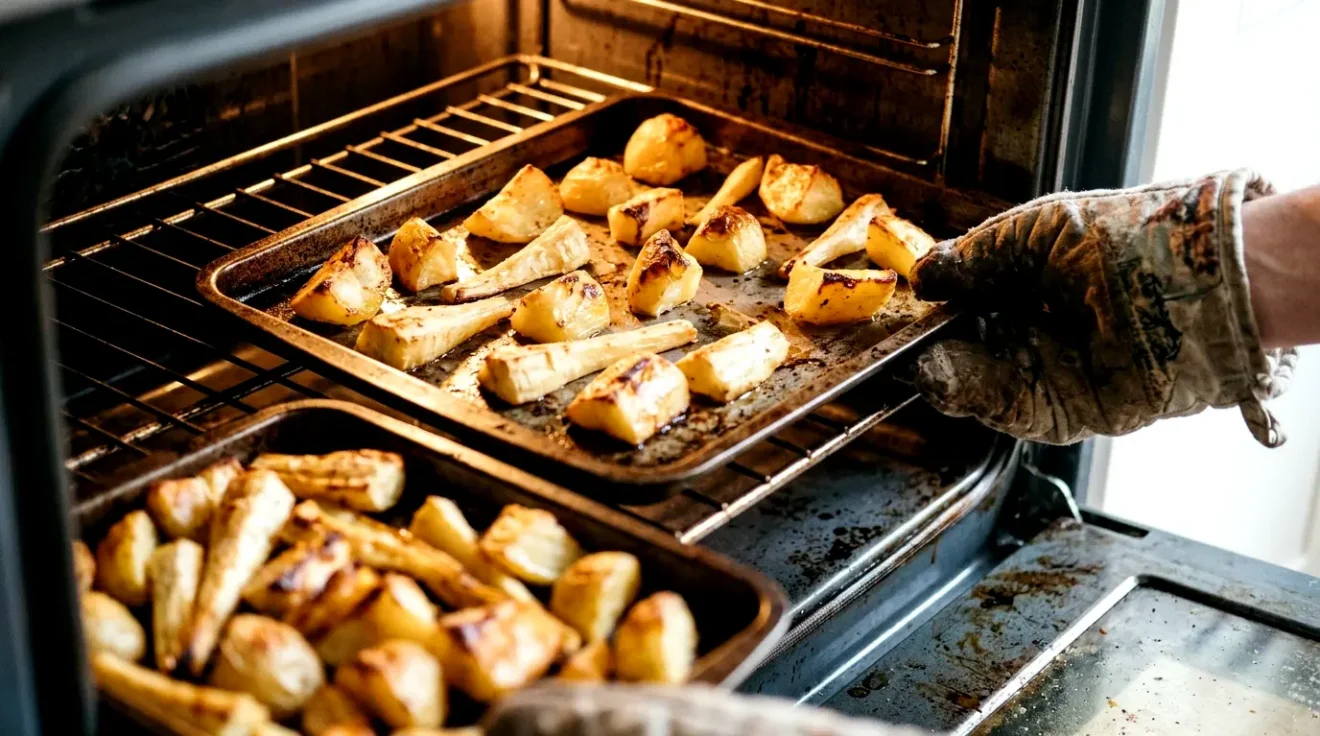
The third mistake involves surface moisture and oil distribution. Vegetables that go into the oven dripping from washing have more water to lose before browning. Meanwhile, poorly distributed oil can produce uneven cooking and dry, unappealing patches.
Pat washed vegetables dry, cut them into reasonably even pieces and toss them with a modest amount of oil so their surfaces are lightly coated. Avoid assuming that adding more oil will solve a tray already crowded with wet vegetables.
British root vegetables provide a useful example. Potatoes and parsnips can benefit from parboiling before roasting. This softens their interiors, and gently roughening the surface after draining can create edges that crisp during roasting.
Allow excess water to evaporate after draining, then transfer the vegetables carefully to the prepared roasting tray. The combination of a tender centre and browned exterior offers texture contrast within a single ingredient.
For a straightforward weekday option, roast carrots, parsnips or squash while preparing lentils or grains on the hob. The vegetables become the tender component with crisp edges, reducing the need for multiple additional toppings.
Different vegetables contain different amounts of water and starch, so identical timings will not produce identical results. Monitor browning, texture and cooking progress rather than applying a single rigid roasting time to everything.
Perfectly browned vegetables are useful, but the greater achievement is making the entire meal simple enough to prepare regularly without losing its appeal.
What matters for your next meal
- Keep the foundation dependable: choose grains, pulses and vegetables you already buy rather than building each meal around speciality ingredients.
- Treat crunch as a finishing component that can change from day to day, not as something that must be cooked from scratch every time.
- Plan leftovers around separate storage and suitable reheating so convenience does not erase the textures you worked to create.
What Makes a Healthy Recipe Easy Enough to Cook Again and Again?
A healthy recipe becomes genuinely repeatable when its ingredients are easy to obtain, substitutions do not undermine the result and leftovers remain convenient to use. Texture contrast supports that repeatability when soft components can be stored or reheated independently and a fresh crunchy finish can be added with little effort. The method matters more than a fixed recipe.
A grain bowl requiring unusual ingredients, several special sauces and a new preparation technique every evening may be enjoyable occasionally. It is less useful as an everyday meal for someone balancing work, shopping and limited cooking time.
A simpler bowl built from familiar ingredients is easier to adapt. Cooked grains, beans or lentils provide the base. Roasted or steamed vegetables supply tenderness. Yoghurt, avocado or a simple dressing contributes creaminess. Seeds or fresh vegetables create a final crunch.
The key is to keep that structure while changing the ingredients according to the weekly shop.
For example, a home cook might begin with pearl barley, lentils, roasted carrots, yoghurt and pumpkin seeds. On another day, the barley becomes brown rice, the lentils become chickpeas, and the carrot is replaced with seasonal squash or cabbage.
These are ingredient combinations for inspiration, not evidence that one particular bowl is nutritionally complete for everyone. A balanced eating pattern requires attention to food variety, suitable portions and nutritional needs across meals.
Leftovers are the practical test of repeatability. If all the components are mixed into a wet container, the next day’s meal may be less enjoyable even when it has been stored safely.
Keeping dry toppings separate gives the cooked base a better chance of surviving refrigeration. Suitable cooked components can be reheated according to food-safety guidance, while crisp elements are introduced fresh.
Some roasted ingredients can regain a little surface crispness in a hot oven or dry pan, although results depend on their moisture content and how they were stored. Dry toasted toppings generally need little more than separation from the base.
To evaluate an everyday healthy recipe, ask three questions:
- Can its main ingredients be bought during an ordinary weekly supermarket trip?
- Can at least one ingredient be replaced without requiring an entirely different cooking method?
- Can the prepared components be stored safely and brought together again without turning the entire meal soft?
A recipe that answers all three questions favourably is more practical to repeat. It also offers room for small seasonal changes rather than requiring constant searches for completely new meals.
The benefits of texture contrast should not be overstated: sensory research does not establish that changing textures guarantees long-term adherence to a nutritious diet. But as a cooking method, it gives home cooks an accessible way to vary meals using ingredients they already understand.
For your next meal, start with a familiar grain or pulse, choose a creamy addition and save one crunchy ingredient for the final moment. Repeat the method with a different topping later in the week. The result is a flexible routine in which healthy meals remain easy to prepare and interesting to eat.
Can a healthy meal be crunchy without adding nuts or seeds?
Yes. Shredded cabbage, sliced radishes, raw carrots, cucumber and properly roasted vegetables can all add crunch. Fresh vegetables are particularly useful when you want a crisp contrast without relying on energy-dense toppings. They also offer alternatives for people avoiding nuts, although individual dietary requirements and allergies must still be considered.
How can you add crunch to a soup without making it too rich?
Finish a smooth soup with a modest scattering of toasted seeds, crisp roasted chickpeas or finely chopped suitable raw vegetables. Add the topping immediately before serving so it remains distinct from the liquid. For a lighter fresh contrast, try finely sliced spring onion or a small quantity of shredded crunchy vegetables that complement the soup’s flavour.
Why do roasted chickpeas sometimes lose their crunch overnight?
Roasted chickpeas can absorb moisture from their surroundings or from moisture remaining inside them. Packing them while hot can also encourage condensation. Let cooked chickpeas cool promptly and safely, store them separately from wet ingredients and add them at serving time. Refrigerate cooked leftovers appropriately, recognising that refrigeration may alter their crispness.
Can texture contrast help when preparing meals for someone who dislikes crunchy foods?
Texture contrast does not have to mean hard or brittle food. A smooth purée beside tender grains, soft roasted vegetables and gently chewy legumes can provide variation without sharp crunch. Choose textures that are comfortable and appropriate for the individual. Anyone with chewing or swallowing difficulties may need professional guidance about suitable food consistencies.
Should grain bowls be eaten warm or cold to preserve their texture?
Either can work. Warm bowls offer a contrast between freshly heated grains and cooler toppings, while chilled bowls can provide a refreshing combination of tender grains, creamy dressing and crisp vegetables. What matters most is separating moisture-sensitive toppings until serving and following safe cooling, refrigeration and reheating practices for cooked ingredients.