
A coconut curry sauce can smell wonderfully fragrant yet taste strangely flat. Add another spoonful of curry powder and it may become stronger without becoming more satisfying. Pour in extra coconut cream and the texture turns luxurious, but the finished meal can feel unnecessarily rich.
The solution is to build flavour in layers rather than relying on coconut fat or spice quantity alone. Softened aromatics create a savoury foundation, briefly heated spices contribute fragrance, gentle simmering develops body, and carefully measured salt and acidity bring the ingredients into focus.
This approach works with everyday ingredients from English supermarkets, including tinned coconut milk, ground spices, chickpeas, frozen spinach, chicken breast and white fish. It also adapts to different cooking times and preferences, whether the aim is a quick vegetable curry or a more substantial family meal.
The most useful finishing test is straightforward: the sauce should coat a spoon, taste distinctly savoury and aromatic, and leave room for the flavour of the vegetables or protein rather than overwhelming them.
Coconut curry sauce: the essentials
- Build fragrance first: soften onion, garlic and ginger, then briefly heat the spices before adding most of the coconut milk.
- Control richness: choose coconut milk by consistency and saturated fat content, and avoid unnecessary additional oil.
- Balance at the end: adjust salt, add lime gradually and finish with fresh herbs for a brighter sauce.
- Why Can Coconut Curry Sauce Taste Bland Even When You Use Plenty of Spice?
- How Can You Build a Coconut Curry Sauce in Four Simple Stages?
- Coconut Milk, Light Coconut Milk or Coconut Cream: Which Works Best for Curry?
- Which Mistakes Can Make Coconut Curry Sauce Oily or Overly Sweet?
- When Should You Add Lime, Herbs and Leafy Greens to a Coconut Curry?
- How Can You Blend Warm Spices Without Making a Dish Taste Overcomplicated?
- Stew, Curry or Traybake: Which Hearty Meal Works Best for a Busy Night?
- How Can Warm Spices Add Depth to Simple Meals Without Overpowering Them?
Why Can Coconut Curry Sauce Taste Bland Even When You Use Plenty of Spice?
Coconut curry sauce often tastes bland because it lacks sufficient seasoning, acidity or properly developed aromatics, rather than because it contains too little spice. Coconut milk brings richness and a mild natural sweetness, but those qualities can soften the impression of other flavours. Heating spices appropriately and balancing the finished sauce usually achieves more than adding another spoonful of curry powder.
Spice aroma and overall flavour are related but different. When cumin or coriander seeds are toasted, they release fragrant compounds that give the curry its distinctive smell. Ground spices briefly heated in cooking fat can also distribute their aromatic compounds through the sauce.
Adding ground spices directly to coconut milk is not inherently wrong. They still contribute flavour, colour and warmth. However, briefly cooking them before adding the main liquid can produce a different, more integrated flavour profile.
There is an important distinction between spices that benefit from early cooking and those that contribute freshness near the end. Ground coriander, cumin and turmeric commonly form part of the early base. A small amount of garam masala, fresh chilli or freshly ground cardamom can be added later to preserve a more noticeable finishing aroma.
Long cooking is not always beneficial. Spices that dominate the pan from the beginning may lose some of their fresher aromatic character, while repeatedly adding more can make the sauce dusty or harsh.
Salt and acidity complete the flavour rather than simply increasing its intensity. A sauce containing enough chilli and turmeric may still need a little salt or lime to make the separate ingredients taste connected.
Try a simple tasting ritual:
- Taste a spoonful of sauce before making changes.
- Add a small pinch of salt if the overall flavour seems muted.
- Stir, allow roughly 30 seconds for the seasoning to disperse, and taste again.
- If the sauce is savoury but still tastes dull, introduce a few drops of lime juice.
- Only add more spice if the curry genuinely lacks the desired spice character.
This approach separates three problems that are easily confused: insufficient seasoning, missing acidity and weak aromatic development.
Once the seasoning problem is identified, a repeatable cooking sequence makes it much easier to avoid it in the first place.
How Can You Build a Coconut Curry Sauce in Four Simple Stages?
A reliable coconut curry sauce can be made in four stages: soften onion, garlic and ginger; briefly cook ground spices in a little fat; add coconut milk and simmer until the consistency suits the dish; then adjust salt, acidity and any sweetness. Each stage has a practical visual or aromatic cue, so the method works without specialist equipment.
For an everyday sauce serving approximately four people, a useful starting combination is one onion, two garlic cloves, a thumb-sized piece of ginger, a modest mixture of ground spices and a 400 ml tin of coconut milk. These are flexible home-cooking quantities rather than a prescribed formula.
Stage 1: Soften the aromatics. Heat a measured teaspoon or two of neutral oil in a saucepan, add finely chopped onion and cook over medium heat until translucent and sweet-smelling. Stir in the garlic and ginger towards the end to prevent them from scorching.
The onion should soften rather than become deeply browned. If the pan looks dry before the onion is ready, a small splash of water can help prevent sticking.
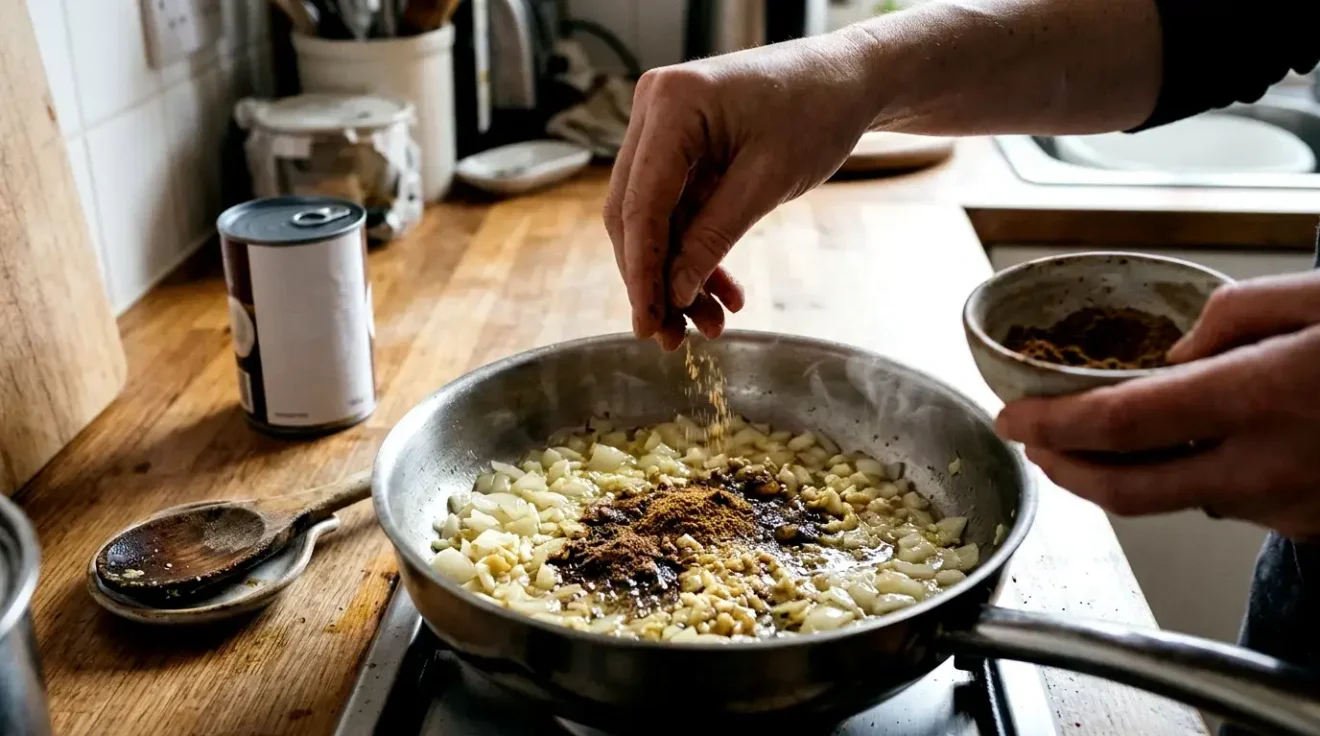
Stage 2: Bloom the spices. Add ground coriander, cumin and turmeric to the softened aromatics. Stir for around 20–40 seconds over moderate heat, adjusting according to the temperature and moisture in the pan.
The spices should smell more fragrant and appear slightly darker, without becoming black or bitter. If the mixture catches, add a little water immediately rather than continuing to fry it.
Stage 3: Add coconut milk and simmer. Pour in the coconut milk and stir until the aromatic mixture disperses. Bring the sauce to a gentle simmer, then reduce the heat and cook until it develops the required body.
A sauce intended to coat roasted vegetables may need more reduction than one serving as the cooking liquid for chickpeas or chicken. The useful cue is whether it lightly coats the back of a spoon rather than running off immediately.
Stage 4: Balance the seasoning. Taste before adding more spice. Adjust salt, introduce lime juice gradually and add a tiny amount of sugar only if the other ingredients genuinely need it. Coconut milk is naturally mildly sweet, so additional sweetness is often unnecessary.
The order matters because adding the main liquid stops the initial frying stage. It does not mean spices added later remain uncooked, but the flavour development will differ. Similarly, prolonged hard boiling can alter the texture of coconut milk, whereas gentle simmering offers more control.
For a quick version, Good Food’s speedy green chicken curry recipe illustrates a shorter method: onion and curry paste are cooked briefly before light coconut milk and seasonings are introduced. The published recipe specifies a 15-minute preparation.
Five checks for a well-balanced coconut curry sauce
- Check the aromatics: record whether the onion is translucent and smells sweet before introducing the spices.
- Check the spice bloom: identify a fragrant, unburnt spice mixture before pouring in the coconut milk.
- Check the consistency: lift a spoon and confirm whether the sauce coats its back or needs further gentle reduction.
- Check the seasoning: taste after a small salt adjustment and note whether the savoury flavour becomes clearer.
- Check the finish: add lime gradually off the heat and confirm that the sauce tastes bright without becoming sharply sour.
If the sauce tastes raw or powdery, give the spices additional gentle cooking time. If it tastes flat, revisit the seasoning before adding more powder. If the sauce looks grainy or separated, take it off the heat and stir gently with a splash of water; this can sometimes restore a smoother appearance, although a broken emulsion may not fully recover.
Supermarket coconut milk may separate in the tin, especially when it has been standing undisturbed. Shake it if the packaging permits, or stir the contents together after opening. Separation alone does not indicate its precise fat content or quality.
Once the cooking sequence becomes familiar, the next decision is which coconut product gives the most suitable texture without making the meal richer than intended.
Coconut Milk, Light Coconut Milk or Coconut Cream: Which Works Best for Curry?
Standard coconut milk is a versatile starting point for most curries, light coconut milk suits a less rich sauce, and coconut cream is useful when a thicker, more concentrated coconut texture is wanted. The best option depends on the finished dish, not simply the packaging. Compare fat content per 100 g and adjust the sauce’s consistency through cooking.
Coconut milk contains coconut-derived fat dispersed in water. Coconut cream generally contains a higher concentration of coconut solids and less water, producing a thicker consistency. Light coconut milk usually contains more water and less fat than a comparable standard product, although formulations vary between brands.
This relationship helps explain why different tins produce noticeably different results in the same recipe.
| Consideration | Light coconut milk | Standard coconut milk | Coconut cream |
|---|---|---|---|
| Typical consistency | Thinner, more fluid | Creamy and pourable | Thick and concentrated |
| Best use | Quick curries and lighter sauces | Everyday coconut-based curries | Small finishing additions or particularly rich sauces |
| Thickness control | May need reduction or another ingredient for body | Usually thickens with gentle simmering | Provides body with a smaller volume |
| Richness consideration | Typically lower in fat than comparable standard milk | Higher fat content varies by product | Often the richest option |
| Main caution | Can leave the dish watery if used without adjustment | Easy to add more than the sauce requires | Can dominate delicate vegetables or fish |
Thickness and richness are not identical. A light coconut milk reduced gently may achieve enough body to coat a spoon, although reducing it does not remove its fat. Evaporating water concentrates the remaining ingredients, so the nutritional impact depends on the quantity of coconut milk used and the number of portions served.
Nor does light coconut milk always require lengthy cooking. It can work directly in a short curry when vegetables, seasoning and sauce quantity are balanced.
For a compromise, use standard coconut milk as the base and reserve an optional spoonful of coconut cream for the final adjustment. Add it only if the curry genuinely needs more body. This offers finer control than pouring in a large amount of cream at the beginning.
As explained in Good Food’s coconut milk glossary, some commercial coconut milks contain emulsifiers that maintain a uniform texture. Others naturally separate when left standing. The ingredient list is more reliable than the appearance of the tin for understanding the product.
There is also a nutritional distinction between a sauce that feels lighter and one that contains less saturated fat. The NHS identifies coconut milk and coconut cream as sources of saturated fat and recommends comparing food labels, measuring cooking oil and paying attention to portions.
Under UK food-labelling guidance, more than 5 g of saturated fat per 100 g is considered high, while 1.5 g or less per 100 g is considered low. These thresholds concern the composition of foods, not whether a particular sauce tastes heavy.
Further practical guidance appears in NHS guidance on reducing saturated fat, including advice relevant to coconut-based curries.
A well-chosen coconut milk provides the foundation, but excessive oil, sweetness or reduction can still make the finished sauce unpleasantly heavy.
Which Mistakes Can Make Coconut Curry Sauce Oily or Overly Sweet?
Coconut curry sauce can become oily when too much cooking fat is added, when coconut cream is used excessively or when a coconut emulsion separates during cooking. It can become overly sweet through added sugar, sweetened coconut products or excessive reduction. The most effective corrections depend on whether the problem is excess fat, poor texture or unbalanced flavour.
Start with the oil. Onion and spices need enough fat to cook without burning, but coconut milk already contributes fat. Adding several generous pours of oil before the coconut milk can produce a sauce that tastes greasy even when its seasoning is otherwise balanced.
Measure the initial oil rather than estimating from the bottle. If the pan becomes dry while the onions soften, add a little water before automatically introducing more fat.
Visible oil separation needs a more careful interpretation. Coconut fat can separate when the sauce is heated or reduced, particularly at higher temperatures. However, separation is not always a cooking failure.
Some traditional Thai-style methods deliberately cook concentrated coconut cream until oil separates, then use that fat to fry the curry paste. The technique is illustrated in Good Food‘s next-level Thai green curry recipe.
The difference is intentionality. If a recipe relies on separated coconut fat to cook a paste, the appearance is expected. If the aim is a smooth, pourable sauce, a large oily layer may be undesirable.
When a finished sauce becomes greasy, reduce the heat and assess how much fat is present. Skim excess surface oil where practical. A little warm water and gentle stirring may improve a sauce that has separated, although this cannot remove the fat already present.
For a sauce prepared ahead and chilled safely, a firm layer of fat can sometimes be lifted from the surface before reheating. This is more useful than adding large amounts of stock simply to disguise the greasiness.
Sweetness presents a different problem. Most plain canned coconut milk is unsweetened, but some packaged coconut products, including products intended for desserts, contain added sugar. Check the label rather than assuming all coconut ingredients behave alike.
Long reduction can also concentrate natural sweetness alongside salt and spices. Taste occasionally as the sauce thickens instead of reducing it until the liquid has almost disappeared.
If the sauce is too sweet, add a little lime juice or tamarind to introduce contrast, then taste. Acidity does not remove sugar, but it can make the overall balance more pleasant. Where necessary, add unsweetened vegetables, pulses or a small amount of liquid to extend the sauce.
A sauce that tastes cloying may also be too concentrated for the quantity of vegetables or protein. Adjusting the overall meal can sometimes work better than continually changing the sauce.
Once richness and sweetness are under control, the final additions of lime, herbs and greens can make the curry noticeably fresher without requiring additional coconut cream.
When Should You Add Lime, Herbs and Leafy Greens to a Coconut Curry?
Add lime juice towards the end of cooking for a fresh, bright finish, although a smaller amount can also be included earlier to season the sauce. Hardy aromatic ingredients such as curry leaves and coriander stems tolerate longer cooking, while delicate herbs are usually best added near serving. Leafy greens should cook only until their texture suits the dish.
Lime has two useful roles in a coconut curry. During cooking, a little juice can provide acidity throughout the sauce. Added after the pan comes off the heat, it gives a more noticeable fresh citrus character because some delicate aromatic compounds are affected by prolonged heating.
These are alternatives rather than rigid rules. Some recipes add most of their lime juice before simmering, while others reserve it almost entirely for the finish.
For more control, divide the addition: use a little acidity during the sauce’s development if needed, then taste again before stirring in a few fresh drops off the heat.
Add acid gradually, particularly to a very hot coconut sauce. Strong acidity combined with prolonged high heat can affect the stability of some emulsions. A small final squeeze is easier to incorporate smoothly than a large addition followed by vigorous boiling.
Herbs need similar attention to timing. Curry leaves can be added to hot oil near the beginning to release their aroma. Coriander stems can be finely chopped and cooked with the onion, garlic and ginger.

Fresh coriander leaves and Thai basil are more delicate. Stir them into the finished sauce or scatter them over each serving. This keeps their aroma distinct from the deeper flavours developed in the pan.
Leafy greens introduce another timing question. Baby spinach typically needs only a short period in the hot sauce to collapse and soften. Frozen spinach should be heated through properly, with excess water accounted for when adjusting the sauce’s consistency.
Finely sliced kale is firmer and generally benefits from being introduced a few minutes earlier. Its cooking time depends on the thickness of the leaves and whether the tough stalks have been removed.
For either vegetable, add most of the final lime juice after the greens have cooked. This avoids exposing their colour and texture to prolonged acidic simmering.
A useful finishing sequence is therefore: cook firm vegetables and proteins until ready, wilt the greens, remove the saucepan from direct heat, adjust salt and lime, then fold through delicate herbs.
This is particularly effective in a quick chickpea and spinach curry, where the coconut sauce provides warmth and body while the greens and herbs contribute a contrasting freshness.
With the finishing ingredients established, it becomes easier to choose a restrained spice blend that complements their freshness instead of competing with it.
How Can You Blend Warm Spices Without Making a Dish Taste Overcomplicated?
A balanced warm spice blend usually works best when one flavour leads and the others provide support. For an everyday coconut curry, choose roughly three to five complementary spices rather than adding every jar in the cupboard. Introduce foundational spices early, use potent accents sparingly and reserve any fresh finishing spice for the final stages.
Ground cumin, coriander and turmeric make a practical starting trio. Coriander contributes a mild citrus-like warmth, cumin adds an earthy character, and turmeric supplies colour alongside its distinctive flavour.
These spices can form the base without having equal prominence. A curry built around cumin will taste different from one with coriander as the leading note, even when the ingredients overlap.
Consider three possible combinations for a sauce based on one 400 ml tin of coconut milk. The following are illustrative starting quantities, not fixed traditional blends.
| Flavour direction | Suggested starting blend | Suitable ingredients |
|---|---|---|
| Earthy and savoury | 1 tsp cumin, ½ tsp coriander, ¼ tsp turmeric | Chickpeas, cauliflower, lentils |
| Fragrant and rounded | 1 tsp coriander, ½ tsp cumin, ¼ tsp turmeric, a small pinch of cardamom | Chicken, green beans, spinach |
| Warm and gently sweet-spiced | 1 tsp coriander, ½ tsp cumin, ¼ tsp turmeric, a small pinch of cinnamon | Butternut squash, carrots, sweet potato |
Start with a modest quantity of any powerful accent. Cinnamon, clove and cardamom can change the character of a sauce quickly, especially when the other ingredients have delicate flavours.
The same five spices can produce several distinctive results simply by changing their relative quantities. A coriander-led curry may taste fresher and more citrus-like; a cumin-led version may feel earthier; a trace of cardamom can move the aroma in another direction without requiring a long ingredient list.
A practical test is whether the dish still has a recognisable leading flavour. If every spice competes equally, the blend may lack definition.
When that happens, resist the temptation to add another spice to counteract the others. Next time, reduce or omit the least useful ingredient and allow the dominant note to emerge.
Spice freshness matters too. Whole cumin or coriander seeds kept in suitable airtight storage tend to retain their aromatic character better than the same spices ground long in advance. Toasting and grinding small quantities as required can provide a cleaner, more expressive result.
Pre-ground spices remain convenient for weeknight cooking. Store them away from heat, moisture and direct sunlight, and replace them when their aroma becomes noticeably weak.
With a dependable sauce and spice combination, the next consideration is how to adapt the curry to the amount of time available for dinner.
Stew, Curry or Traybake: Which Hearty Meal Works Best for a Busy Night?
Choose a stew when you want a meal that can cook gently and be reheated, a curry when you want a fragrant sauce prepared on the hob and served relatively quickly, or a traybake when you prefer minimal hands-on attention while the oven does the work. Coconut curry sauce can support all three approaches, with a few adjustments to consistency and reheating.
The distinction is not simply total cooking time. A meal with a longer oven period may require less active preparation than a shorter stovetop recipe that needs frequent stirring.
A coconut curry usually offers a useful middle ground. The sauce can be assembled while vegetables cook, and ingredients such as canned chickpeas, spinach and small pieces of lean protein can turn it into a complete meal without the long simmering associated with some stews.
| Decision factor | Stew | Curry | Traybake |
|---|---|---|---|
| Hands-on preparation | Often concentrated at the beginning | Moderate, especially while building the sauce | Usually limited to cutting and seasoning ingredients |
| Cooking supervision | Occasional checking during gentle cooking | Stirring and seasoning as the sauce develops | Mostly oven-based, with periodic checks |
| Make-ahead suitability | Often particularly convenient | Good when reheated gently | Varies with the vegetables and protein |
| Using coconut curry sauce | Extend with stock and other ingredients | Use as the main cooking sauce | Serve as a finishing sauce or accompaniment |
For a quick curry, cook the aromatics and spices, add coconut milk and introduce ingredients that can finish cooking in the sauce. Chickpeas and spinach are convenient because the chickpeas are already cooked and the spinach wilts rapidly.
For chicken or fish, account for safe cooking and the size of the pieces rather than relying on a universal simmering time.
For a stew, prepare the same aromatic base but add stock, vegetables and other suitable ingredients. Use less coconut milk relative to the total liquid if a lighter broth-like texture is preferred. Allow enough time for firm vegetables to become tender.
For a traybake, roast cauliflower, squash, peppers or other vegetables until tender and lightly browned, then spoon a separately prepared coconut curry sauce over them just before serving. Keeping the sauce separate preserves the roasted surfaces instead of softening them during oven cooking.
Reheating is another consideration. Coconut sauces can change texture when boiled vigorously, especially if they have already been reduced. Warm leftovers gently, stir regularly and add a splash of water if the sauce has thickened too much.
Cool leftovers promptly, refrigerate them appropriately and reheat until thoroughly hot. Rice should be handled with particular care because unsafe cooling and storage can allow harmful bacteria to grow.
For a busy evening, the most efficient method is often to prepare a single aromatic coconut base and decide whether to add pulses directly, extend it into a stew or spoon it over roasted vegetables.
Whichever format suits the evening, the same broader principle applies: warm spices should support the main ingredients rather than turn every dish into an identical curry.
What to remember before adapting the sauce
- Choose a main ingredient first, then build a spice combination that complements its flavour rather than concealing it.
- Adjust strong spices according to the dish’s richness: a delicate vegetable soup needs a different approach from a creamy coconut sauce.
- Use infused spices and a fresh finishing element when you want depth without an aggressively spiced result.
How Can Warm Spices Add Depth to Simple Meals Without Overpowering Them?
Warm spices add depth when they create contrast around the main ingredient rather than taking over its flavour. A small amount of cumin can make lentils taste earthier, cinnamon can complement roasted squash, and cardamom can introduce fragrance to a creamy sauce. The key is to control intensity through quantity, timing and the way each spice is introduced.
Depth does not have to mean chilli heat. Warm spices often contribute fragrant, earthy, sweet or gently bitter notes that make a simple ingredient taste more interesting.
A lentil dish, for instance, can become more rounded with a little cumin and coriander without tasting like a heavily seasoned curry. Roasted butternut squash may need only a trace of cinnamon to bring out its natural sweetness.
The amount matters in relation to the whole dish. A quarter-teaspoon of ground clove could dominate a delicate vegetable soup while seeming less prominent in a large, strongly flavoured coconut sauce. This does not make that amount universally suitable: clove is particularly potent, so starting with a pinch is more controllable.
Adjust upward gradually after the spice has had time to disperse and infuse. It is generally easier to add a little more than to correct an excessively spiced dish.
Another useful approach is the quiet spice technique. Instead of stirring a large quantity of ground spice into the finished meal, briefly toast a small quantity of whole spices and let them infuse a cooking liquid or fat.
For example, a lightly crushed cardamom pod can contribute fragrance to a sauce or cooking liquid before being removed. A small piece of cinnamon stick can do something similar in a pot of lentils or gently simmered grains.
Removing the whole spices before serving limits the risk of biting into a strongly flavoured piece and avoids the gritty texture that excessive ground spices can create. Be mindful that whole spices can still release substantial flavour if left to infuse for too long.
The technique also works in reverse: build a modest background of spice and finish with an ingredient that makes the main food taste more recognisable. Lemon can brighten lentils, fresh herbs can lift roasted vegetables, and lime can sharpen a coconut sauce.
Consider a simple meal of roasted squash and chickpeas. A touch of cumin in the roasting mixture creates a savoury note; a lightly spiced coconut sauce adds creaminess; lime and coriander at the end keep the dish from becoming monotonously rich.
The same structure adapts to cauliflower, green vegetables, chicken, white fish or plain rice. It is the relationship between the elements that creates variety, not an ever-expanding list of spices.
In a coconut curry, this means allowing the coconut to provide body, the spices to contribute warmth, the protein or vegetables to define the dish, and the finishing acidity to restore freshness.
For the next curry, begin with one main ingredient, choose a small complementary spice blend and finish by tasting for salt, acidity and texture. That simple sequence makes it possible to create a deeply flavoured meal without automatically reaching for more oil, sugar or coconut cream.
Can you make coconut curry sauce without frying the spices first?
Yes. Ground spices can be added directly to a simmering sauce, and many quick recipes use prepared curry pastes or different cooking sequences. Briefly frying spices with softened aromatics is one useful technique for developing fragrance, but it is not compulsory for every style of curry. Allow enough cooking time for ground spices to blend into the sauce.
How can you thicken coconut curry sauce without adding coconut cream?
Simmer the sauce gently with the lid off to evaporate some water, stirring occasionally. Alternatively, blend a small portion of cooked vegetables or pulses into the sauce for additional body. If rapid thickening is needed, a small amount of cornflour mixed with cold water can be stirred into a simmering sauce and cooked until the starch thickens. Each method changes texture differently.
Can you prepare coconut curry sauce ahead and freeze it?
Yes. A plain coconut curry base can be cooled promptly, portioned and frozen in suitable containers. Some coconut sauces separate slightly after thawing, but gentle reheating with stirring can help restore a smoother texture. Fresh coriander and final lime juice are often better added after reheating. Follow safe food storage and reheating practices, especially when the sauce contains meat or fish.
What can replace lime juice in a coconut curry?
Lemon juice can provide a similar fresh acidic contrast, although its flavour differs from lime. Tamarind can add a deeper, fruitier sourness, especially in recipes where that character fits the spice blend. Introduce either gradually and taste before adding more, because the acidity and concentration of different products vary.
Is coconut curry sauce suitable for vegan meals?
It can be. Coconut milk, vegetables, pulses, herbs and spices are plant-based ingredients, but some curry pastes contain shrimp paste and some recipes use fish sauce or other animal-derived seasonings. Check packaged ingredients and use suitable plant-based alternatives. Chickpeas, lentils, tofu and vegetables can all work well with a coconut curry sauce.