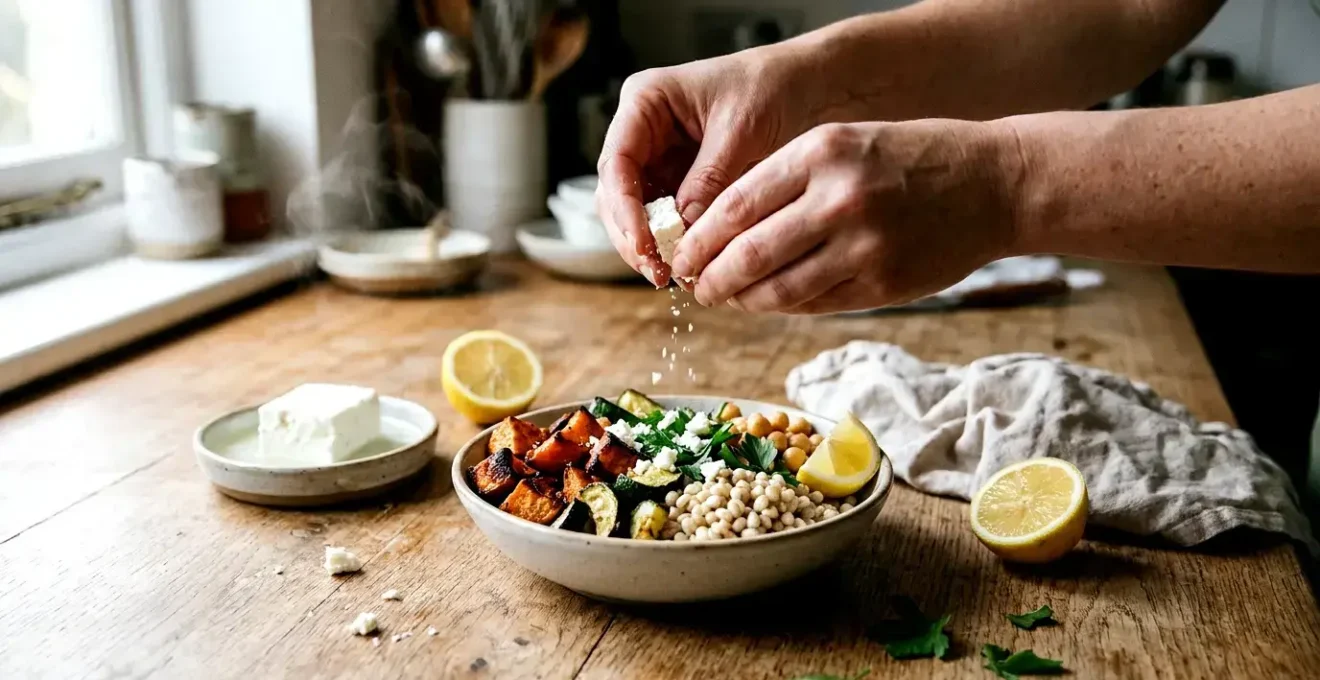
A handful of roasted vegetables, a scoop of barley and a few chickpeas can make a nourishing lunch, yet still taste surprisingly flat. A little feta often changes that. Its salty, tangy character brings definition to mild ingredients, while its soft texture adds richness without requiring a heavy sauce.
The secret is to treat feta as a concentrated flavour ingredient rather than the centre of every meal. Crumble it where it will be noticed, pair it with vegetables that offer sweetness or freshness, and adjust other salty ingredients accordingly. The amount needed depends as much on the rest of the plate as on the cheese itself.
That approach works particularly well in Mediterranean-inspired cooking, where grains, pulses, seasonal vegetables, herbs and citrus provide the substance and contrast. It also makes a block of feta more versatile: one purchase can contribute to several distinctly flavoured lunches and dinners instead of disappearing into a single salad.
How to make feta work harder in a balanced meal
- Use a modest crumble of feta to provide saltiness, acidity and creamy contrast rather than adding more cheese automatically.
- Build the meal around vegetables, wholegrains and protein-rich ingredients such as lentils or chickpeas.
- Taste before adding extra salt, keep opened feta refrigerated according to its packaging, and add crunchy toppings just before serving.
- a Small Amount of Feta Change the Flavour of an Entire Dish?
- How Can You Build a Balanced Meal Around Roasted Vegetables and Feta?
- Feta, Halloumi or Goat’s Cheese: Which Works Best in a Grain Bowl?
- Which Ingredients Should You Use Carefully When a Dish Already Contains Feta?
- How Should You Store Opened Feta So It Stays Useful for Several Meals?
- How Can You Use Smaller Portions of Meat or Cheese Without Making Meals Feel Incomplete?
- Nuts, Seeds or Crunchy Vegetables: Which Topping Best Complements a Soft Dish?
- How Can You Build a Balanced Grain Bowl That Works as a Complete Meal?
a Small Amount of Feta Change the Flavour of an Entire Dish?
A small amount of feta can transform a dish because it delivers saltiness, tanginess and creaminess together. When crumbled over moist vegetables or mixed into a dressing, its salty flavour reaches ingredients beyond the individual pieces of cheese. This makes feta particularly effective in otherwise mild salads, vegetable dishes and grain bowls.
Feta is traditionally preserved in brine, which contributes to its characteristic salt content. Research published in the Journal of Dairy Science research on feta brining demonstrates that cheese absorbs salt from its surrounding brine, with the amount absorbed influenced by processing conditions.
In a finished dish, the practical effect becomes apparent when feta meets moisture. Crumble it over warm courgettes or juicy tomatoes and some of its saltiness spreads into the surrounding juices. Stir a little into lemon dressing and the resulting mixture can season grains or vegetables more widely than a few large pieces placed on top.
There are two useful ways to think about feta:
- As seasoning: finely crumbled or lightly mashed feta contributes salt and tang throughout the dish, often reducing the need for additional seasoning.
- As a topping: larger pieces provide individual creamy, salty mouthfuls and a more noticeable contrast with crunchy or firm ingredients.
Neither approach requires covering the entire plate with cheese. Consider a bowl of pearl barley, roasted butternut squash and parsley. The barley is mild, the squash is naturally sweet and the parsley is fresh. A scattering of feta creates a satisfying contrast between those flavours without changing the proportions of the main ingredients.
That contrast is important. Feta does not make the vegetables or grains themselves richer; it changes how their flavours are experienced together. A salty bite makes a sweet vegetable seem more distinctive, while a creamy piece softens the impression of a sharp lemon dressing.
The common mistake is seasoning every component separately before adding feta. Salted cooking water, a heavily seasoned dressing and generous feta can easily combine into an overly salty result. Cook grains with restrained seasoning, taste the dressing and allow the feta to contribute part of the final saltiness.
Once feta has a clearly defined role, it becomes easier to build an entire meal around it, particularly when warm roasted vegetables provide a sweet counterpoint.
How Can You Build a Balanced Meal Around Roasted Vegetables and Feta?
Build a balanced roasted vegetable and feta meal by combining a generous serving of roasted vegetables with a substantial grain or pulse, then adding feta for flavour and a fresh finishing ingredient for contrast. Chickpeas, lentils, barley or freekeh make the plate more satisfying, while lemon and herbs prevent the combination from tasting heavy.
Roasting is particularly effective with vegetables such as carrots, peppers, aubergines, courgettes and butternut squash. Their flavours become more concentrated as moisture evaporates, while browning creates deeper savoury and sometimes sweet notes. Those flavours offer a natural counterbalance to feta’s saltiness.
A practical starting point is a tray of roasted carrots, red peppers and courgettes. Add cooked pearl barley or lentils, scatter over feta and finish with chopped parsley and lemon juice. The vegetables provide volume and variety, the grain or pulse adds substance, and the feta supplies a strong finishing flavour.
Vegetables and feta alone may not make a sufficiently substantial main meal. Although feta contributes some protein, adding lentils, chickpeas or another appropriate protein source makes the dish less dependent on cheese for nutritional substance.
This reflects the British Nutrition Foundation‘s balanced diet guidance, which encourages a variety of vegetables, fibre-rich wholegrains and protein sources such as beans, peas and lentils, alongside limiting foods high in salt.
The timing of the feta also changes the result:
- Added before roasting: a block or larger pieces soften as they heat, producing a creamier mixture that can coat nearby vegetables and juices. Some edges may colour, depending on the cooking conditions.
- Added after roasting: crumbled feta retains more of its individual texture and delivers distinct salty bites against the still-warm vegetables.
For a dish that needs only a small amount of feta, adding it after roasting often makes the cheese easier to notice. Its flavour remains concentrated in recognizable pieces rather than becoming completely incorporated into the tray juices.
Freshness should come last. Lemon zest, mint, parsley or a little finely sliced red onion can brighten the dish. Raw onion contributes a sharp, crunchy contrast, although a small quantity is usually enough alongside feta.
The same method works with other cheeses, but swapping feta for halloumi or goat’s cheese changes the function of the topping and sometimes the balance of the meal.
Feta, Halloumi or Goat’s Cheese: Which Works Best in a Grain Bowl?
Feta is usually the best choice when a grain bowl needs salty, tangy flavour distributed throughout its ingredients. Halloumi works better when the bowl needs a firm, warm cheese component, while soft goat’s cheese adds gentle creaminess. The right choice depends on what the grains, vegetables and other ingredients already provide.
These cheeses should not be treated as interchangeable toppings. Their textures influence how they combine with a bowl, how much they dominate each mouthful and how well they work in meals prepared ahead.
Consider their practical differences before choosing.
| Criterion | Feta | Halloumi | Soft goat’s cheese |
|---|---|---|---|
| Main contribution | Salty, tangy seasoning | Firm, savoury cheese element | Creamy texture and gentle tang |
| Typical preparation | Crumbled or cubed | Grilled or pan-fried | Dolloped or stirred through |
| Texture in the bowl | Crumbly, with creamy pockets | Firm, sometimes springy | Soft and spreadable |
| Best pairing | Sweet vegetables and mild grains | Fresh vegetables and substantial grains | Roasted beetroot, herbs and earthy grains |
| Meal-preparation consideration | Easy to crumble at serving time | Often more enjoyable freshly cooked and warm | Can soften into moist or warm ingredients |
Choose by the missing element, not simply by preference. If a barley bowl already contains chickpeas and roasted peppers but lacks sharpness, feta is an efficient addition. If it needs a more substantial warm cheese component, grilled halloumi may be appealing, although it should not automatically be assumed to supply all the protein required for the meal.
If the vegetables are heavily seasoned and the dressing already contains salty ingredients, a suitably mild goat’s cheese may provide creaminess without such a pronounced brined flavour. However, goat’s cheeses vary substantially in salt content, so mildness on the palate does not guarantee a lower-salt product.
This is particularly relevant when comparing feta and halloumi. A UK study examined salt declarations for 612 cheeses sold by major supermarkets in 2012. Halloumi products in that survey averaged 2.71 g of salt per 100 g, but that historical average should not be treated as the value for halloumi sold today.
612 cheeses
Number of supermarket cheese products examined in a UK survey using 2012 data. Salt levels varied substantially between cheese types and between products within the same type.
The practical lesson is to check the nutrition label rather than assuming one cheese is always less salty than another. Compare the declared salt per 100 g, then consider the quantity actually being used and the other seasonings in the bowl.
For lunches prepared in advance, feta is convenient because it can be stored separately and crumbled over the bowl when needed. Halloumi generally benefits from cooking close to serving time, while soft goat’s cheese is useful when a creamy coating is more desirable than distinct pieces.
Whichever cheese is chosen, the next important decision is what not to add: several familiar Mediterranean ingredients can compete with feta by contributing additional salt.
Which Ingredients Should You Use Carefully When a Dish Already Contains Feta?
Use olives, capers, anchovies, sun-dried tomatoes, salted nuts and salty stock cautiously when a dish already contains feta. Each can add another layer of saltiness, making a fresh vegetable meal taste unbalanced. Season the base lightly, add feta towards the end, then taste before introducing any additional salty ingredients.
A Mediterranean-inspired salad can contain excellent ingredients and still become excessively salty. Imagine combining feta with brined olives, capers, anchovies and a ready-made dressing. Each ingredient contributes flavour, but several also contribute salt, so their effects accumulate.
Salt behaves differently depending on how an ingredient is prepared. Finely chopped anchovies can dissolve into a dressing, dispersing saltiness widely. Capers release some of their salt into surrounding liquids, while brine added directly to a dressing spreads seasoning more immediately.
By contrast, a whole olive may create a concentrated salty mouthful without seasoning every surrounding ingredient equally. A piece of feta can behave similarly when left intact, whereas very fine crumbles distribute its influence more widely.
The distinction matters because dispersed salt is harder to avoid once mixed through the whole dish. Before combining several preserved ingredients, decide which one should provide the main salty accent.

A useful seasoning sequence begins with the least salty components. Combine the grains or vegetables with olive oil, herbs and a modest amount of lemon juice. Taste the mixture, then add the feta. Only after tasting again should olives, capers or other strongly salted ingredients be introduced.
For example, a tomato and chickpea salad with feta may need no capers at all. If capers are especially appealing, use them as a deliberate accent rather than adding them automatically alongside olives and salty dressing.
If the finished dish tastes too salty, acidity can help change its perceived balance. A squeeze of lemon juice or a little vinegar may make the flavours seem brighter and less heavy. However, acid does not remove sodium or reliably correct a severely oversalted dish.
For a dish that is genuinely too salty, increasing the amount of unsalted ingredients may be necessary. Adding plain chickpeas, cooked grains or vegetables distributes the existing salt across a larger quantity of food. The resulting portion is larger, but the salt concentration is reduced.
A five-step feta seasoning check
- Identify the salty ingredients before cooking. Create a short list of feta, olives, capers, stock or any other concentrated seasonings in the recipe.
- Choose the main salty accent. Mark feta or one alternative ingredient as the primary seasoning component.
- Prepare the base with restrained added salt. Taste a spoonful of the dressed grains or vegetables before introducing the cheese.
- Add feta gradually and taste again. Stop when the bowl has a clear salty contrast without losing the flavour of its vegetables.
- Finish with herbs, citrus or crunch. Check one completed mouthful for saltiness, freshness and texture before serving.
This approach also makes feta easier to use across several meals: add only what each recipe needs, then preserve the remaining cheese properly for another occasion.
How Should You Store Opened Feta So It Stays Useful for Several Meals?
Keep opened feta refrigerated in a clean, covered container and follow the storage instructions on its packaging. If the product is supplied in brine, keeping the remaining block submerged as directed can help protect its moisture and texture. Store feta whole where practical and crumble only the amount needed for each meal.
Feta’s appeal depends partly on its moist, crumbly texture. Once the packaging is opened, exposure to air can dry exposed surfaces, leaving them firmer and less pleasant in a fresh salad. Keeping the cheese covered and limiting unnecessary handling helps preserve its eating quality.
For feta sold in brine, the original liquid can be useful for maintaining moisture, provided the manufacturer’s storage instructions allow this. Transfer the block and its brine to a clean, suitable container if necessary, ensuring the cheese remains covered by the liquid and the container is properly closed.
If the original brine has been discarded, do not assume that homemade salt water automatically provides the same preservation conditions. A salt-water solution may affect the cheese’s texture and saltiness, but it is not a verified substitute for the manufacturer’s storage method or use-by instructions.
The distinction between quality and safety is important. Brine is not a guarantee that opened feta will remain safe indefinitely. The recommended period after opening varies by product, packaging and manufacturer.
Official UK government food storage and labelling guidance explains the importance of product-specific storage instructions. Such guidance does not establish a universal number of days for keeping opened feta, so the label remains the appropriate reference.
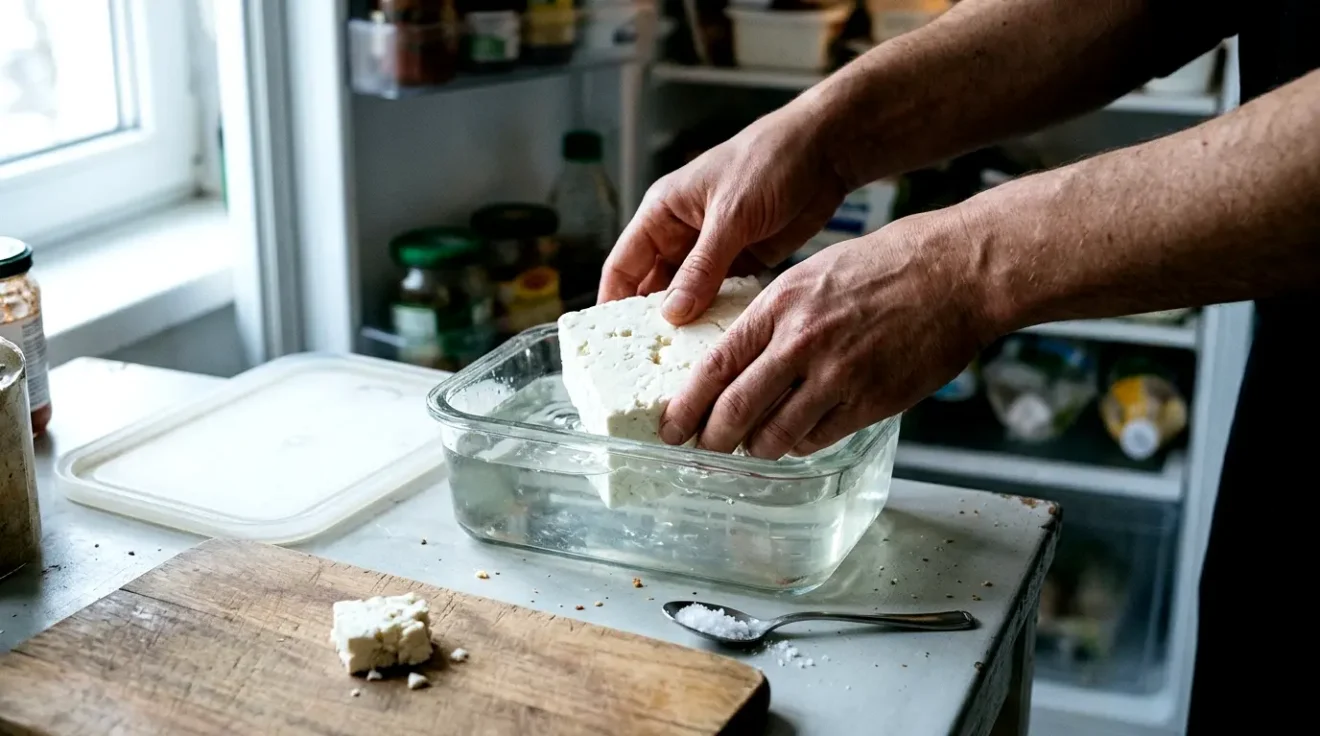
Keeping the block whole also offers a practical advantage. A freshly crumbled piece provides the texture needed for the current meal, while the remainder retains less exposed surface area than a container of pre-crumbled cheese. It is a simple way to avoid preparing more than necessary.
Inspect the cheese before using it. Feta normally has a moist appearance and a distinctly tangy, dairy-like aroma. Visible mould, unexpected discolouration, sliminess or an unusual yeasty or rotten smell are reasons to discard it. However, harmful contamination does not always create visible or detectable changes, so a normal smell cannot override the stated storage period.
Do not assume that trimming away a suspicious area makes spoiled soft cheese safe. Where deterioration or spoilage is suspected, discard the affected cheese rather than trying to rescue it.
Freezing is another option when the product and storage circumstances permit it, although thawed feta may become more watery or crumbly. That altered texture can be acceptable in cooked dishes, fillings or sauces, but it may be less attractive in a salad where creamy pieces are part of the appeal.
With the remaining feta kept for later use, the next question is how to make those smaller portions feel satisfying rather than restrictive.
How Can You Use Smaller Portions of Meat or Cheese Without Making Meals Feel Incomplete?
Smaller portions of meat or cheese can still produce satisfying meals when the plate gets its substance from vegetables, grains and pulses, and its flavour from carefully placed concentrated ingredients. A little feta scattered over the surface may be more noticeable than a larger quantity mixed invisibly through the dish, provided the meal contains adequate substance and texture.
The useful principle is strategic placement. Instead of relying on a large cheese portion to make the entire meal interesting, distribute distinct flavours where they will be encountered. Feta on top of roasted vegetables, for example, offers intermittent salty and creamy bites alongside sweeter, softer ingredients.
The rest of the plate needs its own structure. Wholegrains provide substance and texture, vegetables contribute variety and volume, and pulses or other protein sources help make the meal more substantial. These ingredients are not merely fillers: they have distinct nutritional and culinary roles.
Consider a hypothetical lunch made from pearl barley, roasted squash, chickpeas and feta. Removing some feta need not leave the bowl disappointing if lemon, parsley and toasted seeds provide brightness, aroma and crunch. The result can remain varied even though the amount of cheese is modest.
Reducing meat portions requires slightly different planning. Meat frequently serves as a major protein component, whereas feta in a vegetable bowl may primarily act as seasoning. If a meal contains less chicken, beef or another meat, the missing protein contribution may need replacing with an appropriate quantity of lentils, beans, eggs or another suitable protein source.
Meat and cheese reductions are not nutritionally identical. Replacing a large meat portion with herbs and crunchy vegetables alone would change the meal’s nutritional composition, even if it still tasted appealing. Reducing a cheese garnish while retaining a protein-rich grain-and-pulse base may have a smaller effect on the meal’s overall structure.
A sense of incompleteness can also come from texture. A bowl containing only soft grains, soft vegetables and soft cheese may feel repetitive. Something crunchy, sharp or warm creates variation without requiring another large serving of a rich ingredient.
Temperature helps, too. Warm roasted peppers paired with cool herbs, lemon and a few feta pieces offer several distinct sensations. This makes the meal more engaging than serving every component at the same temperature and texture.
Portion size remains personal and depends on nutritional needs, appetite and the other components of the meal. The objective is not to make every serving of meat or cheese as small as possible, but to avoid using a larger portion to compensate for flavour or structural gaps elsewhere.
Once the substantial components are in place, a well-chosen crunchy topping can provide the final contrast without overwhelming the feta.
Nuts, Seeds or Crunchy Vegetables: Which Topping Best Complements a Soft Dish?
Choose nuts when a soft feta dish needs richness, seeds when it needs a lighter crisp texture, and crunchy raw vegetables when freshness and volume are the priority. All three can improve a grain bowl, but the best topping depends on whether the meal already contains enough richness, saltiness and substantial ingredients.
A bowl of soft barley, roasted aubergine and crumbled feta has several appealing flavours but relatively little crispness. A finishing ingredient creates contrast, making individual components more noticeable rather than allowing their textures to merge.
Each topping has a different culinary function:
- Nuts: toasted walnuts, almonds or hazelnuts add pronounced crunch, richness and some protein and fibre. They are particularly useful alongside sweet roasted vegetables or earthy grains.
- Seeds: pumpkin, sunflower or sesame seeds offer a smaller, easily distributed crunch. Their flavour can be enhanced by light toasting or the addition of spices.
- Crunchy vegetables: cucumber, radish, celery or finely sliced red cabbage add freshness, moisture and crispness without making the dish feel richer.
If the grain bowl already contains olive oil, feta and avocado, cucumber or radish may be more useful than another rich ingredient. If the bowl consists mainly of vegetables and grains, a scattering of toasted unsalted nuts or seeds can contribute more substance as well as texture.
Salt remains an important consideration. Salted roasted nuts, feta and a heavily seasoned dressing recreate the same stacking problem encountered with olives and capers. Unsalted nuts or seeds offer greater control over the final seasoning.
For a more distinctive finish, use aromatic ingredients rather than extra salt. Lemon zest, smoked paprika, cumin or finely chopped herbs can flavour toasted seeds. These additions contribute another sensory dimension without needing to compete directly with feta’s brined character.
Timing makes a noticeable difference. Nuts and seeds can lose crispness when left in a moist dressing, while raw vegetables may soften after prolonged contact with salt and acid. For meals prepared in advance, keep the topping separate and add it immediately before eating.
The topping should also match the scale of the dish. A fine scattering of seeds is often enough for a soft grain bowl, whereas large roasted vegetables may benefit from roughly chopped nuts or substantial crunchy vegetable pieces. The objective is a pleasant contrast in successive mouthfuls, not a thick layer that hides the ingredients underneath.
With flavour, substance and texture accounted for, these decisions can be combined into a repeatable method for building a complete grain bowl.
Key takeaways for building your next bowl
- Give each ingredient a clear job: grains and pulses provide substance, vegetables provide variety, and feta provides a concentrated flavour accent.
- Check the meal’s protein sources and overall composition before deciding that a cheese topping makes it nutritionally complete.
- Prepare sturdy components ahead, but keep feta, fresh herbs and crunchy toppings separate until the bowl is ready to eat.
How Can You Build a Balanced Grain Bowl That Works as a Complete Meal?
A balanced grain bowl combines a substantial grain or pulse base, plenty of vegetables, an appropriate protein source and a finishing layer of flavour and texture. Feta can provide saltiness and creaminess, but it should complement rather than replace the meal’s other components. Fresh herbs, acidity and crunch complete the combination.
Start with a grain or pulse that gives the bowl substance. Pearl barley, brown rice, bulgur wheat and freekeh each provide a different texture, while chickpeas and lentils can contribute protein and fibre. Combining grains with pulses is particularly useful when the bowl has no separate meat, fish, egg or other protein component.
Next, choose vegetables with contrasting characteristics. Roasted butternut squash or carrots bring sweetness; peppers and courgettes provide familiar Mediterranean flavours; cucumber, leaves or radish add a fresher element.
Feta then acts as the concentrated flavour component. Rather than treating it as the main source of nourishment, use it to give the vegetables and grains a distinctive salty, tangy finish. The amount should reflect the cheese’s strength, the dish’s existing salt content and individual dietary needs.
Finally, complete the bowl with lemon, herbs or a crunchy element. A well-balanced combination does not need every possible topping. It needs ingredients that contribute something the others do not.
A practical four-part template is:
- Substantial base: cooked wholegrains, pulses or a combination of both.
- Generous vegetable element: roasted, raw or lightly cooked vegetables, ideally with contrasting flavours and textures.
- Concentrated flavour: a modest scattering of feta, with the other seasoning adjusted accordingly.
- Fresh finishing layer: herbs, citrus, unsalted toasted seeds or crunchy vegetables.
For example, a hypothetical bowl could combine pearl barley and chickpeas with roasted peppers and courgettes, followed by crumbled feta, parsley, lemon juice and toasted pumpkin seeds. The ingredients provide different forms of substance, flavour and texture without depending on a large cheese serving.
The exact quantities should reflect appetite, activity, dietary preferences and the other meals eaten throughout the day. A complete meal is not defined by the number of ingredients or by the presence of feta alone. It should make a meaningful contribution to protein, fibre and overall nutritional needs while remaining enjoyable to eat.
Meal preparation can make this approach practical during a busy week. Cook a batch of grains and pulses, roast vegetables and refrigerate them promptly in suitable containers. Follow appropriate food storage guidance for each cooked ingredient rather than assuming everything prepared together has the same safe storage period.
Keep feta in its recommended storage conditions and leave fresh garnishes separate. When serving, combine the base and vegetables, add the cheese, then finish with lemon, herbs and crunch. This preserves contrasting textures and allows the final saltiness to be assessed rather than fixed several days in advance.
For the next lunch or dinner, start with the vegetables and grains already available, add a suitable protein source, then crumble over just enough feta to make their flavours stand out. Finish with one fresh or crunchy ingredient, taste and adjust only what the bowl genuinely needs.
Should feta be rinsed before adding it to a salad?
Rinsing can remove some surface brine and may soften the immediate salty impression, but it does not remove all the salt absorbed into the cheese. For most salads, draining feta and using a smaller amount is a more straightforward way to control flavour. If rinsed, use clean water and handle the cheese hygienically.
Can feta replace salad dressing entirely?
Feta can provide saltiness, acidity and creaminess, especially when mashed into vegetable juices or combined with lemon. However, it does not always distribute evenly enough to replace a dressing. A little olive oil or citrus juice may still help coat the ingredients without requiring additional salt.
Is reduced-fat feta automatically a better choice for a balanced meal?
Not necessarily. Reduced-fat feta may suit someone wishing to moderate fat intake, but its salt content, texture and flavour can differ from standard feta. Compare the nutrition labels and consider the serving size and the rest of the meal rather than judging the cheese by fat content alone.
Can feta be used in warm meals without completely melting?
Yes. Feta generally softens with heat rather than melting into a smooth, stretchy cheese sauce. Larger pieces can become creamy while retaining some structure, whereas fine crumbles blend more readily into warm vegetables and their juices. Adding feta after cooking preserves a more distinct crumbly texture.
What can you use instead of feta when a meal is already too salty?
Try plain yoghurt, a suitable lower-salt soft cheese or a topping of fresh herbs, lemon zest and unsalted seeds. These alternatives contribute creaminess, aroma or texture without necessarily reproducing feta’s concentrated saltiness. Check packaged cheese labels, since salt levels vary substantially between products.