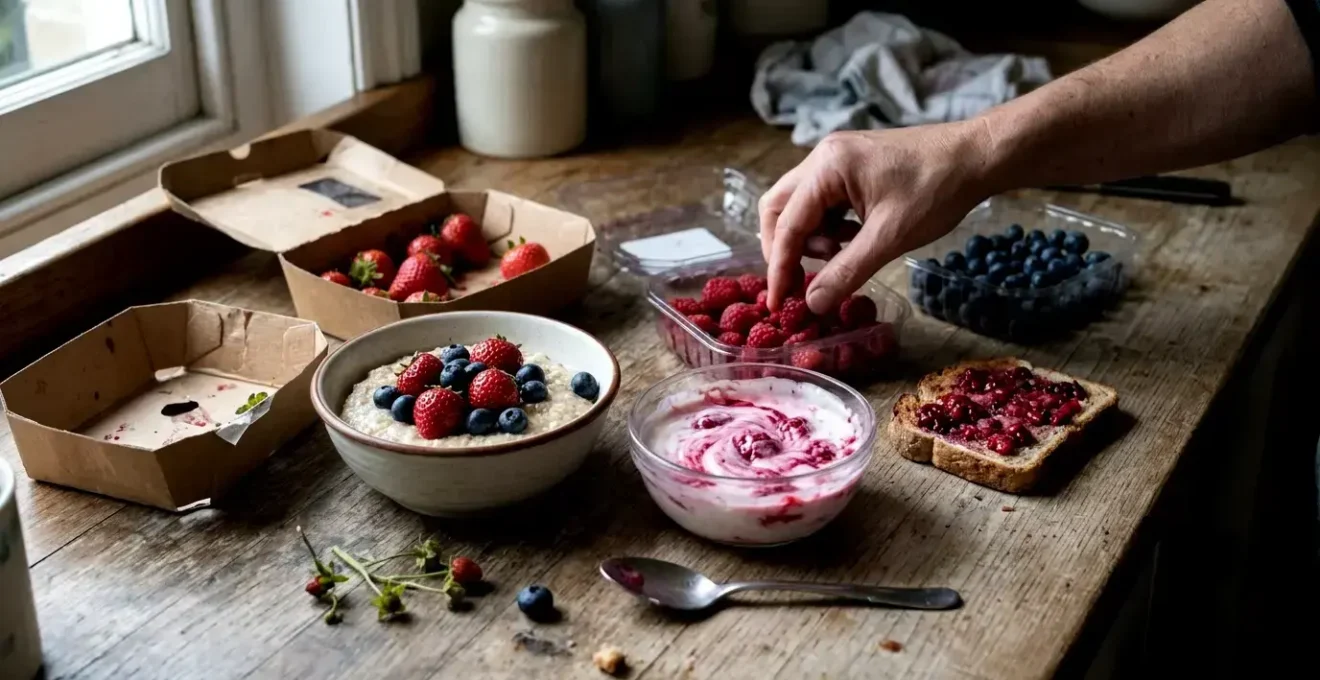
A bowl of plain porridge can become a completely different breakfast with a handful of raspberries. Add blueberries instead, and the same oats offer little bursts of sweetness. Slice in some strawberries, and the bowl feels more substantial, colourful and summery.
Fresh berries are particularly useful for making everyday breakfasts and snacks more interesting because they need very little preparation. They can brighten yoghurt, soften the crunch of granola, lift a slice of toast or provide a refreshing afternoon snack without turning a simple meal into a cooking project.
The trick is to use each berry where its flavour and texture work best, rather than buying a punnet and hoping to finish it before the fruit deteriorates. A little planning helps English shoppers enjoy seasonal fruit, manage supermarket quantities and avoid wasting berries that soften unexpectedly.
From choosing between strawberries, raspberries and blueberries to freezing the surplus, these small decisions make it easier to enjoy more fruit variety throughout the week.
Fresh berries at a glance
- Match the berry to the dish: strawberries add sweetness and volume, raspberries bring sharpness, and blueberries are convenient for scattering or packing.
- Sort each punnet after shopping, use the most delicate fruit first and freeze surplus berries while they are still in good condition.
- Use mashed or gently warmed berries to add fruit sweetness, colour and juiciness to unsweetened porridge and yoghurt.
- Why Do Fresh Berries Work So Well in Quick Breakfasts?
- How Can You Use Fresh Berries in Three Different Meals Before They Go Soft?
- Strawberries, Blueberries or Raspberries: Which Berry Fits Your Dish Best?
- Which Storage Mistakes Make Fresh Berries Mouldy Too Quickly?
- When Should You Freeze Fresh Berries Instead of Waiting to Use Them?
- Spring Greens, Summer Berries or Autumn Squash: When Is Each at Its Best?
- How Can You Add Natural Sweetness to Porridge or Yoghurt Without Extra Sugar?
- How Can Natural Sweetness Make Breakfasts and Snacks More Enjoyable?
Why Do Fresh Berries Work So Well in Quick Breakfasts?
Fresh berries work well in quick breakfasts because they add strong flavour, bright colour and natural juiciness with almost no preparation. Once washed and checked, blueberries and raspberries can go straight into a bowl, while strawberries usually need only their green tops removed. Their combination of sweetness and acidity makes familiar breakfast foods more appealing without additional cooking.
Most busy mornings leave little room for peeling, chopping or preparing elaborate toppings. Berries avoid much of that effort. A handful of blueberries can be scattered over cereal in seconds, while raspberries can be folded into yoghurt with a spoon. Strawberries are slightly more demanding but can be sliced directly over toast or porridge.
Their biggest advantage is sensory rather than miraculous nutritional properties. Berries bring contrast to foods that are otherwise mild, creamy or dry. Their juices can soften granola, their acidity offsets rich yoghurt, and their colour makes an ordinary bowl feel more inviting.
The NHS porridge with yoghurt and berries recipe illustrates how easily berries fit into an everyday breakfast. Its four-serving recipe includes 100 g of defrosted summer berries or forest fruits alongside oats and natural yoghurt. The NHS lists five minutes of preparation and ten minutes of cooking for the complete dish.
A useful pairing principle is to start with a neutral base. Plain porridge, natural yoghurt, pancakes and lightly buttered toast leave room for berry flavours to stand out. A heavily flavoured cereal or an already very sharp topping may offer less contrast, particularly when paired with tart raspberries.
Choose berries for what the breakfast lacks. Dry cereal benefits from juiciness, creamy yoghurt from acidity, and pale porridge from colour and texture.
Once that combination becomes familiar, the next challenge is making sure the remaining fruit gets eaten while it still tastes good.
How Can You Use Fresh Berries in Three Different Meals Before They Go Soft?
Use fresh berries across three eating occasions by sorting them as soon as you get home, eating the softest sound fruit first and saving firmer berries for later. A simple sequence is berries with breakfast, a handful as an afternoon snack, and the remaining ripe fruit mashed into yoghurt or spread over toast. Adjust the order if the fruit softens sooner than expected.
Supermarket punnets can contain berries at different stages of ripeness. The fruit at the bottom may already be softer than the berries on top, particularly after transport. Before putting the punnet away, check its contents and separate any damaged or visibly mouldy fruit from the rest.
Imagine buying a mixed selection of strawberries, raspberries and blueberries for use over the next few days. The following is an illustrative plan, not a guaranteed storage timetable.
- Breakfast: Add the softest sound raspberries and a few sliced strawberries to warm porridge. Their juices mingle with the oats, so slightly soft but still wholesome fruit can be particularly enjoyable.
- Afternoon snack: Keep a handful of firm blueberries or strawberries for eating separately. Their shape and texture make them convenient when there is no time to prepare another dish.
- Later breakfast or dessert: Mash the remaining ripe strawberries onto toast or stir sound, softening raspberries into natural yoghurt. This makes good use of fruit that is losing firmness but has not spoiled.
These are three distinct uses from the same purchase: a warming breakfast, a ready-to-eat snack and a fruit topping. The order matters more than the exact day. Delicate raspberries may need attention earlier, while firm blueberries can often be reserved for a later occasion.
If several berries become soft at once, stop following the original plan mechanically. Use the sound fruit in a cooked topping, or freeze what cannot be eaten promptly. Do not attempt to rescue mouldy berries by mashing, cooking or freezing them.
Think of the punnet as a small ingredient supply rather than a container that must be emptied at one sitting. Planning three uses before storing it gives every purchase a purpose and makes variety almost automatic.
The easiest way to make that plan work is to understand which berries are naturally suited to each dish and which need using most urgently.
Strawberries, Blueberries or Raspberries: Which Berry Fits Your Dish Best?
Choose strawberries when a dish needs sweetness, larger pieces and a more substantial fruit topping; raspberries when it needs a sharp contrast to creamy or rich ingredients; and blueberries when convenience matters most. Their different textures also influence storage and packing: raspberries are delicate, cut strawberries release juice, and firm blueberries generally withstand handling better.
Rather than buying the same berry out of habit, consider the flavour and texture already present in the food. A thick bowl of Greek-style yoghurt may benefit from the bright acidity of raspberries, while mild oats can accommodate sweeter strawberries or blueberries.
The following comparison offers a practical starting point rather than a fixed rule. Ripeness and individual varieties affect both sweetness and texture.
| Berry | Eating qualities | Best uses | Handling consideration |
|---|---|---|---|
| Strawberries | Sweet, juicy and substantial when ripe | Sliced over pancakes, toast and porridge | Cut surfaces release juice, so slice shortly before serving |
| Raspberries | Soft, fragrant and often noticeably tart | Mashed into yoghurt or paired with creamy foods | Very delicate; inspect and use promptly |
| Blueberries | Small, juicy and convenient to eat whole | Granola, cereal, snack pots and lunchboxes | Usually tolerate handling better when firm and undamaged |
For a breakfast eaten immediately, texture can be a pleasure rather than a constraint. A sliced strawberry releases juice onto warm pancakes, and a soft raspberry breaks apart easily when stirred through yoghurt.
Packed snacks need a different approach. Choose firm, undamaged berries, transport them in a clean, suitable container and keep them appropriately chilled. Blueberries are especially convenient because they do not need slicing. Strawberries can also work well when kept whole until eating.
Availability and value change with the season. English supermarkets may carry imported berries outside the British growing season, but an attractive-looking punnet is not necessarily the best-value option. Compare the shelf price per weight, check the condition of the fruit and consider whether the whole quantity will actually be used.
During periods when fresh berries are expensive, frozen berries are a useful alternative for cooking or mixing into breakfast. They will not offer the same fresh bite after thawing, but they can provide flavour without requiring a delicate punnet to be used immediately.
Even a well-chosen punnet needs careful handling at home, particularly when some berries are already ripe.
Which Storage Mistakes Make Fresh Berries Mouldy Too Quickly?
Fresh berries deteriorate more quickly when they remain wet, become crushed, sit beside already spoiled fruit or are kept in unsuitable storage conditions. Excess moisture encourages spoilage, while damaged skins expose delicate flesh. Inspecting the punnet, removing compromised fruit and refrigerating the remaining berries promptly can help preserve their quality without complicated equipment.
One common mistake is washing the whole punnet and returning the berries to the fridge while they are still damp. Water trapped between tightly packed berries creates persistently moist conditions. For ordinary short-term storage, it is simpler to keep berries unwashed and rinse them under running water just before use. If berries have already been washed, drain and dry them gently before storing.
Another mistake is leaving crushed or visibly mouldy fruit among sound berries. A damaged berry can leak juice onto its neighbours, and mould may spread through close contact. Check the bottom of the punnet as well as the top, and discard visibly mouldy berries. If nearby fruit shows signs of contamination, discard that too.
Airflow matters as well. Avoid trapping wet berries in an airtight, moisture-laden container. Use clean, suitable packaging that protects the fruit from crushing while allowing excess moisture to escape. Do not pile heavy fruit onto delicate raspberries.
Fridge position also makes a difference. Keeping berries in a stable, cold location is preferable to exposing them repeatedly to warmer air near the door. The Food Standards Agency guidance on chilling and freezing food, published in December 2017, recommends maintaining refrigerators between 0°C and 5°C.
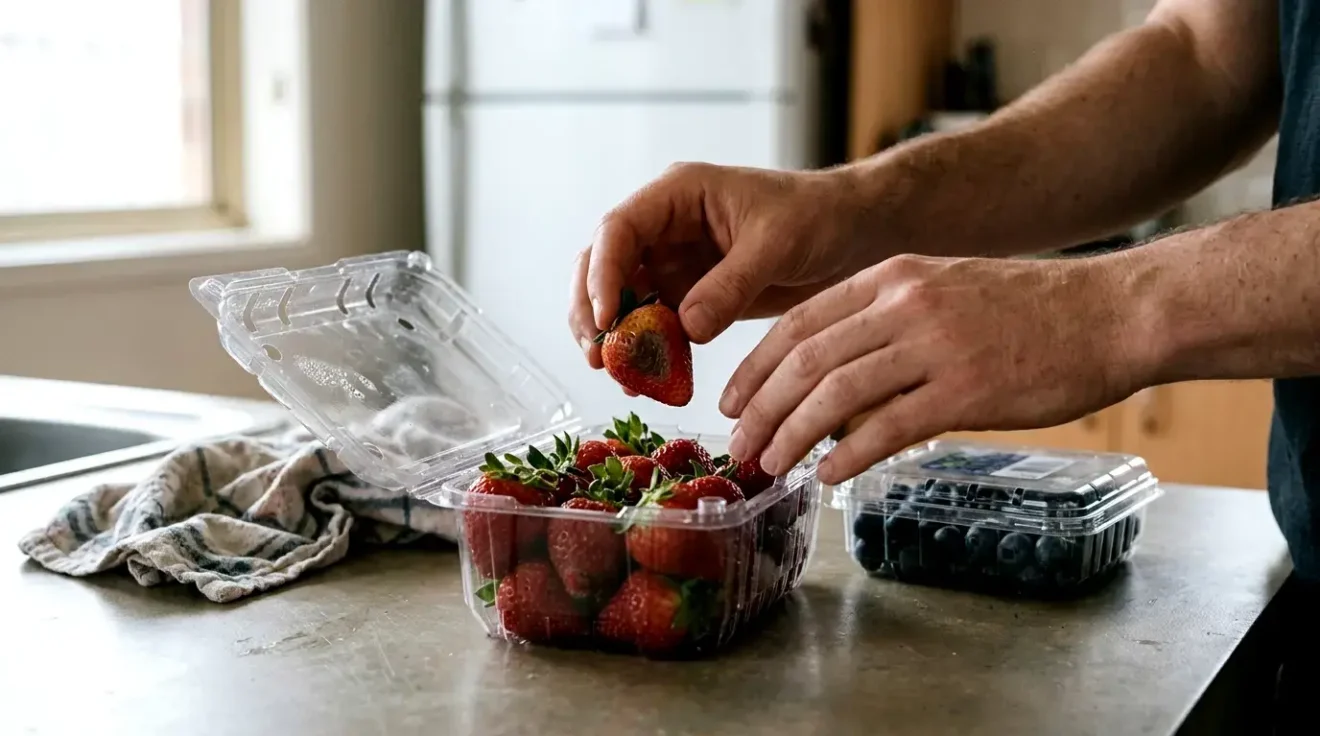
Early warning signs include wet or leaking patches, collapsed flesh, discolouration and an unusual musty smell. A dull surface alone is not proof that fruit is unsafe, but a berry that is slimy, visibly mouldy or smells spoiled should not be eaten. Always assess the fruit itself, not simply the date on the packaging.
Five checks to make after buying berries
- Open the punnet and inspect the top and bottom; identify any damaged, leaking or visibly mouldy berries.
- Remove spoiled fruit and check neighbouring berries; leave a container holding only sound fruit.
- Keep the remaining berries unwashed until use, or dry them gently if already rinsed; check that no water is pooling underneath.
- Arrange delicate berries without heavy stacking in clean, suitable packaging; check that they are not being crushed.
- Place the fruit in a stable, cold area of the fridge and identify which berries to eat first; finish with a simple use-first plan.
Good storage buys useful time, but it cannot stop ripening indefinitely. When the amount of fruit exceeds what can realistically be eaten, freezing becomes the more practical option.
When Should You Freeze Fresh Berries Instead of Waiting to Use Them?
Freeze fresh berries when they are ripening faster than you can eat them, when a larger punnet is unlikely to be finished or when you will be away from home. Freezing is most useful while the fruit is still in good condition. It preserves berries for later cooking, although thawed fruit generally becomes softer and less suitable for crisp, fresh snacks.
A ripe strawberry that tastes excellent today may be too soft for a lunchbox later in the week. Freezing it now makes more sense than waiting until it becomes damaged or spoiled. The same principle applies to raspberries, which can lose their structure quickly, and blueberries bought in larger quantities.
The first decision is whether you want the fruit for fresh eating or for a recipe. Reserve enough attractive, firm berries for immediate snacks. Put the surplus aside for freezing before their quality declines.
For easy portioning, prepare the berries using this straightforward kitchen method:
- Inspect the berries and discard any that are spoiled. Rinse the sound fruit and dry it thoroughly.
- Remove strawberry tops and halve larger strawberries if desired. Leave blueberries and raspberries whole where practical.
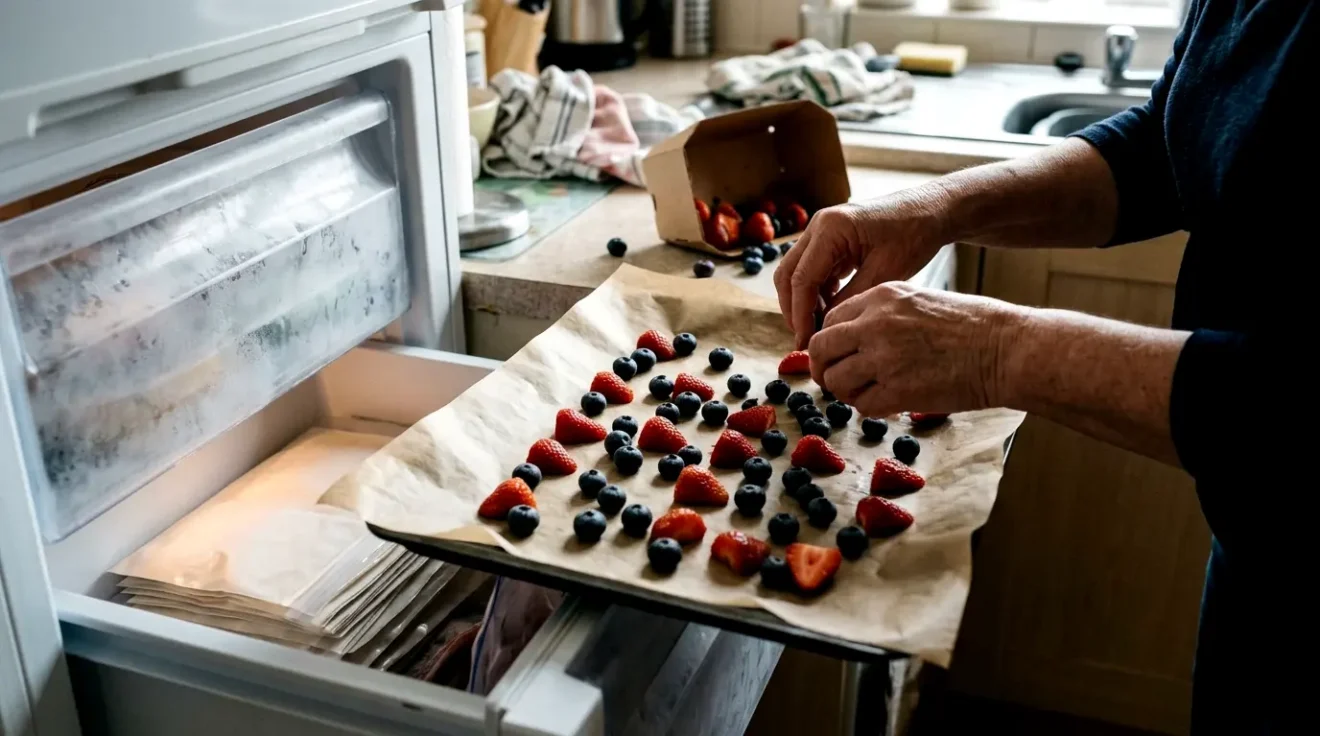
- Spread the berries in a single layer on a lined tray, leaving space so they do not freeze into one large mass.
- Once frozen, transfer them into suitable freezer bags or containers, remove excess air where practical and label them with the contents and freezing date.
- Return them promptly to the freezer and take out only the amount needed for the intended recipe.
Freezing individual berries before bagging is a practical way to make small portions easier to remove. It is a kitchen technique rather than a requirement established by the Food Standards Agency’s general freezing guidance.
UK food safety guidance recommends a freezer temperature of around -18 °C. The Food Standards Agency also advises suitable packaging and clear labelling. Its general guide gives three to four months as an indicative period for maintaining the best quality of frozen fruit and vegetables, rather than a berry-specific safety expiry date.
Frozen berries are particularly useful in hot porridge, baking and cooked fruit toppings. They may also be used in yoghurt or other cold dishes after appropriate preparation, although they will usually release more juice than fresh fruit. Follow applicable food safety instructions for frozen berries, including any cooking directions on the packaging, before using them in uncooked dishes.
Freezing is a trade-off between fresh texture and future convenience. It will not restore fruit that has already spoiled, but it can help prevent good berries from reaching that stage.
This approach becomes even more useful when combined with the British growing calendar, which influences the fresh berries available throughout the year.
Spring Greens, Summer Berries or Autumn Squash: When Is Each at Its Best?
Spring greens, summer berries and autumn squash each offer a different way to vary everyday meals as the British seasons change. For fresh berry breakfasts, summer is the most relevant period: British strawberries and raspberries feature prominently in the warmer months, while blueberries also appear in the seasonal calendar. Outside those periods, frozen berries and other seasonal produce offer practical alternatives.
Seasonality provides a useful shopping guide, especially when choosing between fresh and frozen fruit. It does not mean that a particular berry is unavailable outside its traditional British season. English supermarkets frequently sell imported produce, and availability varies between retailers and regions.
According to the British Dietetic Association seasonal fruit and vegetable calendar, strawberries appear from May to September, raspberries from June to September, and blueberries in July. These are calendar indications, not guarantees of availability in every shop.
| Period | Produce focus | Practical meal idea |
|---|---|---|
| Spring | Spring greens and emerging seasonal produce | Use greens in savoury breakfasts while exploring available seasonal fruit |
| Summer | Strawberries, raspberries and other summer berries | Add generous fresh berry toppings to porridge, yoghurt and toast |
| Autumn | Squash and other autumn produce | Try roasted squash in savoury breakfast dishes and rotate fruit choices |
| Winter | Stored, imported and frozen produce | Use appropriately prepared frozen berries in warm breakfasts and choose other available seasonal fruits |
Summer is a good time to compare locally grown berry punnets, particularly when several varieties are available. Seasonal abundance may create attractive offers, but lower prices are not guaranteed. Check the price per weight, the fruit’s condition and whether you can use or freeze the quantity purchased.
In colder months, there is no need to insist on fresh berries for every breakfast. Frozen fruit can keep berry flavours available for cooked dishes, while other fruits provide a different combination of sweetness, acidity and texture.
Seasonal variety is also about moving beyond berries. Spring greens and autumn squash are not substitutes for a sweet strawberry topping, but they can inspire different savoury meals. Alongside changing fruit choices, they prevent a weekly food routine from becoming repetitive.
Whatever the season, berries remain especially helpful when a plain breakfast needs sweetness without automatically reaching for a spoonful of sugar.
How Can You Add Natural Sweetness to Porridge or Yoghurt Without Extra Sugar?
Add natural sweetness to porridge or yoghurt by using ripe whole berries, lightly mashing them or gently heating them until their juices spread through the dish. Strawberries and blueberries can contribute sweetness, while raspberries bring a sharper flavour. These techniques distribute the fruit’s natural taste without requiring added sugar, although the result depends on the berries and the base food.
Consider a bowl of unsweetened porridge. Fresh berries placed on top offer separate mouthfuls of fruit and oats. Add some berries during cooking instead, and they soften, release juice and distribute their flavour more evenly.
Neither method is universally better. Cooking creates a more blended breakfast, while adding berries at the end retains more contrast between the fruit and the oats.
For natural yoghurt, try mashing a few ripe strawberries with a fork before stirring them in. The released juice spreads colour and fruit flavour throughout the bowl. Allowing the mixture to stand briefly can help the fruit and yoghurt combine, although it also softens the berries.
Combining different berries offers another possibility. Naturally sweeter ripe strawberries can balance the tartness of raspberries, while blueberries add small bursts of juice. The balance depends on ripeness, so taste the fruit before deciding how much to use.
There is also an important distinction between sugars naturally present in whole fruit and sugars deliberately added to food. The NHS explains that sugars naturally present within whole fruit are not classed as free sugars, whereas honey and syrups contribute free sugars. The same distinction should not automatically be applied to fruit juice, smoothies or purées, which are treated differently in its guidance.
This does not mean that berries are sugar-free or that they always replace added sweeteners successfully. A very sour yoghurt, underripe raspberries or unusually bitter ingredients may remain sharp even after fruit is added.
In those cases, try a sweeter ripe berry or add sliced banana. If a little honey is still wanted, use it deliberately rather than treating fruit sweetness as an exact substitute. Honey counts as an added source of free sugars.
Start by changing how the fruit is prepared. A mashed strawberry distributed throughout yoghurt can have a different effect from the same strawberry served whole on top.
The greater benefit is not simply removing an ingredient. It is learning how fruit changes the enjoyment of a familiar meal.
Key takeaways for everyday berry variety
- Choose berries according to the flavour and texture your breakfast needs, rather than using the same topping every day.
- Make storage and freezing decisions when the fruit is still in good condition, so more of the purchase remains useful.
- Let fruit provide sweetness, colour and contrast, while recognising that different dishes and personal tastes need different combinations.
How Can Natural Sweetness Make Breakfasts and Snacks More Enjoyable?
Natural sweetness from berries makes simple breakfasts and snacks more enjoyable by adding fruit flavour, aroma, colour and contrast to familiar ingredients. A plain bowl of oats can taste different with strawberries, raspberries or blueberries, even when the base recipe stays unchanged. Rotating fruit varieties makes everyday meals feel less repetitive without requiring elaborate preparation or automatically adding sugar.
Enjoyment matters because convenient meals need to be appealing enough to repeat. A breakfast that feels dull may encourage constant changes of recipe or extra toppings. Fruit offers another option: keep the simple base and vary the ingredients that provide flavour.
For example, natural yoghurt can become several noticeably different snacks across a week. Whole blueberries provide little juicy bites, mashed raspberries create a sharper pink mixture, and sliced ripe strawberries offer larger pieces of sweetness. None of these requires a completely different shopping list or cooking technique.
The same approach works with porridge. Add strawberries after cooking for fresh texture, stir raspberries through warm oats for a more blended result, or use suitably prepared frozen blueberries when fresh fruit is less convenient.
Sweetness is only part of the appeal. Raspberry acidity can make a rich yoghurt taste fresher. Strawberry aroma can lift a mild bowl of oats. The contrast between pale porridge and colourful fruit makes the ingredients visually distinct, while varying textures creates interest from one mouthful to the next.
There is no need to present every berry as equally sweet or suitable for every dish. Preferences differ, and the flavour of a berry depends on its variety and ripeness. A combination that works beautifully with creamy yoghurt might be less satisfying alongside a sharp, heavily flavoured cereal.
The most useful routine brings together the practical decisions covered throughout the article: buy berries that suit the meals you enjoy, check their condition, plan which to eat first, refrigerate them carefully and freeze sound surplus fruit. Use fresh berries where texture matters and frozen berries where softness is welcome.
Next time you buy a punnet, choose one breakfast, one snack and one topping for it before putting it away. That small plan is an easy starting point for making seasonal berries a regular source of flavour and variety.
Can you mix different fresh berries in one breakfast?
Yes. Mixing ripe strawberries, raspberries and blueberries can create a balance of sweetness, sharpness and texture. Try smaller amounts of tart raspberries alongside sweeter fruit, then adjust the proportions to your taste. Wash and check the berries before using them.
Should strawberries be sliced before storing them in the fridge?
For everyday storage, keeping sound strawberries whole until shortly before use generally helps maintain their shape and reduces exposed cut surfaces. Sliced strawberries release juice and soften more readily. Keep prepared fruit appropriately chilled and use it promptly.
Can frozen berries go straight into breakfast?
Frozen berries can be useful in cooked porridge and other heated recipes. For yoghurt, smoothies or dishes eaten without cooking, check the packaging and follow applicable food safety guidance, including any instruction to cook the berries before consumption. Freezing does not itself eliminate every potential food safety risk.
Is a soft berry still suitable for eating?
A berry that has merely softened through ripening may still be usable if it has been stored properly and shows no signs of spoilage. Check for mould, slime, leaking decay or an unusual smell. Discard spoiled fruit rather than trying to disguise its condition in a cooked dish.
How can you make berry breakfasts more affordable?
Compare the price per weight of different punnets, buy quantities you can realistically finish and consider frozen berries for cooked breakfasts when fresh options are expensive. Seasonal British berries may offer attractive choices during summer, but prices vary. Freezing sound surplus fruit can also help avoid wasting a larger purchase.