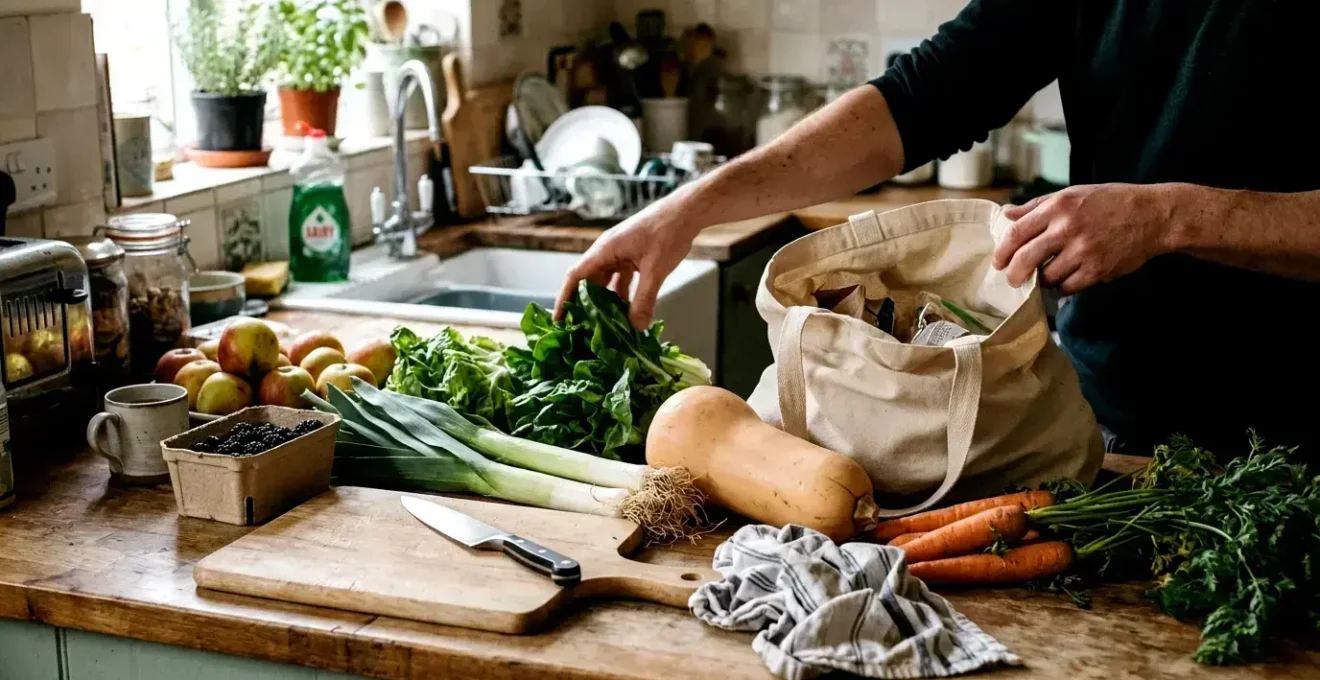
Another Monday, another familiar shopping list: carrots, broccoli, potatoes and the same handful of meals. British seasonal fruit and vegetables offer a straightforward way to make everyday cooking more interesting without buying specialist ingredients or spending longer in the kitchen.
The principle is simple. Choose produce that is naturally harvested in Britain at the time of year, then use it in dishes already familiar to your household. Spring greens can replace cabbage in a stir-fry, summer berries can brighten breakfast, and autumn squash can become a traybake, soup or curry.
Seasonal shopping is not an obligation to buy everything locally or abandon frozen vegetables. It is a flexible way to introduce variety, make use of changing availability and potentially find better value. The most practical approach also accounts for storage, household appetite and how quickly fresh ingredients need using.
With a small amount of planning, one seasonal purchase can contribute to several different meals rather than becoming another forgotten item in the vegetable drawer.
Seasonal British cooking at a glance
- Choose one seasonal fruit or vegetable each week and substitute it into meals you already cook.
- Match purchases to realistic meal plans, storage space and freshness rather than buying simply because produce is abundant.
- Use different cooking methods, sensible freezing and occasional farmers’ market visits to increase variety without unnecessary expense.
- Why Can Eating With the Seasons Make Weekly Cooking Feel Less Repetitive?
- How Can You Turn One Seasonal Vegetable Into Three Different Weeknight Meals?
- Spring Greens, Summer Berries or Autumn Squash: When Is Each at Its Best?
- Which Seasonal-Shopping Mistakes Lead to Fruit and Vegetables Being Thrown Away?
- When Should You Freeze Seasonal Produce Instead of Trying to Use It Fresh?
- Why Can a Farmers’ Market Offer More Seasonal Variety Than Your Usual Food Shop?
- How Can You Use Fresh Berries in Three Different Meals Before They Go Soft?
- How Can You Shop at Local Farmers’ Markets Without Overspending or Wasting Food?
Why Can Eating With the Seasons Make Weekly Cooking Feel Less Repetitive?
Eating with the seasons makes weekly cooking less repetitive because the ingredients available from British growers change throughout the year. Instead of choosing the same vegetables automatically, households can rotate spring greens, summer courgettes, autumn squash and winter roots through familiar recipes. The variety comes from changing ingredients, not learning a completely new way to cook.
Many households repeat meals because those dishes are quick, affordable and reliable. The problem is rarely a lack of recipes. It is that the same few vegetables appear in every shopping basket, giving otherwise different dishes similar flavours and textures.
Seasonal produce creates a natural prompt to change that pattern. Tender greens work particularly well in lighter spring meals. Summer tomatoes and courgettes suit salads and quick pan cooking. Autumn squash introduces sweetness and a softer texture to roasted dinners, while winter cabbage and root vegetables provide substance for soups and stews.
Freshness can make these substitutions more appealing. Produce harvested at a suitable stage and handled well may offer particularly enjoyable flavour and texture, although freshness also depends on transport, storage and how long an item has been on display. British-grown does not automatically mean fresher than every imported alternative.
A useful starting point is the one seasonal anchor method. Choose one vegetable each week and use it instead of an ingredient that has become overly familiar. Replace green beans with spring greens, for example, or use squash instead of carrots in a roasting tray. Keep the rest of the recipe unchanged.
This approach fits broader nutrition advice without making seasonal eating unnecessarily restrictive. The fruit and vegetable advice from MyHealth London recommends variety and at least five 80 g portions of fruit and vegetables daily. It also recognises that fresh, frozen, dried and canned options can contribute, subject to the relevant portion guidance.
Seasonal choices can support that variety, but the nutritional goal does not depend on buying exclusively fresh or locally grown produce.
Once an ingredient has become part of the routine, the next opportunity is to prepare it in several ways so that buying more of it does not mean eating identical meals.
How Can You Turn One Seasonal Vegetable Into Three Different Weeknight Meals?
One seasonal vegetable can become three different weeknight meals by dividing it between contrasting cooking methods. A red cabbage, for example, can be shredded for slaw, roasted in wedges and simmered into a warm vegetable dish. Preparing these portions together saves repeated chopping while producing different textures, flavours and meal combinations.
Start with a versatile vegetable that works both raw and cooked, or across several cooked preparations. Carrots, cabbage, beetroot and many squashes are useful choices. Delicate lettuce and fresh peas are less suitable for exactly the same approach because they have fewer practical cooking and storage options.
Consider a whole red cabbage bought when it is plentiful and reasonably priced. Rather than cooking the entire cabbage as one side dish, divide it into three portions before preparing dinner.
- Meal one — crunchy cabbage slaw: finely shred one portion and dress it with grated apple, a little yoghurt or vinegar, and seasoning. Serve with jacket potatoes, sandwiches or a simple bean-based lunch.
- Meal two — roasted cabbage wedges: cut another portion into wedges, brush lightly with oil and roast until tender with browned edges. Pair with sausages, lentils or a Sunday roast.
- Meal three — gently cooked cabbage: slice the remainder and simmer it with onions, stock and suitable seasonings. Add it to a vegetable soup, lentil stew or warming midweek curry.
The three meals share an ingredient but not a cooking experience. Raw cabbage is crisp and refreshing, roasted cabbage develops deeper savoury notes, and simmered cabbage becomes soft enough to blend into a comforting main dish.
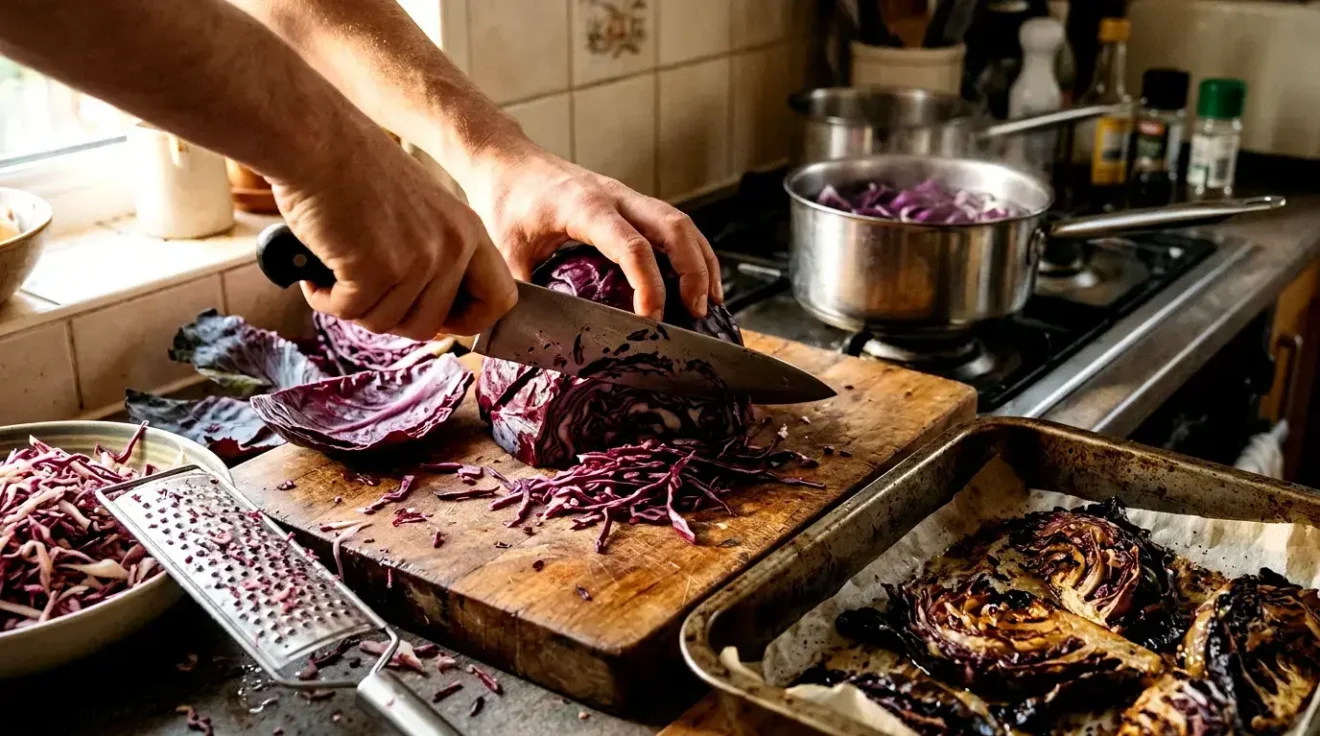
The time-saving element is shared preparation, not necessarily cooking every portion in advance. Shred the raw portion and prepare the wedges together, then cook or refrigerate each component according to when it will be eaten. Keep raw and cooked foods separate and follow appropriate refrigeration and storage practices.
Quantity still matters. A large vegetable is only economical when the household can use the portions before they deteriorate. Smaller households may prefer one cabbage across two meals, reserving the three-meal method for weeks when suitable leftovers can be stored or frozen.
Choosing the right vegetable becomes easier when the shopping list follows the British growing calendar and the kinds of meals typically cooked at different times of year.
Spring Greens, Summer Berries or Autumn Squash: When Is Each at Its Best?
British seasonal produce is most useful when chosen for the meal you intend to make. Spring greens and asparagus suit quick cooking, summer berries and tomatoes work well in fresh dishes, autumn squash and apples are versatile for roasting and baking, and winter roots and brassicas suit hearty meals. Exact availability varies with weather, region, growing methods and variety.
A seasonal calendar is therefore more useful as a flexible cooking guide than as a rigid shopping rule. The following examples describe typical periods for produce grown in England, rather than guaranteeing that every item will be locally harvested throughout each season.
| Season | Produce to look for | Everyday meal ideas |
|---|---|---|
| Spring | Spring greens, asparagus, radishes, spring onions, later-season rhubarb and strawberries | Stir-fries, omelettes, quick vegetable sides, rhubarb compote and light salads |
| Summer | Strawberries, raspberries, courgettes, tomatoes, broad beans and other summer vegetables | Fresh salads, pasta, berry breakfasts, traybakes and quick sauces |
| Autumn | Squash, pumpkins, apples, pears, beetroot and cabbage | Roasted vegetable dishes, soups, crumbles, warm salads and stews |
| Winter | Leeks, kale, Brussels sprouts, parsnips and stored root vegetables | Soups, casseroles, gratins, roasted dinners and slow-cooked dishes |
The same crop can also change during its harvest period. Younger spring greens may be particularly tender and suitable for brief stir-frying, while more mature leaves can stand up better to longer cooking. Early and late varieties of a crop may also reach shops at different times.
English asparagus offers a useful example of a relatively distinct local harvest window. The Royal Horticultural Society’s asparagus growing advice describes an established crop that can generally be harvested for around eight weeks in spring and early summer, often beginning around mid-April. The timing depends on the plant and growing conditions.
Asparagus sold during winter may still be available through imports, but that does not make it part of the English outdoor harvest season. Similar distinctions apply to tomatoes and berries, which supermarkets can stock beyond their typical British growing periods.
Even British-grown produce may come from protected cultivation or storage rather than a current outdoor harvest. That is not necessarily a disadvantage, but it helps explain why availability alone is an imperfect indicator of seasonality.
When a seasonal list seems confusing, check the country-of-origin label and ask whether the produce is currently being harvested, has been stored, or has been imported. General European seasonal calendars do not always reflect what is growing in England.
A calendar can inspire the shopping basket, but the benefits disappear quickly when more fresh produce is purchased than the household can realistically eat.
Which Seasonal-Shopping Mistakes Lead to Fruit and Vegetables Being Thrown Away?
The most wasteful seasonal-shopping mistakes are buying too much because produce is cheap, shopping without checking what is already at home, and storing different vegetables as though they need identical conditions. Seasonal abundance becomes useful only when quantities match actual meals, storage space and household routines. A bargain is not good value if much of it ends up in the bin.
Imagine finding a generous offer on courgettes at a market. They look fresh, the price is attractive, and several are added to the bag. After using two for dinner, the remaining vegetables sit in the fridge because no other meals have been planned.
The problem is not the courgettes or the seasonal offer. It is the gap between buying and cooking.
Another common mistake is shopping for individual recipes without accounting for the week as a whole. A household might buy spinach for pasta, cabbage for a roast and salad leaves for lunches, only to discover that several existing vegetables still need using.
Storage mistakes compound the problem. Berries and delicate leaves generally need prompt attention and refrigeration. Potatoes are better kept in an appropriate cool, dark, dry place, while whole winter squashes can often be kept outside the fridge in suitable conditions. Storage requirements can vary by produce type and whether it has been cut.
Before buying extra seasonal produce, ask three questions: Which meals will use it? When will those meals be cooked? Where will the remaining portions be stored?
A five-step check before your next seasonal shop
- Inspect the fridge and vegetable storage: write down the three fresh items that most urgently need using.
- Choose your seasonal anchor: add one specific fruit or vegetable to the shopping list.
- Name its meals: identify two or three dishes where the ingredient will be used.
- Set a realistic quantity: record how much to buy for the actual household and planned meals.
- Decide on storage and surplus: note whether the ingredient will be refrigerated, kept in suitable dry storage, cooked promptly or frozen.
This short check is particularly valuable before buying large bags, reduced-price produce or multiple punnets of soft fruit. Buying loose produce may also make it easier to choose exactly the amount needed rather than accepting a fixed package size.
When plans change or a seasonal crop is especially plentiful, freezing provides another option, provided the food is still suitable for preserving.
When Should You Freeze Seasonal Produce Instead of Trying to Use It Fresh?
Freeze seasonal produce when it is unlikely to be eaten fresh in good condition and will later be cooked, baked or blended. Berries destined for smoothies, excess greens for soup and prepared vegetables for stews are suitable examples. Freezing is less useful when crispness or fresh texture is essential, as with most salads.
The most important decision is how the food will eventually be used. Frozen strawberries can be excellent in a compote but will usually be softer after thawing. Frozen greens can work well in soup while being much less appealing as a fresh salad ingredient.
Rather than waiting until produce is close to spoiling, consider freezing a portion when it is still in good condition. This can make use of a seasonal purchase without requiring several consecutive meals built around the same ingredient.
The practical instructions from Love Food Hate Waste Canada’s produce-freezing instructions include preparing produce into useful portions, blanching many vegetables before freezing, removing excess air from packaging and labelling the contents. The guidance recommends keeping a freezer at -18°C.
Although the organisation is Canadian, its freezing methods are relevant to household food preservation in England. Its crop-specific seasonal examples should not, however, be treated as an English harvest calendar.
For berries, a practical method is to spread washed and thoroughly dried fruit in a single layer on a tray, freeze it, then transfer it to suitable containers. Separating the fruit initially makes it easier to remove individual portions later.
Many vegetables benefit from blanching before freezing, although the appropriate preparation and timing depend on the vegetable. Cooling and draining prepared vegetables properly also help preserve quality. Some vegetables are better cooked before freezing rather than handled exactly like raw greens.
| Produce and intended use | Keep fresh when… | Freeze when… |
|---|---|---|
| Soft berries | They will be eaten whole shortly | They are intended for compotes, baking or smoothies |
| Leafy greens | They will be used promptly in salads or quick dishes | Prepared portions will be cooked into soups or stews |
| Root vegetables | They can be stored appropriately and used in planned meals | Prepared, suitably blanched or cooked portions will be needed later |
| Squash | A whole squash can be stored and used in the near future | Cooked or appropriately prepared portions are intended for later meals |
A freezer can create a different form of waste if everything disappears into unlabelled bags. Write the contents and freezing date on each package, portion food for actual recipes and place older items where they will be used first.
With a reliable way to preserve surplus, households can explore more unusual seasonal ingredients without feeling obliged to cook every purchase immediately.
Why Can a Farmers’ Market Offer More Seasonal Variety Than Your Usual Food Shop?
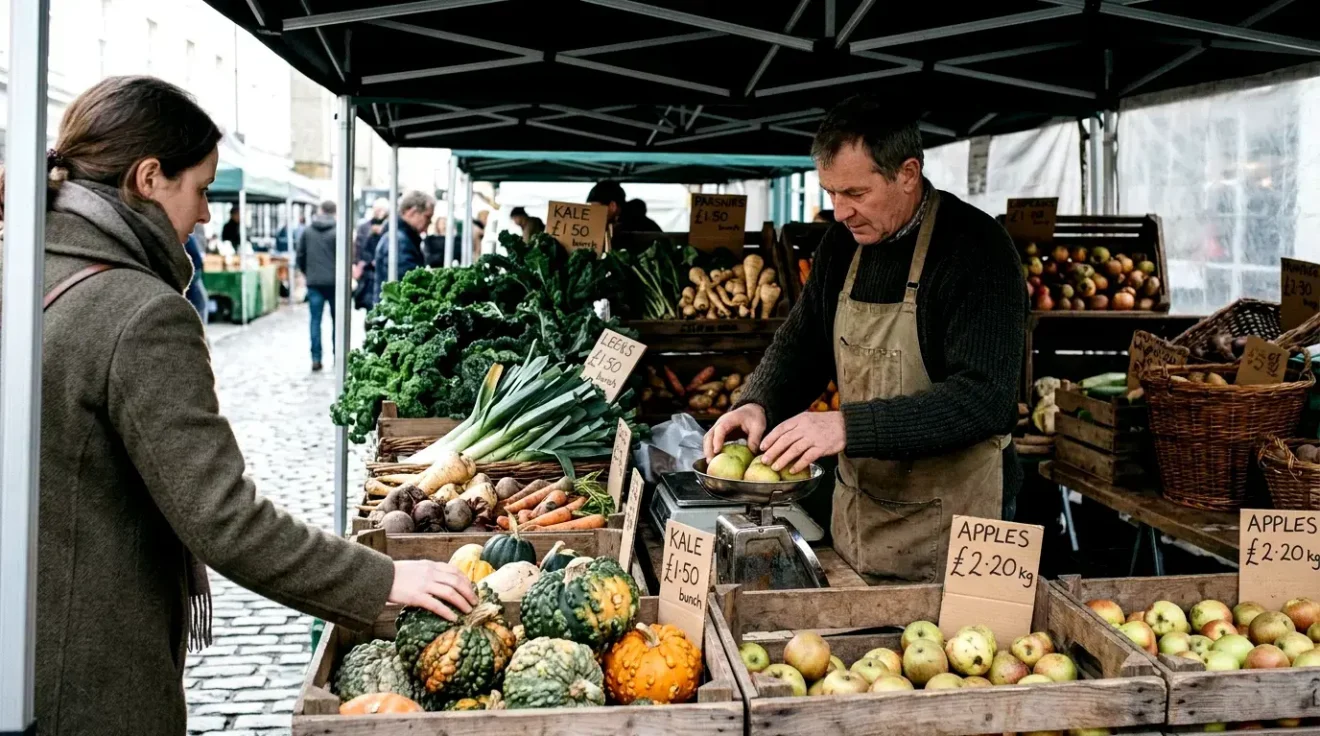
A farmers’ market can offer greater seasonal variety because individual growers and specialist sellers may bring crops and varieties that supermarkets do not regularly stock. Heritage apples, unusual squashes and less familiar leafy vegetables can give shoppers new cooking ideas. However, the range depends on the market, the sellers attending and the time of year.
Supermarkets need produce that can be transported, displayed and sold consistently across many branches. Standardised appearance, predictable supply and storage performance therefore influence what is stocked.
Growers selling through a farmers’ market may have more flexibility to offer small harvests, unusual varieties or crops whose appearance does not fit mainstream retail specifications. Some sellers can also explain the differences between varieties they have grown.
Autumn provides a useful example. A supermarket may stock familiar butternut squash, while a specialist stall might offer several squash varieties with different textures and cooking characteristics. One could be suitable for roasting, another for soup and another for stuffing, depending on the variety.
Markets can also reveal the transitions between seasons. The first tender greens of spring or the final harvest of a summer crop may appear in small quantities depending on local conditions and individual growers.
That does not mean every farmers’ market offers more choice than every supermarket. Small markets may have limited stalls, particular vegetables may be unavailable, and growers can be affected by poor weather or crop failures.
The most practical approach is usually a hybrid shopping routine. Buy predictable household staples wherever they offer suitable value and convenience, then use an occasional market visit to discover one seasonal ingredient that is less familiar.
For example, continue buying potatoes, onions and other essentials during the normal food shop, but choose an unfamiliar squash or apple variety at the market. Ask the seller how its flavour or texture differs from a familiar alternative and which cooking method suits it.
The same idea works on a smaller scale with supermarket seasonal ranges, farm shops and greengrocers. What matters is choosing ingredients that inspire a realistic meal, not shopping somewhere simply because it seems more traditional.
How Can You Use Fresh Berries in Three Different Meals Before They Go Soft?
Fresh berries can contribute to three different meals by planning their uses as soon as they are purchased. Enjoy the firmest fruit fresh, reserve another portion for a quick breakfast or snack, and cook or freeze remaining sound berries before they deteriorate. The order should follow their actual condition rather than a fixed three-day expiry rule.
A punnet of British strawberries or raspberries is a good candidate for a simple three-meal plan, particularly when the fruit is ripe and likely to soften quickly.
For an illustrative household plan, divide the berries into portions based on how many people will eat them and the fruit’s condition.
- First meal — porridge or yoghurt breakfast: scatter firm berries over porridge, yoghurt or overnight oats. Serve them fresh so their natural texture remains the focus.
- Second meal — berry sauce: gently cook another portion into a quick compote for pancakes, porridge or a yoghurt dessert. The softened fruit provides a different flavour and texture from the first meal.
- Third meal — a simple bake: add the remaining sound fruit to a crumble, sponge or baked pudding. If that meal is postponed, freeze suitable berries instead of leaving them to deteriorate.
The sequence is flexible. If the fruit is already particularly soft when purchased, cooking or freezing it sooner may be preferable to keeping it for a planned later meal.
Store berries in the fridge, generally leaving them unwashed until they are needed. Check the punnet promptly for damaged or mouldy fruit, and do not treat fruit that has developed mould as suitable for cooking. If mould is widespread or neighbouring berries show signs of spoilage, discard affected fruit and assess the remainder cautiously.
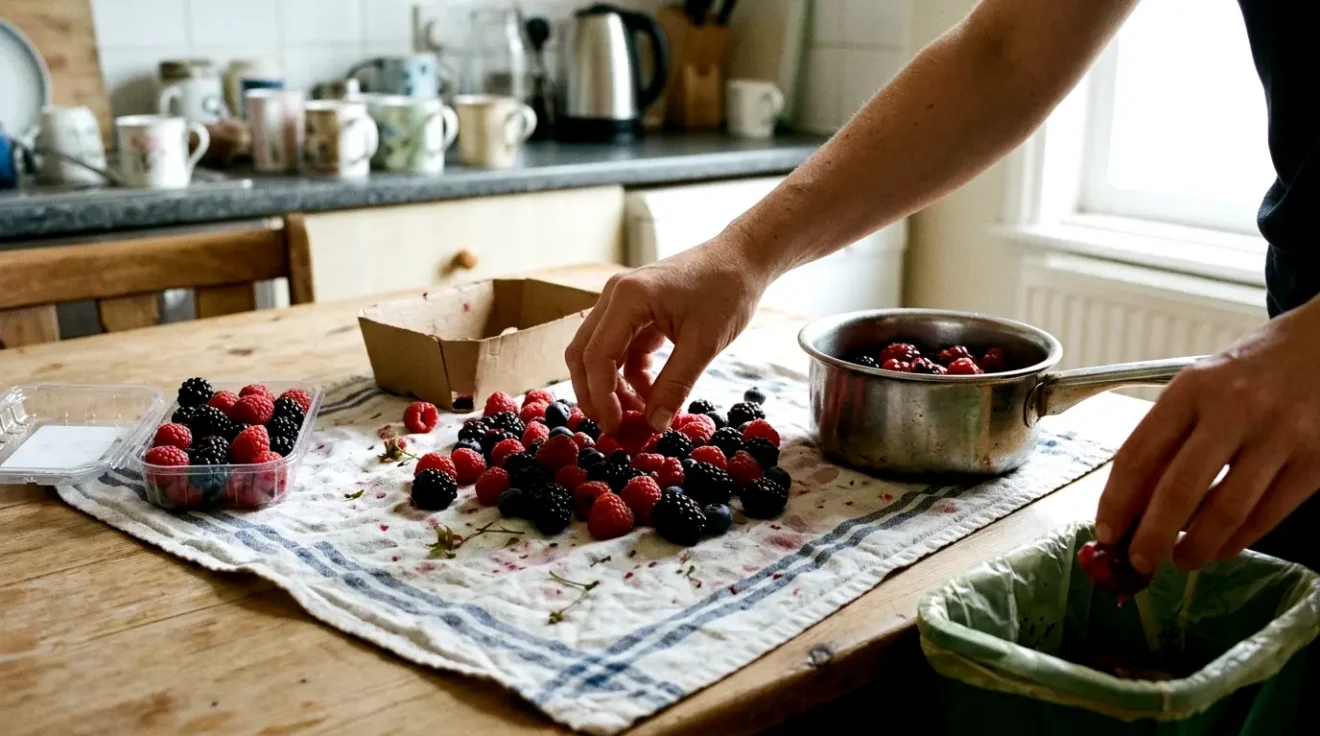
Love Food Hate Waste Canada’s berry storage guidance recommends refrigeration at around 0–4°C and suggests using soft but otherwise sound berries in smoothies, baking and desserts. The guidance also describes freezing individual berries before packing them into an airtight container.
Its advice does not establish a universal storage duration for every berry. Variety, ripeness, handling and refrigerator conditions can all change how long fruit remains usable.
The advantage of the three-meal method is that it gives every portion a purpose before the fruit begins to deteriorate. It also encourages different uses for an ingredient that might otherwise be eaten only as a snack.
The next step is applying the same realistic planning to farmers’ market purchases, where appealing displays and unfamiliar produce can make it tempting to buy more than intended.
What to remember before your next seasonal shop
- Start with ingredients that already have a place in the week’s meals, then add a seasonal discovery only when it has a clear use.
- Compare the value of produce by how much the household can actually eat, not simply by the advertised price.
- Allow storage life and meal timing to determine quantities, especially when combining delicate fruit with longer-lasting vegetables.
How Can You Shop at Local Farmers’ Markets Without Overspending or Wasting Food?
Shopping at local farmers’ markets without overspending requires a clear budget, a short priority list and realistic quantities. Buy produce that fits planned meals, compare prices using usable portions rather than attractive displays, and distinguish fragile fruit from vegetables that store well. One carefully chosen seasonal discovery often provides more practical value than a large unplanned basket.
Farmers’ markets can be appealing because produce is displayed in abundance, sellers may offer unusual varieties and seasonal ingredients can look especially tempting. Those attractions become expensive when they encourage purchases beyond what a household can use.
Before leaving home, choose two or three priorities. These might include one vegetable for weekday dinners, fruit for breakfasts and one unfamiliar seasonal item to try. Set a spending limit for the visit, treating anything beyond those priorities as optional.
Timing can influence the shopping experience. Early visits may provide a wider selection of varieties, especially at popular stalls. Towards the end of some markets, sellers may be willing to reduce prices on perishable stock, although discounts are not guaranteed and the remaining choice may be limited.
Value also needs a careful comparison. A lower sticker price does not necessarily make produce cheaper if it requires extensive trimming or spoils before use. Equally, a higher-priced ingredient that remains usable and contributes to several meals may represent acceptable value for a particular household.
A hypothetical farmers’ market shopping plan
Consider a two-person household planning a market visit before a busy working week. The shopping priorities are apples for breakfasts, a firm seasonal vegetable for two dinners and one small portion of fresh berries for the following day’s meals.
Instead of buying several unfamiliar vegetables, the household chooses one squash, checks that it can be stored appropriately and plans to roast part of it before using the remainder in soup. The berries are bought in a quantity that can be eaten promptly. This illustrates a planning method, not a documented household saving or a verified price comparison.
Ask sellers practical questions before purchasing. How should the vegetable be prepared? Does the variety need peeling? Is it best eaten quickly or suitable for storage? If buying apples, ask whether a particular variety is better for eating fresh or cooking.
These questions can make unfamiliar produce easier to use and reduce the likelihood of buying something that will sit untouched because nobody knows what to do with it.
Balance the basket between highly perishable items and produce with suitable storage potential. Buy smaller quantities of soft fruit and delicate leaves unless they already have a meal planned. Larger quantities of roots, apples or whole squash may be more manageable when appropriate storage conditions are available.
Finally, compare market prices with the alternatives available to your household. Farmers’ markets are not automatically cheaper than supermarkets, and the best choice depends on the particular products, their quality, travel requirements and how much will actually be eaten.
For the next food shop, choose one seasonal ingredient, name the meals it will improve and buy only the amount that fits those plans. Repeat the process with a different ingredient as the British growing seasons change. That small, manageable habit can bring fresh ideas to everyday meals without making shopping or cooking unnecessarily complicated.
Does seasonal British produce always cost less than imported alternatives?
No. Seasonal abundance can create opportunities to find good value, but retail prices also depend on weather, growing costs, supply, distribution and the retailer. Compare actual prices and quantities rather than assuming locally grown produce is always the cheapest choice.
Can frozen vegetables count towards five portions of fruit and vegetables a day?
Yes. UK nutrition guidance recognises frozen fruit and vegetables alongside fresh, canned and dried options, subject to the relevant portion recommendations. Choosing frozen produce can therefore support a varied diet when fresh seasonal options are inconvenient or unavailable.
How can you tell whether supermarket vegetables are actually British-grown?
Check the country-of-origin information on the label or display. British-grown produce may be harvested outdoors, grown under protection or sold after storage, so the origin label is a useful starting point rather than proof that it was picked that week.
Is it practical to eat seasonally without visiting farmers’ markets?
Yes. Supermarkets, local greengrocers, farm shops and other retailers can supply seasonal ingredients. The important habit is noticing what is currently available from British growers and incorporating it into meals you already know how to cook.
What should you do when seasonal produce is available but your household dislikes it?
Choose another seasonal ingredient or try a small quantity prepared differently. Roasting, grating or simmering can change a vegetable’s flavour and texture, but there is no reason to buy large amounts of something unlikely to be eaten. A sustainable seasonal routine should suit household preferences as well as the growing calendar.