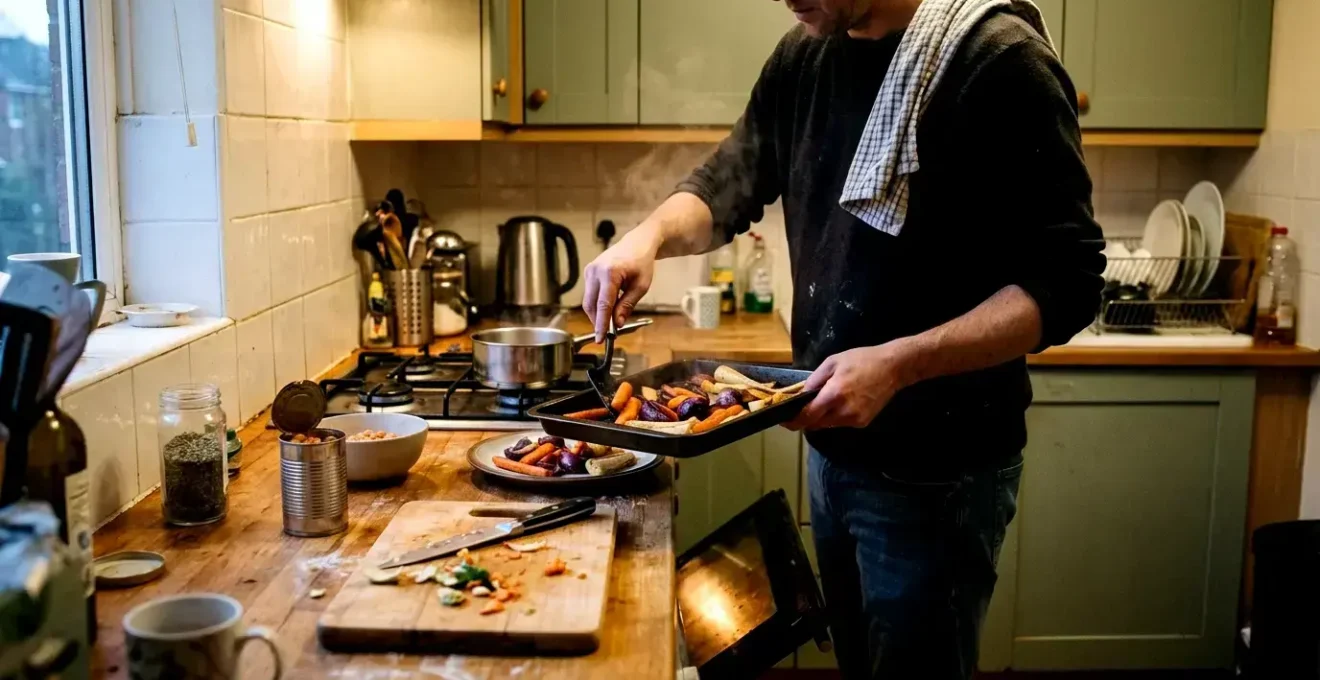
Everyday cooking becomes easier when dinner stops being a new project every evening. Instead of finding another recipe, buying its ingredients and following unfamiliar instructions, a few dependable cooking methods can turn ordinary supermarket staples into satisfying meals.
The practical approach is to learn how to roast, stir-fry and simmer, keep a small selection of useful ingredients available, and prepare only what will genuinely save time later. A tray of vegetables, a tin of chickpeas and a simple sauce can become different dinners without requiring an elaborate meal-preparation routine.
This matters especially when work finishes late, children need collecting or there is little energy left for decision-making. The aim is not to cook everything from scratch every night. Frozen vegetables, tinned pulses, microwaveable grains and other convenient ingredients can all support home cooking without making a complete ready meal the default.
With a flexible routine, cooking becomes less dependent on motivation and more manageable within an ordinary working week.
Everyday cooking made simpler
- Learn three adaptable methods rather than collecting recipes for every possible dinner.
- Prepare versatile ingredients in sensible quantities, while following safe storage and reheating guidance.
- Plan flexible dinners with quicker alternatives for evenings when time or energy disappears.
- Why Can Learning a Few Cooking Methods Be More Useful Than Saving Hundreds of Recipes?
- How Can You Cook One Set of Ingredients in Three Different Ways During the Week?
- Roasting, Stir-Frying or Simmering: Which Method Works Best on a Busy Evening?
- Which Kitchen Habits Make Everyday Cooking Take Longer Than It Should?
- When Should You Chop, Cook or Portion Ingredients Ahead of Time?
- Traybake, Stir-Fry or One-Pot Meal: Which Healthy Recipe Format Saves the Most Time?
- How Can You Plan Five Dinners While Leaving Room for Schedule Changes?
- What Makes a Healthy Recipe Easy Enough to Cook Again and Again?
Why Can Learning a Few Cooking Methods Be More Useful Than Saving Hundreds of Recipes?
Learning a small number of cooking methods is often more useful than saving hundreds of recipes because a method works with different ingredients. Once roasting, stir-frying or simmering feels familiar, dinner no longer depends on finding an exact recipe or buying everything on its shopping list. The same technique can adapt to what is already available.
A recipe tells you what to do with particular ingredients. A method explains how ingredients behave under heat, how flavours develop and what can be substituted without ruining the result.
For example, understanding how to roast vegetables means recognising that pieces of similar size cook more evenly, surface moisture delays browning and overcrowding traps steam. Those principles work with carrots, parsnips, cauliflower or sweet potatoes.
Likewise, a basic aromatic base of gently cooked onion, celery and carrot can support soups, lentil dishes and tomato sauces. Once the technique becomes familiar, different ingredients produce different meals without requiring completely new instructions.
Cooking from understanding reduces dependence on exact recipes. A useful test is whether you could make a familiar dinner without checking your phone. If you know the general sequence, recognise when ingredients are cooked and can correct small mistakes, the method is becoming dependable.
Saved-recipe apps and recipe-box subscriptions can still provide inspiration, especially when learning something unfamiliar. The difficulty begins when collecting ideas replaces choosing meals that suit the available time, ingredients and equipment.
A collection of elaborate recipes may create additional decisions: which dish to make, what to buy, whether an unusual ingredient will be used again and how much preparation is involved. Method-based cooking narrows those decisions.
Start with three dependable patterns:
- Roast: combine vegetables and a suitable protein on one or more trays, adjusting cooking times as needed.
- Stir-fry: cook prepared ingredients quickly over fairly high heat, then finish with a simple sauce.
- Simmer: soften aromatics, add liquid and other ingredients, and cook gently until everything is properly done.
Learning these patterns does not mean abandoning recipes. It makes recipes easier to understand, simplify and adapt.
Once those techniques feel familiar, the next opportunity is using the same shopping basket to produce several genuinely different dinners.
How Can You Cook One Set of Ingredients in Three Different Ways During the Week?
One set of ingredients can produce three different dinners by changing the cooking method, sauce and final texture. Choose a versatile ingredient such as sweet potato, chicken thighs or tinned beans, then combine it with different supporting foods. Reuse ingredients intelligently, but avoid keeping cooked leftovers longer than recommended for safe storage.
Consider a hypothetical weekly combination of sweet potatoes, peppers, onions, spinach, eggs, chickpeas and a little halloumi. These familiar supermarket ingredients can be distributed across three dinners without every meal tasting identical.
- Dinner one — roasted vegetable and halloumi traybake. Roast sweet potatoes, peppers and onions until tender and browned. Add halloumi towards the end, allowing it to colour without drying excessively.
- Dinner two — vegetable frittata. Use a suitable refrigerated or frozen portion of cooked vegetables with eggs and spinach. Cook until the eggs are fully set, serving with a simple salad.
- Dinner three — chickpea and sweet potato soup. Simmer fresh or safely stored prepared vegetables with chickpeas, stock and spices. Blend part of the mixture for a thicker texture.
These dinners share ingredients, not necessarily the same batch of cooked leftovers. That distinction matters when meals are spread across several days.
The Food Standards Agency advises that cooked leftovers should be cooled and refrigerated within two hours, eaten within 48 hours or frozen, and reheated only once until steaming hot throughout. Its guidance on cooking and reheating food provides the relevant precautions.
A safer strategy for a three-dinner rotation is to use freshly prepared ingredients for some meals, refrigerate portions intended for the following day and freeze cooked portions that will be needed later. Do not repeatedly reheat and cool one shared container.
The anchor ingredient should also be chosen carefully. The following comparison is a practical planning guide, not a ranking based on measured cooking performance.
| Anchor ingredient | Useful transformations | Practical limitation |
|---|---|---|
| Sweet potatoes | Roast, mash, soup or curry | Cooked portions need appropriate chilling, freezing and reheating |
| Chicken thighs | Traybake, chicken and vegetable pan dish, stew | Require careful handling and thorough cooking |
| Tinned beans | Salad, tomato stew, vegetable soup | Seasoning and texture need variation to avoid repetitive meals |
| Eggs | Frittata, omelette, egg-fried vegetables | Cooked egg dishes are not suitable for indefinite refrigeration |
For better variety, change at least two features between meals: the cooking method, sauce, texture or accompaniment. Roasted sweet potato with paprika and halloumi feels different from a smooth soup seasoned with cumin.
With suitable ingredients chosen, the next decision is which cooking method fits the time and attention available that evening.
Roasting, Stir-Frying or Simmering: Which Method Works Best on a Busy Evening?
Roasting works well when energy is limited but there is time to wait, stir-frying suits evenings when dinner needs to be cooked quickly, and simmering is useful when a dish can cook gently with occasional attention. None is universally fastest. The best method depends on hands-on work, total cooking time and how predictable the evening will be.
A meal requiring ten minutes of preparation and a longer oven cooking period may be easier than a shorter dish requiring continuous stirring. Understanding that difference prevents unnecessary frustration.
The comparisons below describe typical home-cooking patterns rather than experimentally established timings.
| Criterion | Roasting | Stir-frying | Simmering |
|---|---|---|---|
| Hands-on attention | Usually low after preparation | High during cooking | Usually intermittent |
| Total cooking time | Often longer | Usually short with prepared ingredients | Varies considerably |
| Timing flexibility | Moderate, depending on ingredients | Low once cooking begins | Often good for suitable soups and stews |
| Washing-up | One or more trays | Usually a pan or wok plus preparation tools | Often one main pot |
| Common mistake | Overcrowding | Adding too much at once | Insufficient heat or attention to cooking safety |
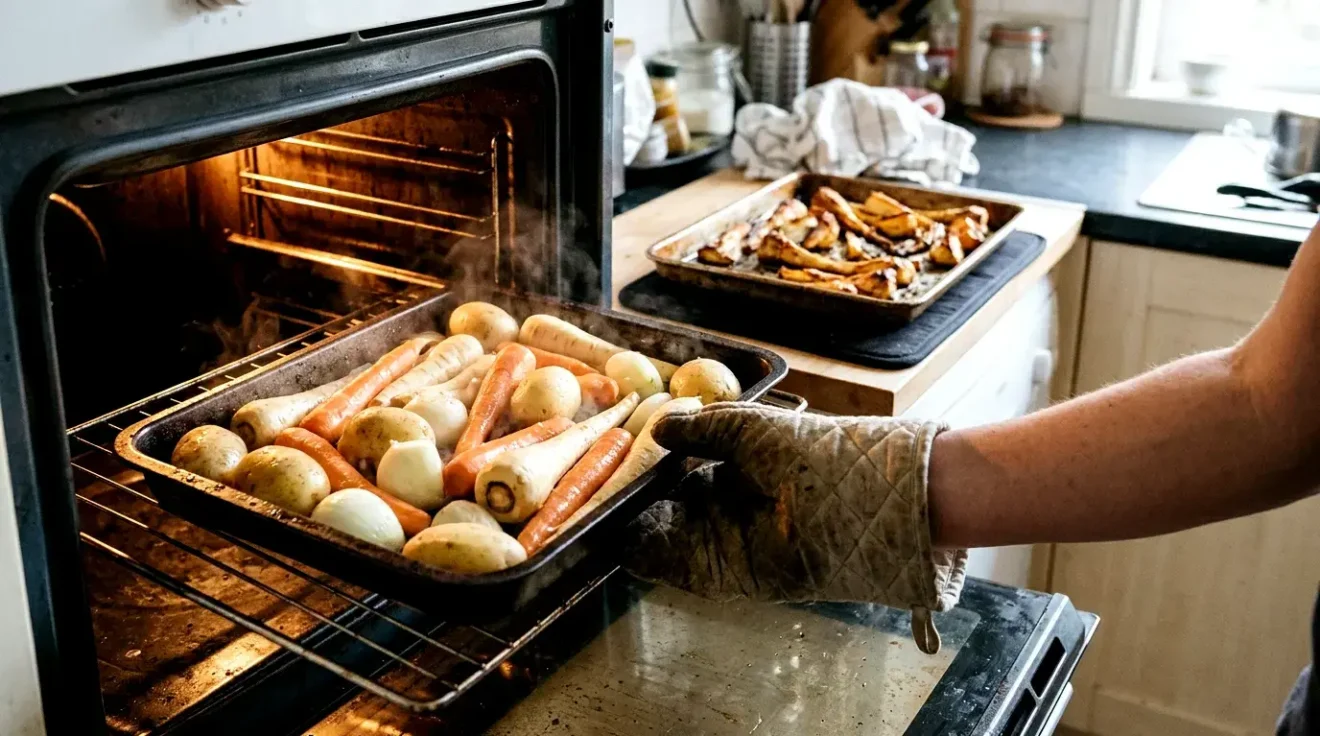
Roasting suits evenings when you can stay at home while dinner cooks. A tray of carrots, potatoes and chicken can require relatively little active work, provided ingredients are arranged appropriately and checked for doneness.
However, an overcrowded roasting tray traps moisture. Vegetables then steam instead of developing browned edges. Spread them out, dry their surfaces where practical and use an additional tray if necessary.
Stir-frying is more demanding while the hob is on. Ingredients need chopping before cooking begins, and everything should be close to hand. Adding a large quantity of cold vegetables at once lowers the pan temperature and encourages steaming. Cook in batches when necessary.
Simmering is forgiving for dishes such as lentil soup or bean stew, but it is not a substitute for proper cooking. If raw meat is included, the food must reach a safe internal temperature. A barely warm pan is not sufficient merely because the ingredients have been left in it for a long period.
The Food Standards Agency lists thorough-cooking combinations including 70°C for 2 minutes or an equivalent combination such as 75°C for 30 seconds. Use appropriate food-temperature checks where needed, particularly with poultry and other foods requiring thorough cooking.
A practical evening decision is simple: choose roasting when attention is scarce, stir-frying when time is scarce but energy is available, and simmering when a suitable dish can cook under supervision while other tasks continue.
Even the right method can feel slow when the kitchen routine creates avoidable delays before cooking begins.
Which Kitchen Habits Make Everyday Cooking Take Longer Than It Should?
Everyday cooking often takes longer because ingredients, tools and cooking steps are poorly sequenced rather than because the recipe itself is difficult. Searching for equipment, chopping vegetables while a pan overheats and using too many separate pans all add friction. A simpler setup and better task order can remove much of that unnecessary effort.
One common habit is starting the hob before everything needed is ready. The cook then searches for spices, opens tins and chops ingredients while the first component risks burning. Preparing the necessary ingredients before a fast cooking method avoids repeated interruptions.
Another delay comes from treating every component as a separate dish. Cooking vegetables in one pan, a protein in another and a sauce in a third can create more monitoring and washing-up than combining compatible ingredients in a single pan or tray.
However, combining ingredients must not compromise cooking safety. Foods with different cooking requirements may need separate stages, and raw meat must be handled and cooked appropriately.
Active time and elapsed time are different resources. A roast requiring forty minutes from start to finish might involve only ten minutes of actual preparation. A stir-fry may finish sooner but require nearly constant attention.
Distinguishing the two helps explain why a meal can be manageable even when its total cooking time initially looks discouraging.
Kitchen layout also makes a difference. In a compact British kitchen with limited worktop space, moving equipment out of cupboards and clearing surfaces can become a substantial part of the evening routine.
A small accessible daily kit can help: one sharp knife, one chopping board, one useful frying pan and one saucepan. Other equipment can remain in storage until genuinely needed.
A five-step kitchen friction audit
- Record the starting delay: after your next dinner, write down the first task that slowed you down. Deliverable: one specific delay noted.
- Identify missing equipment: list anything you had to search for while cooking. Deliverable: a short list of frequently used tools.
- Check preparation order: note whether you had to stop cooking to chop or open ingredients. Deliverable: a revised preparation sequence.
- Review washing-up: count the pans and utensils used and identify anything unnecessary. Deliverable: one practical simplification for the next meal.
- Choose two improvements: review the week’s notes and select the most repeated obstacles. Deliverable: two changes to test the following week.
This approach is more useful than attempting to reorganise the entire kitchen in one weekend. Fix the issues that repeatedly interrupt real dinners, then observe whether the changes help.
Once daily friction is reduced, ingredient preparation becomes another opportunity to make evenings easier, provided advance preparation is timed sensibly.
When Should You Chop, Cook or Portion Ingredients Ahead of Time?
Prepare ingredients ahead when doing so removes a task from a busy evening without sacrificing freshness or food safety. Hardy vegetables can often be chopped before they are needed, while delicate herbs and soft ingredients benefit from preparation closer to cooking. Cooked foods require stricter storage planning, so preparing everything on Sunday is not always sensible.
Advance preparation works best when ingredients are treated differently according to how quickly they deteriorate and how they will eventually be used.
For example, carrots, onions and celery can be prepared for an upcoming meal and stored covered in the refrigerator. Washed salad leaves should be drained and dried thoroughly before storage. Soft tomatoes and fresh herbs are often better prepared nearer serving time.
It is also useful to distinguish preparing components from preparing entire meals. Chopping an onion or portioning uncooked vegetables can reduce later work without committing to an exact dinner.
Preparing several complete cooked meals requires a more careful plan for refrigeration, freezing and reheating.
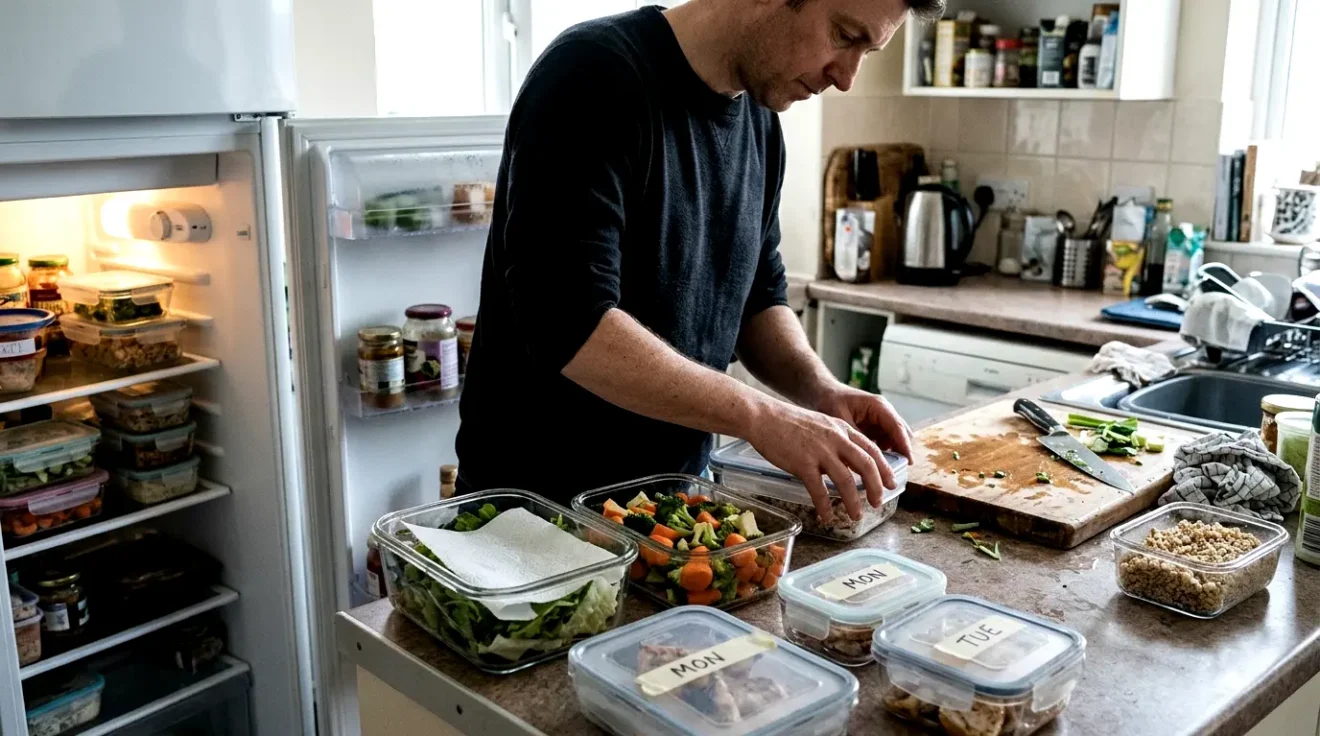
Cooked rice deserves particular attention. The Food Standards Agency advises cooling it as quickly as possible, ideally within one hour, refrigerating it and consuming it within 24 hours. Rice should not be reheated more than once, and reheated rice must be steaming hot throughout.
These recommendations are explained in the Food Standards Agency home food fact checker. The concern includes Bacillus cereus spores, which can survive the cooking process. Incorrect storage can create risks that reheating does not necessarily remove.
Other cooked leftovers should follow the relevant refrigeration, freezing and reheating guidance rather than an assumed three- or four-day fridge life.
A staggered routine is often more practical than attempting to prepare five dinners in advance:
- At the beginning of the week: organise ingredients, wash suitable produce and prepare components for the next few meals.
- On the first cooking evening: cook what is needed and promptly chill or freeze any portions intended for later.
- Midweek: spend a short session refreshing chopped vegetables, checking remaining ingredients and moving suitable frozen portions into the refrigerator for safe defrosting.
- Near serving time: prepare delicate garnishes, dress salads and cook ingredients whose texture suffers from long storage.
Do not assume every ingredient remains usable for the same period. Follow package instructions, observe use-by dates and maintain suitable refrigerated storage. A food with a use-by date cannot be declared safe simply because it smells acceptable.
The amount to prepare should reflect actual eating habits. If schedules regularly change, smaller batches and freezer portions offer more flexibility than a refrigerator filled with fully cooked dinners.
With ingredients ready at the right moment, choosing a suitable meal format becomes considerably easier.
Traybake, Stir-Fry or One-Pot Meal: Which Healthy Recipe Format Saves the Most Time?
A traybake usually saves hands-on effort, a stir-fry can minimise total cooking time, and a one-pot meal often reduces washing-up while allowing ingredients to cook together. The healthiest and most efficient choice depends on the ingredients, cooking conditions and your available time. None of these formats guarantees a balanced meal simply because it uses fewer pans.
A traybake combines ingredients on an oven tray, often allowing much of the cooking to happen without constant stirring. It is convenient for root vegetables, chicken and some fish dishes, although ingredients with different cooking times may need to be added in stages.
A stir-fry is useful for a quick combination of vegetables, protein and noodles or another accompaniment. Its advantage is rapid cooking once everything is prepared. Its limitation is that chopping, managing heat and finishing the sauce may all require attention within a short period.
One-pot meals include lentil soups, bean stews and vegetable-based curries. They can combine pulses, vegetables and grains in a single vessel while developing flavour through simmering.
Healthy meal construction matters more than the format. A traybake based largely on processed meat and salty sauces does not automatically become nutritious because it includes vegetables. Similarly, a stir-fry can contain excessive salt if its sauce is heavily based on salty prepared seasonings.
The NHS Eatwell Guide recommends dietary variety, plenty of fruit and vegetables, higher-fibre starchy foods and suitable protein sources. It also explains that nutritional balance can be achieved across a day or week rather than within every individual meal.
That makes it possible to vary cooking formats without trying to construct an identical dinner every night.
| Format | Best practical advantage | How to create a balanced meal | Leftover considerations |
|---|---|---|---|
| Traybake | Low active attention | Combine vegetables with a suitable protein and starchy component | Some roasted foods lose texture when reheated |
| Stir-fry | Fast cooking after preparation | Use varied vegetables, a protein source and an appropriate accompaniment | Best textures are often achieved when freshly cooked |
| One-pot meal | Convenient cooking and reduced washing-up | Include pulses, vegetables and suitable grains or other starches | Portion promptly and follow storage and reheating rules |
A realistic weekly rotation could use a traybake on Monday, a stir-fry on Wednesday and a one-pot dish on Friday. This provides variation in texture and flavour while allowing ingredients to overlap.
Using different formats also helps avoid a common problem: relying on one supposedly efficient cooking style until every dinner begins to feel the same.
Once a few dependable formats are available, dinner planning can become flexible rather than an exercise in following a rigid timetable.
How Can You Plan Five Dinners While Leaving Room for Schedule Changes?
Plan five dinners by choosing ingredients and adaptable meal formats rather than assigning every recipe to an unchangeable evening. Use the most perishable foods first, keep shelf-stable or frozen options for unpredictable days, and give each meal a simpler alternative. This allows a disrupted schedule to change the dinner without making the entire shopping plan useless.
A fixed plan might insist that Tuesday is salmon night and Thursday is vegetable curry night. If Tuesday becomes unexpectedly busy, the cook must either prepare the planned meal under pressure or abandon it.
An ingredient-based plan is more adaptable. It identifies the available protein, vegetables and staple foods, then allows the final cooking method to change according to circumstances.
Consider this hypothetical five-dinner plan for a typical working week.
| Meal priority | Planned dinner | Shorter alternative |
|---|---|---|
| Use first | Fresh fish with vegetables and potatoes | Quick fish and vegetable pan meal with a ready-to-use accompaniment |
| Early week | Chicken and vegetable traybake | Chicken strips with frozen vegetables, ensuring thorough cooking |
| Flexible | Vegetable and chickpea curry | Chickpeas warmed through in tomato sauce with a simple accompaniment |
| Flexible | Spinach and vegetable frittata | Vegetable omelette with toast |
| Reserve option | Lentil and tomato stew | Tinned lentils warmed with tomatoes and seasoning |
The ordering is a planning example, not a substitute for checking individual use-by dates and storage instructions. In practice, those dates determine which chilled foods must be used first.
Each shorter alternative should use ingredients already available. Otherwise, the emergency dinner becomes another recipe requiring an extra shopping trip.
A practical test is whether the reduced version can realistically be prepared in roughly fifteen minutes with the required ingredients ready to use. Some foods, especially raw meat, may take longer to cook safely depending on their size and preparation.
When a late meeting or children’s activity changes the evening, swap a more demanding dinner for a simpler one. Use an appropriate freezer option if fresh ingredients cannot be cooked in time, and avoid keeping highly perishable foods past their safe storage period.
Flexible planning also helps address food waste. WRAP’s UK-wide Household Food Management Survey 2025 examined purchasing decisions, changing meal patterns and food-management behaviours among 5,509 adults responsible for household shopping or food preparation. Its findings provide context for why realistic meal planning matters, although they do not prove that any particular five-dinner system reduces waste.
At the end of the week, spend five minutes reviewing three questions: which meals were cooked, which were skipped, and what caused the changes? The answers may reveal that one evening regularly needs a particularly easy option or that fewer fresh ingredients should be purchased at once.
As those patterns become clearer, the most reliable dinners can form a small collection of recipes worth repeating.
What to remember before choosing your repeatable dinners
- Keep recipes that work with ingredients already bought regularly, rather than requiring extra purchases every time.
- Prefer cooking methods with manageable preparation, flexible timing and equipment that is already accessible.
- Retain a small number of adaptable meals and gradually refine them around the household’s actual schedule.
What Makes a Healthy Recipe Easy Enough to Cook Again and Again?
A healthy recipe becomes easy to repeat when it uses familiar ingredients, requires few simultaneous tasks, tolerates small substitutions and fits a realistic evening. Nutritional balance, convenience and flexibility must work together. A dish that looks appealing but requires unusual ingredients, precise timing and extensive washing-up may never become part of a sustainable cooking routine.
The most useful repeatable recipes usually have a short core ingredient list, with optional flavours and additions that can change from week to week.
For example, a basic tomato and bean stew can begin with onion, tinned tomatoes, beans and seasonings. Add spinach when available, vary the beans, change the spices or serve it with different accompaniments.
The cooking process remains familiar even when the finished dish changes. That familiarity reduces the number of decisions required each evening.
Use the following criteria when deciding whether a recipe deserves a permanent place in the household rotation:
- Accessible ingredients: most items already appear in the regular supermarket shop.
- Limited equipment: the dish uses a manageable number of pans, utensils and work surfaces.
- Forgiving timing: minor delays do not immediately ruin the finished result.
- Flexible substitutions: a vegetable, pulse or suitable protein can be changed without rebuilding the recipe.
- Realistic effort: preparation, cooking and washing-up fit the evenings when the meal will actually be needed.
A recipe may need a few attempts before it feels routine. The first preparation often involves checking instructions, adjusting quantities and learning how the ingredients behave.
The second attempt is a useful practical test. If the shopping is simpler, preparation feels more familiar and fewer instructions are needed, the recipe may be worth keeping. If it remains awkward despite sensible adjustments, there is little value in forcing it into the weekly routine.
Healthy recipes can also be simplified without abandoning their nutritional purpose. An elaborate dish with several garnishes, separate sauces and numerous vegetable components may work just as well for everyday use when reduced to a protein source, a substantial portion of vegetables, a suitable starchy food and one flavourful seasoning.
What matters is preserving dietary variety over time rather than reproducing an attractive presentation at every dinner.
Three to five genuinely dependable recipes can provide a strong starting point. Combined with the cooking methods learned earlier, they offer enough structure to make shopping and preparation easier without preventing experimentation.
Once these meals become familiar, everyday cooking no longer requires finding something completely new each evening. More ambitious recipes can remain enjoyable occasional projects rather than obligatory weekday tasks.
Choose one familiar dinner this week, simplify its preparation and cook it again using a slightly different vegetable, seasoning or accompaniment. A sustainable home-cooking routine develops through useful repetitions, not through an ever-growing collection of recipes.
Can frozen and tinned ingredients count as home cooking?
Yes. Home cooking does not require every ingredient to be fresh or prepared from scratch. Frozen vegetables, tinned beans, tomatoes and other convenient staples can help create varied meals with relatively little preparation. Compare labels where relevant, particularly for added salt and sugar, and follow package cooking and storage instructions.
How can you cook more often without spending every Sunday meal prepping?
Prepare only the components that regularly slow down weekday dinners. For example, organise ingredients, chop suitable vegetables for upcoming meals and keep convenient cupboard staples available. A short midweek preparation session can refresh ingredients when necessary. Refrigerate or freeze cooked foods promptly and follow the appropriate storage periods rather than assuming all prepared meals remain safe for the whole week.
Is cooking a large batch always cheaper or more efficient?
Not necessarily. Larger batches can reduce repeated preparation and make good use of ingredients, but savings depend on what is bought, cooked, stored and eventually eaten. A batch that produces unwanted portions or exceeds safe refrigeration capacity may create waste instead of reducing it. Freeze suitable portions promptly and make quantities match realistic demand.
What should you cook when there are only fifteen minutes available?
Choose a meal built around ingredients that need little preparation or cooking. Options include a vegetable omelette with toast, tinned beans warmed with tomatoes, or a quick stir-fry using prepared vegetables and an appropriate protein. The actual time depends on the ingredients and equipment; never shorten the cooking of foods that must reach a safe temperature.
How can you avoid getting bored when repeating the same meals?
Keep the basic cooking technique but change one or two elements. A tomato and chickpea stew can use different spices, vegetables or accompaniments, while roasted vegetables can feature in a traybake, soup or freshly prepared egg dish. Changing flavour, texture and presentation provides variety without requiring an entirely new recipe or shopping list.