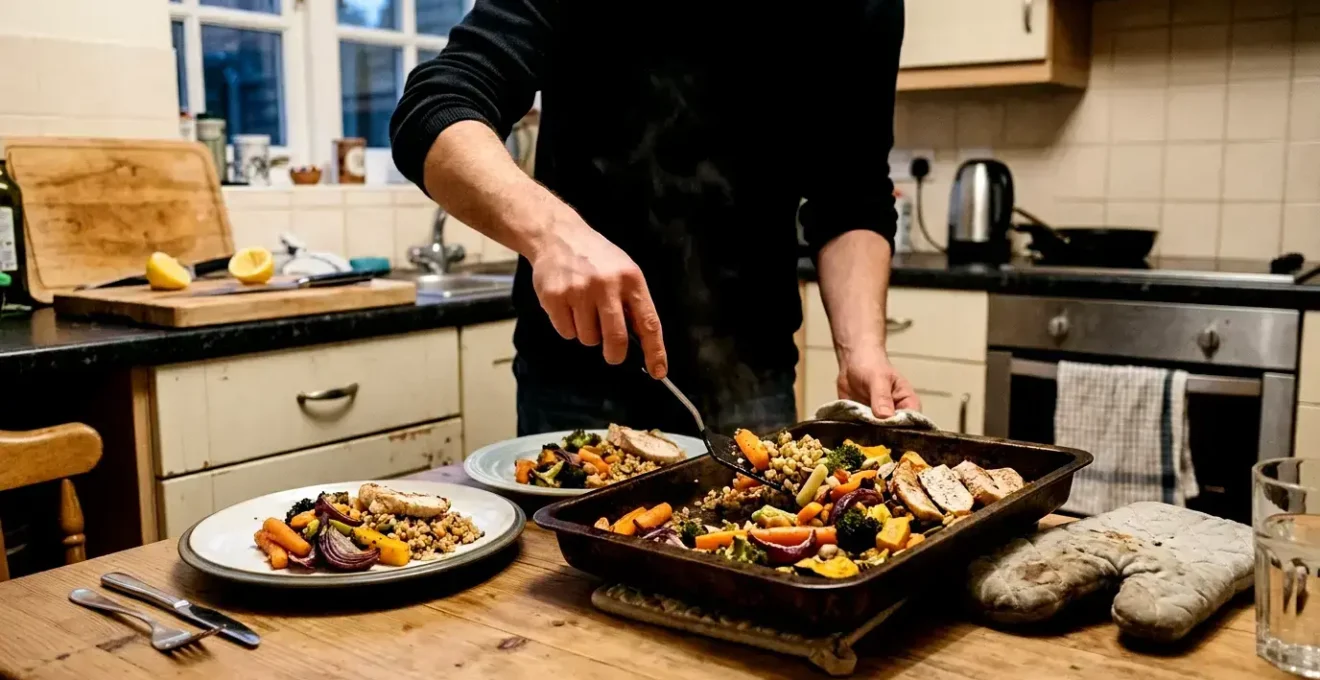
A healthy recipe earns its place in your kitchen when you can cook it on an ordinary Tuesday, enjoy eating it and still feel like making it again next week. Nutritional quality matters, but so do the price of ingredients, the number of pans in the sink and whether everyone at the table actually likes dinner.
The most useful everyday recipes combine familiar ingredients, manageable preparation, flexible substitutions and satisfying flavours. They do not need to be elaborate, expensive or perfectly balanced in isolation. The NHS Eatwell Guide recognises that dietary balance can be achieved across a day or week rather than at every single meal.
For home cooks in England, that opens up a practical approach: choose a few dependable meals, learn cooking methods that adapt to whatever is available, and organise shopping around a flexible plan. Frozen vegetables, tinned beans and wholegrain staples can be just as useful to that routine as fresh ingredients.
The aim is not to cook something different every evening. It is to make nutritious home cooking convenient enough to remain enjoyable when time, energy and budgets are limited.
What makes a healthy recipe worth repeating?
- Choose meals that suit your actual schedule, shopping habits and washing-up tolerance, not just their advertised cooking time.
- Keep the flavours you love while improving the supporting ingredients and learning flexible cooking methods.
- Build a small rotation of reliable dinners, supported by substitutions, useful leftovers and a plan that can change.
- Why Do Some Healthy Recipes Look Good but Never Make It Into Your Weekly Routine?
- How Can You Make a Favourite Recipe Healthier Without Changing What Makes It Enjoyable?
- Traybake, Stir-Fry or One-Pot Meal: Which Healthy Recipe Format Saves the Most Time?
- Which Healthy-Recipe Mistakes Make Everyday Cooking Harder Than It Needs to Be?
- When Should You Repeat a Healthy Recipe Instead of Constantly Searching for New Ideas?
- Why Can Learning a Few Cooking Methods Be More Useful Than Saving Hundreds of Recipes?
- How Can You Plan Five Dinners While Leaving Room for Schedule Changes?
- How Can Everyday Cooking Become Easier Without Relying on Ready Meals?
Why Do Some Healthy Recipes Look Good but Never Make It Into Your Weekly Routine?
Healthy recipes often disappear from weekly routines because they are attractive to read but inconvenient to cook. An impressive dish might require unfamiliar ingredients, lengthy chopping or several pans, making it unsuitable for a busy evening. A repeatable recipe must pass a practical test: can you prepare, enjoy and clean up after it without disrupting your day?
Consider a beautifully photographed salad with multiple roasted components, homemade dressing, toasted seeds and a specialist grain. It may be nutritious and delicious, yet require separate cooking stages and ingredients you rarely use elsewhere. Compare that with a warm bowl of brown rice, roasted vegetables, chickpeas and lemon yoghurt. The second dish offers fewer decisions and familiar shopping.
Recipe appeal and recipe repeatability are different qualities. One describes how much you want to eat a dish; the other describes how comfortably you can make it again.
Before adding a recipe to your regular rotation, examine four hidden effort costs:
- Shopping friction: Are the main ingredients available from your usual supermarket, and will you use the remaining quantities?
- Preparation effort: Does the recipe involve numerous peeling, chopping, marinating or blending stages?
- Washing-up: Will several mixing bowls, trays and pans need cleaning afterwards?
- Leftover usefulness: Can an extra portion become tomorrow’s lunch without losing its texture or appeal?
A useful self-test is to imagine arriving home on a busy weekday. Could you start cooking within 15 minutes using ingredients you normally buy? This is a personal screening rule, not a scientific threshold. Recipes that fail it may still be excellent choices for a relaxed weekend.
The NHS Healthier Families dinner recipes provide a practical starting point, with filters for preparation time, cooking time and ingredients. Their existence reinforces a useful selection principle: the right dinner depends on the time and ingredients available, not simply how appetising its photograph looks.
Once a recipe fits your everyday circumstances, the next challenge is preserving the pleasure of eating it while making its ingredients work harder nutritionally.
How Can You Make a Favourite Recipe Healthier Without Changing What Makes It Enjoyable?
Make a favourite recipe healthier by protecting the ingredient or texture that makes it satisfying and adjusting the less essential components. Keep the crispy topping, rich sauce or familiar seasoning, then introduce more vegetables, higher-fibre carbohydrates or suitable protein alternatives. Small changes usually make a more practical starting point than transforming the entire dish at once.
Think of this as protect the anchor, adjust the edges. The anchor is the feature you would genuinely miss if it disappeared. In macaroni cheese, that might be the creamy cheese sauce. In a curry, it might be the warming spices and satisfying texture. In pizza, it may be the combination of crisp base, tomato and melted cheese.
Once the anchor is clear, change ingredients that support rather than define it. A macaroni cheese recipe could include peas or broccoli while retaining its familiar topping. A curry could incorporate lentils alongside its usual protein, while a family pasta sauce could contain finely chopped mushrooms, carrots or courgettes.
The NHS Eatwell Guide recommends a varied dietary pattern including vegetables, higher-fibre starchy foods and protein sources such as beans and lentils. These principles leave room for familiar dishes rather than requiring entirely new meals.
Not every substitution suits every household. Blended vegetables may work well in a smooth tomato sauce but spoil a dish where someone particularly enjoys a chunky texture. Wholewheat pasta may be an easy change for one family and less popular with another. A gradual mix of familiar and wholegrain ingredients can offer a gentler introduction.
Prioritise ingredients used in substantial quantities, but consider their nutritional role rather than changing them blindly. Replacing part of a refined-grain side with a higher-fibre alternative can be useful. Reducing an excessive amount of creamy sauce may also help. However, removing all cooking oil or drastically cutting a strongly flavoured topping can make the meal less appealing without producing a sensible overall balance.
Change one variable at a time. Try the modified recipe, ask whether the flavour and texture still work, and retain the adjustment only if the household enjoys it. This is a practical way of testing a change, not a guarantee that everyone will accept it.
When a healthier version still tastes like the meal you enjoy, attention can turn to choosing the most convenient cooking format for the evening.
Traybake, Stir-Fry or One-Pot Meal: Which Healthy Recipe Format Saves the Most Time?
A stir-fry is often the best choice when you need dinner cooked quickly and can give it your full attention. A traybake suits evenings when you can leave food in the oven while doing something else. A one-pot meal offers flexibility and potentially simpler washing-up. The fastest option depends on preparation, attention and cleanup, not cooking time alone.
These three formats can all accommodate vegetables, protein and satisfying carbohydrate sources. Their main differences lie in how much active work they demand and how forgiving they are when plans change.
A traybake might involve chopping carrots, peppers and potatoes, coating them lightly in oil and seasoning, then roasting them alongside an appropriate protein. Once the tray is in the oven, much of the cooking is hands-off. However, ingredients must be cut and arranged to cook properly, and some require different timings.
A stir-fry can move from hob to table quickly, particularly with pre-cut vegetables and a simple sauce. Yet the cook must usually remain nearby, move ingredients regularly and manage the heat. It is less convenient if you need to answer the door or supervise another task.
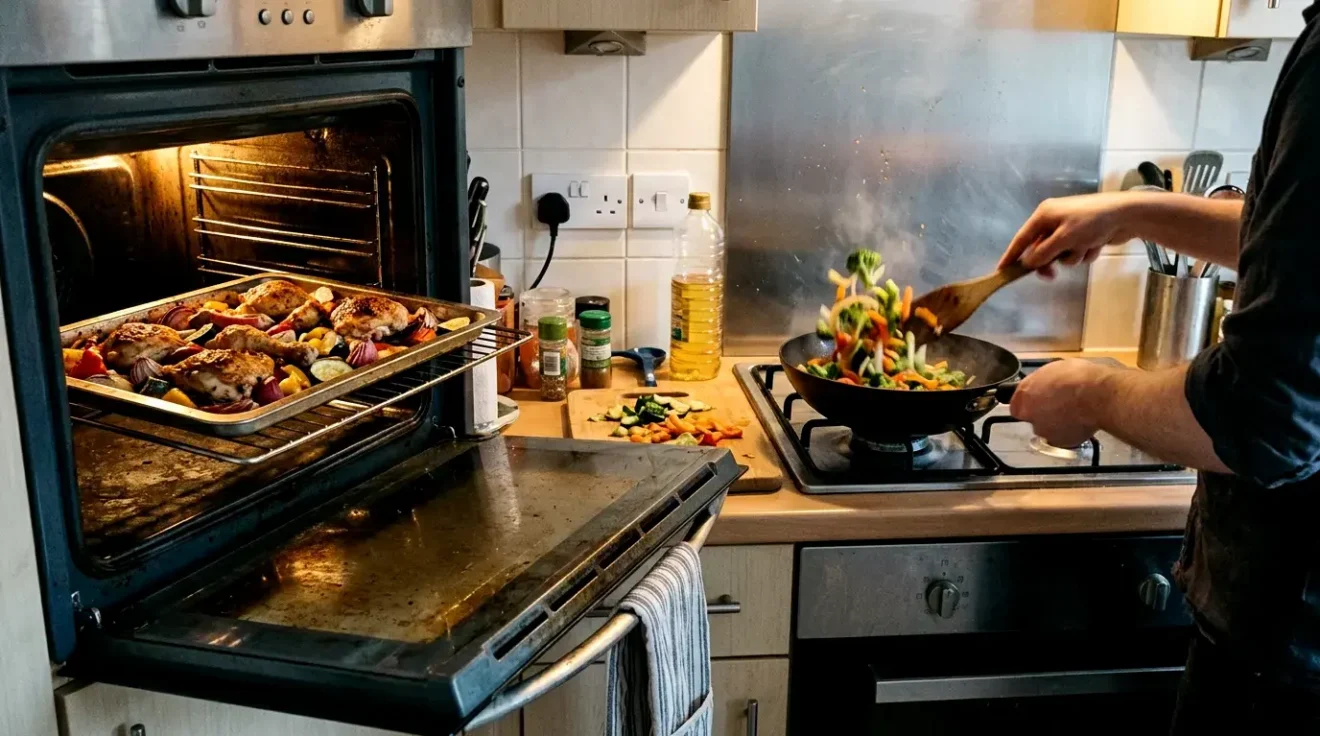
One-pot meals sit somewhere between the two. A bean and vegetable chilli, for example, can combine ingredients in a single saucepan and simmer while you prepare a side. The main risk is poor timing or too much liquid, particularly when combining ingredients with different cooking requirements.
The following comparison describes typical practical trade-offs rather than measured cooking-time results. Individual recipes, equipment and portions can change the outcome.
| Practical factor | Traybake | Stir-fry | One-pot meal |
|---|---|---|---|
| Active attention | Usually lower after preparation | Usually high during cooking | Variable, often moderate |
| Total cooking time | Often longer because of roasting | Often shorter with prepared ingredients | Depends on simmering requirements |
| Washing-up | Typically one tray plus utensils | Pan, utensils and possible preparation bowls | Typically one main pot plus utensils |
| Ingredient flexibility | Good for suitable roasting ingredients | Good for quick-cooking combinations | Good for pulses, vegetables and sauces |
| Best use | Busy-at-home evenings | Fast, focused cooking | Flexible family dinners |
Use start-to-washed-up time as your personal measure of convenience. A stir-fry cooked quickly may still feel demanding after extensive chopping and cleaning. Conversely, a traybake might allow you to finish other jobs while dinner roasts.
Whichever format you choose, check that every ingredient is cooked safely. Chicken and certain frozen vegetables, for example, cannot simply be assumed ready because other ingredients on the tray or in the pan are cooked.
Picking a suitable format removes one source of effort, but a few common recipe-design mistakes can still make everyday cooking unnecessarily difficult.
Which Healthy-Recipe Mistakes Make Everyday Cooking Harder Than It Needs to Be?
The most troublesome healthy-recipe mistakes are overcomplicating ingredients, relying on exact shopping lists, forgetting leftovers and neglecting flavour. Each makes cooking less convenient or enjoyable than necessary. Simpler recipes become more dependable when they use familiar seasonings, allow sensible substitutions, produce useful extra portions and taste satisfying without demanding complicated preparation.
A lengthy ingredient list is not automatically a problem, but it can become one when several items are needed for only a teaspoon or two. Build a modest collection of seasonings that work across meals, such as garlic, paprika, mixed herbs, mustard and lemon. They can create different flavours without requiring a special shopping trip for every dinner.
Always give a recipe a fallback version. If broccoli is unavailable, could green beans or another suitable vegetable work? If a dish normally uses chicken, could chickpeas or another appropriate protein be substituted? Some changes also require different cooking times, quantities or liquid levels, so substitutions should follow the cooking method rather than being made indiscriminately.
Portion planning matters too. Preparing an extra serving of soup, chilli or roasted vegetables can make another meal easier. But extra portions are only useful when they are stored safely and actually wanted.
The Food Standards Agency‘s cooking and leftovers guidance advises refrigerating cooked leftovers within two hours, eating refrigerated leftovers within 48 hours or freezing them if they will not be eaten in that period. Reheated leftovers should be steaming hot throughout and reheated only once. Some foods, including cooked rice, need particular attention to their specific safety guidance.
Finally, do not confuse nutritious cooking with flavourless cooking. A squeeze of lemon, a little vinegar, herbs, spices or mustard can make a substantial difference. Appropriate amounts of fat and seasoning also contribute to enjoyment; reducing salt or saturated fat does not require abandoning flavour.
Five practical steps to make a healthy recipe repeatable
- Audit one favourite recipe: write down its ingredients and active preparation tasks. Your deliverable is a simplified shopping and cooking list.
- Identify its essential flavour: mark the sauce, seasoning or texture you want to preserve. Your deliverable is one clearly identified flavour anchor.
- Create two substitutions: choose one suitable alternative vegetable and one alternative protein or staple, with any cooking adjustments noted. Your deliverable is a fallback ingredient pair.
- Plan the extra portion: decide whether you will eat it within the safe storage period or freeze it. Your deliverable is a labelled leftover container or a clear storage plan.
- Cook and evaluate: record the active effort, washing-up and whether you would genuinely want the meal again. Your deliverable is a keep, adjust or weekend-only decision.
Once a dish survives ingredient shortages, busy evenings and the leftovers test, it becomes a stronger candidate for a regular dinner rotation.
When Should You Repeat a Healthy Recipe Instead of Constantly Searching for New Ideas?
Repeat a healthy recipe when it consistently tastes good, fits your schedule and uses ingredients you can obtain easily. You do not need a new dinner idea every night to eat well. A small collection of dependable recipes can make shopping and cooking more straightforward, provided the overall diet remains varied and the meals do not become monotonous.
Trying something unfamiliar can be enjoyable, but it introduces decisions about ingredients, techniques, timings and quantities. Familiar recipes remove many of these uncertainties. You already know which pan to use, what needs chopping first and how the finished dish should taste.
One useful household strategy is to develop a personal collection of eight to ten proven dinners, then rotate them according to the week’s demands. This is a suggested organisational tool, not an evidence-based optimal number.
The rotation might include a vegetable and bean chilli, chicken traybake, lentil curry, pasta with tomato and vegetables, fish with potatoes, egg-based dinner, stir-fried noodles and a flexible grain bowl. The exact dishes should reflect budget, household preferences and dietary requirements.
Repeat favourites weekly or fortnightly while leaving one meal for experimentation. That creates room to discover something new without turning every evening into a cooking project.
Repetition should not mean eating an identical combination constantly. A familiar traybake can use carrots one week and cauliflower the next. A grain bowl can feature different vegetables, sauces or protein sources. Variety across the day and week remains important, including different fruit, vegetables and other food groups.
The deciding factor is the second-time test: cook the dish again without the excitement of a first attempt. Did you enjoy it as much? Was shopping easy? Did the preparation feel reasonable?
If the answer is yes, the recipe deserves consideration for your regular rotation. If it was delicious but exhausting, keep it for a less busy day rather than forcing it into your weekday schedule.
A reliable rotation becomes even more flexible when you understand how the meals work, rather than depending entirely on their written instructions.
Why Can Learning a Few Cooking Methods Be More Useful Than Saving Hundreds of Recipes?
Learning a few cooking methods makes everyday meals more adaptable because each technique works with many different ingredients. A recipe explains how to prepare one specific dish; a cooking method helps you build multiple dishes from what is available. Once you understand roasting, quick pan cooking, sauce-making and grain-bowl assembly, you can rely less on exact shopping lists.
A saved recipe may call for a particular vegetable, protein or dressing. If one ingredient is missing, you must decide whether to shop again or find a replacement recipe. Understanding the underlying method gives you more options.
For example, roasting vegetables and suitable protein components together is a transferable skill. You learn how ingredient size affects cooking, why crowded trays can prevent browning and why different foods may need to be added at different times.
Similarly, learning to make a basic tomato sauce means you can use it with pasta, beans, vegetables or another compatible dish without starting a completely new recipe every time.
Four especially useful methods to practise are:
- Tray roasting: combine vegetables and suitable protein ingredients, adjusting size, arrangement and timings.
- One-pan stovetop cooking: soften aromatics, cook ingredients in a suitable sequence and finish with seasonings or sauce.
- Simple sauce-building: combine an appropriate base with herbs, spices and acidity, then adjust consistency and taste.
- Grain-bowl assembly: bring together cooked grains, vegetables, a protein source and a complementary dressing.
Practise each method with a familiar combination before improvising more freely. You may eventually stop measuring some seasoning ingredients, but food safety, cooking temperatures and important liquid ratios still require care.
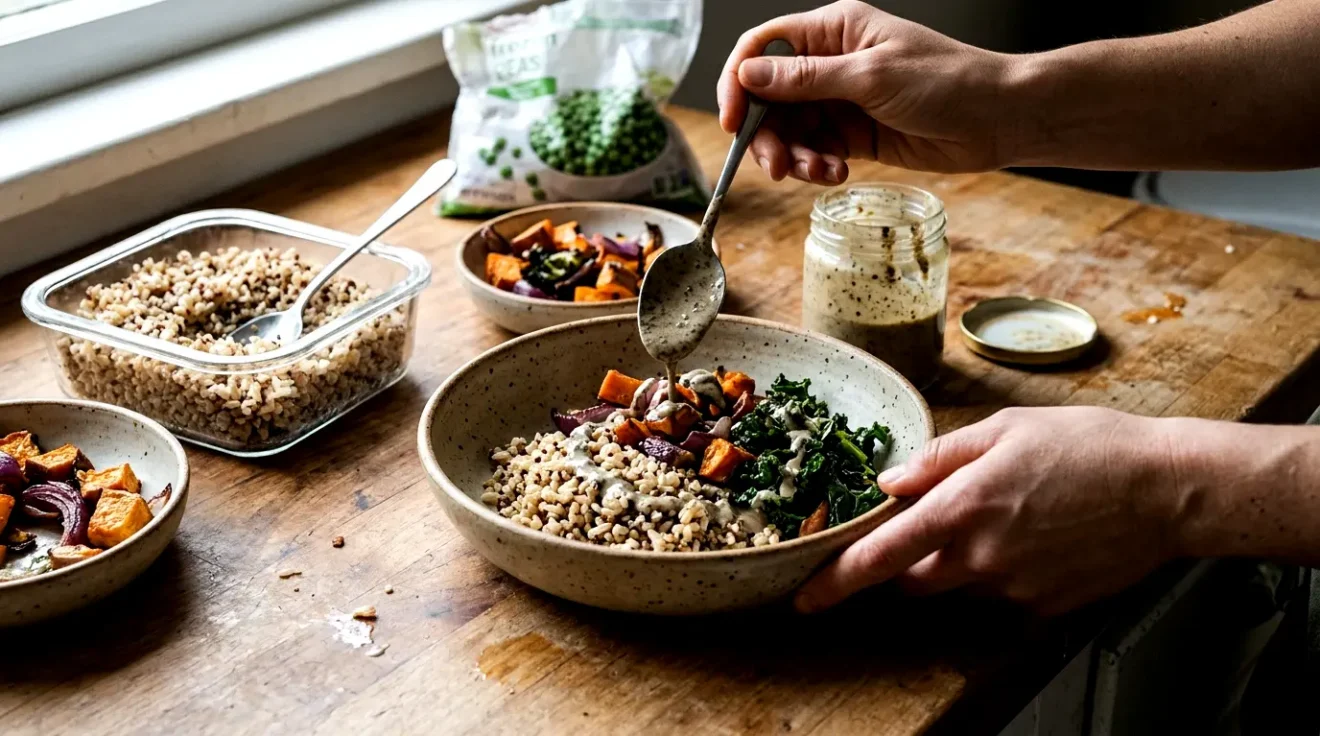
Imagine opening the fridge to find cooked lentils, carrots, spinach and a partly used jar of tomato sauce. With method knowledge, those ingredients suggest several possible dinners: a lentil and vegetable saucepan meal, a tomato-based pasta sauce or a warm grain bowl.
This is a hypothetical kitchen example, not a documented household outcome. It demonstrates how method knowledge can turn available ingredients into choices rather than obstacles.
Collecting recipes still has value, particularly for unfamiliar cuisines or precise techniques. The problem arises when collecting more instructions substitutes for practising the ones you already have.
With a few dependable techniques and meals in place, weekly planning becomes a question of choosing combinations rather than designing five completely separate dinners.
How Can You Plan Five Dinners While Leaving Room for Schedule Changes?
Plan five dinners as flexible meal options rather than assigning every dish to a fixed weekday. Buy ingredients that work across several meals, use the most perishable foods first and keep one dinner based on frozen or cupboard staples. This approach allows meals to move around when work, family commitments or energy levels change unexpectedly.
A rigid schedule can unravel after one late meeting. If Monday’s fresh fish dinner moves to Thursday without considering its use-by date, the original plan may no longer be safe or practical. A flexible plan keeps the meals but changes their sequence according to ingredient condition and household availability.
Consider this hypothetical five-dinner plan for a household that enjoys a mixture of vegetable-based and protein-rich meals. The dishes are examples, not a prescribed nutritional programme.
| Dinner option | Main ingredients | When to use it | Useful flexibility |
|---|---|---|---|
| Fish, potatoes and greens | Fresh fish, potatoes, green vegetables | Early, according to the fish’s use-by date | Frozen fish can be planned instead, following its cooking instructions |
| Chicken and vegetable traybake | Chicken, peppers, carrots, potatoes | According to chicken storage requirements | Change the vegetables to suitable alternatives |
| Vegetable and bean chilli | Tinned beans, tomatoes, vegetables | Any suitable evening | Use different beans or vegetables |
| Egg and vegetable dinner | Eggs, vegetables, wholegrain toast | A relatively quick evening | Use available suitable vegetables |
| Frozen vegetable and chickpea curry | Frozen vegetables, chickpeas, curry seasonings | Built-in backup evening | Relies mainly on freezer and cupboard ingredients |
The meals are slots, not appointments. If Wednesday becomes unexpectedly busy, prepare the backup curry or another suitable quick option and move the remaining dinner to a different evening. Check storage dates before rearranging meals involving perishable ingredients.
Preparation can also be flexible. Instead of assembling five complete meals in advance, prepare useful components: wash and chop suitable vegetables, mix a dressing or cook grains when they will be stored and handled safely.
Component preparation has an advantage: roasted vegetables might accompany a protein one evening and appear in a grain bowl another. A sauce can complement different meals without obliging you to eat the same completed dish repeatedly.
40,554 adults
A 2017 observational study of French NutriNet-Santé participants found associations between meal planning, dietary quality and food variety. The study cannot establish that planning caused those outcomes, and its findings are not automatically generalisable to households in England.
International Journal of Behavioral Nutrition and Physical Activity: a 2017 observational study of meal planning and diet quality.
The research offers context for considering meal planning, but it does not establish that five flexible dinners outperform a fixed schedule. The five-slot method is a practical organisational suggestion: try it and adjust it to your household.
The strongest weekly plan is one that tolerates a difficult evening. Combining this flexibility with familiar recipes and reusable cooking skills provides the foundation for easier home cooking.
Key takeaways for a sustainable cooking routine
- Decide which dinner methods you can use confidently, rather than relying on a completely new recipe every evening.
- Make your weekly rotation flexible enough to accommodate ingredient substitutions and unexpected schedule changes.
- Keep convenient ingredients available so cooking remains achievable when time or energy is limited.
How Can Everyday Cooking Become Easier Without Relying on Ready Meals?
Everyday cooking becomes easier when reliable recipes, adaptable methods and convenient ingredients work together. A small dinner rotation reduces the need for constant planning, while frozen vegetables, tinned pulses and other useful shortcuts reduce preparation. The goal is not to cook everything from scratch or eliminate ready meals, but to make enjoyable home cooking manageable on most evenings.
A practical routine begins with three foundations: a collection of dinners you genuinely like, a handful of techniques you know how to use and a shopping list that supports several combinations.
For example, keeping tinned chickpeas, wholewheat pasta, frozen vegetables and suitable sauces available means you can prepare several different meals without building a separate shopping list for each one.
Convenience ingredients are not necessarily complete convenience meals. Frozen peas, tinned lentils and ready-cooked grains can shorten active preparation while leaving you in control of how the meal is assembled and seasoned.
However, convenience foods vary. A jarred sauce may be useful as a base, but its salt, sugar and saturated-fat content can differ between products. Compare labels when choosing regularly used ingredients. Ready-cooked grains also require attention to their packet instructions and storage requirements.
There is no need to treat all ready meals as nutritionally equivalent or automatically unsuitable. Some can contribute to a balanced diet, depending on their ingredients, portion sizes and what else is eaten throughout the day or week.
The practical distinction is control and flexibility. A complete ready meal requires minimal preparation but may offer limited scope to adapt portions, vegetables or flavours. Cooking from convenient components often lets you make those decisions yourself, although it still involves some effort and equipment.
A simple weekly structure could look like this:
- Choose familiar dinners that match your busiest evenings.
- Buy overlapping ingredients for several meals rather than separate specialist items.
- Reserve one cupboard-and-freezer dinner for disruptions.
- Prepare selected components when doing so genuinely saves effort.
- Keep one opportunity to try a new recipe without making novelty compulsory.
Measure success by what happens after an unusually busy week. If you can still prepare a meal you enjoy without a major shopping trip, complicated instructions or excessive cleaning, your routine is becoming more resilient.
Start with one favourite dinner this week. Simplify its preparation, identify a sensible ingredient substitution and cook it again on a normal working evening. Keep what works, adjust what does not and gradually build a collection of meals you look forward to making.
Can a healthy dinner use mostly frozen or tinned ingredients?
Yes. Frozen vegetables, tinned pulses and other cupboard staples can contribute to a balanced diet. Choose products that suit the dish, compare added salt or sugar where relevant and follow preparation instructions. The overall combination of food groups matters more than whether every ingredient is fresh.
How can you make a healthy dinner more filling without making it complicated?
Consider combining a suitable protein source, higher-fibre carbohydrate and vegetables, with enough food to satisfy your appetite. For example, adding chickpeas to a vegetable soup or pairing roasted vegetables with potatoes and beans can make a more substantial meal without requiring an entirely new recipe.
Is it better to cook from scratch or use prepared ingredients?
Neither approach is automatically healthier. A meal assembled from frozen vegetables, tinned beans and a suitable sauce can be nutritious and practical, while a scratch-cooked dish may still contain excessive salt or saturated fat. Ingredient quality, overall balance, portion suitability and enjoyment are more useful considerations than the amount of preparation involved.
What if different people in the household dislike the same vegetables or sauces?
Use adaptable meals with shared components and optional additions. A grain bowl, baked potato meal or pasta dinner can allow different vegetables, sauces or suitable protein toppings without preparing entirely separate recipes. Keep a familiar flavour or texture available while introducing changes gradually.
How do you know when a healthy recipe is worth keeping?
Cook it at least twice, including once on an ordinary busy evening. Check whether the ingredients were affordable and accessible, the preparation manageable, the result enjoyable and the washing-up acceptable. If you still want to make it again, it is a good candidate for your personal dinner rotation. This is a practical household test rather than a scientifically validated standard.