
Oats at breakfast, beans stirred into a jacket potato filling, wholemeal bread at lunch and an extra serving of vegetables at dinner can all help increase your daily fibre intake. These familiar foods are easy to find in English supermarkets, require little additional preparation and fit into meals you may already enjoy.
The challenge is not necessarily knowing that fibre matters. It is finding changes that feel manageable, taste satisfying and do not leave you uncomfortable afterwards. Switching everything to wholegrain overnight or suddenly eating large portions of lentils may be less successful than making a few modest improvements consistently.
UK guidance recommends 30g of fibre per day for adults, yet many people consume substantially less. The most practical approach is to combine different sources of fibre across meals, increase portions gradually and pay attention to digestive tolerance.
There is no need to build an entirely new diet around specialist ingredients. A few versatile supermarket staples, sensible substitutions and a little variety can make ordinary meals noticeably more fibre-rich.
Easy ways to eat more fibre every day
- Start with familiar staples: porridge oats, wholemeal bread, lentils, beans, vegetables, fruit and potatoes with their skins.
- Improve one meal at a time by adding a fibre-rich ingredient or replacing part of a refined carbohydrate with a wholegrain alternative.
- Increase fibre gradually, drink enough fluid and adjust portions if bloating or changes in bowel habits occur.
- Why Can a Low-Fibre Meal Leave You Hungry Again Sooner Than Expected?
- How Can You Add More Fibre Without Completely Changing What You Eat?
- Oats, Lentils or Wholemeal Bread: Which Fibre Source Fits Your Meal Best?
- What Can Go Wrong When You Double Your Fibre Intake Too Quickly?
- When Should You Add New Fibre-Rich Foods One at a Time?
- How Can You Swap Refined Carbs for Higher-Fibre Options Without Changing the Whole Meal?
- Why Does Eating a Wider Variety of Plants Matter for the Gut Microbiome?
- How Can You Support Gut Health Without Following a Complicated Diet?
Why Can a Low-Fibre Meal Leave You Hungry Again Sooner Than Expected?
A low-fibre meal may leave you hungry sooner because it provides less of the bulk and digestive slowing that certain fibres contribute to fullness. Some soluble fibres can slow gastric emptying and carbohydrate absorption, while foods containing fibre often require more chewing. However, lasting satisfaction also depends on protein, fat, portion size and overall meal composition.
Imagine eating two slices of white toast with jam for breakfast. They provide carbohydrate, but relatively little fibre or protein. Depending on the portion and your appetite, you may find yourself looking for a snack before lunch.
Now consider porridge oats with berries and plain yoghurt. Oats contain beta-glucan, a soluble fibre that forms a viscous mixture during digestion. The berries add further fibre, while the yoghurt supplies protein. This combination may provide a more satisfying breakfast, although individual responses vary.
There are two useful ways to think about fullness:
- Physical fullness: The volume, water content and structure of a meal can contribute to the sensation of having eaten enough.
- Lasting satisfaction: Fibre, protein, fat and the way carbohydrates are digested can influence appetite in the hours afterwards.
A simple personal check is to notice when genuine hunger returns after comparable meals. This is not a precise test of fibre intake, but it can help identify combinations that work for your appetite.
Liquid meals deserve particular attention. A smoothie made from fruit may provide some fibre, especially when the whole fruit is blended, but it may be less satisfying than eating the fruit alongside a substantial meal. Likewise, a white rice bowl topped with vegetables can look nutritious while remaining relatively low in fibre if the vegetable portion is small.
96%
Of adults in the UK National Diet and Nutrition Survey for 2019–2023 did not meet the recommended fibre intake. Average intake among adults aged 19–64 was 16.4g per day, compared with the 30g recommendation.
These UK-wide findings include England but are not England-only measurements. They show why improving ordinary meals is a relevant goal for many adults, without proving that an individual’s fibre intake determines exactly when hunger returns.
Once you have identified which meals could benefit from more fibre, the next step is to improve them without abandoning the foods you already like.
How Can You Add More Fibre Without Completely Changing What You Eat?
The easiest way to add fibre is to keep your regular meals and introduce one useful ingredient at a time. Add berries to porridge, beans to a jacket potato, lentils to a pasta sauce or vegetables to a familiar casserole. Small additions are often simpler to maintain than replacing your entire eating routine.
This addition-before-substitution approach works particularly well when you already have a collection of dependable meals. You need only identify where fibre is missing.
For example, a jacket potato can stay on your weekly menu. Eating the skin contributes fibre, while adding beans or a vegetable-rich filling can increase the total further. A standard tomato pasta sauce can accommodate lentils without requiring you to prepare a separate dish.
Similarly, frozen berries can be added directly to porridge, yoghurt or overnight oats. Frozen vegetables can go into soups, curries and stews without washing or chopping.
Keeping two or three reliable fibre anchors in the kitchen reduces planning effort:
- Whole oats: Suitable for porridge, overnight oats and adding to homemade breakfast mixtures.
- Tinned beans or lentils: Convenient for soups, baked potatoes, sauces and salads.
- Frozen vegetables or berries: Useful when fresh produce is unavailable or you want to avoid food waste.
These choices are consistent with NHS advice on getting more fibre into your diet, which recommends obtaining fibre from varied everyday foods.
Shopping labels are helpful, provided you know what to examine. In the UK, the familiar red, amber and green traffic-light labels focus on fat, saturated fat, sugars and salt rather than fibre. Look at the nutrition information on the back or side of the packet for fibre content.
A product labelled high in fibre must contain at least 6g of fibre per 100g under the applicable nutrition-claim criteria. However, that does not mean every serving provides 6g. A small cereal bar or thin slice of bread may contribute considerably less.
Compare the actual portion you eat, not just the wording on the front of the packet. Similarly, a product described as multigrain or seeded is not automatically higher in fibre than every wholemeal alternative.
With a few versatile ingredients ready to use, choosing the right fibre source for each meal becomes more straightforward.
Oats, Lentils or Wholemeal Bread: Which Fibre Source Fits Your Meal Best?
Oats are a convenient breakfast choice, lentils work especially well in substantial lunches and dinners, and wholemeal bread is one of the simplest everyday replacements for refined grains. All three provide fibre, but they differ in preparation time, texture, protein content and digestive tolerance. The best choice is the one that fits your meal and agrees with you.
Fibre is not one uniform substance. Soluble fibre includes types that dissolve or form viscous mixtures in water, while insoluble fibre contributes to stool bulk and supports bowel regularity. Many plant foods contain mixtures of both, so categorising an entire food as exclusively one type is misleading.
Oats contain beta-glucan, a soluble fibre. Lentils contain both fibre and plant protein, making them useful as part of a main dish. Wholemeal bread provides a convenient mixture of fibres from the grain, although amounts depend on the recipe.
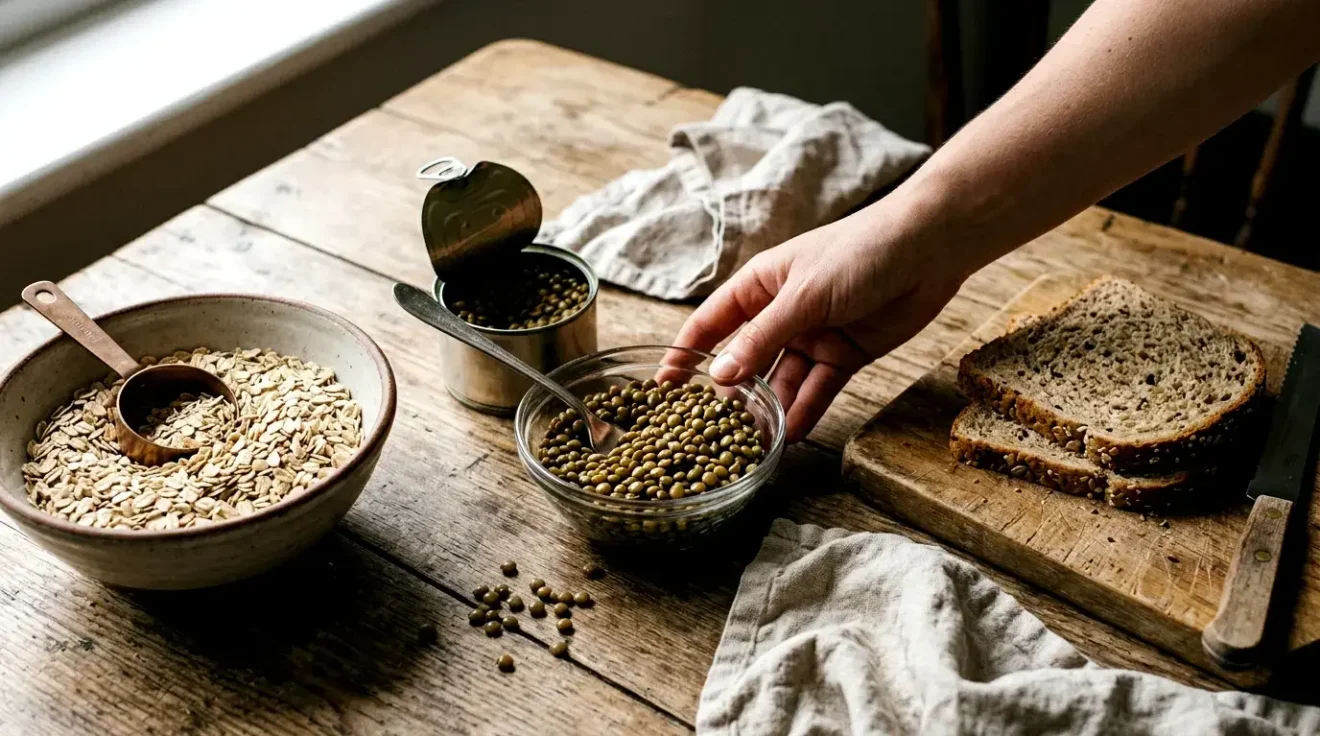
Rather than ranking these foods by a single fibre figure, compare how easily each one fits your existing eating pattern.
| Practical consideration | Oats | Lentils | Wholemeal bread |
|---|---|---|---|
| Best everyday use | Porridge, overnight oats, breakfast bowls | Soups, salads, curries, pasta sauces | Toast, sandwiches, quick lunches |
| Main advantage | Convenient source of soluble fibre | Provides fibre alongside plant protein | Easy replacement for white bread |
| Preparation | Short cooking time or overnight soaking | Tinned varieties are ready to use; dried varieties require cooking | Ready to eat or toast |
| Digestive consideration | Portion size still matters | Larger servings may cause gas or bloating | Wheat-based bread may trigger symptoms in sensitive individuals |
| Useful shopping check | Compare plain oats with sweetened products | Check seasoning and added salt in prepared products | Compare fibre per slice and per 100g |
For busy households, tinned lentils remove most of the preparation barrier. Drain and rinse them, then stir them into a sauce or soup. Dried lentils are another option, but cooking requirements vary by type. Cooked pulses can also be frozen in meal-sized portions for later use, provided they are cooled, stored and reheated safely.
Bread deserves a closer look because seeded, granary and wholemeal recipes can differ substantially. Seeds may contribute fibre, but a seeded loaf is not necessarily made predominantly from wholemeal flour. The fibre declaration gives a more useful comparison than appearance alone.
Digestive comfort is another reason to rotate foods rather than depend on one high-fibre staple. Someone who finds a large lentil meal uncomfortable may prefer a smaller portion combined with rice and cooked vegetables.
Food choice matters, but the quantity introduced at once can make an even greater difference to how comfortably your digestive system adapts.
What Can Go Wrong When You Double Your Fibre Intake Too Quickly?
Doubling your fibre intake suddenly can cause bloating, abdominal discomfort, excess wind and changes in bowel movements. Gut bacteria ferment certain fibres and other carbohydrates, producing gas, while additional fibre changes the amount of material moving through the digestive tract. Increasing intake gradually and drinking enough fluid can help make the transition more comfortable.
Consider someone who normally eats white toast, white rice and only small portions of vegetables. If they immediately change to large bowls of bran cereal, wholemeal pasta and generous servings of beans, their digestive system encounters several unfamiliar changes at once.
The issue is not necessarily that these foods are unsuitable. Portion size and speed of introduction can influence tolerance, as can the particular fermentable carbohydrates present.
Three common situations can make the transition unnecessarily difficult:
- Replacing nearly every refined grain with a wholegrain version over a few days.
- Adding a large bean or lentil meal every day before establishing tolerance for smaller portions.
- Taking a fibre supplement while simultaneously making substantial dietary changes.
Some fibres are fermented more readily than others. Gas production can increase when gut bacteria receive a larger supply of fermentable material, particularly when the change is abrupt. Not every fibre has the same effect, and people differ in their sensitivity to intestinal gas and distension.
Water also matters. Certain fibres absorb or retain water, so an increase in fibre should be accompanied by adequate fluid intake. Without sufficient fluid, some people may find that constipation worsens instead of improving.
If bloating develops, there is no need to abandon all fibre-rich foods automatically. Stop increasing the amount, consider returning to the last comfortable portion and allow symptoms to settle before trying a smaller step forward.
This is a practical adjustment strategy, not a guarantee that every digestive symptom is caused by fibre. Persistent pain, significant bowel changes, bleeding or unexplained weight loss should be assessed by a healthcare professional.
A five-step plan for increasing fibre comfortably
- Record a typical day: Write down your usual breakfast, lunch, dinner and snacks to create a simple starting food record.
- Choose one improvement: Identify one familiar meal and one fibre-rich ingredient you could add, producing a specific meal-change plan.
- Begin with a modest portion: Note the amount introduced so the next serving can be compared with your first attempt.
- Check fluid intake and comfort: Keep a brief record of drinks, bloating and bowel changes over the following days.
- Review before increasing again: Record whether to maintain, reduce or cautiously increase the portion based on how you feel.
When digestive reactions are difficult to interpret, testing new foods separately can help reveal which ingredients and portions are easier to tolerate.
When Should You Add New Fibre-Rich Foods One at a Time?
Introducing fibre-rich foods individually is particularly useful if you experience bloating, abdominal discomfort or unpredictable bowel habits. Trying one new food and keeping other meals relatively consistent for several days makes it easier to notice possible patterns. This is a practical self-observation method rather than a medically established testing schedule for everyone.
Suppose you introduce chickpeas, wholemeal bread and a large onion-based vegetable dish on the same day. If you feel uncomfortable afterwards, it may be difficult to identify which change contributed, whether the portion was too large or whether the combination mattered.
Introducing those foods separately provides clearer information, although symptoms can also depend on stress, sleep, other meals and existing digestive conditions.
Some foods deserve extra attention because they contain fermentable carbohydrates known as FODMAPs. These can contribute to gas and digestive symptoms in susceptible people, particularly those with irritable bowel syndrome (IBS).
The Monash University FODMAP food list identifies legumes as sources of galacto-oligosaccharides and onions, garlic and leeks as sources of fructans. Wheat-based foods can also contain fructans.
These classifications do not mean that beans, onions or wholemeal bread should be avoided by everyone. They explain why two fibre-rich foods may feel different to someone with sensitive digestion. Preparation, food type and portion size can also affect FODMAP exposure.
A manageable approach is to keep a short food-and-symptom note instead of maintaining a complicated diary. Record the new ingredient, approximate portion and how your digestion feels afterwards.

For instance, you might try a small serving of lentils in a familiar pasta sauce and observe how you feel across subsequent meals. If the portion is comfortable, you can consider increasing it gradually. If symptoms occur, the record provides a useful starting point for understanding what changed, although it does not establish a diagnosis.
Timing can help. Trying an unfamiliar pulse dish during a quieter weekend may feel more practical than doing so before a long commute or an important social event. This is a matter of convenience, not a requirement for digestive adaptation.
People with persistent digestive symptoms should seek advice from a GP or appropriately qualified dietitian. A restrictive low-FODMAP diet is not a routine requirement for increasing fibre and should not be started casually.
Once you know which foods are comfortable, everyday carbohydrate substitutions offer another route to increasing fibre without changing the structure of your meals.
How Can You Swap Refined Carbs for Higher-Fibre Options Without Changing the Whole Meal?
Replace part or all of a refined carbohydrate with a higher-fibre alternative while keeping the rest of the meal familiar. Brown rice can replace white rice, wholewheat pasta can replace regular pasta, and wholemeal wraps can replace white wraps. Mixing the two versions initially is a practical option when you want to adjust taste, texture or digestive tolerance.
A chicken curry does not need a new recipe simply because you want more fibre. You can serve it with a mixture of brown and white rice. Likewise, a familiar bolognese sauce can be paired with half wholewheat and half regular pasta.
This half-and-half approach also works when different household members prefer different textures. It avoids treating an immediate complete switch as the only acceptable outcome.
Common substitutions include:
- White rice to brown rice: Start with a mixture, allowing for different cooking times or preparing the two varieties separately.
- Regular pasta to wholewheat pasta: Try a smaller wholewheat proportion initially if the firmer texture or nuttier flavour is unfamiliar.
- White bread to wholemeal bread: Toasting may make the texture more appealing for some people.
- White wraps to wholewheat wraps: Compare labels rather than assuming all products marketed as wholewheat provide the same fibre content.
When comparing products, grams of fibre per 100g help establish a consistent basis, but fibre per actual serving tells you what the swap contributes to your meal.
For example, comparing two bread products solely by their fibre per 100g can be misleading if one slice is substantially larger than the other. The same applies to cereal servings and portions of cooked pasta.
Cooking methods and texture are practical considerations. Brown rice generally takes longer to cook than standard white rice. Wholewheat pasta may have a different firmness, while some quick-cook varieties offer a more convenient option.
Wholegrain products are not automatically lower in calories. Depending on their formulation and serving size, they may contain similar or occasionally more energy than refined alternatives. Fibre is an important benefit, but it is not the only nutritional characteristic worth considering.
If the swap produces discomfort, use a smaller proportion rather than forcing a full replacement. Consistent partial substitutions can still contribute to a higher-fibre eating pattern.
After the easiest substitutions become routine, rotating a wider selection of grains, vegetables and pulses can add another dimension to your diet.
Why Does Eating a Wider Variety of Plants Matter for the Gut Microbiome?
Eating different plant foods exposes your gut microbiome to a wider range of fibres and other plant compounds. Because gut microbes differ in their ability to process these substances, dietary variety may influence which microbial communities thrive. Research has found associations between greater plant-food diversity and differences in microbiome composition, although this does not prove that a particular weekly plant count improves health.
The gut microbiome includes bacteria and other microorganisms living in the digestive tract. Some help break down dietary substances that human digestive enzymes cannot process fully, producing compounds such as short-chain fatty acids during fermentation.
Different fibres have different structures. That means repeatedly eating one fibre source is not nutritionally identical to eating the same total amount of fibre from a varied selection of plants.
The distinction is between two complementary goals:
- Fibre quantity: The total number of grams consumed, assessed against the UK adult recommendation of 30g per day.
- Plant variety: The diversity of plant foods eaten, which can provide different fibre types and plant compounds.
The American Gut Project examined dietary variety and gut microbiome characteristics in a large, self-selected international citizen-science cohort. Its analysis compared people who reported eating more than 30 different plant types per week with those reporting fewer than 10.
What the American Gut Project found
The project analysed microbiome specimens contributed by more than 10,000 citizen-scientists, primarily from the United States, United Kingdom and Australia. Researchers examined relationships between reported dietary plant diversity and microbial composition.
Greater plant-food variety was associated with differences in gut microbial communities. The observational design does not establish that eating 30 plants per week causes better digestive health or that this is a clinically necessary threshold.
The original findings are described in the American Gut Project research published in mSystems.
For everyday shopping, variety does not require exotic ingredients. Different beans, lentils, wholegrains, seasonal vegetables, fruit, nuts, seeds, herbs and spices all contribute plant diversity.
A practical rotation might include porridge oats and berries at breakfast, a bean salad for lunch and a vegetable curry containing several different vegetables at dinner. Over the week, you could alternate lentils with chickpeas or brown rice with bulgur wheat.
Counting herbs, spices and small ingredients can be a motivating personal game, but there is no universally validated scoring system in which every tiny quantity earns an equivalent nutritional point. Nor is 30 different plants an official UK dietary requirement.
The important principle is to avoid depending exclusively on the same few foods. A broader selection can make meals more interesting while providing a range of dietary fibres and other nutrients.
Variety is most useful when it remains manageable. The final goal is a repeatable eating pattern, not an increasingly complicated set of nutritional rules.
Key takeaways for a sustainable fibre routine
- Build around foods you already enjoy, then introduce different plants gradually as your meals and digestion allow.
- Use the 30g daily fibre recommendation as a general reference, not a reason to make sudden changes or count every mouthful.
- Judge progress through consistency and comfort rather than expensive products, strict plant-count targets or elaborate tracking systems.
How Can You Support Gut Health Without Following a Complicated Diet?
You can support everyday gut health by eating fibre-containing foods regularly, choosing a variety of plant ingredients, staying adequately hydrated and increasing fibre at a comfortable pace. A simple routine built around familiar meals is usually more practical than restrictive diets, specialist supplements or intensive microbiome tracking. The aim is consistency, not perfect nutritional calculations.
A manageable day might begin with porridge and berries, continue with a wholemeal sandwich and vegetable soup, and finish with a meal containing beans, lentils or vegetables alongside a grain or potato.
These are examples rather than a prescribed menu. Portion sizes, nutritional needs and digestive tolerance differ, so a routine should be adjusted to individual circumstances.
For planning purposes, three habits can provide a useful foundation: include a fibre source at each main meal, choose an additional plant variety during an ordinary supermarket shop, and increase portions progressively while drinking enough fluid.
There is also no need to turn every meal into a high-fibre challenge. Some days will contain fewer fibre-rich choices than others. Looking at your usual eating pattern over time is more useful than treating one low-fibre lunch as a failure.
Fermented foods are often discussed alongside gut health. Plain yoghurt, kefir and other fermented products can complement a varied diet, depending on their ingredients and your tolerance. Some contain live microorganisms, but not all fermented foods deliver the same organisms or demonstrated effects.
Fibre and fermented foods serve different roles. Certain fibres are used by existing gut microorganisms, while fermented foods may supply microorganisms or products of fermentation. Neither makes the other universally necessary, and specialist probiotic products are not a requirement for eating more fibre.
Similarly, most adults trying to improve an otherwise low-fibre diet do not need commercial microbiome tests, multiple fibre supplements or complicated food-elimination protocols as a starting point. These interventions have different purposes and may be relevant in selected clinical situations, but they are not substitutes for balanced eating habits.
A more useful way to assess your routine is to notice three everyday indicators:
- Bowel regularity: Whether your usual bowel movements become more comfortable and predictable.
- Digestive comfort: Whether bloating, wind or abdominal discomfort becomes more frequent or troublesome after particular changes.
- Post-meal satisfaction: Whether your usual meals leave you comfortably satisfied without depending on constant snacking.
These signs are subjective and cannot diagnose microbiome health or measure fibre intake precisely. Changes may be gradual, and improvement is not guaranteed for every individual.
If persistent constipation, diarrhoea, abdominal pain or troublesome bloating continues despite dietary adjustments, speak to a GP. Blood in the stool, unexplained weight loss or other concerning symptoms also warrant medical assessment rather than indefinite self-management.
At your next meal, choose one familiar fibre-rich ingredient, use a portion that feels comfortable and build from there. A sustainable habit matters more than trying to achieve every fibre or plant-variety goal immediately.
Can frozen and tinned foods help increase fibre intake?
Yes. Frozen vegetables and berries retain fibre, while tinned beans, chickpeas and lentils provide convenient ways to add fibre to everyday dishes. Check ingredient lists and nutrition labels because added sauces, seasoning and serving sizes vary between products. Tinned pulses can be drained and rinsed before use.
Is fruit juice as useful as whole fruit for fibre?
Generally, no. Juicing removes much of the fibrous material found in whole fruit, so fruit juice usually provides considerably less fibre. Smoothies made from blended whole fruit may retain more fibre than juice, depending on their ingredients and preparation, but whole fruit remains a straightforward choice when you want both fibre and a food that requires chewing.
Do peeled potatoes still contain fibre?
Yes. Potato flesh contains some fibre, but keeping the edible skin generally increases the amount available in the serving. Jacket potatoes and other skin-on preparations are therefore convenient ways to obtain more fibre without choosing a different food.
Does cooking vegetables remove their fibre?
Cooking changes vegetable texture and can affect some components, but it does not simply eliminate dietary fibre. Cooked vegetables can still contribute meaningfully to fibre intake. Amounts depend on the vegetable, preparation method, whether skins or other parts are removed, and the portion consumed.
Should you take a fibre supplement if you rarely reach 30g a day?
Not necessarily. For most adults, improving ordinary meals with wholegrains, vegetables, fruit and pulses is a reasonable first step because these foods provide nutrients beyond fibre. Supplements may be useful in particular circumstances, but the appropriate type and amount depend on individual needs, medications and digestive conditions. Ask a pharmacist, GP or registered dietitian for personalised advice if needed.