A tray of roasted vegetables can look like a generous dinner, yet still leave you searching the cupboards later. The problem is rarely that plant-based food cannot be filling. More often, the plate has been assembled around vegetables alone, with the protein, carbohydrate and flavour treated as optional extras.
A satisfying plant-based meal needs enough substance to work as the main event. That generally means combining a useful protein source, a substantial starchy ingredient, vegetables and something that makes the whole dish enjoyable to eat. Lentils, chickpeas, potatoes, rice, tofu, seasonal greens and everyday cupboard seasonings can do the job without specialist meat substitutes.
The trick is to think in components rather than complicated recipes. Once you know what each component contributes, you can turn a few supermarket ingredients into a warm grain bowl, a hearty curry or a properly substantial salad. You can also change the flavours and textures without starting from scratch every evening.
The essentials of a satisfying plant-based meal
- Build around protein, starchy carbohydrates, vegetables and flavour rather than simply increasing the quantity of vegetables.
- Choose chickpeas, lentils or tofu according to the dish’s texture, cooking method and seasoning.
- Prepare reusable components in advance, then combine them differently to keep meals interesting.
- Why Can a Vegetable-Heavy Dinner Still Leave You Hungry Later?
- How Can You Build a Balanced Plant-Based Bowl From Four Simple Components?
- Chickpeas, Lentils or Tofu: Which Base Fits Your Plant-Based Meal Best?
- Which Mistakes Make Plant-Based Meals Taste Flat Even When the Ingredients Are Fresh?
- When Should You Batch-Cook Plant-Based Staples to Save Time Without Eating Repetitively?
- Beans, Lentils or Tofu: Which Swap Works Best in Different Flexitarian Meals?
- How Can You Build a Grain Bowl From Five Simple Components?
- What Makes a Healthy Recipe Easy Enough to Cook Again and Again?
Why Can a Vegetable-Heavy Dinner Still Leave You Hungry Later?
A vegetable-heavy dinner can leave you hungry because a large portion does not necessarily provide enough energy or protein for your needs. Vegetables contribute water, fibre and volume, but a plate built almost entirely around them may lack the substantial ingredients that help make a meal satisfying. The solution is usually to improve the meal’s composition, not simply pile on more vegetables.
Consider a bowl of tomato soup with a small piece of bread, or a large salad of lettuce, cucumber and roasted peppers. Both can be enjoyable and provide useful nutrients. Yet neither necessarily contains much protein or enough energy to function as a substantial evening meal.
The distinction is between feeling physically full and remaining comfortably satisfied. Stomach volume contributes to fullness, while protein, fibre, overall energy intake and the composition of the meal all influence appetite. Individual responses vary, so there is no universal formula that guarantees a particular number of hours without hunger.
Three practical factors are worth checking:
- Protein: lentils, beans, chickpeas or tofu provide a more substantial foundation than vegetables alone.
- Energy: potatoes, grains, bread and other starchy foods help a meal supply enough fuel.
- Volume and texture: vegetables add fibre, water, colour and something satisfying to chew.
A generous plate of roasted carrots and courgettes may emphasise the third factor while neglecting the first two. Add butter beans, a baked potato and a lemony dressing, and the same vegetables become part of a more substantial dinner.
This approach is consistent with the NHS Eatwell Guide, which recommends variety across vegetables, starchy carbohydrates and protein foods. Its dietary proportions apply across the overall diet, not as compulsory measurements for every individual plate.
If you regularly feel hungry within two hours of dinner, use that as a prompt to review the meal rather than as proof of a specific deficiency. Portion size, activity, appetite and earlier food intake can all influence when hunger returns.
Once the missing components are clear, a simple bowl-building framework makes the next dinner easier to assemble.
How Can You Build a Balanced Plant-Based Bowl From Four Simple Components?
Build a plant-based bowl from four components: a protein-rich food, a starchy base, vegetables and a flavour element. Together, they make the meal more substantial, varied and enjoyable than vegetables served alone. The proportions can change with appetite, ingredients and the rest of your day’s diet, so the method is a flexible cooking framework rather than a strict nutritional formula.
Begin with a grain, potato or other starchy ingredient, then add a generous serving of beans, lentils or tofu. Fill the remaining space with cooked or raw vegetables and finish with a dressing, sauce or pickle that connects the flavours.
For an everyday visual guide, think of roughly half the bowl containing vegetables, with the other half shared between the starchy and protein-rich components. Adjust this starting point according to your needs rather than treating it as an official portion recommendation.
A small quantity of tahini dressing may contribute substantial richness, whereas a spoonful of vinegar-based dressing mainly adds sharpness. Likewise, avocado can make a bowl more energy-dense, so the balance of the other ingredients can change without making the meal incomplete.
| Component | What it contributes | Everyday ingredients |
|---|---|---|
| Protein-rich food | Protein, with fibre from pulses | Chickpeas, lentils, beans, tofu |
| Starchy base | Energy and substance | Potatoes, barley, rice, bulgur |
| Vegetables | Fibre, volume, variety | Kale, carrots, cabbage, squash |
| Flavour element | Acidity, richness or savoury depth | Lemon-tahini sauce, salsa, pickles |
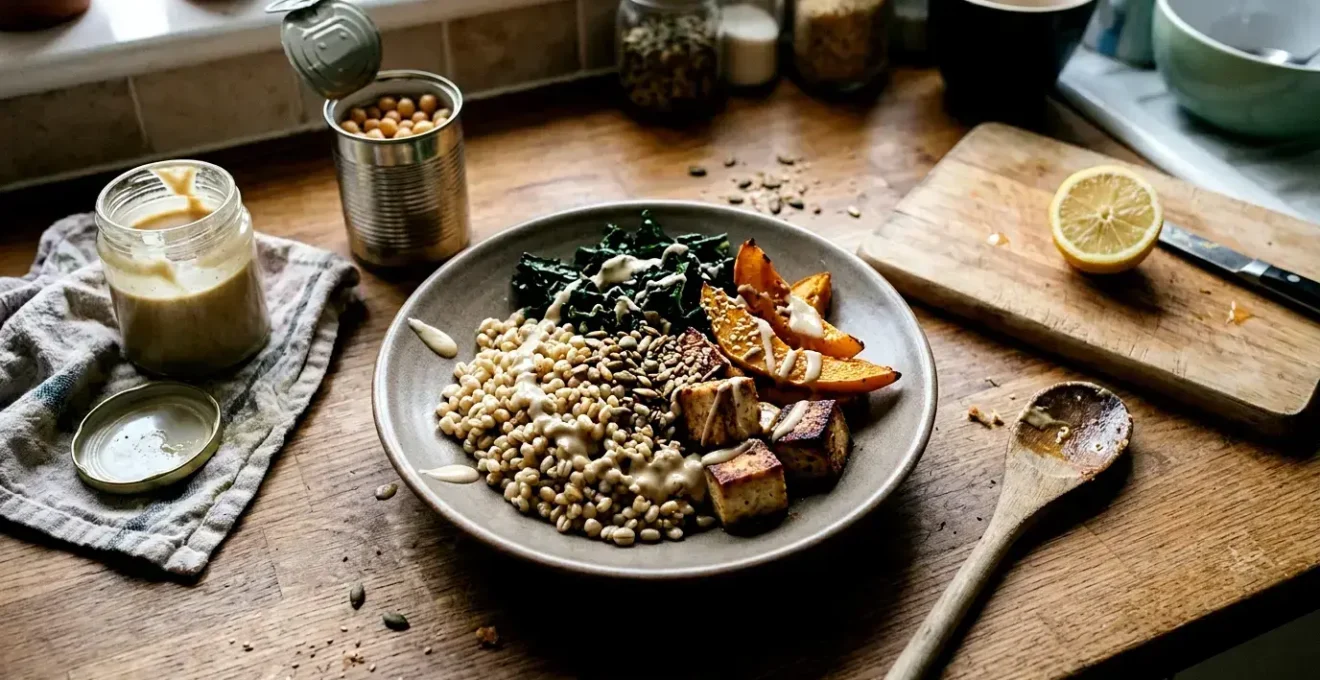
For a cold evening, try cooked pearl barley with green lentils, roasted butternut squash and wilted kale. Finish with tahini loosened with lemon juice and water. The barley contributes substance, the lentils add protein and fibre, and the sauce gives the vegetables a richer finish.
In warmer weather, use bulgur, chickpeas, chopped tomatoes, cucumber and parsley with a lemon-and-olive-oil dressing. The same structure produces a fresher meal without changing the underlying method.
It is important not to confuse a complete-feeling meal with a nutritionally complete diet. NHS guidance on vegan diets highlights nutrients such as vitamin B12, iodine, vitamin D and calcium that may require particular attention through food choices, fortified products or supplements.
Once the basic structure works, choosing the protein base becomes the next decision because it determines much of the meal’s texture and cooking style.
Chickpeas, Lentils or Tofu: Which Base Fits Your Plant-Based Meal Best?
Choose chickpeas for firm, hearty meals that benefit from roasting; lentils for sauces, dals and one-pot cooking; and tofu for dishes where a neutral, protein-rich ingredient can carry a strongly flavoured sauce. All three are useful, but they behave differently during cooking. The right choice depends on texture, preparation time, seasoning and personal tolerance rather than a single nutritional ranking.
Tinned chickpeas are especially convenient when dinner needs to come together quickly. Drain, rinse and season them before adding them to a curry, crushing them for a sandwich filling or roasting them until their surfaces become firmer.
Dried lentils offer two noticeably different approaches. Red split lentils soften and break down, making them useful for thick dals and soups. Green or brown lentils generally retain more shape, suiting salads, warm bowls and vegetable-based sauces.
Tofu behaves differently again. Firm tofu can be dried, cut into cubes and pan-fried until the edges colour, while silken tofu is better suited to smooth sauces, creamy mixtures and delicate preparations. Pressing may improve the texture of some water-packed firm tofu, but it is not always necessary.
| Base | Preparation and texture | Best meal applications | Flavour direction |
|---|---|---|---|
| Chickpeas | Tinned versions are ready to use after draining; firm and slightly nutty | Roasted bowls, curries, crushed sandwich fillings | Cumin, paprika, lemon |
| Red lentils | Cook relatively quickly and soften into a thick mixture | Dal, soup, thick sauces | Turmeric, ginger, mustard seeds |
| Green or brown lentils | Take longer than red split lentils and tend to retain their shape | Salads, vegetable pies, hearty ragù | Thyme, tomato, smoked paprika |
| Firm tofu | Benefits from surface drying and browning for a crisp exterior | Stir-fries, rice bowls, skewers | Soy sauce, garlic, ginger |
In English supermarkets, tinned chickpeas and dried lentils are accessible cupboard staples. Tofu is also widely sold, although prices, pack sizes and availability vary. Compare the cost per usable serving rather than assuming one ingredient is always cheapest.
There is also a digestive consideration. Beans and lentils contain fibre and carbohydrates that can contribute to gas or bloating in some people. NHS advice on bloating identifies them among possible triggers, but this does not mean everyone should avoid pulses.
If large legume portions cause discomfort, experiment with smaller portions and different ingredients. Alternating chickpeas, lentils and tofu can provide cooking variety and may help you identify what suits you personally. Persistent or recurrent bloating warrants medical advice.
Even a well-chosen base needs effective seasoning. Without it, a substantial plant-based meal can still taste disappointingly flat.
Which Mistakes Make Plant-Based Meals Taste Flat Even When the Ingredients Are Fresh?
Plant-based meals often taste flat because they lack a balance of salt, acidity, savoury depth and contrasting textures. Fresh ingredients alone cannot provide every flavour dimension. Seasoning during cooking, browning ingredients, using aromatic spices and finishing with lemon or vinegar can make the same vegetables and pulses taste far more satisfying without relying on excessive chilli or complicated sauces.
One common mistake is waiting until the finished meal to add all the seasoning. A little salt at appropriate stages helps bring the individual ingredients into focus, although salty ingredients such as soy sauce, miso and stock must also be considered.
Another mistake is adding ground spices directly to a watery mixture without developing their aroma. Briefly warming suitable spices in oil can release their fragrance and distribute their flavour more evenly. Watch the temperature carefully: burnt spices make a dish bitter rather than richer.
The missing dimension may also be umami, the savoury depth that makes a sauce taste rounded. Mushrooms, browned onions, tomato purée, miso, soy sauce and nutritional yeast can provide this character without meat.
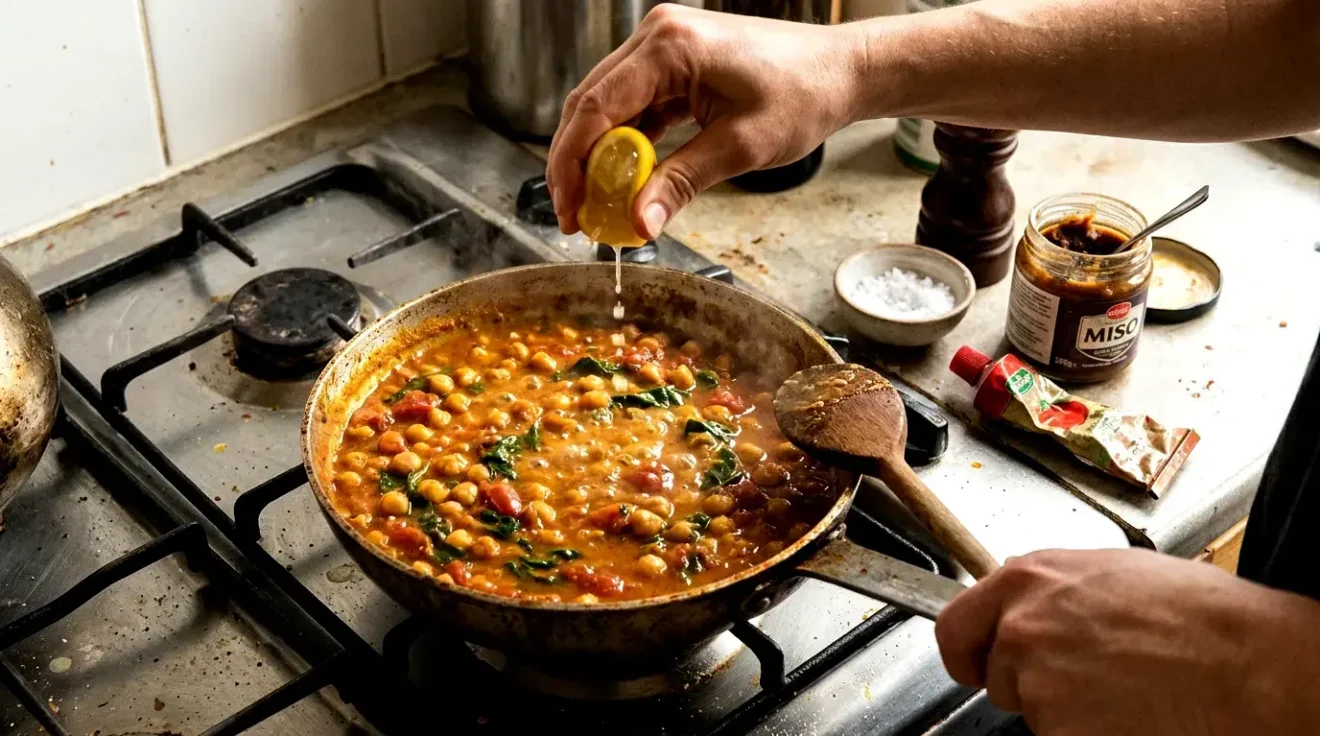
Acidity is equally useful. A thick chickpea curry that tastes heavy can become brighter with lemon juice. A lentil salad may need a splash of vinegar to distinguish the earthy pulses from the vegetables around them.
Texture creates another layer of interest. A bowl containing only soft lentils, steamed courgettes and tender rice may taste monotonous even when seasoned. Toasted seeds, fresh spring onions or crisp roasted chickpeas introduce contrast.
Instead of automatically reaching for hot sauce, diagnose what is missing. Chilli introduces heat, but heat cannot substitute for acidity, salt or savoury depth.
The five-step flavour repair checklist
- Check seasoning: taste a spoonful and decide whether a small seasoning adjustment improves it. The result is a clearly seasoned base.
- Test acidity: add a few drops of lemon juice or vinegar to a separate spoonful. The result is a comparison before altering the whole pan.
- Assess richness: consider a little olive oil, tahini or another suitable fat. The result is a more rounded mouthfeel where needed.
- Check savoury depth and heat: assess whether tomato purée, miso or warmed spices would improve the dish. The result is a deliberate flavour choice rather than indiscriminate chilli.
- Finish with contrast: choose a crunchy or fresh topping. The result is a serving-ready plate with more than one texture.
These checks are a practical cooking technique, not a rule that every dish needs all five adjustments. If the meal already tastes balanced, adding more can make it worse.
Keeping a few versatile flavour ingredients available makes this easier, especially when dinner relies on components prepared earlier in the week.
When Should You Batch-Cook Plant-Based Staples to Save Time Without Eating Repetitively?
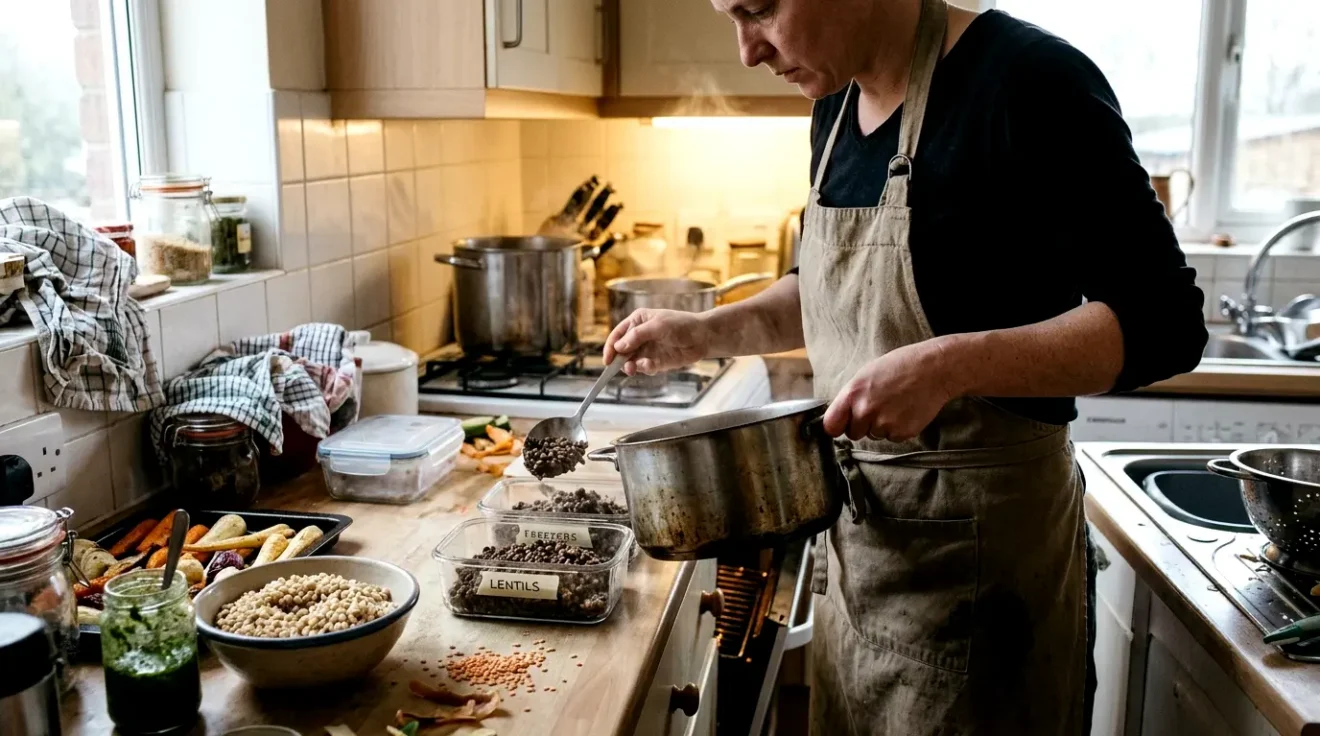
Batch-cook plant-based staples when they take time to prepare but can be used in several different dishes. Cooked lentils, grains, roasted vegetables and versatile sauces are generally more adaptable than fully assembled meals. Store them appropriately and combine them with fresh ingredients later, so one preparation session supports different dinners instead of producing identical portions throughout the week.
The most useful distinction is between preparing components and preparing complete plates. A large container of finished lentil curry has one established flavour. A container of simply seasoned lentils can become a tomato ragù, a warm salad or a spiced filling.
Similarly, cooked barley can be served with roasted vegetables, stirred into a soup or dressed with lemon and herbs. Roasted carrots might accompany chickpeas on Monday and form part of a warm grain bowl another evening.
A practical preparation session might involve cooking one grain, preparing one protein-rich component and making one flexible sauce. Fresh herbs, citrus, crunchy toppings and seasonings can be added when serving.
Food safety matters more than how ambitious the preparation session is. The Food Standards Agency guidance on cooking and leftovers advises cooling cooked leftovers and refrigerating them within two hours, eating refrigerated leftovers within 48 hours or freezing them, and reheating food until steaming hot throughout. Reheat leftovers only once.
Rice needs particular care because of risks associated with incorrect cooling and storage. Cool it promptly, follow specific safe-storage guidance and avoid leaving cooked rice at room temperature.
For longer planning, freeze suitable portions promptly in freezer-safe containers. Cooked lentils and many grains generally freeze well, although textures can change after thawing. Delicate salad leaves and crunchy toppings are better prepared near serving time.
Consider one hypothetical batch of chickpeas:
- First meal: simmer them with tomatoes, cumin and spinach for a curry.
- Second meal: roughly crush a separate portion with lemon, herbs and olive oil for toast.
- Third meal: roast another portion with paprika for a grain bowl.
The dishes share an ingredient, but not their final texture or flavour. Portions intended for later meals should be frozen within the safe storage window rather than left refrigerated throughout the week.
There is no need to dedicate every Sunday to batch-cooking. One short preparation session whenever your schedule allows may be enough, particularly if tinned pulses and quick-cooking grains fill the gaps.
Once those ingredients are available, they also become convenient substitutes in familiar recipes that traditionally contain meat.
Beans, Lentils or Tofu: Which Swap Works Best in Different Flexitarian Meals?
For flexitarian cooking, lentils work especially well in minced-meat-style sauces and vegetable pies, beans suit chilli and hearty stews, and firm tofu fits stir-fries or strongly seasoned dishes. These swaps are most successful when they match the original recipe’s texture and cooking method. A partial replacement can also be useful when you want to reduce meat without changing a familiar family meal completely.
The important question is not simply which ingredient contains protein. It is what the original meat contributes to the recipe. Mince provides small pieces and savoury flavour; slow-cooked meat contributes texture and richness; strips of meat in a stir-fry behave differently again.
For shepherd’s pie, cooked green or brown lentils can give the filling a pleasantly substantial texture beneath mashed potatoes. Onions, mushrooms, tomato purée and stock help build savoury depth. Red split lentils can also work, but their softer finish creates a different result.
In chilli, kidney beans or black beans offer a creamy interior that suits a tomato-based sauce. A mixture of beans and finely chopped vegetables can make the dish hearty without requiring a specialist replacement product.
Firm tofu is a practical option for stir-fries. Dry its surface, brown it separately if you want crisp edges, and coat it in a soy, ginger and garlic sauce near the end. Silken tofu is not interchangeable in this technique because its delicate texture is easily broken.
| Original dish | Useful plant-based alternative | Adjustment that helps |
|---|---|---|
| Shepherd’s pie | Green or brown lentils | Add mushrooms and tomato purée for depth |
| Chilli con carne | Kidney beans or black beans | Build flavour with cumin, paprika and browned onions |
| Bolognese-style sauce | Lentils and finely chopped mushrooms | Simmer with tomatoes and aromatics |
| Stir-fried meat strips | Firm tofu | Brown before adding a strong sauce |
| Hearty meat stew | Butter beans or mixed pulses | Adjust cooking time and add savoury ingredients |
A swap is not always a one-for-one replacement. Beans may soften rather than retain a chewy texture, while tofu will not reproduce the fibres of slow-cooked meat. It is often more successful to make a delicious version of the dish on its own terms than to demand an identical result.
If your household prefers a gradual change, mix lentils with a smaller quantity of mince in a familiar sauce. That produces a flexitarian rather than fully plant-based meal, but it can be a practical transition. For a completely plant-based version, replace the meat entirely and use savoury ingredients to build the sauce.
For evenings when you want to create a dish without following a traditional meat-based recipe, the grain bowl provides an even more adaptable starting point.
How Can You Build a Grain Bowl From Five Simple Components?
Build a grain bowl with five components: a cooked grain, a protein source, vegetables, something crunchy and a dressing. The extra crunchy element distinguishes this approach from the basic four-component bowl by making texture contrast a deliberate part of the meal. Choose a grain that suits your time and ingredients, season it while warm, then assemble the remaining components just before eating.
Pearl barley offers a pleasantly chewy base for autumn and winter meals, especially with mushrooms, kale and roasted roots. Bulgur cooks more quickly and suits lighter bowls containing tomatoes, cucumber and fresh herbs.
Brown rice works well with tofu, sesame and ginger dressing, although it needs careful cooling and storage if prepared ahead. Quinoa offers a different, slightly nutty texture, while freekeh brings a smoky character where available.
The choice does not need to involve specialist shopping. Pearl barley, rice and bulgur provide enough variety for many home kitchens, while potatoes or another starchy ingredient can replace grains entirely when that is more convenient.
| Grain | Practical character | Suggested combination |
|---|---|---|
| Pearl barley | Chewy, hearty; requires a longer simmer | Lentils, mushrooms, kale |
| Bulgur | Quick to prepare; light and fluffy | Chickpeas, cucumber, parsley |
| Brown rice | Nutty, substantial; comparatively longer cooking | Crispy tofu, greens, sesame |
| Quinoa | Light, slightly nutty | Roasted peppers, beans, lemon |
| Freekeh | Chewy, distinctive smoky flavour | Roasted squash, lentils, herbs |
Assembly order makes a difference. Toss freshly cooked grain with a little dressing while it is warm enough to absorb flavour, then add vegetables at a suitable serving temperature. Arrange the protein over the top, add any remaining sauce and finish with toasted pumpkin seeds, chopped nuts or crispy onions.
For example, combine warm barley with lemon dressing, green lentils, roasted beetroot and spinach. Finish with toasted sunflower seeds. The ingredients share earthy flavours, but the seeds prevent the whole bowl from having a uniformly soft texture.
A grain bowl should also be adjusted to appetite. The five-component method is a culinary template, not a guarantee of nutritional completeness or a requirement to use five separate ingredients every time.
The next challenge is not making one excellent bowl. It is finding a method convenient enough to become part of ordinary weeknight cooking.
What matters for everyday cooking
- Choose recipes that use ingredients already shared across several meals rather than requiring a separate shopping trip.
- Keep the core structure consistent but change sauces, vegetables and textures to create variety.
- Judge a recipe by how comfortably it fits a busy evening, not only by how appealing it looks when finished.
What Makes a Healthy Recipe Easy Enough to Cook Again and Again?
A healthy recipe is easier to repeat when it uses familiar ingredients, requires little active preparation and allows straightforward substitutions. It should fit your usual shopping habits, work with ingredients you can prepare ahead and produce leftovers worth eating. For plant-based meals, repeatability also depends on building enough substance and flavour into the dish without turning every dinner into a lengthy project.
Some recipes look simple but require several fresh herbs, a speciality sauce, three separate pans and ingredients that cannot be reused elsewhere. Others rely on a short list of cupboard staples and a few flexible fresh additions. The second type is often more useful for everyday cooking.
A repeatable plant-based dinner might begin with tinned beans, cooked grains, frozen spinach and a lemon dressing. The next time, you could use lentils, leftover roasted carrots and a yoghurt-style plant-based sauce. The underlying method remains familiar even though the result changes.
Try applying three questions before adding a recipe to your regular rotation:
- Could I make it on a tired weeknight? Consider active preparation, washing-up and the number of separate cooking steps.
- Does it reuse ingredients I already buy? Look for pulses, grains, vegetables and sauces that work in several meals.
- Will the leftovers remain useful? Think about texture, food safety and whether individual components can be frozen or repurposed.
Flexibility is particularly important. A recipe that works only with one exact vegetable or grain becomes inconvenient when that ingredient is unavailable. A reliable everyday recipe should explain which elements can change without losing the dish’s essential character.
For example, a warm lentil bowl can accommodate roasted squash, carrots, mushrooms or broccoli. Its structure remains intact because the lentils contribute substance, the grain or potato supplies energy, and the dressing connects the ingredients.
Healthy eating also works over time rather than depending on perfect individual plates. NHS dietary guidance recognises that balance can be achieved across a day or week. Someone eating entirely plant-based should additionally plan for nutrients such as vitamin B12 and other nutrients requiring particular attention in vegan diets.
The most durable cooking habits are usually built around a small repertoire of adaptable methods, not an endless collection of unrelated recipes. Keep a few reliable combinations, learn how to season them and change ingredients according to season, availability and appetite.
For your next plant-based dinner, choose one protein-rich ingredient, one starchy base, vegetables you already have and a flavourful finishing element. Cook those well, notice what worked, and keep the combination as a starting point for the next variation.
Can a plant-based meal be filling without meat substitutes?
Yes. Everyday ingredients such as beans, lentils, chickpeas, tofu, potatoes and grains can form a substantial meal without specialist replacement products. Combine an appropriate protein-rich ingredient with enough starchy food, vegetables and flavour, adjusting portions to your appetite and needs.
Do plant-based meals always need to contain grains?
No. Potatoes, sweet potatoes, bread and other starchy foods can supply the carbohydrate component. A bean stew with a baked potato, for example, can be just as practical as a grain bowl. Variety across the wider diet matters more than choosing one particular carbohydrate at every meal.
How can you make a plant-based meal more substantial without making it much larger?
Consider adding or increasing a protein-rich food, a starchy ingredient or a suitable source of unsaturated fat instead of simply adding more low-energy vegetables. A spoonful of tahini, some chickpeas or a more generous serving of barley can change the meal’s substance without dramatically increasing its volume.
Is it safe to prepare plant-based meals several days in advance?
Advance preparation is useful when food is cooled, stored and reheated safely. General Food Standards Agency guidance recommends refrigerating cooked leftovers within two hours and eating them within 48 hours or freezing them. Reheat leftovers until steaming hot throughout, and only reheat once. Cooked rice requires additional care.
Does a filling plant-based meal provide every nutrient you need?
Not necessarily. A satisfying meal and a nutritionally adequate overall diet are different things. A varied, well-planned vegan diet can meet nutritional needs, but nutrients including vitamin B12, vitamin D, iodine, selenium and calcium deserve particular attention. Fortified foods or suitable supplements may be needed, especially for vitamin B12.