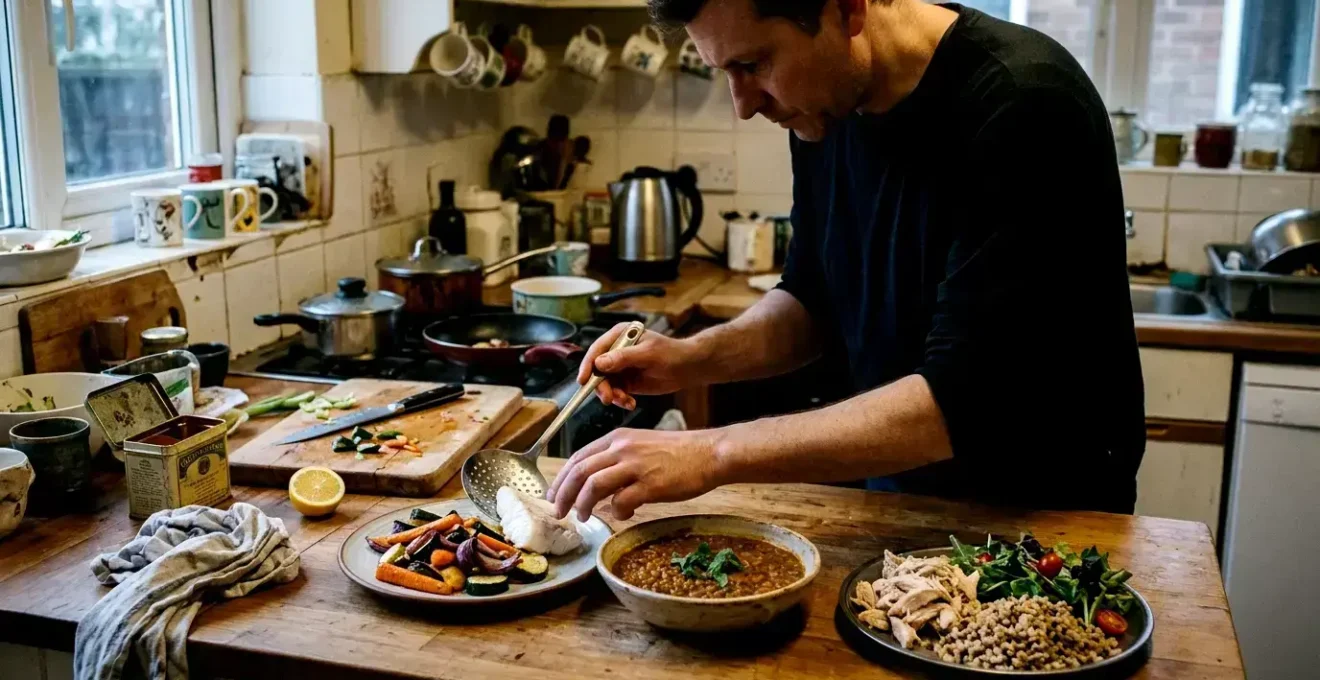
Lean proteins can make everyday meals satisfying without turning dinner into an endless rotation of plain chicken, boiled eggs and steamed fish. The trick is to treat protein as the starting point of a meal, not the entire meal. Cooking methods, fibre-rich accompaniments, sauces and contrasting textures determine whether the finished plate feels substantial and enjoyable.
A chicken breast with plain vegetables may leave you wanting something more. The same chicken served with warm whole grains, crunchy cabbage and a lemon-yoghurt dressing becomes a complete, more interesting meal. Lentils can work just as well, particularly when their fibre and hearty texture complement the rest of the plate.
For home cooks in England, there is no need for specialist ingredients or expensive protein products. Familiar supermarket staples such as frozen cod, chicken, tinned pulses, eggs, tofu and plain yoghurt offer plenty of flexibility.
The most useful approach is to **keep a few reliable protein foods and change how they are cooked, seasoned and served**.
Lean protein meals: the essentials
- Build satisfying plates by combining protein with vegetables, higher-fibre carbohydrates and appropriate amounts of healthy fats.
- Keep familiar proteins interesting by changing cooking techniques, seasonings, sauces and meal formats.
- Choose proteins around your available time, use batch cooking selectively and compare packaged protein products beyond their headline claims.
- Why Does the Type of Protein Change How a Meal Comes Together?
- How Can You Cook Lean Protein Without It Becoming Dry or Bland?
- Chicken, White Fish or Lentils: Which Lean Protein Works Best on a Busy Weeknight?
- When Can a High-Protein Product Be a Poor Substitute for a Simple Protein Food?
- How Can You Prep Protein Once and Use It in Three Different Meals?
- Chickpeas, Lentils or Tofu: Which Base Fits Your Plant-Based Meal Best?
- Eggs, Ricotta or Nut Butter: Which Topping Fits Your Whole-Grain Toast Best?
- What Makes a Healthy Recipe Easy Enough to Cook Again and Again?
Why Does the Type of Protein Change How a Meal Comes Together?
Different protein foods influence a meal’s texture, moisture, fibre content and cooking requirements. Chicken provides a substantial centrepiece, white fish offers a lighter texture, and lentils contribute both protein and fibre. None guarantees fullness on its own: satisfaction also depends on portion size, accompanying foods and the overall composition of the meal.
A useful way to understand this is through four **satiety levers**:
- Protein type: determines the food’s texture, protein contribution and whether it also supplies fibre.
- Cooking method: changes moisture, tenderness and how enjoyable the protein is to eat.
- Accompanying fibre: comes from vegetables, pulses and higher-fibre carbohydrates, helping create a more substantial plate.
- Added fat: contributes flavour and richness, although generous amounts of oil, butter or creamy dressing can substantially increase energy content.
Consider a hypothetical lunch built around grilled chicken. Served alone with a few lettuce leaves, it may feel incomplete. Add wholemeal couscous, tomatoes, cucumber and a modest amount of olive-oil dressing, and the meal offers more variety in texture and a broader mix of nutrients.
The NHS Eatwell Guide supports this balanced approach, recommending varied protein sources alongside higher-fibre starchy foods, fruit and vegetables. It also identifies beans and lentils as useful sources of both protein and fibre.
Cooking time matters just as much as nutritional composition. Eggs, thin chicken portions and white fish suit meals prepared shortly before eating. Dried lentils, firm tofu and slow-cooked lean meat can be useful for advance preparation, although tofu itself can also be cooked quickly.
There is no reliable universal ranking that makes one of these foods the most filling at an identical calorie level. Water content, fibre, portion volume and the rest of the meal complicate that comparison.
Once the structure of the plate is right, the next challenge is preserving flavour and moisture during cooking.
How Can You Cook Lean Protein Without It Becoming Dry or Bland?
Lean proteins stay tender when the cooking method matches their structure and the heat is controlled carefully. Chicken benefits from measured cooking and resting, white fish from gentle heat, and lentils from sufficient simmering liquid. Strong flavour does not require much added fat: herbs, spices, citrus, stock and yoghurt-based sauces can make familiar ingredients taste completely different.
Low-fat meat and fish have less internal fat to contribute richness, making overcooking particularly noticeable. High heat is not always the problem; leaving a delicate ingredient cooking longer than necessary often matters more.
For chicken, use evenly sized pieces, cook thoroughly and allow a short rest before slicing. Resting can help retain juices, but it must never substitute for adequate cooking.
For white fish, poach fillets in gently simmering stock or water with lemon and herbs. Vigorous boiling can damage their delicate texture. The flesh should become opaque and separate readily into flakes when properly cooked.
For lentils, start with enough liquid to keep them submerged, then adjust as they soften. Red lentils absorb liquid and break down into a thick mixture, while green or brown varieties can retain more shape. Add further hot water or stock if the pan begins drying out before they are tender.
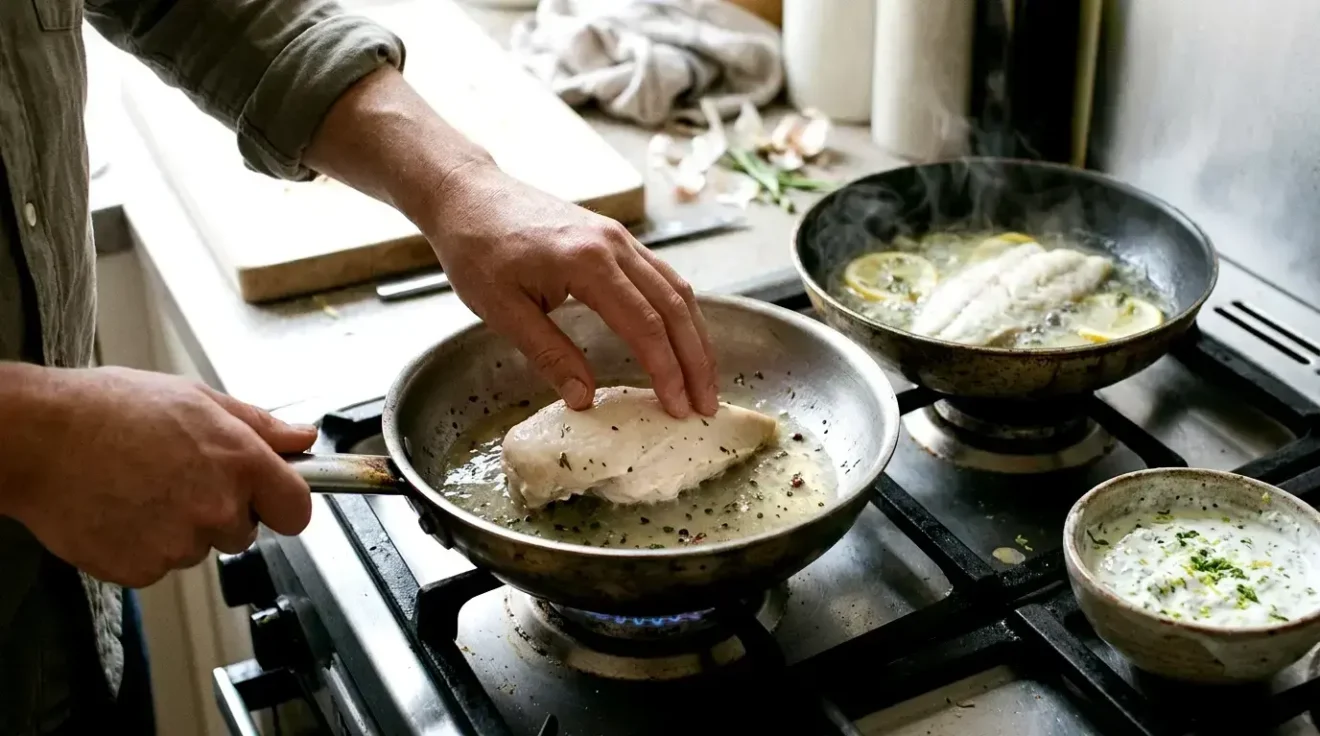
A finger-press can help assess texture, but **firmness alone cannot confirm that chicken is safe to eat**. The Food Standards Agency‘s advice on cooking and reheating food gives a core temperature of 70°C for two minutes, or an equivalent combination such as 75°C for 30 seconds. A food thermometer is the more dependable check.
Without one, cut into the thickest part of the chicken: there should be no pink flesh, the juices should run clear and the meat should be steaming throughout. These visual checks are less precise than measuring temperature.
Flavour can change without changing the underlying protein. For example, one batch of cooked chicken can take three different directions:
- Lemon, oregano and yoghurt for a Mediterranean-style grain bowl.
- Smoked paprika, cumin and tomatoes for a warm wholemeal wrap.
- Ginger, garlic and a little soy sauce for a vegetable stir-fry.
Marinades add surface flavour, while sauces introduced after cooking can restore moisture without extending the cooking time.
A well-cooked protein is only useful on a busy evening if it also fits the time and attention available.
Chicken, White Fish or Lentils: Which Lean Protein Works Best on a Busy Weeknight?
Chicken is a versatile choice when you want a substantial main dish, white fish suits a quick meal with prepared sides, and lentils are practical when you need an inexpensive, fibre-containing base. The best option depends on total cooking time, attention required, freezer availability and whether the rest of the meal is already prepared.
For a typical weekday dinner, the important measurement is not just cooking time. It is the time between opening the fridge and sitting down to eat.
The following times are approximate planning estimates for common preparations, not fixed cooking guarantees.
| Practical factor | Chicken | White fish | Lentils |
|---|---|---|---|
| Typical meal preparation | About 20–35 minutes for small, thawed portions | About 15–25 minutes with quick sides | About 20–30 minutes for split red lentils; faster when pre-cooked |
| Attention needed | Moderate; thorough cooking essential | Low to moderate; delicate and easy to overcook | Occasional stirring and liquid checks |
| Convenient format | Tray-bake, stir-fry, wraps | Poached fillets, oven-baked parcels | Dal, soup, stew, grain bowl |
| Contribution to the plate | Versatile protein centrepiece | Light-textured protein that benefits from substantial sides | Protein, fibre and a hearty base |
| Useful budget option | Frozen portions or larger packs divided at home | Frozen plain fillets | Dried or tinned lentils |
A white fish fillet can be quick to cook, but a plate of fish and a few vegetables may not feel substantial enough for everyone. Add boiled new potatoes, peas or a wholegrain side to make the meal more complete.
Chicken works particularly well when you want to vary cuisines without changing the main ingredient. Lentils are convenient for one-pot dishes, especially when their fibre and thick texture help form the body of the meal.
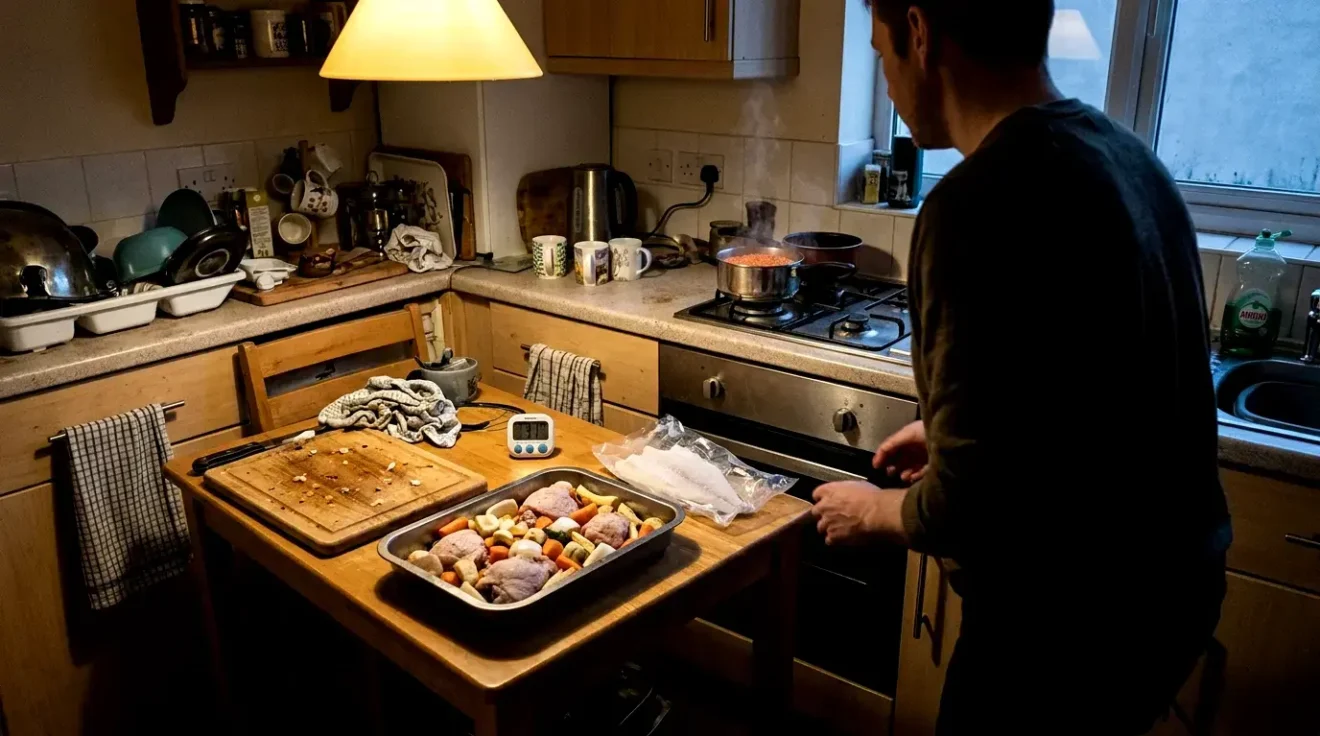
Frozen ingredients can help reduce waste, but they require planning. Some fish products are suitable for cooking directly from frozen, while others need defrosting. Follow the packaging instructions. The same applies to chicken; never assume frozen poultry will cook safely within the timing for thawed portions.
Dried lentils generally cost less per cooked serving than convenient packaged alternatives, although actual value depends on retailer, pack size and cooking costs. Tinned lentils save time and avoid having to cook a large batch.
Split red lentils are particularly useful for rushed evenings. They generally need no soaking and soften in roughly 15–20 minutes, as explained in Good Food‘s overview of lentil varieties and cooking methods.
For a simple decision, choose white fish when sides are ready, chicken when you want a flexible main ingredient, and lentils when a one-pot meal is more convenient.
Convenience matters, but it is worth distinguishing useful shortcuts from packaged foods that offer little beyond a prominent protein claim.
When Can a High-Protein Product Be a Poor Substitute for a Simple Protein Food?
A high-protein product can be a poor substitute when it adds substantial calories, sugars or saturated fat without creating a complete, satisfying meal. Protein bars, flavoured yoghurts and shakes can be convenient, but their protein claims do not establish overall nutritional quality. Simple foods such as eggs, pulses, fish and plain yoghurt often provide more flexibility for building balanced meals.
A product marketed as high in protein is not necessarily low in fat or energy. Nor does a larger protein figure automatically mean it will keep you satisfied for longer.
The useful comparison is between what the product contributes and what you would otherwise eat.
For example, plain yoghurt with berries and oats offers protein alongside fruit, fibre-containing carbohydrates and different textures. A flavoured protein yoghurt may also fit a balanced meal, but its label needs checking rather than assuming it is superior.
UK nutrition labels make this possible. The NHS food-labelling guidance uses the following thresholds for foods:
- Low total fat: 3 g or less per 100 g.
- High total fat: more than 17.5 g per 100 g.
- Low total sugars: 5 g or less per 100 g.
- High total sugars: more than 22.5 g per 100 g.
- Low saturated fat: 1.5 g or less per 100 g.
These are food thresholds, not identical rules for drinks. Total sugars also include naturally occurring sugars, so the figure does not directly reveal how much sugar has been added.
To compare protein relative to energy, divide the grams of protein by the number of calories and multiply by 100. This gives grams of protein per 100 kcal.
For a purely hypothetical comparison, a food containing 15 g of protein and 150 kcal provides 10 g per 100 kcal. Another containing 20 g of protein and 300 kcal provides about 6.7 g per 100 kcal. The second has more protein per portion but less relative to its energy content.
That calculation is a useful screening tool, not a complete nutritional score. Also check the actual portion, saturated fat, sugars, fibre and ingredients. A longer ingredient list is not automatically evidence of an unhealthy product.
The biggest practical problem can be losing the structure of the meal. Replacing a lunch of lentils, vegetables and whole grains with a protein bar removes several elements that may contribute to satisfaction, including volume, texture and fibre. That does not prove the bar will cause overeating, but it makes the two options nutritionally different.
A packaged protein product earns its place when it solves a genuine constraint: travelling, limited cooking facilities or very little preparation time.
For everyday meals at home, simple ingredients often offer greater control over portions, accompaniments and flavour.
How Can You Prep Protein Once and Use It in Three Different Meals?
Prepare a neutral protein base, divide it into portions and give each portion a different flavour, texture and meal format. Cooked lentils can become a dal, salad and soup; chicken can become a grain bowl, wrap and broth-based dish. Safe cooling, storage and reheating are essential, and some delicate proteins are better cooked fresh.
The most effective version of batch cooking starts with a fully cooked, lightly seasoned base. Do not deliberately leave chicken undercooked for finishing later.
For example, cook a pot of green or brown lentils in water or lightly seasoned stock. Divide the cooked lentils into separate portions before adding strongly flavoured ingredients.
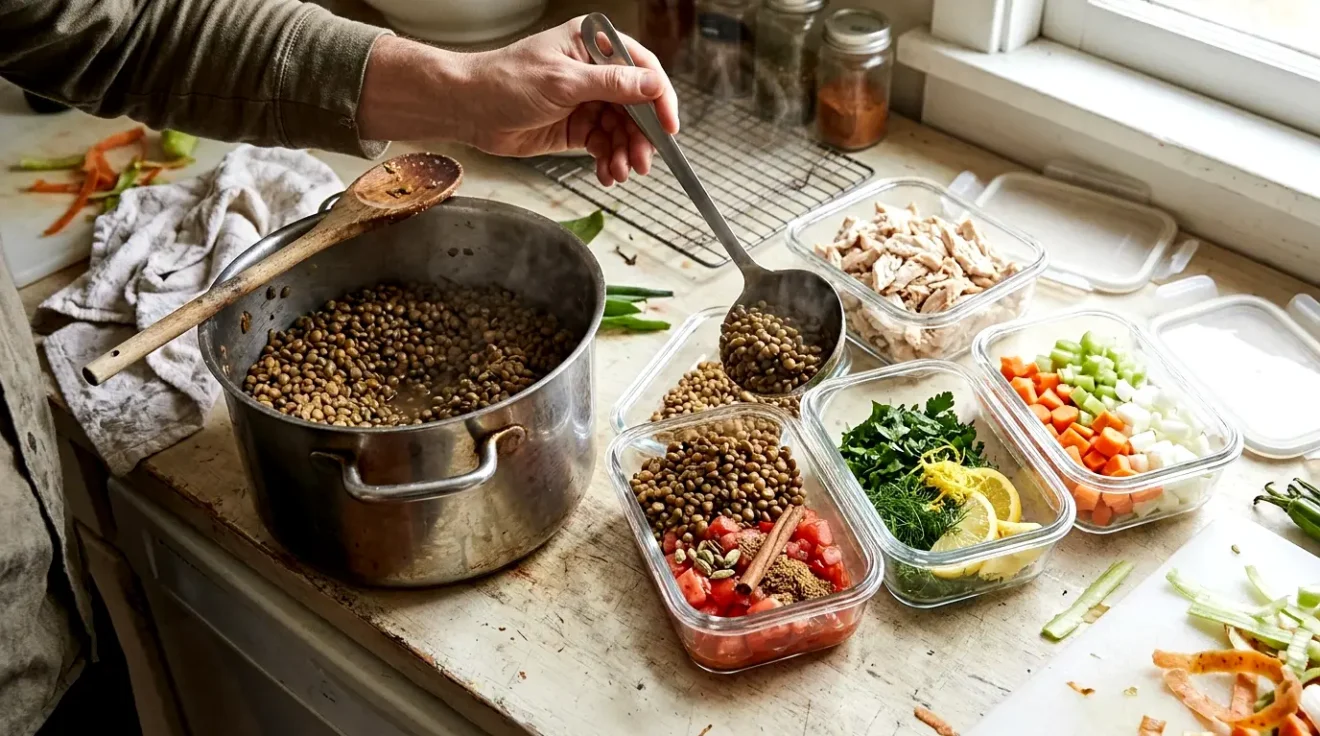
The transformation works on three levels: **change the cuisine, change the format and change the carrier**.
| Meal | Flavour and texture | How to serve |
|---|---|---|
| Spiced dal | Warm with curry spices, tomatoes and a little liquid | With brown rice and spinach |
| Lentil salad | Whole lentils with lemon, parsley and diced cucumber | Over bulgur wheat or salad leaves |
| Vegetable soup | Simmered with stock and vegetables; partly blended | With wholemeal bread |
Chicken offers similar flexibility. Plainly cooked, shredded chicken can be combined with paprika and peppers for wraps, mixed into a lemony grain bowl, or added to a broth with vegetables.
Storage is the critical limit. Under the Food Standards Agency guidance already discussed, cooked leftovers should be cooled and refrigerated within two hours, eaten within 48 hours or frozen. Reheat only once, until steaming hot throughout.
Apply that conservative approach to cooked chicken, lentils and tofu. Divide large batches into smaller shallow containers so they cool more quickly, and avoid leaving cooked food sitting on the worktop for extended periods.
Cooked lentils generally freeze conveniently in portions. Cooked chicken can also be frozen, although reheating may reduce tenderness. Tofu can change texture after freezing, becoming firmer or more porous. White fish and chicken breast can become dry when reheated, making them better candidates for fresh cooking or suitable cold dishes.
Five actions for a practical three-meal protein prep
- Choose one protein base and write down the three meals it will become; the result is a three-meal plan.
- Cook the base fully with mild seasoning; the result is a safe, versatile batch ready for portioning.
- Divide it into meal-sized containers and identify the portions to refrigerate or freeze; the result is a clear storage plan.
- Assign a different seasoning, texture and carrier to each meal; the result is three distinct serving combinations.
- Record when the food was cooked and when each portion will be eaten or frozen; the result is a usable storage schedule.
Batch cooking works best when it respects both food safety and texture, rather than assuming every ingredient improves through reheating.
Chickpeas, Lentils or Tofu: Which Base Fits Your Plant-Based Meal Best?
Chickpeas are useful when a dish needs firm, distinct pieces; red lentils suit thick soups, dals and stews; and firm tofu works well when you want a sliceable or crisp-edged protein centrepiece. The right choice depends on the meal’s texture and cooking method as much as its nutritional content. All three can support varied plant-based meals.
Chickpeas keep their shape when mixed into salads, roasted with spices or added to a tomato-based stew. Tinned chickpeas are especially convenient because they are already cooked and can be drained and rinsed before use.
Dried chickpeas need more preparation, usually including soaking and thorough cooking. They may offer better value for larger batches, but require more planning.
Red lentils behave differently. They soften and break down, naturally thickening sauces and soups. They are useful when the protein base should become part of the dish rather than remain in separate pieces.
Firm tofu provides another texture entirely. It can be cubed for a stir-fry, baked with spices or crumbled into a savoury filling. Pressing excess moisture from suitable firm tofu can improve browning, although not every tofu recipe requires pressing.
| Base | Best texture | Easy meal idea |
|---|---|---|
| Chickpeas | Firm and distinct | Roasted chickpea and vegetable bowl |
| Red lentils | Soft and thick | Tomato and spinach dal |
| Firm tofu | Sliceable, chewy or crisp-edged | Ginger and garlic tofu stir-fry |
The most useful anti-repetition technique is to change the ingredient’s role.
Roasted chickpeas can be a crunchy topping rather than the centre of a stew. Cooked lentils can be mashed with other ingredients into patties. Silken tofu, distinct from firm tofu, can be blended into a creamy dressing or sauce.
These transformations create different eating experiences without requiring an entirely new shopping list.
For balanced plant-based meals, remember that chickpeas and lentils contribute carbohydrate and fibre as well as protein. Tofu generally plays a different nutritional role, so adjust the vegetables, grains and other ingredients accordingly.
Once the base is chosen, changing its form is often more effective than searching for another unfamiliar protein ingredient.
Eggs, Ricotta or Nut Butter: Which Topping Fits Your Whole-Grain Toast Best?
Eggs are a practical protein-rich topping for a savoury meal, ricotta offers a creamy base for sweet or savoury combinations, and nut butter adds richness in smaller portions. Whole-grain toast provides a fibre-containing foundation, but the most satisfying combination depends on portion size, additional toppings and whether the toast is breakfast, lunch or a snack.
These toppings are not nutritionally interchangeable. Eggs contribute protein and some fat, ricotta varies in fat content depending on the product, and nut butter is relatively energy-dense. Nut butter is not generally a lean protein choice, even though it supplies some protein.
The advantage of toast is that it makes meal construction visible: start with a whole-grain carrier, add a suitable topping, then use vegetables, fruit or other ingredients to build volume and contrast.
For a savoury breakfast, try a boiled or poached egg on wholemeal toast with tomatoes and black pepper. The egg gives the toast a substantial centre, while tomatoes add freshness and moisture.
For a light lunch, spread ricotta on seeded whole-grain toast, then add cucumber, lemon zest and chopped herbs. Choose a lower-fat ricotta if reducing saturated fat is a priority, and check the label because products differ.
For a sweeter snack, spread a modest amount of unsweetened peanut or almond butter on toast and add sliced apple or banana. The nut butter provides richness, while the fruit adds volume and contrasting texture.
A second sweet option is ricotta with berries and cinnamon, particularly when you want a creamy topping without relying on a sweetened spread.
**Meal or snack?** That distinction matters. One slice of toast with nut butter may be suitable as a snack but may not be substantial enough for lunch. A more complete meal might include additional protein, fruit or vegetables and a portion appropriate to appetite.
Acidity also helps keep rich toppings interesting. Lemon with ricotta, tomatoes with eggs or tart apple with nut butter can make familiar combinations feel less heavy.
The broader lesson is that variety can come from the layers around a familiar ingredient, not only from changing the main food.
Key takeaways for your weekly meals
- Keep a small selection of proteins that work with the ingredients already in your kitchen.
- Choose recipes that tolerate ordinary weeknight interruptions rather than demanding perfect timing.
- Plan different uses for leftovers before cooking, so convenience does not turn into repetition.
What Makes a Healthy Recipe Easy Enough to Cook Again and Again?
A healthy recipe becomes repeatable when it uses accessible ingredients, fits the cook’s available time and produces a satisfying result without complicated techniques. It should also be adaptable: changing a sauce, vegetable, grain or seasoning should create a different meal without requiring a completely new method. Reliability matters more than constant novelty.
A recipe that looks appealing on a quiet Sunday may be impractical after a long working day. It might involve too many pans, unfamiliar ingredients or a cooking process that needs uninterrupted attention.
A repeat-friendly recipe usually has four qualities:
- Accessible ingredients: ordinary supermarket foods such as chicken, eggs, frozen fish, lentils, seasonal vegetables and whole grains.
- Forgiving technique: simple simmering, roasting or assembly rather than several precisely timed stages.
- Manageable washing-up: one-pan, tray-bake or one-pot methods where practical.
- Adaptable leftovers: components that can become another meal rather than an identical reheated plate.
A lentil and vegetable stew illustrates the principle. Its basic method stays consistent: soften vegetables, add lentils and liquid, simmer until cooked, then season. Change the spices, vegetables and accompaniments, and the result can become a tomato-based soup, a warming dal or a thick filling for baked potatoes.
Before adding a new recipe to your regular rotation, assess whether it fits your actual routine.
Ask whether the ingredients are easy to find, whether preparation can be completed on a busy evening, whether the technique is manageable, and whether the finished meal includes enough variety and substance for your needs.
Also consider what happens to any remaining portions. A recipe that produces useful components for another dish may be more practical than one that leaves several awkward ingredients unused.
The goal is not to cook exactly the same dishes indefinitely. It is to build a dependable collection of methods that can change with the season, available ingredients and appetite.
For example, a basic tray-bake can use chicken with peppers one evening and suitable fish with courgettes another. A grain bowl can feature lentils, tofu or leftover chicken without requiring a new approach to assembling the meal.
Start by choosing two or three protein-based meals you already enjoy. Keep their cooking methods familiar, then change one seasoning, topping or accompaniment the next time you prepare them. Over several weeks, that small habit can create a varied, manageable routine without making every dinner a new project.
Can a meal be filling without containing meat?
Yes. Lentils, beans, chickpeas, tofu and other plant-based ingredients can form satisfying meals. Combine suitable protein sources with vegetables, higher-fibre carbohydrates and modest amounts of healthy fats. The right portion depends on individual appetite and nutritional needs, while a varied plant-based diet also needs attention to overall nutrient adequacy.
Is white fish always a better lean-protein choice than salmon?
No. White fish generally contains less fat, but salmon supplies beneficial omega-3 fats. UK dietary guidance recommends at least two 140 g portions of fish per week, including one portion of oily fish. Choosing lean protein does not mean avoiding all higher-fat fish.
Can frozen protein foods be as useful as fresh ones?
Yes. Plain frozen chicken portions, fish fillets and other frozen protein foods can be convenient options that help reduce waste. Compare ingredients and nutritional information, particularly for breaded or heavily sauced products. Follow the packaging instructions for defrosting and cooking rather than assuming every product can be cooked directly from frozen.
Do you need a protein shake after every workout?
No. Protein shakes are a convenience option rather than an automatic requirement. Many people can meet their protein needs through ordinary meals containing foods such as eggs, dairy, fish, meat, pulses or tofu. Requirements vary with body size, activity and individual circumstances, so a shake is most useful when ordinary food is impractical or insufficient.
How can you stop prepared protein meals becoming boring by the second day?
Keep the cooked protein relatively neutral, then change its sauce, texture and accompaniments. For example, cooked lentils can become a grain salad or a spiced soup, while chicken can be served cold in a salad or reheated in a broth-based dish. Refrigerate cooked leftovers within two hours, eat within 48 hours or freeze, and reheat leftovers only once until steaming hot throughout.