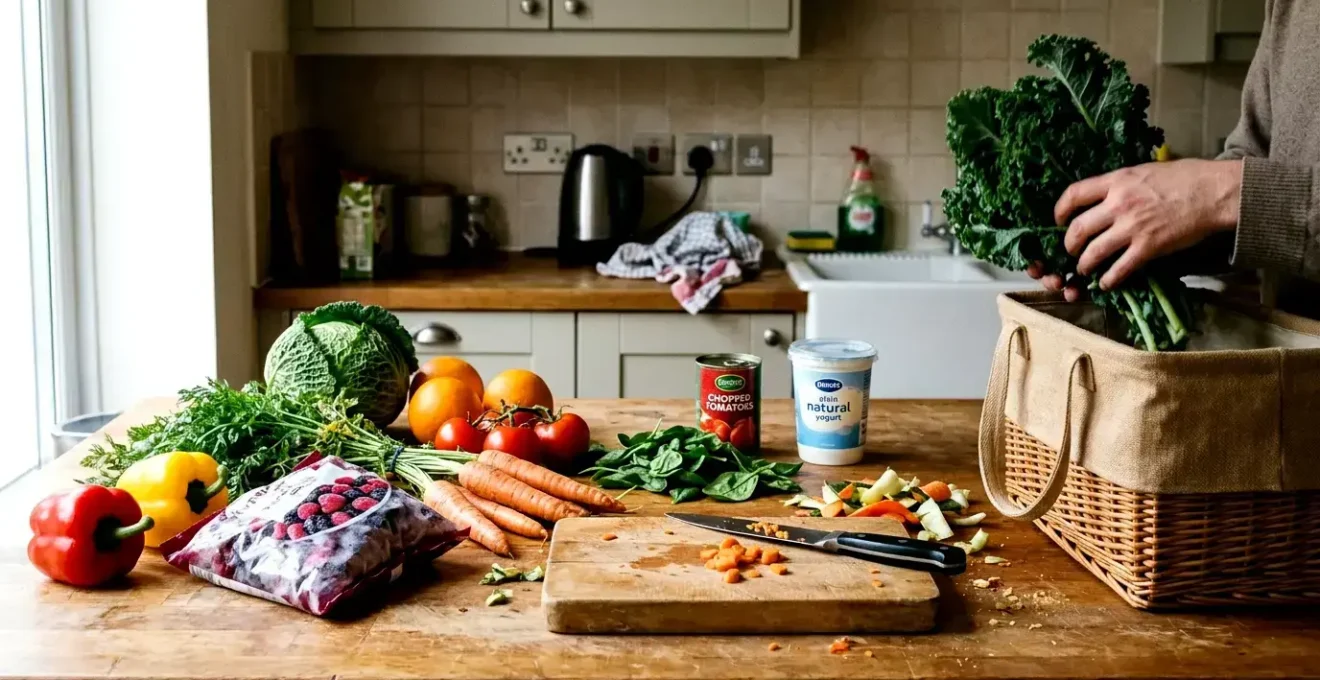
Red peppers, carrots, cabbage, eggs, lentils and frozen berries are ordinary supermarket foods that can make a meaningful contribution to vitamin intake. The challenge is rarely finding one exceptionally nutritious ingredient. It is combining familiar foods so that different vitamins appear regularly across breakfast, lunch and dinner.
Each vitamin has distinct dietary sources. Leafy greens provide folate and vitamin K, orange vegetables contribute beta-carotene, and peppers and citrus fruit offer vitamin C. Eggs and dairy products can supply vitamin B12, while nuts and seeds add vitamin E. No single fruit or vegetable provides every essential vitamin.
A practical approach begins with meals already on the weekly menu. Changing the vegetables in a Sunday roast, alternating breakfast fruit or keeping frozen spinach available for pasta can broaden nutrient variety without requiring expensive ingredients or complicated cooking.
These changes support a varied diet rather than guaranteeing complete vitamin adequacy. Vitamin D, in particular, requires separate attention in the UK, where food alone may not reliably provide enough.
Vitamin-rich eating: the essentials
- Choose foods with complementary vitamin profiles instead of repeating the same supposedly healthy ingredients.
- Use fresh, frozen and tinned supermarket foods to make variety affordable and convenient.
- Rotate vegetables, fruits and other vitamin sources throughout the week, using cooking methods that preserve nutrients where practical.
- Why Can Eating the Same Healthy Foods Every Day Still Limit Vitamin Variety?
- How Can You Add More Vitamin Variety Without Buying Specialist Foods?
- Peppers, Kale or Berries: Which Vitamin-Rich Food Adds Most to Your Current Meal?
- Which Cooking and Storage Habits Can Reduce Vitamins in Fresh Produce?
- How Can a Simple Weekly Rotation Help You Eat a Wider Range of Vitamin-Rich Foods?
- Why Is Plant Variety More Useful Than Relying on One Antioxidant Superfood?
- Why Does Eating a Wider Variety of Plants Matter for the Gut Microbiome?
- How Can Seasonal Produce Make Everyday British Meals More Varied and Practical?
Why Can Eating the Same Healthy Foods Every Day Still Limit Vitamin Variety?
Eating the same healthy foods every day can restrict vitamin variety because individual ingredients contain different combinations of nutrients. A daily spinach salad, for example, contributes folate, vitamin K and other nutrients, but cannot provide the full range of vitamins needed. Changing food groups and ingredients helps cover gaps that repetition can leave.
A meal can appear balanced while relying on a narrow set of ingredients. Someone who eats porridge with banana for breakfast, chicken with broccoli for lunch and rice with spinach for dinner may consume several valuable nutrients. However, repeating these combinations throughout the week can mean overlooking other sources of vitamin E, vitamin B12 or different carotenoids.
Even foods within the same broad category have contrasting nutritional profiles. Carrots are associated with beta-carotene, peppers are notable for vitamin C, and leafy greens commonly contribute vitamin K and folate. These differences can be examined using the official UK Composition of Foods Integrated Dataset (CoFID), which provides nutrient composition information for foods consumed in the UK.
Food variety is not simply the number of ingredients on a plate. Three different leafy vegetables may provide overlapping nutrients, while combining leafy greens with peppers, pulses and eggs introduces more distinct nutritional contributions. Botanical diversity offers a useful additional perspective, although it is not an exact measure of vitamin coverage.
A straightforward self-check is to write down the 10–15 foods eaten most frequently during a normal week. Group them into vegetables, fruits, pulses, grains, nuts and seeds, dairy foods, eggs, fish and meat, as applicable. Then identify which vitamin sources rarely appear.
This exercise cannot diagnose a deficiency, because nutritional adequacy depends on quantities, preparation, individual requirements and overall dietary intake. It can, however, expose an overly repetitive shopping pattern.
Repeated ingredients also mean repeated combinations of fibre and plant compounds. A broader selection of plant foods therefore offers nutritional benefits beyond vitamins alone.
Once the gaps are clearer, small substitutions become more useful than adding another fashionable health food to an already familiar menu.
How Can You Add More Vitamin Variety Without Buying Specialist Foods?
You can improve vitamin variety by swapping familiar ingredients for alternatives with different nutrient profiles, using the same recipes and shopping budget. Frozen vegetables, tinned pulses, ordinary fruit, eggs, nuts and seasonal produce all contribute useful nutrients. Specialist powders, imported berries and expensive fortified products are not necessary for most everyday food choices.
The easiest approach is substitution within an existing habit. Replace broccoli with Brussels sprouts occasionally, alternate bananas with oranges or berries, or use sweet potato instead of ordinary potato in one meal. These changes preserve the meal’s structure while diversifying nutrients.
Frozen vegetables are particularly helpful in British households where fresh produce may not be used immediately. Freezing generally helps preserve many nutrients, including vitamin C, although processing, blanching, storage and cooking can affect the amount retained. Frozen spinach, peas, broccoli and mixed vegetables make it easier to add variety without risking unnecessary food waste.
The following guide focuses on common supermarket foods rather than specialist products.
| Vitamin | Common supermarket sources | Easy meal addition |
|---|---|---|
| Vitamin C | Red peppers, oranges, broccoli | Add sliced pepper to a sandwich or broccoli to dinner |
| Vitamin A precursors | Carrots, sweet potatoes, spinach | Roast carrots or add spinach to a curry |
| Folate (B9) | Leafy greens, lentils, chickpeas | Stir lentils into soup or spinach into pasta |
| Vitamin K | Kale, cabbage, broccoli | Serve greens alongside a main dish |
| Vitamin E | Sunflower seeds, almonds, vegetable oils | Sprinkle seeds over porridge or salad |
| Vitamin B12 | Eggs, dairy products, fish, meat, fortified foods | Include an appropriate source at breakfast or lunch |
Foods contain combinations of vitamins, so these examples are not exclusive sources. For people eating exclusively plant-based diets, reliable vitamin B12 sources generally require fortified foods or supplements.

At Aldi, Lidl, Tesco or another ordinary supermarket, compare the foods available rather than assuming that a premium label means better nutrition. A frozen vegetable mix can be more practical than buying several fresh vegetables that might spoil. Tinned tomatoes and pulses are useful cupboard staples, although nutrient retention varies with processing.
Cooking is not essential for every addition. An orange with breakfast, raw pepper strips alongside lunch or a handful of seeds over porridge can make an existing meal more varied. Plain yoghurt with fruit is another convenient option, with the specific vitamin contribution depending on the ingredients and whether the yoghurt is fortified.
Once these convenient foods are available, the next decision is which ingredient best complements a particular meal rather than which food has the strongest nutritional reputation.
Peppers, Kale or Berries: Which Vitamin-Rich Food Adds Most to Your Current Meal?
Peppers are a practical choice when a meal needs more vitamin C, kale is useful for vitamin K and beta-carotene, and berries provide different combinations of vitamin C and plant compounds. The best addition depends on what the meal already contains. Nutritional usefulness comes from complementing existing ingredients, not winning a universal vitamin ranking.
These foods overlap nutritionally, but their strengths differ. Red peppers are notably rich in vitamin C and contribute carotenoids. Kale offers vitamin K, folate and carotenoids, alongside some vitamin C. Berries vary considerably: blackcurrants are particularly notable for vitamin C, while other berries provide different amounts and types of polyphenols.
Compare the missing contribution, not just nutrient density. If a meal already contains kale and carrots, adding peppers might expand its vitamin C contribution more usefully than adding another portion of leafy greens. If lunch consists mainly of bread and processed meat, leafy vegetables may contribute nutrients that the existing ingredients provide less prominently.
Consider these illustrative meal combinations commonly encountered in Britain.
| Meal | Useful addition | Reason |
|---|---|---|
| Fish and chips | Raw red pepper strips or a pepper-based side salad | Adds vitamin C and fresh vegetables |
| Sunday roast | Steamed kale alongside the usual vegetables | Adds vitamin K, folate and carotenoids |
| Chicken club sandwich | Fresh pepper slices | Adds vitamin C with minimal preparation |
| Porridge | Mixed berries, particularly blackcurrants when available | Adds fruit variety, vitamin C and polyphenols |
These are examples of possible improvements, not assessments of complete meals or individual deficiencies. A Sunday roast already containing cabbage and broccoli might benefit more from a different addition than another leafy vegetable.
Online lists ranking foods by nutrient density can be helpful for comparing specific nutrients, but they often ignore portions, preparation methods, price and how frequently somebody will actually eat the food.
A person who regularly includes ordinary peppers may gain more practical dietary benefit than someone who purchases a highly rated vegetable once but rarely uses it. Accessibility and consistency matter when translating nutrient information into a weekly diet.
After choosing the ingredient, preparation becomes important: a vitamin-rich vegetable can lose some nutrients between purchase and serving, even when it still looks appetising.
Which Cooking and Storage Habits Can Reduce Vitamins in Fresh Produce?
Prolonged boiling, extended storage, repeated reheating and leaving chopped vegetables soaking in water can reduce certain vitamins, particularly vitamin C and folate. Steaming, microwaving, shorter cooking times and sensible storage can limit some losses. However, cooking may also improve the availability of particular nutrients, so raw vegetables are not automatically more nutritious.
Water-soluble vitamins can be lost through both heat-related degradation and movement into cooking water. The effect depends on the vegetable, how finely it is cut, the temperature, the cooking time and whether the liquid is eaten.
A British Nutrition Foundation review of nutrient losses during cooking explains why prolonged boiling can be detrimental and why steaming or microwaving may help preserve some water-soluble nutrients. The review also highlights variation between foods and nutrients, rather than establishing one universally superior cooking method.
For broccoli, cabbage and other vegetables contributing vitamin C and folate, steaming until suitably tender is often a sensible approach. Microwaving with little added water can also be practical. When vegetables are boiled in soups or stews, keeping the cooking liquid in the finished dish may retain nutrients that would otherwise be discarded.

Fat-soluble vitamins and carotenoids behave differently. They may be less vulnerable to leaching into water, but their retention still depends on heat, oxygen and other conditions. Cooking carrots can improve the accessibility of beta-carotene by softening plant tissues, especially when the meal contains a little fat.
Freshness also requires context. Some vegetables gradually lose vitamin C during storage, while commercially frozen produce is often processed relatively soon after harvest. A frozen vegetable can therefore be a useful nutritional alternative to fresh produce stored for several days, although neither form is consistently superior in every comparison.
Simple habits worth reconsidering include peeling all vegetables unnecessarily, cutting them long before cooking, soaking chopped produce for extended periods and boiling vegetables in excessive water that is subsequently discarded. Edible skins can contribute fibre and nutrients, provided the produce is cleaned and prepared appropriately.
Food safety remains essential. Produce should be stored according to its needs, and nutrient preservation should never take priority over safe cooking or storage.
Once these habits become routine, the greatest remaining opportunity is often to vary the ingredients themselves from one week to the next.
How Can a Simple Weekly Rotation Help You Eat a Wider Range of Vitamin-Rich Foods?
A weekly rotation improves vitamin variety by changing the vegetables, fruits and other nutrient sources used in familiar meals. Instead of planning seven completely different menus, keep reliable dishes such as pasta, curry, soup and a Sunday roast, then vary their ingredients. This creates broader nutritional exposure with less planning and less disruption to everyday eating.
Rotating plant families is more informative than simply changing recipes. Broccoli, cabbage and kale are all brassicas, while carrots, peppers, onions, lentils and berries introduce different botanical groups and nutrient combinations.
Botanical families are a useful organising tool, not a substitute for considering actual vitamin content. A complete weekly diet also needs appropriate sources of nutrients that plants may not reliably supply, particularly vitamin B12.
Here is a hypothetical rotation built around meals already common in British households.
| Day | Familiar meal | Vegetable or fruit variation |
|---|---|---|
| Monday | Pasta | Spinach and tomatoes |
| Tuesday | Chicken or chickpea curry | Peppers and cauliflower |
| Wednesday | Homemade soup | Carrots, leeks and lentils |
| Thursday | Jacket potato | Baked beans and steamed broccoli |
| Friday | Fish or bean-based dinner | Cabbage and peas |
| Saturday | Porridge or yoghurt breakfast | Mixed berries and sunflower seeds |
| Sunday | Traditional roast | Parsnips, kale and winter squash |
This example illustrates ingredient rotation rather than a nutritionally complete seven-day meal plan. Portion sizes, other meals and individual requirements still matter.
Use colour as a reminder, not a scientific score. Green vegetables, orange roots, red peppers, purple berries and pale alliums often contribute different combinations of vitamins and plant compounds. However, colour alone cannot establish whether vitamin requirements are met.
A Saturday shopping trip, regular grocery delivery or Sunday batch-cooking session offers a convenient moment to review the week’s ingredients and make changes.
Build your five-step vitamin variety rotation
- Write down your five most frequent meals and produce a short list of ingredients used repeatedly.
- Identify three different plant groups missing or rarely used and create a shortlist of accessible replacements.
- Choose two vegetable swaps and one fruit swap for the coming week, recording them on your shopping list.
- Check your cupboard and freezer before shopping, then make a written list of ingredients that can be used without additional waste.
- At the end of the week, mark which substitutions you actually ate and retain the most convenient options for your next rotation.
The aim is not to achieve a perfect number of vegetables every day. A modest rotation that becomes a lasting habit is more useful than an ambitious shopping list that repeatedly goes unused.
Variety becomes easier to maintain when it is treated as a normal shopping habit, rather than something requiring a special nutritional product.
Why Is Plant Variety More Useful Than Relying on One Antioxidant Superfood?
Plant variety is generally more useful than relying on one antioxidant superfood because different fruits, vegetables, pulses, nuts and seeds supply different vitamins, fibres and phytochemicals. No individual food reproduces the nutritional contributions of a varied diet. Expanding ordinary food choices is therefore a more dependable strategy than expecting one concentrated ingredient to compensate for limited variety.
Antioxidant is a broad description of chemical activity, not proof that eating more of one particular compound prevents disease. Vitamin C, vitamin E and numerous plant polyphenols behave differently within foods and the human body.
Foods are also complex mixtures. Berries contain various polyphenols, leafy vegetables contribute carotenoids and other compounds, and pulses provide fibre alongside micronutrients. Eating these foods together broadens dietary exposure, although claims that particular combinations produce clinically proven antioxidant synergy require specific evidence.
Marketing often isolates an attractive characteristic of goji berries, açaí or spirulina and presents it as exceptional. Research on extracts, concentrated preparations or laboratory measures cannot automatically be translated into benefits from an ordinary portion of the food.
That does not mean these products have no nutritional value. It means the evidence for a concentrated compound should not be confused with evidence that an expensive product improves health outcomes.
Consider a hypothetical shopping choice: spending part of a weekly food budget on one imported powder, or using the same money to purchase cabbage, carrots, frozen berries and pulses. Without specific prices, the cheaper option cannot be declared universally. However, the second basket plainly offers more ingredient diversity and several distinct nutrient sources.
Budget decisions should focus on what the existing diet lacks. If someone rarely eats vegetables, adding routine portions of ordinary produce is a more relevant priority than buying a supplementary antioxidant product.
Equally, someone who enjoys a particular superfood can include it as part of a varied diet. There is no need to ban it or portray it as uniquely harmful.
One reason this wider approach matters is that plants contribute more than vitamins and antioxidants: they also provide substrates used by different members of the gut microbiome.
Why Does Eating a Wider Variety of Plants Matter for the Gut Microbiome?
Eating a wider range of plants exposes the gut microbiome to different fibres and plant compounds. These substances can be used or transformed by different microorganisms, potentially influencing microbial composition and activity. Research has found associations between greater plant diversity and differences in gut microbiota, although it does not establish that a specific number of plants guarantees better health.
Oats, lentils, onions, berries and nuts do not contain identical fibres or polyphenols. This matters because gut microorganisms differ in their ability to break down complex plant components. Some microbial processes produce short-chain fatty acids, which play roles in intestinal physiology.
Greater plant variety can therefore contribute to a more diverse supply of microbial substrates while also widening dietary vitamin sources. These goals overlap, but they are not interchangeable: a food’s vitamin content does not directly measure its effect on gut bacteria.
Fewer than 10 versus more than 30 plant types weekly
Comparison groups examined in the 2018 American Gut Project research. Greater reported plant variety was associated with differences in gut microbial composition and diversity. The comparison was not a clinical threshold or official dietary target.
The American Gut Project drew on an international, self-selected participant population and partly self-reported diet information. Its observational findings cannot demonstrate that eating more than 30 plant types directly causes better digestive or metabolic health, nor can they be assumed to represent the entire UK population.
Thirty plants is not a required weekly minimum. It is more practical to increase variety gradually, particularly for people currently eating only a few regular plant foods.
Small additions can contribute to this effort. Seeds sprinkled over porridge, herbs in a tomato sauce, different lentils in soup and nuts served with fruit all introduce plant ingredients. Coffee and cocoa also come from plants and contain bioactive compounds, but they should not be treated as nutritionally equivalent to substantial portions of vegetables or pulses.
People who are not accustomed to fibre-rich foods may prefer gradual increases alongside adequate fluid intake, as sudden large changes can cause bloating or discomfort.
Seasonal produce provides a convenient next step because the ingredients available throughout Britain change over the year, creating natural opportunities to expand this diversity.
Key takeaways before planning your seasonal shopping
- Choose seasonal foods for their practical availability and nutritional contribution, not because local produce is automatically superior.
- Let changing harvests introduce unfamiliar ingredients while keeping familiar recipes and cooking methods.
- Use frozen, stored and imported foods when necessary so winter availability does not limit vitamin variety.
How Can Seasonal Produce Make Everyday British Meals More Varied and Practical?
Seasonal produce makes British meals more varied by changing which vegetables and fruits are readily available throughout the year. Spring greens, summer berries, autumn squash and winter brassicas can all contribute different nutrients. Following these changes provides a natural ingredient rotation, while frozen and imported produce helps maintain variety when locally grown choices are limited.
British growing seasons influence what appears in farm shops, greengrocers, markets and supermarkets. The British Dietetic Association‘s monthly seasonal fruit and vegetable list, drawing on information attributed to the Vegetarian Society, provides a useful guide to changing availability.
A flexible seasonal shopping pattern might look like this:
| Season | Produce to consider | Simple meal use |
|---|---|---|
| Spring | Spring greens, spinach, asparagus and rhubarb | Add greens to pasta or use stewed rhubarb with breakfast |
| Summer | Strawberries, raspberries, blackcurrants, courgettes and tomatoes | Serve berries with porridge and tomatoes with lunch |
| Autumn | Apples, pears, winter squash, beetroot and cabbage | Roast squash or add beetroot to a salad |
| Winter | Brussels sprouts, kale, leeks, parsnips, swede and stored apples | Prepare vegetable soups, roasted roots and steamed greens |
Seasonal availability varies by region, weather, harvest conditions and retail supply. Some listed foods may be available outside their main British growing period through storage or imports.
In November, for example, apples, pears, Brussels sprouts, cabbage, kale, leeks and winter squash offer numerous possibilities for rotating familiar meals. A leek-and-potato soup can alternate with lentil-and-carrot soup, while a roast dinner can include kale one week and Brussels sprouts the next.
Seasonal produce can sometimes be economical, especially when supply is plentiful, but seasonal does not automatically mean cheapest or most nutritious. Transport, storage, growing methods, weather and retail pricing all influence cost and availability. Nutrient content also depends on the particular food and how it is handled.
British winters present a practical limitation for some fresh fruits, particularly those rich in vitamin C. Imported oranges and peppers, frozen berries and frozen vegetables can help fill this gap. There is no nutritional reason to insist that every ingredient must be locally grown.
Seasonal rotation also complements weekly rotation. Changing vegetables from one shopping trip to the next increases short-term variety; following changing harvests introduces different options over the year.
For the next weekly shop, choose one seasonal vegetable you do not normally buy, one different fruit and one convenient frozen or cupboard staple. Add them to meals already on your menu, then repeat the combinations you genuinely enjoy. That is a practical way to make vitamin variety part of everyday eating.
Can frozen vegetables provide as many vitamins as fresh vegetables?
Frozen vegetables can provide comparable amounts of many vitamins, depending on the vegetable, processing, storage and preparation. Blanching before freezing can reduce some water-soluble vitamins, while freezing helps slow subsequent deterioration. Fresh produce also changes during storage. Neither option is nutritionally superior in every situation, so using both is sensible.
Do you need vitamin supplements if you eat plenty of vegetables?
Not necessarily, but eating vegetables alone does not guarantee adequate intake of every vitamin. In the UK, vitamin D supplementation deserves particular attention, especially during autumn and winter. People following vegan diets need reliable vitamin B12 sources, and pregnancy or certain medical circumstances can involve additional recommendations. Individual supplementation needs should follow appropriate UK health guidance.
Is it better to eat vegetables raw or cooked?
Both can contribute to a nutritious diet. Raw vegetables avoid some heat-related vitamin losses, while cooking can improve the accessibility of certain carotenoids and make some foods easier to eat. Cooking methods and duration matter. Combining raw salads with steamed, roasted and cooked vegetables offers flexibility rather than relying on one preparation style.
Can tinned foods count towards a vitamin-rich diet?
Yes. Tinned tomatoes, beans, chickpeas and other vegetables can contribute useful nutrients, although heat processing may reduce some vitamins. Pulses are especially useful for fibre and folate, while tomatoes provide carotenoids. Choose products that fit your dietary needs and check added salt or sugar where relevant.
Does eating five portions of fruit and vegetables guarantee enough vitamins?
No. The UK’s five-a-day recommendation supports fruit and vegetable consumption, but meeting it does not by itself establish adequacy for every vitamin. Types of produce, portion sizes, the rest of the diet and individual requirements all matter. Vitamin B12 and vitamin D, for example, need attention beyond simply increasing fruit and vegetable portions.