
A more diverse gut microbiome does not require exotic ingredients, expensive powders or a completely new way of eating. Everyday choices such as adding lentils to a pasta sauce, alternating wholegrain cereals and using a wider selection of vegetables can introduce different fibres and other plant compounds into the diet.
The gut contains a complex community of microorganisms involved in breaking down certain food components and producing metabolites that interact with the body. What these microorganisms receive through food can influence their composition and activity. Research suggests that eating a greater variety of plants is associated with differences in gut microbial communities, although those differences do not automatically translate into better health for every individual.
For adults in England, the most practical starting point is often familiar supermarket food: oats, beans, frozen vegetables, seasonal fruit, wholemeal bread and affordable pulses. The aim is to build variety gradually while meeting general nutrition needs, rather than chase an ideal microbiome score or follow restrictive food rules.
Gut microbiome diversity: the essentials
- Eat a wider selection of plant foods across the week, including grains, pulses, vegetables, fruit, nuts, seeds and herbs.
- Increase fibre through everyday staples before spending money on products marketed for gut health.
- Introduce unfamiliar or fibre-rich foods gradually, especially if your digestion is sensitive.
- Why Does Eating a Wider Variety of Plants Matter for the Gut Microbiome?
- How Can You Add More Plant Variety to Familiar Meals During the Week?
- Whole Grains, Pulses or Vegetables: Which Adds the Most Variety to Your Current Diet?
- When Can Gut-Health Supplements Distract You From More Useful Food Habits?
- When Should You Increase Gut-Friendly Foods Slowly Rather Than All at Once?
- How Can You Add More Fibre Without Completely Changing What You Eat?
- Why Are Probiotics and Prebiotics Not the Same Thing?
- How Can You Support Gut Health Without Following a Complicated Diet?
Why Does Eating a Wider Variety of Plants Matter for the Gut Microbiome?
Eating a wider range of plants exposes gut microorganisms to different types of fibre and plant compounds. Because microbial species differ in what they can break down and use, dietary variety may support a wider range of microbial activities. However, research showing an association between plant variety and microbiome composition does not prove that more plant types always produce better health.
Not all plant foods provide the same substrates. Oats contain beta-glucans, pulses contribute several fermentable carbohydrates, and fruits and vegetables supply varying combinations of fibres and polyphenols. Different microorganisms have different capacities to metabolise these compounds.
In contrast, a highly repetitive diet supplies a narrower selection of substrates. Even when the foods are nutritious, the range of microbial resources may remain relatively limited. Eating porridge, broccoli and an apple every day can be a healthy habit, but including other grains, vegetables and fruits adds nutritional variety.
The American Gut Project study published in mSystems compared people reporting fewer than 10 different plant types per week with those reporting more than 30. Researchers identified differences in their gut microbial communities, including bacterial groups associated with higher reported plant variety.
More than 30 plant types per week
An observational comparison group in the American Gut Project, contrasted with fewer than 10 plant types. The figure is not a clinically validated target or a guarantee of improved gut health.
American Gut Project, McDonald and colleagues, mSystems, 2018.
The study involved self-selected participants, principally from the United States, United Kingdom and Australia. Its observational design cannot establish that adding plants causes better health outcomes, and microbiome diversity alone is not a universal measure of digestive wellbeing.
In a British household where wheat-based bread, potatoes and a small rotation of vegetables dominate the weekly menu, the opportunity may be to expand the selection rather than simply increase portion sizes. Potatoes and wheat can remain useful staples; they do not need replacing to make room for additional foods.
Once this distinction is clear, a useful next step is to add variety to meals that already fit comfortably into everyday life.
How Can You Add More Plant Variety to Familiar Meals During the Week?
The simplest approach is to keep familiar meals and add one different plant ingredient at a time. Frozen vegetables, tinned beans, lentils, seeds and herbs can increase variety without demanding new recipes or longer shopping trips. Small additions made consistently are more manageable than changing breakfast, lunch and dinner simultaneously.
A pasta sauce made with tomatoes can incorporate peas, carrots or lentils. Beans on toast can gain an extra vegetable topping. Porridge can alternate between banana, apple, berries and chopped nuts. These changes retain the convenience and familiarity of the original dishes.
Frozen and tinned ingredients are particularly practical because they can be stored for future meals and used in modest quantities. Buying a frozen vegetable mixture also makes it possible to keep several vegetables available without purchasing each one fresh.
The NHS guidance on what counts towards 5 A Day confirms that frozen and canned fruit and vegetables can count towards the recommendation, as can beans and pulses. For 5 A Day specifically, beans and pulses count towards a maximum of one portion per day, regardless of how much is eaten. This rule is separate from counting the different plants in a weekly diet.

A weekly plant tally can make the habit more visible. Write down each distinct plant food consumed during seven days, whether it is a grain, pulse, vegetable, fruit, nut, seed or culinary herb. Count the same plant only once during the week. A mixture of peas, carrots and green beans would add three different plant types to a personal tally if none had already been recorded.
This is an informal self-monitoring method, not a medically validated score. Herbs and spices may add variety, but a small sprinkle is not nutritionally equivalent to a substantial portion of vegetables or pulses. The tally should complement balanced eating, not replace it.
A five-step weekly plant-variety routine
- Record the different plant foods already eaten over seven days. Deliverable: one baseline list without repeated entries.
- Choose one familiar meal to modify. Deliverable: the meal name and one additional plant ingredient written beside it.
- Check the cupboard and freezer before shopping. Deliverable: a short list of ingredients already available for the planned change.
- Prepare the modified meal once during the following week. Deliverable: a tick beside the meal when completed.
- Review the updated plant tally at the end of the week. Deliverable: the new total and one realistic addition for the next week.
There is little benefit in setting an ambitious variety target if the required shopping, preparation and expense make it unsustainable. Starting by varying just one meal each week can establish a repeatable pattern.
For the next improvement, consider which food category appears least frequently in the current rotation. That is often a more useful question than asking which individual ingredient is healthiest.
Whole Grains, Pulses or Vegetables: Which Adds the Most Variety to Your Current Diet?
The best category to diversify is usually the one least represented in your current meals. Whole grains, pulses and vegetables contribute different fibres and nutrients, so none is universally superior for gut microbial diversity. Reviewing what you already eat helps identify where an additional food could make the most meaningful difference.
Whole grains such as oats, barley and wholewheat provide dietary fibre and carbohydrates that support everyday energy needs. Some grain foods also supply resistant starch, although amounts vary with the grain, preparation and cooking or cooling process.
Pulses, including lentils, chickpeas and beans, contribute fibre and plant protein. Their mixture of fermentable carbohydrates makes them particularly useful for adding another source of microbial substrates to meals dominated by refined grains or meat.
Vegetables contribute different combinations of fibre, vitamins, minerals and polyphenols. Rotating between leafy greens, root vegetables, brassicas and other vegetables can broaden the range of plant compounds consumed.
The categories are complementary rather than interchangeable. A vegetable-rich diet may still benefit nutritionally from including whole grains or pulses, while a diet centred on porridge and wholemeal bread can become more varied through additional vegetables.
A simple self-check is to write three lists: grains eaten last week, pulses eaten last week and vegetables eaten last week. Look for the shortest list, especially if it contains only one repeatedly consumed food.
The comparison below focuses on practical differences rather than claiming that any category delivers a specific increase in microbial diversity.
| Food category | What it contributes | Affordable, familiar examples | Practical consideration |
|---|---|---|---|
| Whole grains | Fibre, energy and a range of grain carbohydrates | Porridge oats, barley, wholemeal bread, wholewheat pasta | Dried grains and oats are convenient to store; preparation times vary. |
| Pulses | Fibre, plant protein and fermentable carbohydrates | Baked beans, tinned chickpeas, red lentils, kidney beans | Tinned options save preparation time; choose lower-salt versions where practical. |
| Vegetables | Fibre, micronutrients and varied plant compounds | Carrots, cabbage, broccoli, peas, spinach | Fresh produce can spoil; frozen and canned alternatives can reduce waste. |
For someone already eating several vegetables daily but relying on white bread and rice, trying oats or barley may be a straightforward priority. Someone who eats whole grains and vegetables but rarely has beans could start by adding lentils to a soup or chickpeas to a curry.
In England, ordinary supermarket staples make these changes accessible without specialist gut-health products. Prices vary between retailers, formats and seasons, so checking cost per portion and likely food waste is more useful than assuming fresh or packaged foods are always cheaper.
After identifying those gaps, it is worth checking whether money earmarked for gut-health products could instead support the food changes that are currently missing.
When Can Gut-Health Supplements Distract You From More Useful Food Habits?
Gut-health supplements can become a distraction when they replace attention to everyday eating habits. Someone consuming little fibre and only a narrow selection of plant foods may gain more practical nutritional value from improving meals than from purchasing a general probiotic product. Supplements may have specific uses, but they cannot substitute for dietary variety.
The attraction of a daily capsule is understandable. It is convenient, requires minimal preparation and promises a straightforward intervention. Expanding a diet, by contrast, involves shopping decisions, meal preparation and sustained habits.
However, probiotic effects are strain-specific and condition-specific. Evidence for one microorganism in a particular situation cannot automatically be applied to another strain, dose or product. A supplement described broadly as supporting gut health does not establish that it will increase microbial diversity or improve symptoms in a healthy adult.
Probiotics also do not necessarily need to establish permanent residence in the gut to produce a benefit. Some may act while passing through the digestive tract. It would therefore be misleading to argue that all probiotic products fail unless the user eats a certain amount of fibre.
The stronger food-first argument is nutritional: supplements do not provide the full range of dietary fibres, proteins, micronutrients and other compounds found in varied meals. A low-fibre diet remains low in fibre even when a probiotic is added.
Product labels deserve careful interpretation too. The presence of live microorganisms does not, by itself, establish a clinically demonstrated probiotic benefit. The quality of evidence, identity of the strain and relevance to the intended use matter more than an impressive-sounding bacterial count.
A practical spending decision is to review the shopping basket before adding another supplement subscription. Could the same discretionary budget help buy oats, tinned pulses, frozen vegetables or other foods that would be eaten regularly?
This is not a blanket argument against medically indicated probiotics or clinician-recommended products. For specific health conditions or circumstances, particular strains may be appropriate. Anyone considering them for a diagnosed condition should seek advice suited to that condition.
Food changes are often a more useful foundation, but even beneficial foods need to be introduced at a pace that suits the individual digestive system.
When Should You Increase Gut-Friendly Foods Slowly Rather Than All at Once?
Increase fibre-rich and highly fermentable foods gradually when your usual intake is low, you experience bloating easily or you have an existing digestive condition. A sudden increase in beans, lentils, whole grains or certain vegetables can cause gas and discomfort. Smaller changes give you a better opportunity to assess tolerance and maintain the habit.
Some dietary fibres and carbohydrates reach the large intestine without being fully digested earlier in the gut. Microorganisms ferment certain compounds, producing metabolites including short-chain fatty acids, alongside gases that can contribute to bloating and flatulence.
The amount and type of carbohydrate matter, as does individual tolerance. A large serving of chickpeas after months of eating very few pulses may feel different from adding a small amount to a familiar meal.
Rather than introducing several new high-fibre foods together, begin with one modest addition. For example, stir a small quantity of cooked lentils into a sauce, keep the rest of the meal familiar and observe how you feel over the following days.
If that change is comfortable, increase the portion gradually or introduce another food. Maintain adequate fluid intake as dietary fibre increases. There is no universal timetable for adaptation, and people do not all tolerate the same foods or amounts.
Temporary changes in gas or bowel habits can accompany increased fibre intake. However, persistent or severe symptoms should not be assumed to be normal adaptation. Symptoms such as significant abdominal pain, blood in the stool, unexplained weight loss or ongoing changes in bowel habits warrant medical assessment.
People with irritable bowel syndrome (IBS) may respond particularly differently to fermentable carbohydrates. Certain foods commonly promoted for gut health, including onions, garlic and some pulses, may worsen symptoms in susceptible individuals. A registered dietitian experienced in gastrointestinal conditions can help identify an appropriate approach without unnecessary restriction.
Other digestive conditions, including situations where clinicians have advised fibre restriction, can also require personalised guidance. General recommendations to increase fibre should not override an individual medical plan.
Comfort matters because a food habit that repeatedly causes distress is unlikely to be sustainable. Gradual introduction is a way to explore tolerance, not a requirement to persist with foods that cause significant symptoms.
For people able to increase fibre, the easiest changes often involve everyday staples rather than unfamiliar high-fibre recipes.
How Can You Add More Fibre Without Completely Changing What You Eat?
Increase fibre by making small substitutions within meals you already enjoy. Wholemeal bread instead of white bread, wholewheat pasta instead of refined pasta, potatoes with their skins and lentils added to familiar sauces can all help. These changes preserve recognisable meals while improving the amount and range of fibre in your diet.
For UK adults, the reference point is 30 g of dietary fibre per day. The NHS advice on increasing dietary fibre reports average adult intake of approximately 20 g daily, below that recommendation.
This gap makes ordinary staple foods an important opportunity. Someone who eats bread every day may find it simpler to choose a higher-fibre variety consistently than to prepare a separate specialist health-food recipe once a week.
Breakfast offers familiar options such as porridge oats or wholegrain cereal. Lunch might include wholemeal sandwiches, while dinner could use brown rice, wholewheat pasta or potatoes with their skins. Beans, lentils, fruit, vegetables, nuts and seeds add further sources.
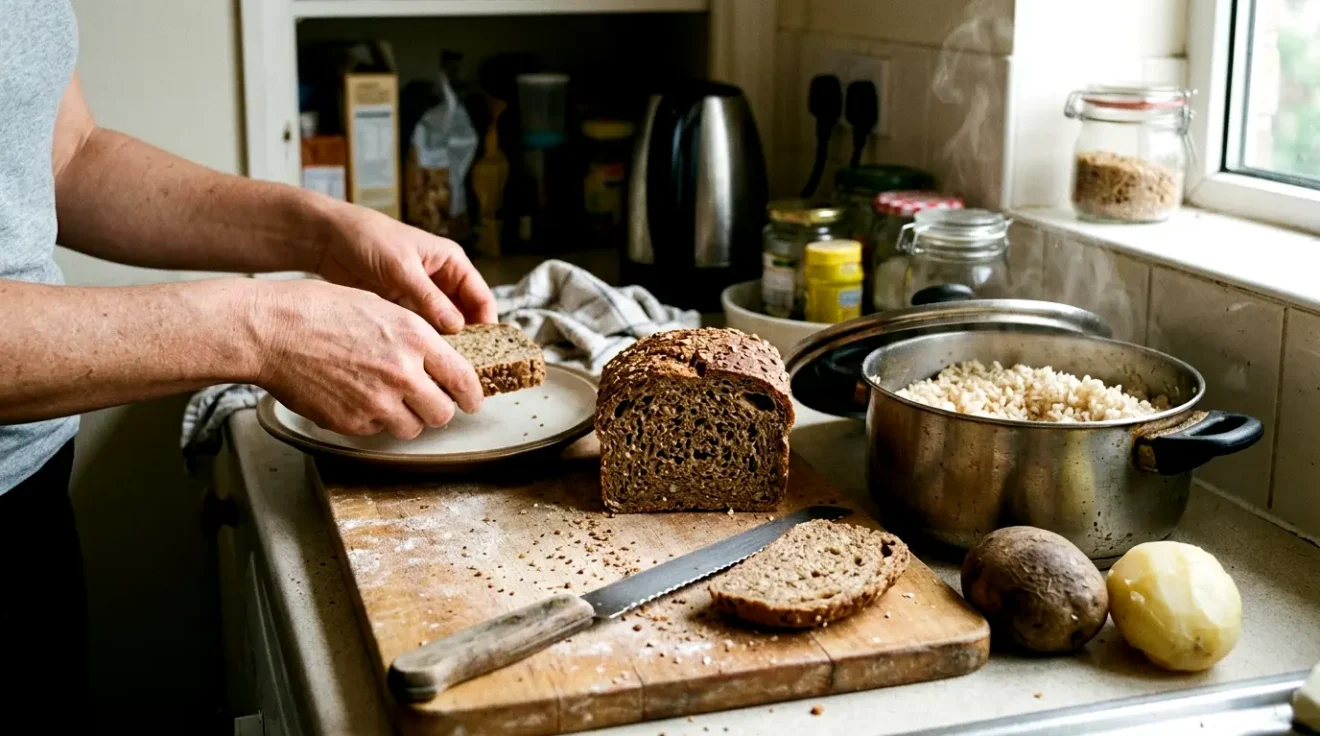
One useful distinction is that fibre quantity and fibre diversity are different. Eating more of one wholegrain product may increase total fibre, but it does not provide every kind of fermentable carbohydrate found in a wider combination of grains, pulses, fruit and vegetables.
For instance, adding lentils to a wholewheat pasta dish introduces a different food source from the pasta itself. Including vegetables in the sauce adds further variety. This combination helps broaden dietary inputs, although no particular recipe can guarantee a measurable microbiome change.
A low-effort order of priorities is to improve the staples you use most often, then introduce a pulse-based meal or ingredient, and finally expand the selection or portions of vegetables and fruit as practical.
The sequence is flexible. Someone who already eats whole grains but rarely has pulses should not feel obliged to make another grain substitution first. Personal preferences, tolerance and nutritional needs determine the most sensible next step.
Food labels can help compare the fibre content of packaged products, but individual meals matter more than a single ingredient claim. A varied pattern across breakfast, lunch and dinner is easier to sustain when each change fits established habits.
Fibre also helps explain why the terms prebiotic and probiotic should not be treated as interchangeable when discussing gut health.
Why Are Probiotics and Prebiotics Not the Same Thing?
Probiotics are live microorganisms that provide a health benefit when consumed in adequate amounts. Prebiotics are substances selectively used by microorganisms in ways that confer a health benefit. In simple terms, probiotics concern beneficial microorganisms, while prebiotics concern certain substances that microorganisms use. The categories are related, but neither automatically guarantees greater gut microbial diversity.
The distinction matters because the word prebiotic is sometimes used as though it applies to every type of fibre. In scientific terminology, a substance must meet additional criteria, including selective utilisation by microorganisms and a demonstrated health benefit.
According to ISAPP‘s overview of probiotic and prebiotic definitions, probiotics and prebiotics have separate consensus definitions. Fermented foods are also a distinct category: a food containing live microorganisms does not automatically qualify as a scientifically established probiotic.
Many ordinary plant foods contain carbohydrates with recognised or potential prebiotic roles. Examples include certain fibres or oligosaccharides found in onions, garlic, leeks, oats, beans and bananas. Their precise composition differs, and not every fibre present in these foods meets the formal definition of a prebiotic.
This gives plant variety a practical advantage. Eating different foods can provide a wider selection of fermentable substrates without requiring a dedicated prebiotic powder. It also contributes nutrients beyond the prebiotic compounds themselves.
Live yoghurt and kefir offer another distinction. Some products contain living cultures, but the presence of those cultures does not establish that every product or microorganism meets the definition of a probiotic. Demonstrated benefits depend on the particular microorganisms and context.
A fibre-containing diet may support the activity of existing gut microorganisms, while a food containing live cultures may introduce additional microorganisms temporarily. Whether either intervention improves a particular outcome depends on more than simply consuming both together.
Prebiotic-rich foods can also increase gas or bloating in sensitive individuals, particularly when introduced in large amounts. Anyone with IBS or another digestive condition may need to select and adjust these foods according to tolerance.
The practical lesson is not to build a complicated combination of probiotic and prebiotic products, but to support an appropriate, varied eating pattern with foods that fit daily life.
What matters when choosing your next gut-friendly habit
- Prioritise foods missing from your current rotation rather than treating a particular weekly plant count as a medical target.
- Judge changes by nutritional value, digestive tolerance, cost and whether they fit your normal meals.
- Use microbiome research to guide reasonable food choices, not to diagnose the condition of your gut or promise a specific outcome.
How Can You Support Gut Health Without Following a Complicated Diet?
Supporting gut health without a complicated diet means maintaining a manageable variety of plant foods, choosing fibre-rich staples and adjusting intake to personal tolerance. Familiar meals can stay on the menu, and supplements do not need to become the centre of the routine. The most useful approach is one that remains nutritionally balanced and practical over time.
Start with the foods you already enjoy. Keep your usual porridge but vary its toppings. Continue making pasta, but alternate the vegetables or pulses added to the sauce. Use the same soup recipe while occasionally changing the beans or grains.
These changes are easier to integrate than a rigid eating protocol requiring extensive meal preparation, specialist ingredients or rules about which ordinary foods must be avoided.
There is also no need to achieve maximum variety at every meal. A repetitive breakfast can coexist with more varied lunches and dinners. A meal eaten several times a week may remain convenient and nutritious while other meals introduce different ingredients.
The evidence around microbial diversity should be interpreted carefully. Dietary patterns can be associated with microbial differences, but the microbiome is complex, individual responses vary, and greater measured diversity is not always equivalent to better health. No single food routine guarantees a particular microbiome composition.
A useful weekly habit is to look back at the plants eaten over the previous seven days and identify one additional food that would be easy to include next week. It might be a different pulse, another grain, a frozen vegetable or a seasonal fruit.
Keep the review brief. It is not necessary to weigh every ingredient, purchase a microbiome test or meet an exact plant-count threshold. The tally is simply a way to notice patterns that are otherwise easy to overlook.
Consistency should not mean forcing dietary changes through persistent discomfort. A varied diet is only useful when it remains suitable for the person’s health circumstances. Those managing digestive conditions may benefit from tailored clinical nutrition advice rather than general gut-health rules.
The most sustainable shift is often psychological: instead of organising food choices around restriction, focus on what can be added. This preserves familiar meals while gradually expanding the range of ingredients available throughout the week.
For the coming week, choose one familiar meal, add one plant ingredient you do not usually include, and see whether the change fits comfortably into your routine. Repeat when ready, keeping variety, balance and personal tolerance ahead of a perfect score.
Do herbs and spices count towards weekly plant variety?
Herbs and spices can be included in an informal weekly record of different plant foods. However, there is no universally validated microbiome scoring system that assigns them a fixed value. A small amount of parsley or cumin contributes variety but should not be treated as nutritionally equivalent to a full portion of vegetables, fruit or pulses.
Can frozen vegetables support a varied gut-friendly diet?
Yes. Frozen vegetables contribute to dietary variety and can supply fibre and other nutrients. They also count towards the NHS 5 A Day recommendation. Mixed frozen vegetables are particularly convenient when fresh ingredients would otherwise spoil before being used.
Is it necessary to eat 30 different plants every week?
No. The often-quoted figure comes from observational research comparing groups with different reported levels of plant consumption. It is not an established clinical requirement. Eating a varied, balanced diet that meets nutritional needs is more important than pursuing an exact weekly total.
Do potatoes count as plant foods even though they are excluded from 5 A Day?
Yes. Potatoes are plant foods and can contribute dietary fibre, especially when their skins are eaten. However, NHS guidance classifies potatoes as starchy foods rather than vegetables for the 5 A Day recommendation. A personal plant-variety tally and the official 5 A Day system measure different things.
Can someone with a sensitive digestive system still eat a varied diet?
Often, yes, but food selection and portion size may need individual adjustment. Introducing fibre-rich foods gradually can help some people assess tolerance. If symptoms are persistent, severe or linked to a diagnosed digestive disorder such as IBS, advice from an appropriate healthcare professional or registered dietitian is preferable to following general high-fibre recommendations without modification.