
Supporting gut health does not require expensive supplements, unfamiliar ingredients or an elaborate eating plan. A bowl of porridge, a few extra vegetables in a familiar dinner and a more consistent approach to hydration can all contribute to a digestive-friendly routine.
The most useful starting point is usually not a dramatic dietary overhaul. It is identifying what your everyday meals already provide, then gradually increasing fibre, adding different plant foods and paying attention to how your digestion responds. Fermented foods can offer another option, although their effects vary and they are not essential for everyone.
Gut health also involves more than the bacteria living in the intestines. Comfortable digestion, bowel regularity, nutritional adequacy and individual tolerance all matter. A routine that looks impressive on paper but leaves you uncomfortable or constantly worrying about food is unlikely to serve you well.
The following approach uses familiar foods available in England and focuses on habits that can be repeated, adjusted and maintained without turning eating into a complicated project.
Gut health without complicated food rules
- Build on ordinary meals by gradually adding fibre-rich foods, drinking regularly and eating a wider range of plants.
- Choose small, repeatable changes rather than relying on one superfood, supplement or restrictive diet.
- Observe digestive comfort over time and seek medical advice for persistent or concerning symptoms rather than repeatedly eliminating foods.
- Why Does Gut Health Depend More on Daily Habits Than on One Superfood?
- How Can You Create a Gut-Friendly Day Using Ordinary Meals and Snacks?
- More Fibre, Fermented Foods or Greater Variety: Where Should You Start?
- What Can Go Wrong When You Cut Out Foods Every Time Digestion Feels Different?
- When Should You Reassess Your Gut-Health Routine After Changing Your Diet?
- How Can You Add More Fibre Without Completely Changing What You Eat?
- How Can You Combine Probiotic and Prebiotic Foods in One Day?
- How Can Everyday Food Choices Support a More Diverse Gut Microbiome?
Why Does Gut Health Depend More on Daily Habits Than on One Superfood?
Gut health is better supported by a sustainable pattern of varied, nourishing meals than by occasionally eating a fashionable superfood. The gut microbiome responds to dietary inputs, including fibre and fermented foods, but no single ingredient guarantees lasting improvements. Regular, manageable habits offer a more practical foundation because they can be maintained without unnecessary expense or restriction.
Consider the difference between buying a specialist gut-health drink once a week and routinely eating oats, vegetables, beans and fruit. The first introduces one product; the second provides repeated opportunities to consume different fibres and other nutrients. These foods can fit into meals that are already familiar, making consistency easier.
Research supports the importance of dietary patterns, although it does not establish that every dietary change produces a permanent improvement in the microbiome. The American Gut Project research on dietary plant diversity found associations between the number of plant types participants consumed and characteristics of their gut microbial communities.
The researchers compared people reporting more than 30 different plant types per week with those reporting fewer than 10. Differences were observed in microbial characteristics and stool metabolites. Because this was observational research involving self-selected participants, it cannot prove that eating a particular number of plants causes better digestive health.
The practical lesson is to look at your overall eating pattern rather than treating any one food as a solution.
For one week, make a brief record of three things:
- When you usually eat breakfast, lunch and dinner, including meals you tend to skip.
- What you normally drink throughout the day and whether you frequently feel thirsty.
- Which vegetables, fruits, pulses, wholegrains, nuts, seeds and herbs appear in your meals.
This simple observation can reveal habits worth keeping. Perhaps breakfast already includes oats, but lunch rarely contains vegetables. Perhaps several types of beans are sitting in the cupboard but seldom make it into dinner.
A useful routine does not need to be perfect. Trying to transform every meal at once can make healthy eating unnecessarily demanding. Keeping a reliable breakfast and improving one evening meal may be a more sustainable starting point.
Once existing habits are clear, the next step is to build a normal day around them without requiring a completely different shopping list.
How Can You Create a Gut-Friendly Day Using Ordinary Meals and Snacks?
A gut-friendly day can be built from ordinary British meals by adding fibre, including a variety of plant foods and keeping drinks readily available. Porridge, a wholemeal sandwich and a familiar evening meal provide plenty of opportunities for small improvements. There is no need to follow a rigid menu or buy specialist products.
Imagine a typical working day in England. Breakfast is quick, lunch needs to travel well and dinner must be affordable. Rather than replacing those meals, make each one slightly more varied.
| Meal | Ordinary starting point | Simple addition |
|---|---|---|
| Breakfast | Porridge | Add a banana, berries or a spoonful of seeds; include plain live yoghurt if enjoyed and tolerated. |
| Lunch | Sandwich | Choose wholemeal bread and add tomatoes, spinach or another vegetable alongside the usual filling. |
| Snack | Something convenient | Try fruit, a small portion of nuts or yoghurt according to appetite. |
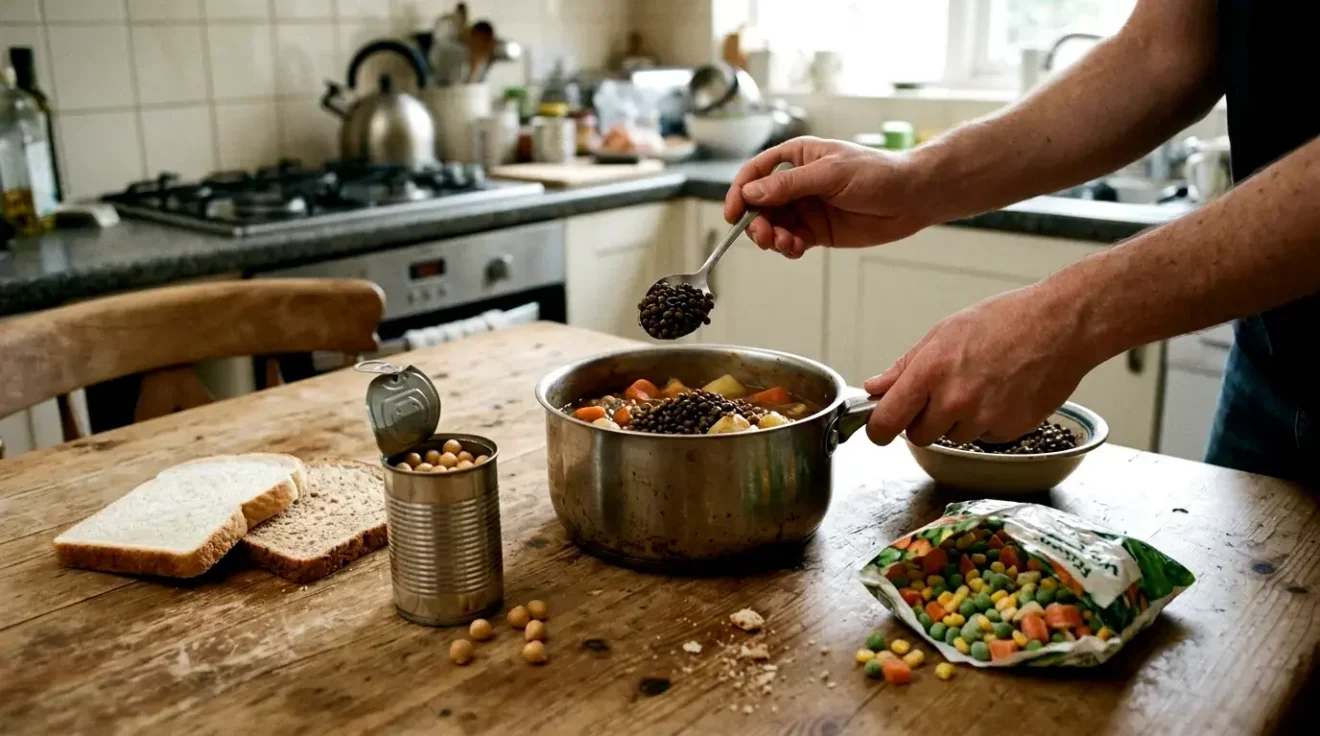
| Dinner | Curry, pasta or stew | Stir in a modest portion of lentils, beans or frozen vegetables. |
| Drinks | Tea, coffee or water | Keep water available and drink regularly according to individual needs. |
These are examples, not a compulsory daily prescription. The most suitable choices depend on appetite, dietary requirements, food preferences and digestive tolerance.
The small-addition method reduces the work involved. A familiar curry can contain a few spoonfuls of chickpeas. A bowl of yoghurt can include oats. A jacket potato can retain its skin and be served with vegetables.
Low-cost ingredients make this approach accessible. Frozen vegetables are convenient when fresh produce would otherwise spoil. Tinned beans and lentils can be stored for months and added to meals with minimal preparation. Plain yoghurt and standard porridge oats can be used without paying for premium gut-health branding.
Eating habits also deserve attention. Some people find that rushing through meals, eating large portions late at night or going long periods without food affects their digestive comfort. Observing these patterns can be worthwhile, but fixed meal timings have not been established as a universal method of improving microbiome diversity.
In people managing irritable bowel syndrome (IBS), NHS guidance specifically advises against skipping meals and eating too quickly. That condition-specific advice should not be mistaken for a rigid schedule that everyone needs to follow.
After these basic meal improvements, choosing whether to prioritise fibre, fermented foods or greater variety becomes a more manageable decision.
More Fibre, Fermented Foods or Greater Variety: Where Should You Start?
Start with the dietary change that addresses the clearest gap in your current routine. If you eat few wholegrains, fruits or vegetables, gradually increasing fibre is a sensible first step. If your meals already contain plenty of fibre, consider greater plant variety or a fermented food you enjoy. Introduce changes separately so digestive responses remain easier to understand.
Fibre, fermented foods and plant variety influence the intestinal environment in different ways. They are complementary dietary features, but they are not interchangeable treatments.
Many dietary fibres are used by gut microorganisms during fermentation, although the effects depend on the fibre type and the existing microbial community. Some fermented foods contain live microorganisms, while others do not contain live cultures when consumed. Greater plant variety introduces different combinations of fibres and plant compounds.
Importantly, a fermented food is not automatically a clinically validated probiotic. Specific probiotic benefits require evidence for the relevant live microorganism, amount and intended use.
To decide where to begin, consider these common situations.
| Your starting point | First action | What to watch |
|---|---|---|
| Few wholegrains, fruits or pulses | Add one manageable source of fibre to a familiar meal. | Gas, bloating and stool comfort as intake changes. |
| Plenty of vegetables but repetitive choices | Rotate one vegetable, grain or pulse each week. | Whether greater variety remains enjoyable and practical. |
| Interested in fermented foods | Try a small portion of a familiar fermented product, such as live yoghurt. | Personal tolerance and whether it fits normal shopping habits. |
| Frequent digestive discomfort | Record symptoms and existing habits before making major changes. | Repeated patterns and whether medical assessment is appropriate. |
30 g per day
The recommended daily dietary fibre intake for adults in UK government guidance. The NHS reports average adult consumption of approximately 20 g, without identifying this as a newly measured 2026 figure.
The 30 g recommendation provides a useful reference, but it should not become a reason to force large increases despite discomfort. Someone currently eating relatively little fibre may find a sudden change produces more gas or bloating. A gradual progression allows time to assess tolerance, alongside adequate fluid intake.
The distinction between these strategies is also visible in scientific research. A randomised dietary intervention published in Cell examined high-fibre and high-fermented-food diets in separate groups of healthy adults. Increased fermented-food consumption was associated with greater measured microbiome diversity during the intervention, while the fibre intervention changed microbial carbohydrate-processing capacity without increasing overall community diversity during the study.
This does not mean that fermented foods are universally better than fibre. The interventions had different measured effects in a small trial, and neither strategy should be presented as a guaranteed solution for digestive symptoms.
For most people seeking an uncomplicated approach, one change at a time is more useful than immediately adding a probiotic drink, several fibre supplements and a long list of unfamiliar vegetables.
The aim is not to maximise every gut-health ingredient. It is to find a tolerable starting point without creating unnecessary food rules or restrictions.
What Can Go Wrong When You Cut Out Foods Every Time Digestion Feels Different?
Repeatedly eliminating foods after occasional bloating or discomfort can make a diet unnecessarily restrictive and may reduce important sources of fibre, protein or other nutrients. Digestive symptoms do not always indicate an intolerance. Portion size, eating speed, stress and individual sensitivity can also matter, so patterns deserve investigation before foods are excluded long term.
Imagine feeling bloated after a meal containing bread, beans and onions. Removing all three ingredients immediately would make it difficult to identify what contributed to the discomfort. The portion size, how quickly the meal was eaten and other circumstances may be relevant.
Symptoms that occur once do not establish an intolerance. A repeated reaction to the same food under comparable conditions is more informative, although a food diary alone cannot diagnose an intolerance or allergy.
Successive exclusions can create nutritional problems. Avoiding wholegrains and legumes without suitable replacements may reduce fibre intake. Removing dairy products can make calcium intake more difficult. Eliminating several protein sources may reduce dietary flexibility and make balanced meals harder to assemble.
Restricting plant foods also narrows the range of dietary substances available for microbial fermentation. However, research does not establish that every food exclusion damages the microbiome or that reduced variety always makes digestive sensitivity worse.
The distinction matters because some people genuinely need dietary restrictions for diagnosed allergies, coeliac disease, intolerances or other medical conditions. Those restrictions should not be dismissed in the name of microbiome diversity.
The NHS guidance on IBS diet and lifestyle recommends keeping a food and symptom diary and seeking professional advice when managing symptoms requires avoiding many foods. It also makes clear that no single diet works for everyone with IBS.
A practical record can include the food eaten, approximate portion, timing of symptoms, stress level and eating speed. If the same problem occurs repeatedly, discuss the pattern with a GP or appropriately qualified dietitian rather than beginning a broad exclusion diet independently.
For suspected coeliac disease, medical testing should be discussed before removing gluten, because avoiding gluten beforehand can affect the reliability of tests.
A sustainable gut-health routine should preserve as much nutritional variety as is appropriate for your circumstances while allowing genuine digestive concerns to receive proper assessment.
When Should You Reassess Your Gut-Health Routine After Changing Your Diet?
Reassess a new gut-health routine after a few weeks of reasonably consistent habits rather than judging success from one meal or a single uncomfortable day. Look at bowel regularity, digestive comfort, food variety and how easy the routine feels to maintain. This is a practical review interval, not a scientifically established deadline for microbiome improvement.
Dietary changes and microbial responses do not necessarily follow the same timetable. Some people notice changes in stool consistency or gas relatively quickly, while microbiome measurements can change during longer dietary interventions. Neither response guarantees that an intervention will improve symptoms or maintain the same effects indefinitely.
An everyday review should focus on changes that matter to you. More regular bowel movements, less discomfort after familiar meals and a less stressful approach to food may be useful observations. Energy levels can also be recorded, but perceived energy is influenced by sleep, stress, physical activity and many other factors.
Rather than aiming for a particular microbiome score, use a short, repeatable assessment.
Your five-step gut-health routine review
- Record your current pattern: write down three typical days of meals, drinks and digestive experiences. Your deliverable is a dated baseline note.
- Select one manageable change: choose an addition such as wholemeal bread at lunch or lentils in a familiar dinner. Your deliverable is one clearly stated habit.
- Track consistency: mark the days when the change was practical and comfortable. Your deliverable is a simple weekly record.
- Review digestive responses: note bowel regularity, discomfort and whether symptoms repeatedly occur in similar circumstances. Your deliverable is a brief comparison with your starting point.
- Decide what to keep: continue, reduce or adjust the change according to tolerance and practicality. Your deliverable is a small plan for the following weeks, including any concerns to discuss with a clinician.
If a fibre increase causes troublesome bloating, consider slowing the progression rather than continuing to increase portions automatically. If a specialist product makes no noticeable difference and adds expense, there may be little practical reason to keep purchasing it.
Some symptoms require medical advice rather than another dietary experiment. Persistent or worsening abdominal pain, unexplained weight loss, blood in stools or ongoing changes in bowel habits should be assessed by a healthcare professional. Severe symptoms or significant bleeding may require urgent attention.
Reassessment also protects against unnecessary complexity. A routine involving numerous special foods, complicated tracking and strict timing rules may become burdensome even when the ingredients themselves are nutritious.
Once the routine is comfortable and manageable, practical improvements to everyday fibre intake can help make it more nutritionally useful.
How Can You Add More Fibre Without Completely Changing What You Eat?
Increase fibre without changing your usual meals by switching some refined grains to wholegrain versions, keeping edible skins on vegetables and adding fruit or pulses to dishes you already enjoy. Small additions are often easier to maintain than replacing entire meals. Increase intake gradually and drink enough fluids to support comfortable digestion.
Fibre is found in a wide range of affordable foods. Wholemeal bread, oats, brown rice, pulses, vegetables and fruit can all contribute, with different foods supplying different types and amounts of fibre.
For a sandwich lunch, choosing wholemeal bread instead of white bread will generally increase fibre, although the exact difference depends on the products. For a pasta dinner, wholewheat pasta offers another option. Keeping the skin on a thoroughly washed baked potato also retains fibre that would otherwise be removed.
These changes do not need to happen simultaneously. An easy approach is to add one source of fibre to a meal that currently contains little.
- Soup: add a small portion of beans or lentils.
- Pasta: include vegetables in the sauce or try a wholewheat variety.
- Breakfast: add berries or seeds to porridge.
- Sandwich: choose wholemeal bread and add salad vegetables.
- Snack: replace fruit juice with a whole fruit when convenient.
The NHS provides an illustration of how these additions can accumulate. Its example of wholemeal spaghetti with lentil and tomato sauce supplies approximately 11 g of fibre, while a meal of grilled chicken, a skin-on baked potato, carrots and green beans supplies approximately 11.2 g. These values describe specific example meals, not guaranteed amounts for every recipe or portion.
Convenience meals and takeaways can also fit. Fish and chips might be accompanied by peas or another vegetable. A ready-made pasta dish can be served with frozen vegetables. A takeaway curry may be accompanied by a small portion of chickpeas or an additional vegetable dish, depending on appetite.
Hydration becomes particularly important when increasing fibre. Fibre interacts with water in the digestive tract, and inadequate fluid intake can contribute to discomfort or constipation. There is no need to force excessive water consumption, but regularly drinking throughout the day is a practical habit.
People with digestive conditions may need more individualised advice. For example, some forms of fibre can worsen particular IBS symptoms, and increasing total fibre indiscriminately is not always suitable.
Once ordinary fibre sources are established, fermented foods can be explored as an optional complementary part of a varied diet.
How Can You Combine Probiotic and Prebiotic Foods in One Day?
Combine foods containing live cultures with prebiotic-rich ingredients by using simple pairings such as live yoghurt with oats or banana. Prebiotics are substances selectively used by microorganisms that can provide health benefits, while probiotics are specific live microorganisms with demonstrated benefits when consumed in adequate amounts. Not every fermented food qualifies as a probiotic, and combining these foods does not guarantee extra benefits.
Understanding that distinction helps avoid misleading product claims. Some dietary fibres act as prebiotics, but not all fibres meet the definition. Similarly, foods may be fermented during production without containing live microorganisms when eaten.
Plain yoghurt containing live cultures is a familiar starting point for people who tolerate dairy. Oats can add fibre, while banana contributes additional plant material. Other options include kefir with fruit or a small portion of live fermented vegetables alongside an ordinary meal.
| Meal | Fermented component | Plant component |
|---|---|---|
| Breakfast | Plain live yoghurt | Oats and banana |
| Snack | Kefir | Berries or another tolerated fruit |
| Lunch | Live fermented vegetables, where appropriate | Wholegrain bread and a vegetable-based filling |
| Dinner | A small portion of live sauerkraut or kimchi | Vegetables, grains or pulses in the main meal |
These combinations illustrate food variety, not proven therapeutic pairings. Eating probiotic-containing and prebiotic foods together has not been established as necessary for healthy digestion, and the benefits of individual probiotic strains and products vary.
Labels are worth checking. Products described as containing live or active cultures may provide live microorganisms, while heat treatment or pasteurisation after fermentation can reduce or eliminate viable cultures. Fermented products still vary widely in composition, and live cultures alone do not establish a clinically demonstrated probiotic effect.
What a randomised dietary intervention found
A study published in Cell enrolled 36 healthy adults, with 18 participants assigned to a high-fibre dietary intervention and 18 to a high-fermented-food intervention. The research followed participants through a 17-week protocol.
The fermented-food group showed increased measured microbiome diversity and reduced inflammatory markers during the intervention. The high-fibre group showed changes in microbial carbohydrate-processing capacity without an increase in community diversity. The study did not test whether combining both approaches in the same day produced additional benefits.
The randomised Cell study comparing fibre and fermented-food diets illustrates why different dietary interventions should not be assumed to have identical effects. Its small sample and specific intervention design also limit how broadly the findings can be applied.
For everyday eating, variety and tolerance matter more than complicated combinations. Rotate familiar foods when convenient, avoid products that cause discomfort and remember that live fermented foods are optional rather than essential.
The broader opportunity is to make a wider range of ordinary plant foods part of meals throughout the week, regardless of whether those meals contain fermented products.
Key takeaways for a sustainable gut-health routine
- Choose changes that you can repeat comfortably with ordinary groceries rather than chasing a particular product or microbiome score.
- Use fibre-rich foods and fermented products according to your starting diet, preferences and tolerance; neither guarantees a specific digestive outcome.
- Measure progress through practical food variety and digestive comfort, while treating persistent symptoms as a reason for professional assessment.
How Can Everyday Food Choices Support a More Diverse Gut Microbiome?
Everyday food choices can support a varied gut microbial environment by providing different fibres and plant compounds from vegetables, fruits, pulses, wholegrains, nuts and seeds. Research links greater dietary plant variety with differences in microbiome composition, although it does not prove that every additional plant improves digestive health. Small weekly substitutions offer an accessible way to broaden your diet.
Plant variety is often easier to achieve than it first appears. A vegetable curry might contain onions, peppers, spinach, tomatoes and chickpeas, served with rice and seasoned with coriander and other spices. These ingredients contribute different plant foods within one familiar meal.
There is no requirement to prepare a separate dish for every plant. Mixed vegetables, bean salads, vegetable soups and ordinary stews can all provide opportunities for variation without substantially changing meal preparation.
One useful technique is the weekly variety swap. Replace one ingredient with a similar alternative each time you shop. Brown rice might occasionally become barley. Chickpeas might be replaced with lentils. A familiar vegetable can be alternated with another that works in the same recipe.
These substitutions can be particularly straightforward when using frozen produce and tinned pulses. Neither freshness marketing nor an expensive organic label is necessary to make a meal more varied.

Some popular gut-health discussions refer to eating 30 different plant foods per week. This number is associated with the American Gut Project’s comparison of participants reporting more than 30 plant types and those reporting fewer than 10. It should not be interpreted as an official NHS target or a clinically validated minimum.
The study was observational and relied substantially on self-reported dietary information. It found associations with microbial characteristics, not proof that reaching a particular weekly count prevents digestive symptoms or improves health for everyone.
If counting helps you explore variety, make it a flexible exercise. Include different vegetables, fruits, pulses, wholegrains, nuts, seeds, herbs and spices without becoming preoccupied with whether every tiny portion deserves a separate count. There is no universally validated household counting method that can determine whether your gut microbiome is healthy.
A more meaningful question is whether the range of foods on your plate has gradually broadened while meals remain enjoyable, nutritionally balanced and comfortable to digest.
The main principles reinforce one another. Ordinary meals make regular eating manageable. Fibre-rich ingredients provide substrates for microbial activity. Fermented foods can contribute additional dietary variety, and rotating plant ingredients makes repetitive meals more interesting.
None of these habits requires eliminating entire food groups, purchasing expensive supplements or following a strict timetable. People with allergies, intolerances or diagnosed digestive conditions may need individual adjustments, and variety should always be pursued within those limits.
For your next food shop, choose just one additional plant food that fits a meal you already enjoy. Keep the change if it works, adjust it if necessary and build on that experience gradually rather than trying to achieve a perfect diet immediately.
Do you need a probiotic supplement to support gut health?
No. Most people can focus first on an adequately nourishing diet containing a range of plant foods, fibre and suitable fluids. Probiotic supplements are not essential to a general gut-supportive routine. Evidence for specific benefits depends on the microorganism, product and condition being considered, so a supplement should not be assumed to work for everyone.
Is bloating normal when you start eating more fibre?
Some people experience temporary increases in gas or bloating after adding fibre, particularly when intake rises quickly. Increasing portions gradually and maintaining adequate hydration may improve tolerance. Persistent, severe or worsening symptoms should not simply be attributed to fibre and may warrant medical assessment.
Can frozen and tinned vegetables support gut health as well as fresh ones?
Frozen and tinned vegetables can contribute fibre, other nutrients and dietary variety. Their exact nutritional composition varies with the food and processing method, but they are useful alternatives when fresh produce is expensive or inconvenient. Choosing suitable products and including a range of different vegetables matters more than insisting on fresh produce for every meal.
Should you test your gut microbiome before changing your diet?
A commercial microbiome test is not necessary to begin basic dietary improvements such as increasing plant variety or choosing more fibre-rich foods. Microbiome composition varies between individuals, and results do not automatically identify a suitable personal diet. If you have ongoing digestive symptoms, a GP can help determine whether clinically appropriate investigations are needed.
Can you follow a gut-friendly diet if you have a sensitive stomach?
Yes, but the approach may need adapting to individual tolerance. Larger portions of pulses, certain vegetables or rapidly increased fibre can aggravate symptoms for some people. Start with tolerated foods, make gradual changes and avoid unnecessary restrictions. If symptoms persist or a balanced diet becomes difficult, seek advice from a GP or registered dietitian.