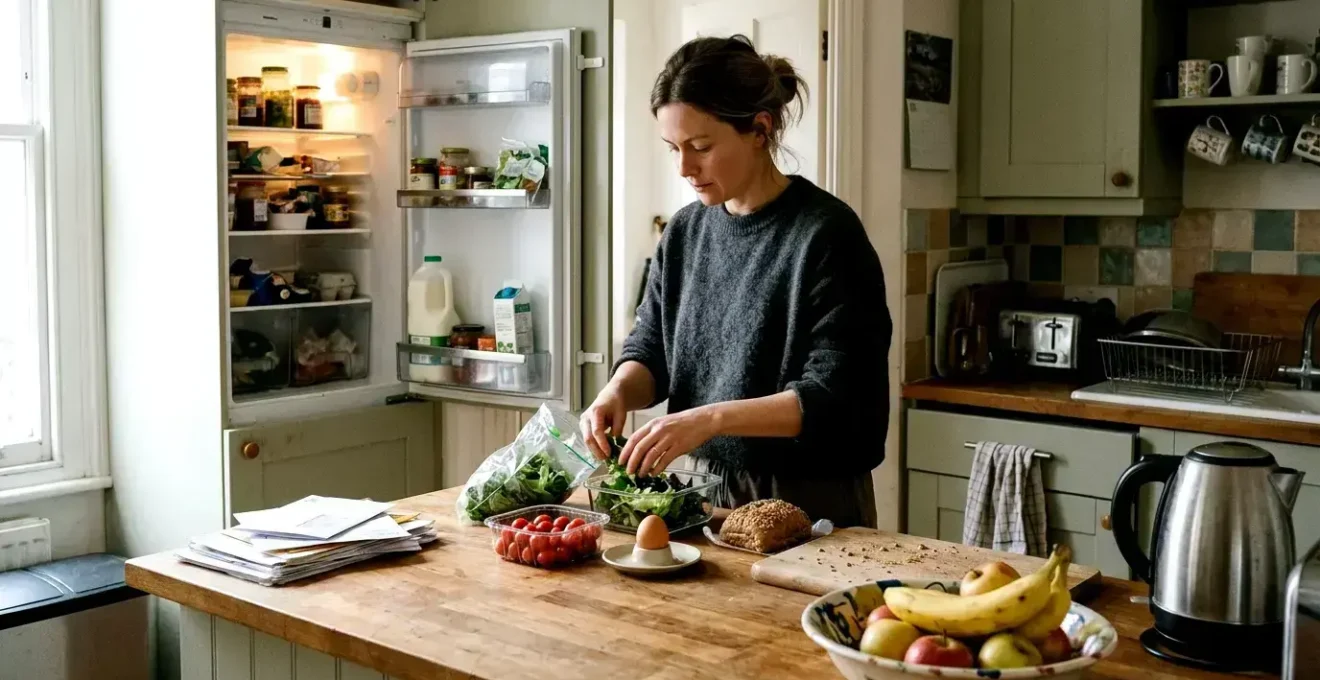
Healthier eating often becomes difficult at the least convenient moments: five minutes before a meeting, during a rushed supermarket visit or after arriving home exhausted. The problem is not always knowing what to eat. It is having to make another decision when time, attention and appealing options are limited.
A more manageable approach is to make healthier food choices easier to repeat. That might mean keeping a reliable lunch option in mind, choosing a different meal-deal drink, preparing vegetables before a busy evening or stocking a few useful cupboard ingredients. None requires every meal to be perfect.
For busy adults in England, familiar routines provide plenty of opportunities to improve food decisions without rebuilding an entire lifestyle. The aim is to reduce unnecessary decisions while keeping enough flexibility for commuting, shift work, family meals and unexpected changes.
Small adjustments to shopping, preparation and food availability can make balanced eating more practical. The following methods focus on changes that remain useful even when motivation is low.
Healthier everyday eating at a glance
- Improve familiar meals with simple substitutions rather than expecting a complete dietary overhaul.
- Choose a few dependable lunches, snacks and backup meals before busy moments arrive.
- Make nutritious foods visible and convenient, while allowing flexibility across the day or week.
- Why Do Small Daily Food Choices Matter Even When Individual Meals Seem Unimportant?
- How Can You Make Better Food Choices in Under a Minute When You Are Busy?
- Ready Meal, Sandwich or Meal Deal: Which Choice Works Best on a Busy Lunch Break?
- Which Everyday Triggers Can Turn a Planned Healthy Day Into Mindless Eating?
- How Can You Arrange Your Kitchen So Healthier Food Becomes the Easiest Choice?
- Why Can Ten Minutes of Meal Planning Prevent Several Stressful Food Decisions Later?
- How Can You Assess an Unfamiliar Ingredient Before Adding It to Your Weekly Shop?
- How Can Flexible Eating Patterns Work When Every Day Has a Different Schedule?
Why Do Small Daily Food Choices Matter Even When Individual Meals Seem Unimportant?
Small daily food choices matter because repeated habits influence your overall eating pattern more than any single lunch or snack. One less balanced meal rarely defines a diet, but regularly choosing similar foods affects how much fibre, fruit, vegetables, protein, salt and added sugar you consume. Improving common defaults makes healthier eating less dependent on individual moments of determination.
Consider a typical working day. Breakfast might be grabbed on the way out, lunch bought near the office and a snack eaten during an afternoon meeting. Each decision looks insignificant in isolation. Together, these familiar purchases form much of the week’s food intake.
The NHS Eatwell Guide explains that dietary balance does not have to be achieved at every meal. It can be considered across a day or even a week. Its recommendations include varied fruit and vegetables, higher-fibre starchy foods and different protein sources.
This broader perspective is useful when lunch is less balanced than intended. Rather than treating the day as unsuccessful, the next meal provides another opportunity to include foods that were missing earlier.
There is also a distinction between making a good decision and making that decision easy. Planning a suitable lunch while relaxed at home is different from choosing one in a crowded supermarket with only a few minutes available.
A systematized scientific review examined studies of interventions using nudges and choice architecture to influence adult food purchases 33. Some approaches showed promising effects, although results varied and the researchers identified a need for further investigation. The systematized review of food-choice nudges supports considering how options are presented, without proving that environmental changes work for everyone.
For everyday eating, this suggests a practical experiment: make one useful choice easier to repeat. Keep a preferred breakfast available, select a regular lunch combination or put fruit somewhere convenient. The change is small enough to fit into an ordinary week.
A sustainable pattern leaves room for enjoyment, convenience and occasional less nutritious choices. The next challenge is making a reasonable decision quickly when the available options are limited.
How Can You Make Better Food Choices in Under a Minute When You Are Busy?
You can make a better food choice in under a minute by checking three things: whether the option contains a useful protein source, whether fruit or vegetables can be included, and whether an unsweetened drink is available. This is a practical shortcut, not a complete nutritional assessment. Its purpose is to improve an existing choice without adding another complicated task.
Imagine standing in a supermarket before catching a train. Comparing every product would take too long. Instead, ask three questions:
- Where is the protein? Look for options containing eggs, beans, lentils, fish, chicken, tofu or another suitable protein source.
- Can fruit or vegetables be added? A piece of fruit, side salad or prepared vegetables may improve a basic meal.
- What will I drink? Water or a sugar-free drink can replace a sugary soft drink without changing the main food choice.
These questions work best as a quick filter. A meal still needs an appropriate amount of food, and fibre, salt and overall dietary variety remain important. Protein alone does not make a product healthy.
The NHS recommends practical substitutions such as fruit instead of some crisps or cakes, wholegrain cereals instead of sugary cereals, and water instead of sugary drinks. Its NHS healthier food swaps guidance offers familiar alternatives rather than requiring unfamiliar meals.
Another useful technique is pre-deciding. Write down three or four acceptable busy-day meals, such as an egg sandwich with fruit, a bean-based soup with wholegrain bread, or a ready meal with additional vegetables. When time is short, choose from that list rather than starting from nothing.
The most nutritious theoretical option is not always the most useful real-world option. A simple supermarket lunch you can obtain and eat may be more practical than a complex homemade meal you do not have time to prepare.
Better decisions should also account for allergies, dietary needs, appetite and access to food. The three-question check is a convenience tool, not a rigid rule or a substitute for individual medical advice.
Once a few acceptable options are familiar, deciding becomes simpler. The approach becomes especially useful when comparing the lunches commonly available on British high streets.
Ready Meal, Sandwich or Meal Deal: Which Choice Works Best on a Busy Lunch Break?
A ready meal, sandwich or supermarket meal deal can all work for a busy lunch. The better choice depends on the actual product, portion size, protein, vegetables, fibre and nutritional label—not the format alone. Compare what you will eat in full, including the snack and drink, rather than assuming a packaged meal is automatically less healthy than a sandwich.
A sandwich with wholegrain bread, a suitable filling and vegetables may offer a practical lunch. A ready meal containing vegetables, pulses and a substantial protein source can also fit a balanced eating pattern. A meal deal may provide similar benefits if its components are chosen carefully.
The following comparison can help you assess the options available in a shop.
| What to check | Ready meal | Sandwich | Meal deal |
|---|---|---|---|
| Protein | Check the main ingredients and declared protein content. | Look at the filling and its amount. | Assess the main item and side together. |
| Vegetables | Check how much the dish actually contains. | Look for meaningful vegetable fillings or add a side. | Choose vegetables or fruit where available. |
| Fibre | Consider pulses, vegetables and wholegrains. | Wholegrain bread may help. | Consider the fibre contribution of every component. |
| Portion adequacy | Check the package size and number of servings. | Check whether the sandwich is substantial enough. | Assess the complete combination rather than its price offer. |
| Practicality | May require a microwave. | Usually ready to eat. | Convenient when buying lunch away from home. |
UK front-of-pack traffic-light labels offer another way to compare similar products. Green indicates a low amount, amber a medium amount and red a high amount of selected nutrients such as saturated fat, sugar and salt. Not every product displays these labels, and an entirely green label does not establish that the food is nutritionally complete.
Check whether nutritional figures refer to 100 g, one portion or the whole package. A ready meal labelled with two portions requires particular attention if you plan to eat all of it.
For meal deals, the side and drink are useful places to make substitutions. Water or a sugar-free drink and a piece of fruit can improve a combination that might otherwise include a sugary drink and confectionery. The main item still matters, particularly if it contains substantial amounts of salt or saturated fat.

Cost deserves equal consideration. Buying prepared food regularly can strain a budget, but the most expensive product is not necessarily the most nutritious. If money is limited, compare similar products on price and nutritional composition, and consider inexpensive additions such as fruit, tinned pulses or vegetables brought from home.
The most helpful upgrade is the one that addresses a genuine gap. If lunch already contains adequate protein but few vegetables, adding vegetables may matter more than buying a product advertised as high in protein.
Even a well-chosen lunch does not prevent every difficult eating moment. Hunger, fatigue and distractions later in the day can still influence what happens next.
Which Everyday Triggers Can Turn a Planned Healthy Day Into Mindless Eating?
Common triggers for unplanned eating include arriving home extremely hungry, working through meals, watching screens while snacking, drinking alcohol and eating food simply because it is within reach. These situations can make eating less deliberate. Recognising the circumstances gives you an opportunity to change the routine without blaming yourself for a lapse in willpower.
The trigger is not always the food itself. Sometimes it is the combination of limited attention, an established habit and immediate access to something appealing.
- Arriving home hungry: After a long commute, preparing dinner may feel difficult. Keeping an accessible snack or simple meal available can reduce the need for an impulsive choice.
- Eating at the desk: Emails, calls and deadlines compete with attention to the meal. Taking a short break can make the experience more deliberate.
- Snacking after alcohol: Drinking may coincide with less structured food decisions. Deciding on food before an evening out can help avoid relying entirely on late-night convenience options.
- Eating while watching television: Reaching into a large packet can become habitual. Serving a portion in a bowl makes the amount easier to notice.
- Finishing children’s leftovers: Food may be eaten because it is available rather than because it is wanted. Putting safe-to-store leftovers away offers another option.
Distinguishing hunger from appetite can also be useful. Ask yourself when you last ate and whether an ordinary, filling food such as a sandwich would appeal. This is an informal reflection, not a diagnostic test: physical hunger, appetite and emotions frequently overlap.
When possible, allow a short pause before an automatic snack. You might move away from the screen, drink some water or decide whether you actually want the food. If you are hungry, eating is appropriate; the goal is not to suppress hunger.
Distraction can make it harder to notice the eating experience. A practical starting point is to eat one part of lunch without simultaneously scrolling or answering messages. You do not need a perfect, uninterrupted mealtime for this to be worthwhile.
Another trigger is all-or-nothing thinking. Eating an unplanned biscuit does not require abandoning your intentions for the rest of the evening. Your next food decision remains separate from the previous one.
These techniques are everyday experiments rather than universally proven solutions. If eating regularly feels distressing, compulsive or difficult to control, individual support from an appropriately qualified health professional may be more helpful than additional self-imposed rules.
One particularly useful place to make those situational changes is the kitchen, where storage and visibility influence which options are easiest to prepare.
How Can You Arrange Your Kitchen So Healthier Food Becomes the Easiest Choice?
Arrange your kitchen so nutritious foods require less searching, preparation and effort. Keep fruit visible, store ready-to-eat vegetables where they are easy to reach, and place useful meal ingredients together. Less nutritious snacks do not need to be forbidden; simply reducing their prominence may help make everyday food choices more deliberate.
This approach is sometimes called friction design. The aim is to make a preferred action convenient and an automatic, less helpful action slightly less immediate.
For example, an apple in a fruit bowl requires almost no preparation. Vegetables hidden behind several containers in the fridge require more effort. Washing or preparing suitable vegetables in advance and storing them safely in a visible container can change which option is most convenient.
Start with one part of the kitchen rather than reorganising everything. During the first week, review the worktop. Later, consider the fridge or snack cupboard. A small change is easier to evaluate and maintain within a busy household.
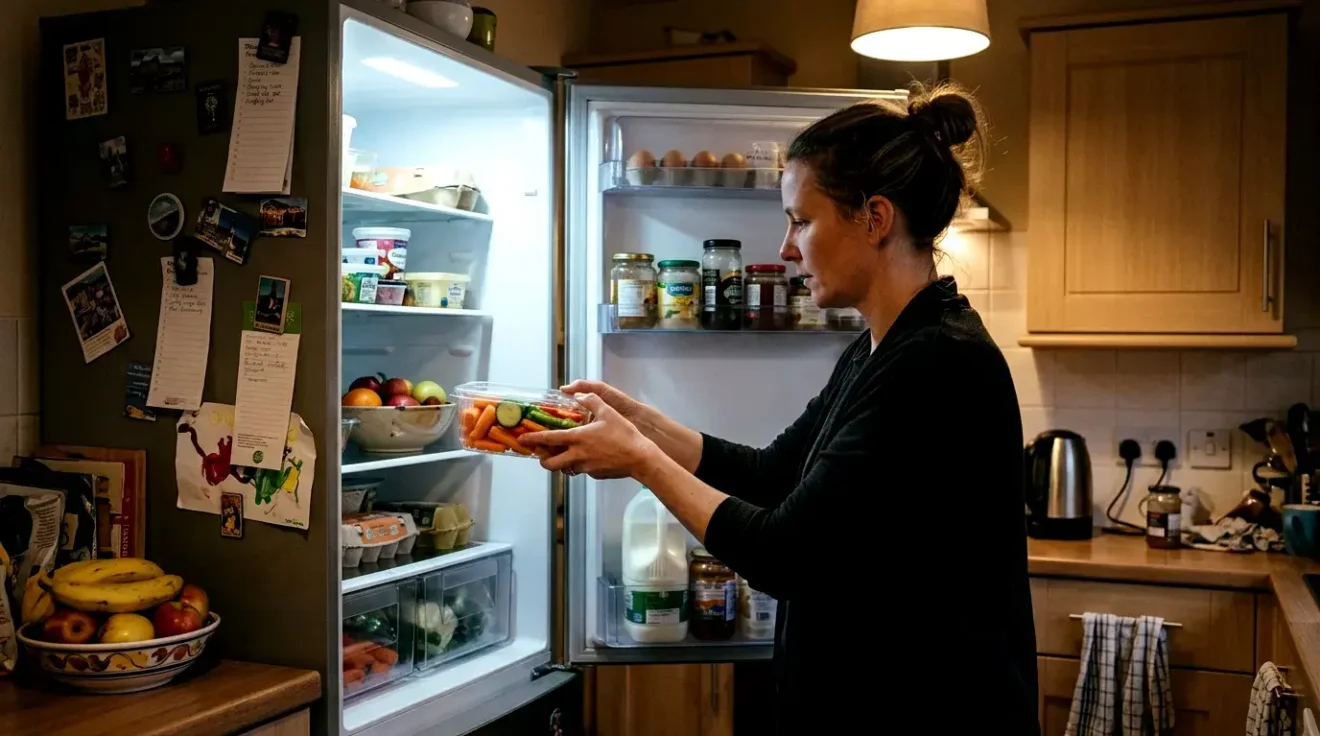
Shared households need flexibility. Children, partners or housemates may have different food preferences. A dedicated snack shelf or separate container can reduce visual temptation without imposing restrictions on everyone else.
Shopping habits are equally important. A convenient kitchen cannot offer foods that never make it into the weekly order. Consider preparing an online supermarket basket from a basic list, ideally when you are not urgently hungry, and reviewing optional extras before checkout.
A five-action kitchen reset
- Inspect your worktop: Identify one place for a visible fruit bowl. The result is a specific, accessible fruit location.
- Check your fridge: Choose a convenient shelf for ready-to-eat vegetables, keeping food-storage safety in mind. The result is one clearly organised area.
- Review the snack cupboard: Group everyday snacks in a designated location. The result is a cupboard arrangement that makes options easier to identify.
- Build a backup-meal space: Put a few suitable cupboard staples together. The result is at least one meal combination available without another shopping trip.
- Update your shopping list: Add the items needed to maintain these changes. The result is a reusable list for your next grocery order.
Observe whether the rearrangement makes your intended choices more convenient. If the fruit is frequently wasted or prepared vegetables remain untouched, adjust what you buy rather than assuming the layout alone should solve the problem.
Once food is accessible, a little advance planning can reduce the number of difficult decisions you face during an unpredictable working week.
Why Can Ten Minutes of Meal Planning Prevent Several Stressful Food Decisions Later?
Ten minutes of meal planning can reduce stressful food decisions by identifying the meals most likely to become rushed or inconvenient. Instead of planning every breakfast, lunch and dinner, focus on demanding days and prepare simple fallback options. The benefit is having an acceptable answer ready when time is short, not guaranteeing that every planned meal will happen.
Begin with your calendar. Check for late meetings, commuting days, children’s activities, evening commitments or shifts that make cooking difficult. These are the meals most likely to benefit from an advance decision.
A simple ten-minute exercise might look like this:
- Review the week’s schedule and identify the busiest days.
- Choose suitable food for the two or three meals most likely to cause difficulty.
- Check what ingredients are already available.
- Add only the missing essentials to your shopping list.
- Choose a backup option for a meal that might be disrupted.
These timings are a suggested planning exercise, not a scientifically established minimum or a guarantee of improved eating habits.
For a hypothetical example, someone working late on Tuesday and Thursday could plan a ready-to-heat bean dish for one evening and an egg-based meal for the other. The remaining evenings could stay flexible.
Making several decisions together can also simplify preparation. Cooking extra rice, preparing a batch of suitable protein or washing vegetables while making another meal may provide ingredients for later use. Store and reheat foods safely, following relevant food-safety guidance.
The most common weakness in elaborate meal plans is their lack of flexibility. A plan that depends on fresh cooking every evening may become impractical when work runs late or a family obligation changes.
Keep a few backup meal components available, such as tinned beans, eggs, frozen vegetables or other ingredients suited to your needs. Their purpose is to make a simple meal possible without relying on a complicated recipe.
Planning should also reduce waste. Buying ingredients for too many ambitious recipes can create unnecessary spending and food that goes unused. A short list of realistic meals is usually easier to adapt than an inflexible menu.
The same principle applies when discovering new foods: an ingredient earns a place on the shopping list by serving a practical purpose, not merely by sounding nutritious.
How Can You Assess an Unfamiliar Ingredient Before Adding It to Your Weekly Shop?
Assess an unfamiliar ingredient by checking what it contains, how much you would eat, what it costs and which existing food it would replace. Read the ingredients list and nutrition information rather than relying on promotional wording. If it serves a useful purpose, try a small quantity before making it a regular purchase.
Start with the ingredients list. On prepacked UK foods, ingredients are listed in descending order by weight. This helps identify what makes up most of a product, although the list alone does not determine its overall nutritional quality.
Next, compare the nutritional declaration with similar products. The NHS advice on reading food labels explains the importance of checking nutrient values per 100 g or 100 ml and understanding the difference between the manufacturer’s stated portion and what you actually consume.
For example, UK guidance identifies foods containing more than 22.5 g of total sugars per 100 g as high in sugar, while more than 1.5 g of salt per 100 g is high in salt. These thresholds apply to foods; drinks have different criteria.
Protein content is another useful detail when comparing products intended to serve a similar purpose. You can look at the amount of protein relative to the product’s energy content, but no single protein-to-calorie ratio establishes whether a food is healthy. Fibre, saturated fat, salt, portion size and dietary variety also matter.

Marketing language requires separate consideration. Expressions such as « natural » or « wholesome » may sound reassuring but do not replace a nutritional comparison. More specific claims, including « high protein » or « no added sugar », have defined conditions under applicable food-labelling rules; they still do not establish that the whole product is nutritionally superior.
Consider an unfamiliar breakfast product marketed as a superfood. If it replaces a less suitable breakfast and fits your budget, it might be worth trying. If it simply adds another expensive topping to an otherwise adequate breakfast, its practical value may be limited.
A low-risk experiment is to buy the smallest available pack and use it in one familiar meal. Afterwards, assess whether you enjoyed it, whether it was convenient and whether it improved or replaced an existing choice.
The central question is what will this replace? Some ingredients are useful additions, but novelty alone is not a dietary benefit. Affordable everyday foods can provide valuable nutrients without specialist branding.
A well-chosen shopping list creates more dependable options at home. The final challenge is maintaining that flexibility when working hours and mealtimes change from one day to the next.
Key takeaways before adapting your routine
- Build meals around a few consistent nutritional principles rather than fixed clock times.
- Keep portable and shelf-stable alternatives available when your schedule may change unexpectedly.
- Review the overall eating pattern instead of judging every unusual working day in isolation.
How Can Flexible Eating Patterns Work When Every Day Has a Different Schedule?
Flexible eating works by keeping your food choices reasonably consistent while allowing mealtimes to change. Instead of following a rigid daily schedule, maintain access to balanced meals and appropriate snacks whenever your working day permits. One predictable meal can provide structure, while other meals adapt to commuting, shifts, family commitments or changing appetite.
For someone working conventional office hours, lunch might be the most predictable meal. For a shift worker, breakfast after returning home or a meal before starting work may provide a more reliable point of structure.
This is the idea behind an anchor meal: choose one meal that is usually manageable and make its composition dependable. The term describes a practical organisational technique, not a clinically validated dietary method.
For example, a regular lunch could include a protein source, vegetables and a higher-fibre carbohydrate. On busy days, it might be a prepared sandwich with fruit. On quieter days, the same broad nutritional structure could come from a homemade meal.
Other meals can vary according to hunger, availability and circumstances. The NHS Eatwell Guide’s emphasis on balance across a day or week is useful here, although individual medical needs may require more specific timing or dietary management.
Changing schedules can also alter when you feel hungry. This does not mean you must ignore your appetite to maintain a fixed pattern. Notice when substantial meals are practical and whether access to convenient food is sufficient during long gaps.
For night shifts or irregular travel days, portable options may include a sandwich with a suitable protein filling, fruit, unsalted nuts where appropriate, or other foods that can be stored safely. Refrigerated foods need suitable temperature control if carried for extended periods.
A flexible routine also needs to avoid turning every change into a restriction. Skipping meals because the planned time has passed is not inherently necessary. When hunger or circumstances require a different arrangement, adjust the meal rather than abandoning the underlying aim of eating adequately and with variety.
Reviewing a week can reveal useful patterns. Perhaps lunches are consistently balanced but vegetables are difficult to include on late evenings. That gives you a specific shopping or preparation problem to address, without imposing identical meals on every day.
Choose one upcoming difficult day and decide on a realistic meal or snack in advance. Add the necessary ingredients to your shopping list and make them easy to access. That small preparation is a practical next step towards healthier eating with less daily decision-making.
Do you need to cook every day to maintain a balanced diet?
No. Ready-to-eat foods, prepared ingredients and convenient supermarket meals can contribute to a balanced diet. Consider their overall nutritional composition, portion sizes and how they fit with other meals. The important distinction is between convenience and nutritional quality: convenient food is not automatically less nutritious.
Are frozen and tinned vegetables suitable for everyday meals?
Yes. Frozen and tinned vegetables can be practical ways to include more vegetables when fresh produce is inconvenient. Consider any added salt, sugar or sauces when comparing products. Choosing vegetables you can store, prepare and eat regularly may also help reduce food waste.
Should you avoid every food with a red traffic-light label?
No. A red traffic-light indicator identifies a high amount of a particular nutrient, such as salt or saturated fat, according to the relevant labelling criteria. It does not automatically make a food unsuitable. Compare similar products, consider your portion and look at the overall dietary pattern rather than treating one colour as a complete verdict.
What if healthier foods cost more than the options you normally buy?
Focus on affordable changes that solve a specific nutritional gap. Tinned pulses, frozen vegetables, oats and familiar supermarket staples may be useful options depending on local prices. Comparing unit prices, using foods already at home and reducing avoidable waste can be more practical than buying products marketed as premium health foods.
How can you tell whether a new food habit is realistic enough to maintain?
Try it during an ordinary busy week rather than only on an unusually quiet day. Notice the preparation time, cost, convenience and whether you actually want to repeat it. If the change consistently demands extra effort, simplify it. A modest habit that fits your circumstances is generally more useful than a complicated routine that is rarely followed.