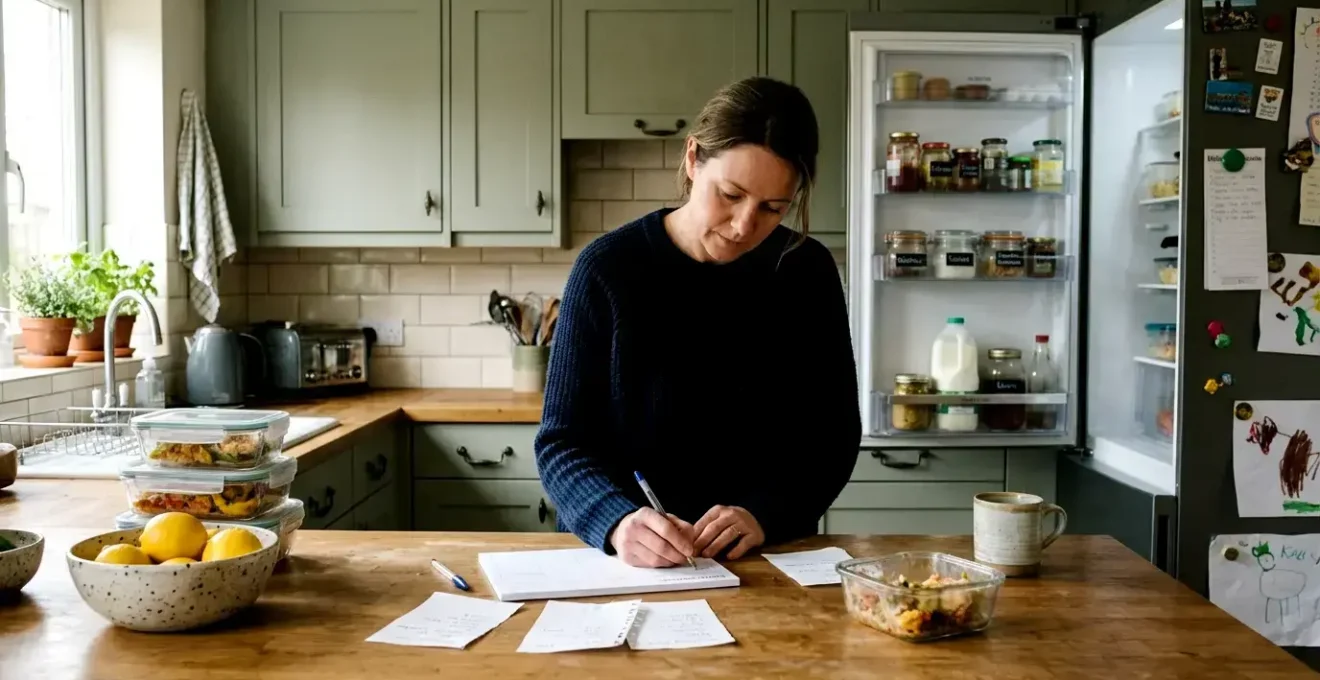
Planning meals ahead saves time by moving food decisions away from the busiest moments of the day. Instead of opening the fridge at 6 pm and wondering what to cook, you already know which ingredients are available, which meals are realistic and what can wait until tomorrow.
That does not mean assigning a different recipe to every day of the week. For busy households, a flexible meal plan can be as simple as choosing a handful of dinners, keeping ingredients for quick alternatives and deciding which meals need to be eaten first.
The most useful approach balances preparation with freedom. A few planned meals reduce repeated decisions and unnecessary shopping, while adaptable recipes and spare portions make it easier to accommodate late meetings, family activities or changing appetites.
Getting that balance right begins with identifying what actually makes weekday cooking difficult: choosing dinner, finding ingredients, preparing food or trying to follow a schedule that no longer fits.
Flexible meal planning at a glance
- Choose a small number of realistic dinners and match them to types of evenings rather than fixed dates.
- Check existing ingredients before shopping, and build meals that share versatile components.
- Prepare only what genuinely makes cooking easier, with a backup dinner for unpredictable days.
- Why Can Ten Minutes of Meal Planning Prevent Several Stressful Food Decisions Later?
- How Can You Plan Five Dinners While Leaving Room for Schedule Changes?
- Full Weekly Menu or Three Anchor Meals: Which Planning Method Is Easier to Maintain?
- Which Meal-Planning Mistakes Lead to Unused Ingredients by the Weekend?
- When Should You Plan Meals So Shopping and Cooking Fit Your Schedule?
- How Can You Build Flexible Meal Templates for Days That Never Go to Plan?
- When Should You Chop, Cook or Portion Ingredients Ahead of Time?
- How Can Everyday Cooking Become Easier Without Relying on Ready Meals?
Why Can Ten Minutes of Meal Planning Prevent Several Stressful Food Decisions Later?
Ten minutes of meal planning can prevent stressful food decisions by grouping several choices into one short session before the pressure of the evening begins. You decide what meals are possible, check the necessary ingredients and identify quick alternatives while you have time to think. Ten minutes is a useful starting point, not a guaranteed duration or measured saving.
Without a plan, deciding what to eat often happens alongside other demands: finishing work, collecting children, managing homework or dealing with tiredness. The question is rarely just what to cook. It can expand into checking the fridge, finding a recipe, deciding whether to shop and estimating how long everything will take.
These choices can be divided into two practical categories:
- Closed decisions: choosing between known meals, such as pasta with tomato sauce or a vegetable omelette.
- Open decisions: working out whether ingredients are available, whether shopping is necessary, whether to order food or what can realistically be prepared.
Planning is particularly helpful because it turns many open decisions into closed ones. Instead of beginning with unlimited possibilities, the household chooses from meals that are already feasible.
The Leeds Community Healthcare NHS fatigue-management advice explicitly recommends advance meal planning as a way to avoid making food decisions when energy is low. Its guidance addresses people experiencing fatigue, rather than establishing a measurable time saving for every household.
A simple experiment can reveal where planning might help. For one week, note each unexpected food decision and the time it occurs. Include moments such as discovering a missing ingredient, deciding to visit a supermarket or abandoning a meal because preparation would take too long.
At the end of the week, look for recurring problems. If most decisions involve choosing dinner, select several meals in advance. If they involve missing ingredients, prioritise the shopping list. If cooking time causes trouble, choose simpler recipes.
The planning session itself might take ten minutes for a small household using familiar meals. A larger family, dietary requirements or unfamiliar recipes may require longer.
The aim is not to eliminate spontaneous cooking. It is to reserve your mental energy for situations that genuinely require a fresh decision, rather than repeating the same avoidable questions every evening.
How Can You Plan Five Dinners While Leaving Room for Schedule Changes?
You can plan five dinners without creating a rigid weekly menu by treating them as movable options rather than appointments. Choose meals for different types of evenings, keep one dinner unassigned as a contingency and prepare ingredients according to how quickly they need using. The plan provides structure while allowing meals to change places when schedules shift.
Start by considering the evenings you normally experience. Some involve very little cooking time, others allow a slower meal, and a few are difficult to predict. Instead of writing Monday, Tuesday and Wednesday beside every recipe, label each dinner by the circumstances in which it works best.
For example, a hypothetical five-dinner plan might look like this:
| Dinner | Best suited to | Flexibility |
|---|---|---|
| Fresh fish with potatoes and peas | An early-week evening with cooking time | Prioritise according to the use-by date |
| Vegetable and chickpea curry | A relatively relaxed evening | Can be prepared ahead and frozen in suitable portions |
| Egg-fried rice with vegetables | A quick dinner evening | Adapt ingredients; follow specific cooked-rice safety advice |
| Pasta with tomato sauce and vegetables | An unpredictable evening | Use store-cupboard and frozen ingredients |
| Unassigned backup dinner | A changed schedule or unexpected need | Keep a freezer meal or versatile ingredients available |
The fifth option acts as a wildcard meal. It does not have to be cooked on a particular date. If plans change, an evening meal is cancelled or everyone gets home late, the wildcard prevents the entire menu from needing to be redesigned.
Meal order should still respect food safety. Fresh ingredients with approaching use-by dates take priority over meals made entirely from frozen or store-cupboard ingredients. Foods should be cooked or frozen before their use-by dates, following packaging instructions.
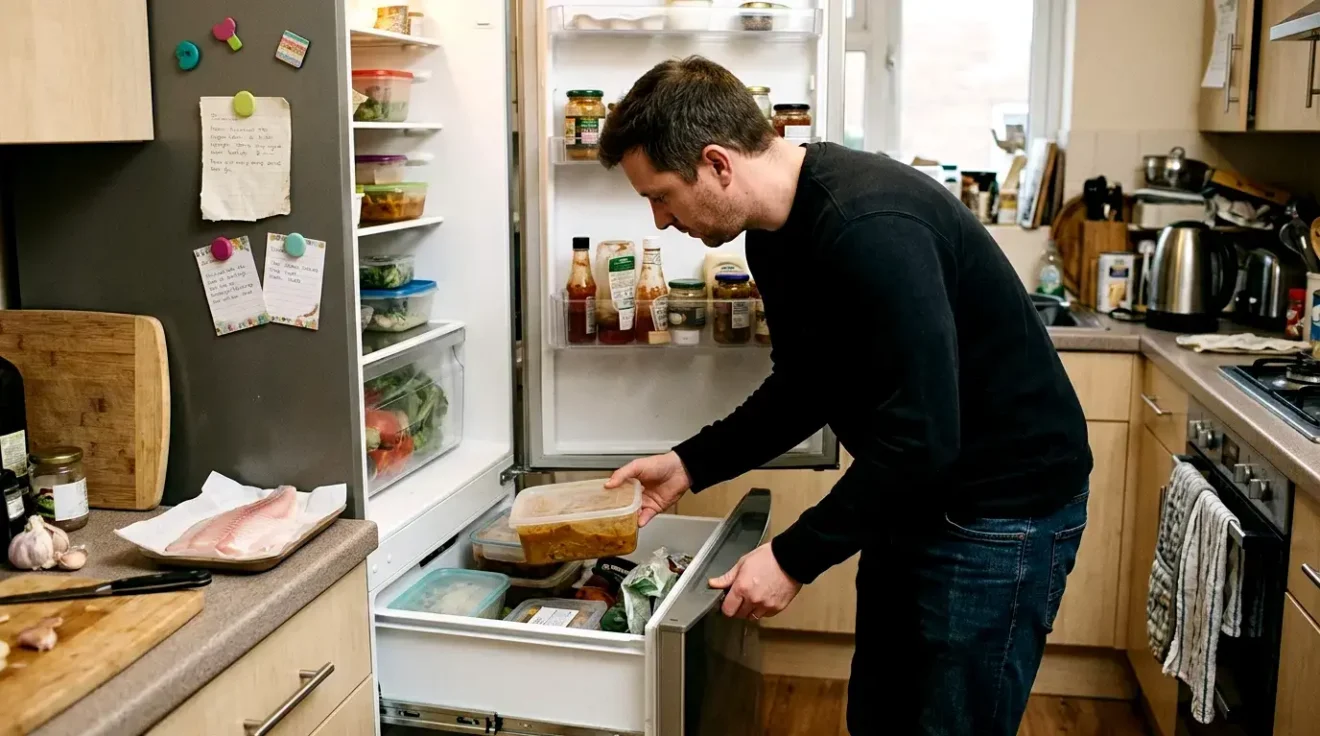
Another important principle is to vary the effort required. Five different recipes that each demand 45 minutes of active cooking offer little practical flexibility. Include something quick, something that reheats well and something that can be assembled from ingredients already in the kitchen.
Check the plan briefly whenever an evening changes. Move a freezer-friendly meal to another date, use the quick option when time is limited and avoid allowing perishable ingredients to become an afterthought.
Flexible scheduling works best when the meals are deliberately different in preparation time and storage requirements. Once that principle is established, the next decision is how many meals the household actually needs to plan.
Full Weekly Menu or Three Anchor Meals: Which Planning Method Is Easier to Maintain?
A full weekly menu generally suits households with predictable routines, while three anchor meals can be easier for households whose schedules change frequently. The full menu offers more advance certainty but requires more decisions upfront. Anchor meals provide structure on selected evenings while leaving the remaining dinners adaptable. Neither approach is universally easier to maintain.
A full weekly menu assigns meals across most or all of the week. Shopping is organised around those meals, and the household knows what it intends to cook each evening.
The three-anchor-meal method works differently. You choose three reliable dinners for evenings when structure is especially valuable, often the busiest or most predictable days. Other meals are handled with flexible recipes, leftovers or store-cupboard ingredients.
For example, a household might establish Tuesday as pasta night, Thursday as a quick tray bake and Friday as a reheated curry evening. Saturday and Sunday remain open to whatever the family has time or appetite to prepare.
The approaches differ in three important ways:
| Criterion | Full weekly menu | Three anchor meals |
|---|---|---|
| Initial planning effort | More meals and ingredients to decide in advance | Fewer fixed choices, with backup ingredients still needed |
| Response to unexpected changes | Requires rearranging planned meals | Leaves more evenings open by design |
| Risk of abandoning the routine | May feel demanding when the schedule changes regularly | May feel easier to continue, but can leave too many daily decisions |
| Ingredient management | Can support detailed purchasing and portion planning | Depends more on versatile ingredients and careful stock checks |
The full menu is worth considering when shopping trips are infrequent, household schedules are stable or reducing unused ingredients is a particular priority. However, a full menu only supports waste prevention when portions, storage and changes of plan are managed properly.
Anchor meals are worth trying when work shifts vary, family activities change or previous attempts at detailed menus have proved frustrating. They do not remove the need for basic shopping preparation. The household still needs enough adaptable ingredients for the unplanned evenings.
There is no need to choose permanently. A two-week comparison can show which approach fits your routine.
- Try a full menu for one week, including realistic preparation times.
- Use three anchor meals the following week, with flexible options for the remaining days.
- Record the number of unexpectedly improvised dinners during each week.
- Note how stressful dinner preparation feels, using the same simple rating scale each evening.
- Compare the ingredients left unused at the end of both weeks.
This is a personal household experiment, not a scientific test. Different appointments and shopping circumstances may influence the results. Nevertheless, the notes can reveal which routine creates less friction in everyday life.
Whichever method works better, its success also depends on whether the ingredients bought for those meals are actually used.
Which Meal-Planning Mistakes Lead to Unused Ingredients by the Weekend?
Unused ingredients often accumulate when households choose recipes before checking their existing food, buy specialist items for only one dish or prepare more portions than they need. Plans can also create waste when fresh ingredients are assigned to meals that repeatedly get postponed. Checking supplies, sharing ingredients between recipes and planning how to use leftovers can reduce these problems.
The first common mistake is planning from a recipe collection without looking in the kitchen. A household might buy another bag of potatoes while an older bag is already in the cupboard, or purchase fresh vegetables when frozen alternatives are available.
University College London Hospitals advice on eating well for less recommends checking existing supplies before shopping and using prepared ingredients across multiple dishes. Its practical suggestions include reusing bolognese sauce and incorporating roasted vegetables into different meals.
A second problem is the single-recipe ingredient: an item purchased for one dish with no clear purpose afterwards. Several unrelated recipes may each require a different herb, sauce or vegetable, leaving small quantities that are easily forgotten.
A more efficient approach is to plan ingredient overlap. For example, a bag of peppers could contribute to a tray bake, an omelette and a pasta sauce. A tomato-based sauce could be used for pasta one evening and adapted for another meal later in the week.
This does not mean every dinner should taste the same. A shared ingredient can be prepared differently, combined with alternative seasonings or used in a different meal format.
Portion optimism creates another problem. Cooking extra servings can be useful when the leftovers have an assigned destination, but repeatedly preparing oversized meals without planning to eat or freeze the surplus can cause food to accumulate.
Before cooking extra, decide whether those portions will become tomorrow’s lunch, another planned dinner or freezer meals. Where suitable, measure ingredients such as rice or dried pasta rather than relying entirely on guesswork.
A useful finishing routine is stock closure: build one early meal in the following planning cycle around food that still needs using.
For example, a hypothetical household could use remaining vegetables in a soup, combine cooked ingredients into a suitable bake or add spare vegetables to a stir-fry. Check storage times and food safety before reusing any leftovers; the existence of a leftover does not mean it remains safe to eat.
Five checks before finalising your next shopping list
- Inspect the fridge, freezer and cupboards, then write a short list of ingredients that need using.
- Choose two meals that share at least one ingredient, and mark that ingredient beside both meals.
- Identify any item required for only one recipe and record a second realistic use or remove it from the list.
- Check expected portion numbers and label any deliberately planned extra servings with their intended meal.
- Assign one upcoming dinner to safe, usable remaining ingredients and write that meal into the plan.
Ingredient planning becomes easier when it happens shortly before the household’s normal shopping trip, rather than on an arbitrary day of the week.
When Should You Plan Meals So Shopping and Cooking Fit Your Schedule?
The best time to plan meals is shortly before your household normally shops for food, when you can check existing ingredients and identify what needs buying. The ideal day depends on your actual routine, whether you use supermarket delivery, visit a market or shop in person. A repeatable planning slot matters more than choosing Sunday or any other particular day.
For a household shopping on Friday evening, Thursday may be the most useful planning day. If groceries arrive on Tuesday morning, a Monday evening check may be more convenient. Planning before the shop lets the menu guide purchases, rather than forcing meals around items bought without a clear purpose.
The Norfolk and Suffolk NHS advice on shopping and food waste recommends planning meals a few days ahead, checking ingredients already available and buying the additional items required. It also supports planning only main meals when that is more manageable.
For households with busy routines, a short planning session can follow this sequence:
- Look at appointments, work commitments and evenings spent away from home.
- Check ingredients already available, including foods that need using soon.
- Choose the main dinners that fit the available cooking time.
- Identify meals that can move if the schedule changes.
- Write a shopping list containing only the missing ingredients and necessary staples.
Breakfasts and lunches often need less detailed planning than evening meals. If household members regularly eat porridge, toast, sandwiches or a small selection of familiar lunches, these foods can be handled as recurring shopping decisions.
Dinners may deserve more attention because they involve different preferences, preparation requirements and household schedules. That distinction is practical rather than universal: a family with complicated packed-lunch requirements may need to plan lunches more carefully.
Planning should also reflect how often the household shops. Someone buying fresh produce several times per week may prefer a shorter rolling plan, while a household relying on one larger supermarket delivery may need a broader view of its meals.
It can help to make a quick adjustment after shopping if an item is unavailable or substituted. This is different from rebuilding the entire menu: the main decisions have already been made, and only the affected meals need attention.
Even with a dependable shopping routine, unexpected days will still occur. Adaptable meal structures make those interruptions much easier to manage.
How Can You Build Flexible Meal Templates for Days That Never Go to Plan?
Flexible meal templates make unexpected evenings easier by providing a repeatable meal structure instead of a fixed recipe. Choose a base, a protein source, vegetables and a sauce or seasoning, then substitute ingredients according to what is available. Keeping at least two suitable options for each component means a meal can remain possible even when shopping or preparation plans change.
A recipe usually specifies ingredients and quantities for a particular dish. A meal template describes a structure that can accommodate different ingredients without fundamentally changing the cooking method.
For example, a stir-fry template might combine noodles or rice with tofu or chicken, frozen or fresh vegetables and a suitable sauce. The cooking method stays familiar even when the exact ingredients differ.
Several templates work well with ingredients commonly found in British supermarkets and household cupboards:
| Template | Flexible ingredients | Practical use |
|---|---|---|
| Stir-fry | Noodles or rice, tofu or chicken, fresh or frozen vegetables, sauce | Useful when vegetables need using |
| Tray bake | Potatoes or other vegetables, chickpeas or another suitable protein, seasoning | Requires relatively little attention once in the oven |
| Grain bowl | Couscous or another grain, beans or eggs, vegetables, dressing | Can combine separately prepared components |
| Flexible pasta | Pasta, tomato-based or other suitable sauce, vegetables, optional protein | Works with store-cupboard ingredients |
| Filled wrap | Wraps, beans or cooked protein, salad or cooked vegetables, dressing | Easy to adapt to different preferences |
| Omelette | Eggs, suitable leftover vegetables, cheese or other fillings | Useful for a simple dinner with minimal equipment |
Build each template around ingredients that are realistic for your household, including dietary needs and preferences. A useful template should have at least two workable choices for its main components.
For instance, a pasta dinner might use fresh spinach when available and frozen peas when it is not. A bean-based meal could use tinned chickpeas or lentils. A tray bake might start with fresh vegetables on shopping day and rely on suitable frozen ingredients later in the week.
The goal is not endless substitution. Ingredient changes must still suit the cooking method, required preparation and food safety. Raw meat, cooked leftovers and frozen vegetables may need different handling even when they appear in the same meal template.
A small set of templates can also simplify shopping. Instead of purchasing ingredients for numerous unrelated recipes, the household maintains versatile staples that fit several familiar meals.
These templates provide a safety net: when a planned dinner is no longer practical, the household already has a manageable alternative rather than needing a completely new idea.
Once those flexible structures are familiar, preparing selected ingredients ahead of time can further reduce work on demanding evenings.
When Should You Chop, Cook or Portion Ingredients Ahead of Time?
Prepare ingredients ahead when doing so removes a meaningful task from a busy evening without compromising quality or food safety. Roasting vegetables, preparing suitable sauces or portioning ingredients for planned meals can be worthwhile. Delicate herbs, some freshly cooked foods and ingredients that deteriorate after preparation may be better handled shortly before eating. The amount prepared should match your actual schedule.
Effective advance preparation is not about completing every possible kitchen task. It is about identifying work that becomes easier when grouped with other tasks or performed during a less demanding part of the day.
For example, washing and cutting vegetables for two planned dinners may reduce repeated setup and cleaning. Cooking a sauce intended for multiple meals may be practical when the portions can be stored safely.
Other tasks offer less benefit. Finely chopped fresh herbs may lose quality during storage, while some cooked pasta dishes have a better texture when finished nearer serving time.
A useful approach is cascade preparation: organise work by shared equipment rather than completing each recipe from beginning to end.
If the oven is already needed for roasting vegetables, consider whether another planned oven dish can be prepared during the same session. If the chopping board is out, prepare suitable vegetables for several upcoming meals before cleaning the work surface.
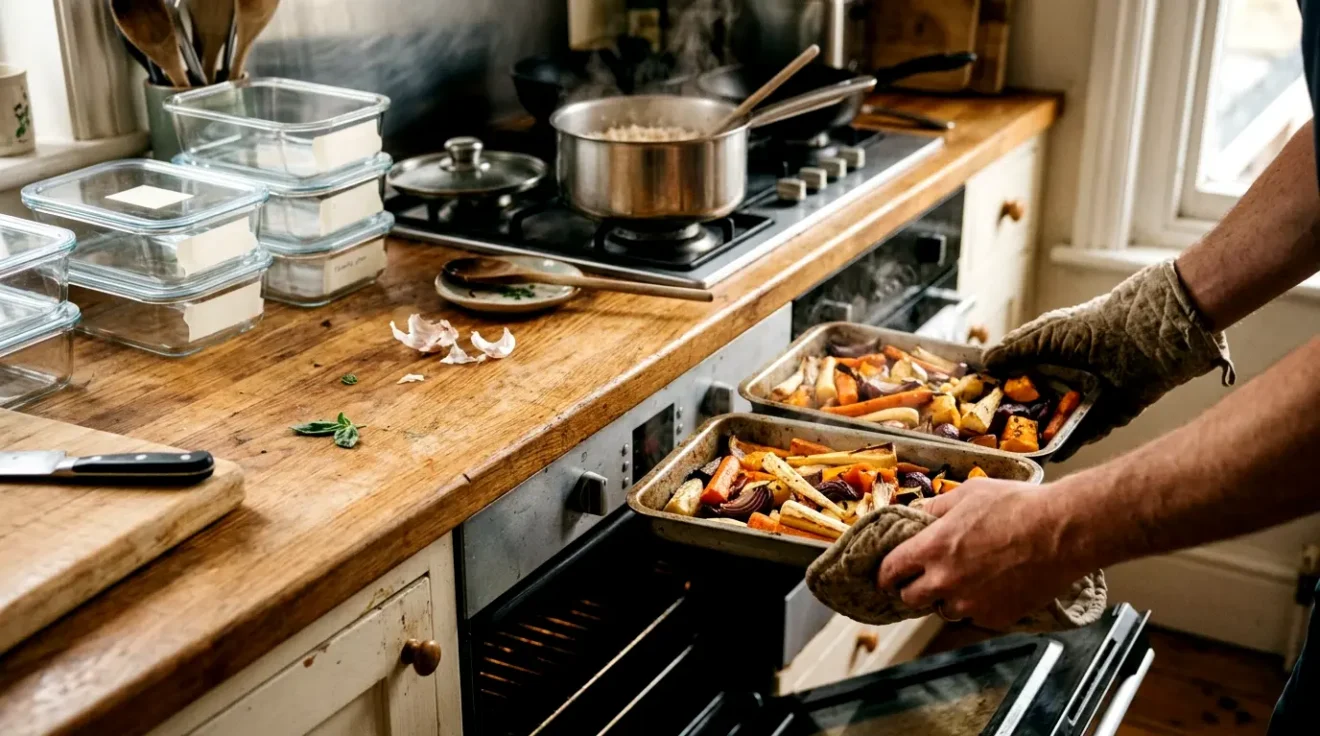
Advance preparation must also account for safe storage. Cooked food should not be left at room temperature for extended periods simply because it is intended for another day.
According to the Food Standards Agency research on eating at home, its general advice is to cool and refrigerate cooked leftovers within two hours, eat refrigerated leftovers within 48 hours or freeze them, and reheat leftovers only once. Some foods, particularly cooked rice, require more specific precautions, while product use-by instructions must also be followed.
“FSA advice is to cool and store leftovers in the fridge within 2 hours of cooking. Leftovers should be eaten within 48 hours, or frozen.”
These recommendations affect how far ahead cooking can reasonably take place. A dinner intended for later in the week may be better frozen promptly rather than kept in the fridge for several days. Ingredients and finished dishes also have different storage needs, so one rule should not be applied indiscriminately.
Excessive batch cooking can create another difficulty: preparing more food than the household wants to eat. A fridge full of repetitive meals may encourage plans to be abandoned, particularly when people’s schedules or appetites change.
Start with one or two genuinely useful tasks. If roasting vegetables makes two dinners easier, prepare them when storage and timing allow. If washing produce and portioning ingredients are enough, there is no need to cook complete meals in advance.
The broader goal is to make ordinary home cooking convenient enough that an unexpectedly busy evening does not automatically require a completely prepared meal from the supermarket.
Key takeaways for making the routine sustainable
- Keep a small collection of versatile staples and familiar meals rather than rebuilding the kitchen routine every week.
- Choose a few preparations that serve multiple dinners, but avoid turning advance cooking into another demanding project.
- Set a realistic standard for weekday meals: convenience, safe preparation and household preferences matter more than variety every evening.
How Can Everyday Cooking Become Easier Without Relying on Ready Meals?
Everyday cooking becomes easier when the kitchen is organised around reliable ingredients, simple meal structures and preparation that serves more than one dinner. A small supply of versatile staples, a few familiar sauces and planned extra portions can reduce daily work without relying on commercially prepared meals. Convenience comes from removing repeated effort, not from cooking elaborate food every evening.
The first improvement is the kitchen’s basic setup. A household that regularly keeps pasta, oats, tinned beans, frozen vegetables and a few suitable seasonings has more options when shopping plans fall through.
These ingredients are most helpful when they connect to meals the family already enjoys. Buying numerous unusual staples in the hope of becoming more organised can create unnecessary expense and unused food.
Similarly, a small selection of versatile homemade sauces can support several meals. A tomato-based sauce might work with pasta, vegetables or an adapted cottage-pie-style dish. A suitable curry sauce could be combined with different vegetables and protein sources on different evenings.
Equipment should solve actual problems rather than add complexity. A sharp knife, practical chopping board, suitable oven trays and usable storage containers may be more valuable to everyday cooking than specialised appliances requiring additional cleaning or storage space.
Another useful principle is cook once, eat twice. When preparing a dish that reheats or freezes well, deliberately make additional portions and assign them to another meal.
For example, a household preparing a vegetable chilli might plan to eat part of it that evening and freeze suitable extra portions for a later dinner. The second meal is already accounted for rather than becoming an accidental leftover.
This strategy is particularly useful for suitable dishes such as soups, stews, curries and tomato-based sauces. Additional portions should be cooled, stored and reheated according to relevant food-safety guidance, with particular attention to ingredients requiring stricter handling.
Flexible templates and selective preparation work together. A frozen portion of sauce can support a quick pasta dinner. Roasted vegetables can become part of a wrap or another appropriate meal. A simple omelette can provide an alternative when the expected dinner no longer fits the evening.
These options make ready meals an occasional choice rather than the only apparent solution to a difficult day. There is no need to reject them entirely; their value depends on household circumstances, preferences and available time.
One of the biggest obstacles to sustainable cooking is setting expectations too high. A balanced household routine does not require a new recipe, numerous ingredients or complicated preparation every night.
Simple, familiar meals are often easier to repeat, shop for and adapt. Repetition can be a practical advantage when the household finds those meals satisfying and uses some variety across the wider week.
For your next shopping cycle, choose three realistic dinners, keep one adaptable backup and prepare only the ingredients that will make a genuinely busy evening easier. Review what worked at the end of the week, then adjust the plan instead of starting from scratch.
Can meal planning work if everyone in the household has different preferences?
Yes. Plan meals around shared components that can be served or finished differently. For example, a common base of potatoes or pasta can be paired with suitable individual toppings, vegetables or protein sources. Account for allergies, dietary requirements and preferences when shopping, rather than expecting everyone to eat an identical finished dish.
Is it worth meal planning if you only cook at home a few nights each week?
Yes. Plan the meals you realistically expect to cook rather than filling an entire calendar. Two or three planned dinners, supported by ingredients for an adaptable backup, may be enough. The important part is matching purchases to actual meals so that ingredients are not left unused when the household eats elsewhere.
Should you buy fresh or frozen vegetables for a flexible meal plan?
Both can be useful. Fresh vegetables may suit meals planned shortly after shopping, while frozen vegetables provide options when schedules change or fresh supplies run out. Choose according to the recipe, storage capacity and expected use. Frozen ingredients can be particularly practical in soups, curries, pasta dishes and other cooked meals.
What should you do when several planned meals are cancelled?
Check which ingredients are most perishable, especially those approaching their use-by dates. Cook or freeze suitable foods before those dates, following packaging and food-safety instructions. Move meals made from longer-lasting ingredients to later dates and adjust the next shopping list to account for what remains. Avoid cooking food merely to preserve the original menu if it will not be eaten or stored safely.
How can you tell whether meal planning is actually saving you time?
Track a few practical indicators for two weeks: time spent deciding what to cook, unexpected shopping trips, last-minute changes and food left unused. Include the time spent planning and preparing ahead, not just the time saved during dinner preparation. A useful routine should reduce overall effort or stress rather than simply moving an excessive amount of work to another day.