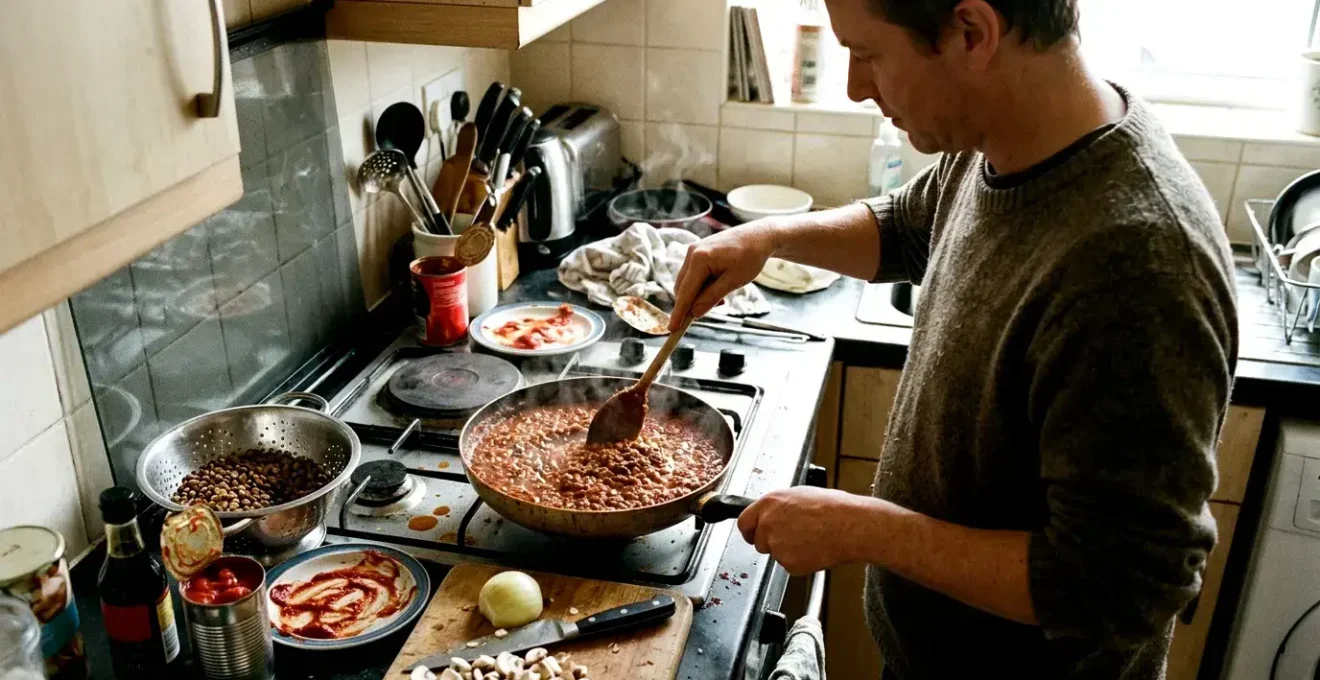
Starting a flexitarian approach does not mean replacing every familiar dinner with an unfamiliar plant-based recipe. You can keep your usual shopping habits, cooking methods and favourite flavours while gradually changing how often you eat meat and how much you serve.
The simplest starting point is a meal you already enjoy. Add lentils to a bolognese, make a chickpea curry instead of a chicken curry occasionally, or serve a smaller portion of meat alongside a more substantial helping of beans and vegetables. The meal remains recognisable, but its balance changes.
Flexitarian eating is an adaptable pattern rather than a strict rulebook. As explained by the British Dietetic Association, it can include some meat, poultry, seafood, eggs and dairy alongside a greater emphasis on plant foods. There is no requirement to eliminate animal products or achieve a particular number of meat-free days.
The practical challenge is making these adjustments satisfying enough to repeat. That means preserving flavour, texture, convenience and nutritional balance rather than simply removing ingredients.
Starting flexitarian eating: the essentials
- Keep familiar meals and change one ingredient or portion at a time instead of overhauling your weekly menu.
- Choose beans, lentils or tofu according to what the dish needs, including texture, cooking method and flavour.
- Build satisfying meals with protein, starchy foods, vegetables and some fat, while allowing flexibility for meat, fish and dairy.
- Why Can Eating Less Meat Be Easier to Sustain Than Giving It Up Overnight?
- How Can You Make Three Familiar Dinners More Flexitarian Without Losing Their Character?
- Beans, Lentils or Tofu: Which Swap Works Best in Different Flexitarian Meals?
- What Can Go Wrong When You Remove Meat Without Replacing What It Added to the Meal?
- Which Meal Should You Make Meat-Free First When Starting a Flexitarian Routine?
- How Can You Use Smaller Portions of Meat or Cheese Without Making Meals Feel Incomplete?
- Chickpeas, Lentils or Tofu: Which Base Fits Your Plant-Based Meal Best?
- How Can You Build a Plant-Based Meal That Feels Complete Rather Than Like a Side Dish?
Why Can Eating Less Meat Be Easier to Sustain Than Giving It Up Overnight?
Eating less meat gradually can be easier to maintain because it changes familiar habits without demanding a completely new way of cooking. Instead of banning foods immediately, a flexitarian approach lets you adjust portions, ingredients and meal frequency while retaining choices you enjoy. Its flexibility may reduce frustration, although long-term success still requires deliberate habits.
Consider someone who cooks spaghetti bolognese, chicken curry, cottage pie and a Sunday roast most weeks. An overnight meat ban could mean finding four unfamiliar recipes, learning different preparation techniques and negotiating changes with other people at the table.
A gradual approach asks for much less initial adjustment. The bolognese might contain half its usual mince alongside lentils. The curry could become meat-free every second week. Everything else can remain unchanged at first.
This is habit substitution rather than total habit replacement. Familiar ingredients, shopping routines and cooking equipment remain useful, reducing the number of decisions involved.
Flexibility also changes how occasional meat consumption is interpreted. Under a strict prohibition, eating meat may feel like breaking a rule. Under a flexitarian approach, it is simply one permitted choice within a broader pattern. This may help some people avoid abandoning their intentions after a single unplanned meal, although the effect is not guaranteed.
To decide where to begin, compare two options:
- Reduction target: If you currently eat meat at four evening meals, try two or three for the next fortnight.
- Defined meat-free routine: If you prefer clear boundaries, designate one or two regular meals as meat-free.
Ask yourself whether you find flexible decisions reassuring or tiring. Someone who dislikes repeated choices may prefer a fixed weekly rule, while someone with unpredictable family meals may benefit from a reduction target.
Flexibility does have a weakness: progress can quietly stall. Every fortnight, review your recent dinners and count how many included meat. Compare that with your original intention, without treating individual meals as failures.
The British Dietetic Association’s plant-based diet information sheet identifies flexitarian eating as a pattern that can retain animal foods. It does not, however, establish that gradual reduction is universally more sustainable than vegetarian eating.
Once you have chosen a realistic reduction pattern, the next challenge is translating it into dinners that still taste and feel familiar.
How Can You Make Three Familiar Dinners More Flexitarian Without Losing Their Character?
Three familiar dinners can become more flexitarian by keeping their basic preparation intact while changing some or all of the meat. For bolognese, use lentils alongside mince; for curry, substitute chickpeas for some chicken; and for cottage pie, combine lentils with the usual filling. Adjust seasoning and liquid to preserve the original character.
The guiding method is keep the base, change the protein, adjust the liquid. This protects the elements people recognise: the tomato-rich sauce in bolognese, the spices in curry and the savoury filling beneath cottage pie’s mashed potato topping.
For a bolognese-style pasta dinner, soften onions and garlic as usual, brown a smaller portion of mince, then add drained cooked lentils, chopped tomatoes and tomato purée. Keep the usual herbs and pasta. A little mushroom or soy sauce can add savoury depth, while the lentils provide bulk.
Green or brown lentils are particularly useful when you want individual pieces to remain noticeable. Red lentils soften and thicken the sauce, which can be welcome but produces a different texture.
For a curry, begin with your usual onions, ginger, garlic and spices. Replace some or all of the chicken with drained chickpeas. Simmer them in the sauce and check the seasoning before serving with rice. Because chickpeas do not release the same juices as chicken, adjust stock or other cooking liquid gradually rather than copying the original quantities automatically.
For cottage pie, prepare a filling using cooked lentils, finely chopped mushrooms, onions, carrots and stock. Add tomato purée and herbs before covering with mashed potato. Reduce excess liquid so the filling holds together when served. If desired, retain some mince during the transition.
These substitutions change more than protein. Meat contributes browning, fat, texture and savoury flavour. Mushrooms, tomato purée, herbs, seasoning and a modest amount of oil can help replace some of those culinary functions.
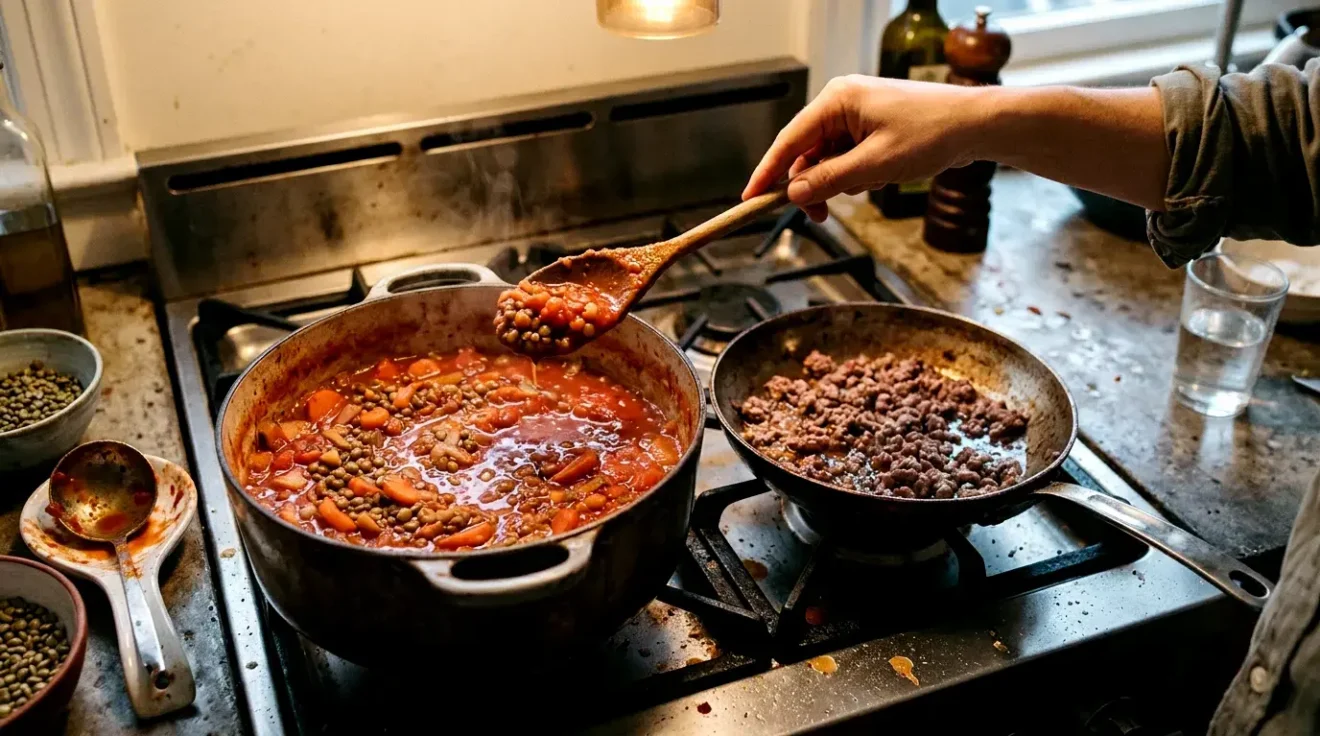
Mixed households can use another method: prepare one shared vegetable-and-lentil sauce, then brown meat separately for anyone who wants it. This avoids cooking two entirely different dinners while allowing individual portions to vary.
Texture deserves particular attention. Lentils cannot reproduce minced meat exactly. To preserve more bite, avoid overcooking them, combine them with a little mince initially, or finish suitable dishes with toasted seeds or chopped nuts, provided there are no relevant allergies.
These examples are adaptable cooking suggestions, not tested recipes with fixed nutritional outcomes. Their success depends on choosing ingredients that suit the structure of each dish.
Beans, Lentils or Tofu: Which Swap Works Best in Different Flexitarian Meals?
Beans work particularly well in chilli, curries and stews; firm lentils suit sauces, salads and pie fillings; and tofu is useful in stir-fries or dishes that rely on browning and a strongly flavoured sauce. The best substitute depends on the role meat played in the original recipe, not simply which ingredient contains protein.
A meat ingredient may provide bulk, a browned surface, a firm bite or something that carries the sauce. Before choosing a replacement, identify which of these functions matters most.
The comparison below focuses on cooking performance rather than claiming that these foods are nutritionally interchangeable.
| Dish or cooking need | Useful substitute | Preparation tip |
|---|---|---|
| Chilli or rich stew | Kidney beans, black beans or chickpeas | Drain and rinse canned beans, then simmer in the seasoned sauce. |
| Bolognese or cottage pie | Green or brown lentils | Use cooked lentils that retain some shape; avoid unnecessary extra simmering. |
| Warm salad or grain bowl | Puy-style or green lentils | Drain well and dress while warm for flavour. |
| Stir-fry | Firm or extra-firm tofu | Remove excess moisture, brown the pieces and add sauce towards the end. |
| Thick soup | Red lentils | Allow them to soften and naturally thicken the liquid. |
Beans absorb and complement strongly seasoned sauces, making them convenient when a dish already contains plenty of vegetables and liquid. Rinsing canned beans removes the packing liquid and some surface starch, although rinsing is not necessary for every recipe.
Lentils behave differently according to variety. Red lentils tend to break down during cooking, whereas green and brown varieties generally hold their shape better. Choose firmness when the dish needs visible pieces rather than a smooth filling.
Tofu benefits from deliberate preparation. Pressing firm tofu can reduce excess moisture and help it brown. Freezing and thawing it can create a more porous, chewy texture, but this is optional and changes the result rather than making it identical to meat.
The swap should match the cooking technique. Beans that work beautifully in a slow-cooked chilli may break apart in a vigorous stir-fry. Tofu that browns well in a frying pan may feel uninteresting when dropped into an unseasoned broth.
There is also a digestive consideration. Beans and lentils add fibre, and increasing intake too abruptly can cause bloating or discomfort in some people.
30g
Recommended daily fibre intake for adults aged 16 and over in the UK. This is a total daily target, not an amount that every individual flexitarian meal must provide.
The British Nutrition Foundation advises increasing fibre gradually and maintaining adequate fluid intake. Begin with manageable pulse portions and increase them as your digestive system adjusts.
Once the right ingredient is in place, consider the complete meal: removing meat can also remove nutritional value, richness and the element that made the dish feel substantial.
What Can Go Wrong When You Remove Meat Without Replacing What It Added to the Meal?
Removing meat without replacing its nutritional and culinary roles can leave a meal short on protein, energy, flavour or satisfying texture. Meat contributes nutrients such as iron and vitamin B12, as well as savoury depth and a substantial centrepiece. A successful flexitarian meal replaces these functions thoughtfully without requiring an exact imitation of meat.
Imagine removing chicken from a roast dinner while leaving only a modest portion of potatoes and vegetables. The result may still taste pleasant, but it can feel more like a collection of side dishes than a complete meal.
Four functions deserve attention:
- Protein: Use beans, lentils, tofu, eggs, fish or another suitable source across your meals.
- Savoury depth: Build flavour with mushrooms, caramelised onions, tomato purée, spices or appropriately seasoned sauces.
- Nutrients: Consider sources of iron, vitamin B12 and other nutrients when reducing animal foods substantially.
- Meal structure: Give the dish a clear centre, substantial texture and enough food to satisfy your appetite.
If a reduced-meat meal leaves you hungry soon afterwards, review the overall portion and ingredients. A small salad with a spoonful of chickpeas may not provide enough protein or energy for your needs. Adding a substantial serving of pulses, potatoes, wholegrains or healthy fats may help.
Hunger within two hours is not proof of a particular nutrient deficiency; appetite also varies with activity, individual needs and the rest of the day’s eating. Treat it as a prompt to reassess the meal, not a diagnosis.
If the dish feels bland rather than insufficient, adding more food may miss the problem. Try acidity from lemon, savouriness from mushrooms, or a contrasting texture from toasted seeds.
Another common pitfall is replacing meat mainly with refined carbohydrates. Extra chips, white bread or pasta may make a meal filling, but they are not equivalent to adding varied protein-rich plant foods and vegetables.
The NHS guidance on eating a balanced diet identifies meat as a source of protein, iron, zinc and B vitamins, while beans and pulses supply protein, fibre and other nutrients.
Iron and vitamin B12 require proportionate attention. A varied flexitarian diet that continues to include animal foods can provide these nutrients, but adequacy depends on actual intake. Plant sources of iron include pulses and some fortified foods; combining plant iron sources with vitamin C-rich foods can support absorption.
Vitamin B12 is found naturally in animal-derived foods and can also come from fortified products. People excluding all animal foods need a reliable B12 source, while those who retain eggs, dairy, fish or meat should assess their overall pattern rather than assuming supplementation is automatically necessary.
Anyone with particular nutritional needs, persistent symptoms or uncertainty about their intake can seek individual guidance from a GP or registered dietitian.
Rather than trying to perfect every dinner immediately, start with a meal where those elements are already easy to maintain.
Which Meal Should You Make Meat-Free First When Starting a Flexitarian Routine?
Your first meat-free meal should be one you already enjoy without much meat, can prepare confidently and can repeat without disrupting your household. Breakfast or weekday lunch may be easier starting points than a traditional family dinner. Choose the meal with the least practical resistance rather than the one that seems most ambitious.
Think about your existing week before choosing a new recipe. Porridge, eggs on toast, jacket potatoes with beans and vegetable soup may already be regular meat-free meals. Recognising these as part of your routine is a useful starting point.
Lunch often offers flexibility because it may involve fewer people and less expectation than an evening meal shared with family. This is a practical observation, not a universal rule: someone who enjoys preparing vegetarian family dinners may find evenings easier.
Look for three favourable conditions:
- The meal is already meat-free or needs only a small substitution.
- You have the ingredients and know the preparation method.
- Other people are unlikely to expect a particular meat-centred dish.
A fixed rule can remove repeated decisions. For example, make Monday lunch meat-free or choose a bean-based dinner every Wednesday. The day itself is unimportant; predictability makes the routine easier to shop and prepare for.
Your five-step first-fortnight flexitarian checklist
- Write down five dinners you already cook regularly. Deliverable: a short list of familiar meals.
- Circle the easiest meal to make meat-free or reduce in meat. Deliverable: one selected starting meal.
- Choose its replacement ingredient and check your cupboard before shopping. Deliverable: a specific ingredient list.
- Assign the adjusted meal to a fixed day in each of the next two weeks. Deliverable: two entries in your meal calendar.
- After the second week, record what worked, what felt unsatisfying and whether you want to repeat or expand the change. Deliverable: a brief two-week review.
When only one household member wants to reduce meat, use a shared meal base with optional toppings. A vegetable pasta sauce can be served with lentils for one person and separately cooked mince for another. The important distinction is that the household still shares the main preparation.
A first attempt that proves inconvenient does not mean the approach has failed. The selected meal may simply have been a poor fit for your schedule, expectations or preferred flavours.
As this becomes routine, you can also reduce meat at meals where removing it completely would be less appealing.
How Can You Use Smaller Portions of Meat or Cheese Without Making Meals Feel Incomplete?
Smaller portions of meat or cheese can work well when you redistribute the meal rather than simply serving less food. Keep the familiar combination of protein, starch, vegetables and sauce, but allow pulses, grains or vegetables to occupy more space. Use smaller amounts of meat or cheese for flavour where appropriate, instead of making them the automatic centrepiece.
Consider a roast dinner with chicken, mashed potatoes, carrots, greens and gravy. Simply cutting the chicken portion while leaving everything else unchanged may make the plate appear noticeably smaller.
Instead, add a generous helping of seasoned lentils or another suitable protein-rich food. The plate retains its usual components, but the balance shifts towards plants.
This is a redistribution strategy rather than a portion-shrinking exercise. The aim is not to leave empty space where meat used to be.
Another technique is to treat strongly flavoured animal ingredients as seasonings. A small amount of chorizo can flavour a bean stew, a few crisp bacon pieces can finish a substantial vegetable dish, and a little grated mature cheese can contribute more noticeable flavour than a larger quantity of mild cheese.
These additions still count as animal foods, and processed meats are best kept limited within a balanced diet. The method is about using less, not treating a small portion as nutritionally irrelevant.
Cheese deserves separate attention because it can take two very different roles. A meal built around cheese, with vegetables and suitable accompaniments, is different from adding cheese automatically to every vegetable or pulse dish.
Ask whether the cheese is providing a meaningful protein-rich component or simply being added because the absence of meat feels unfamiliar. If the meal already contains a substantial serving of lentils or beans, a modest cheese garnish may be sufficient for flavour.
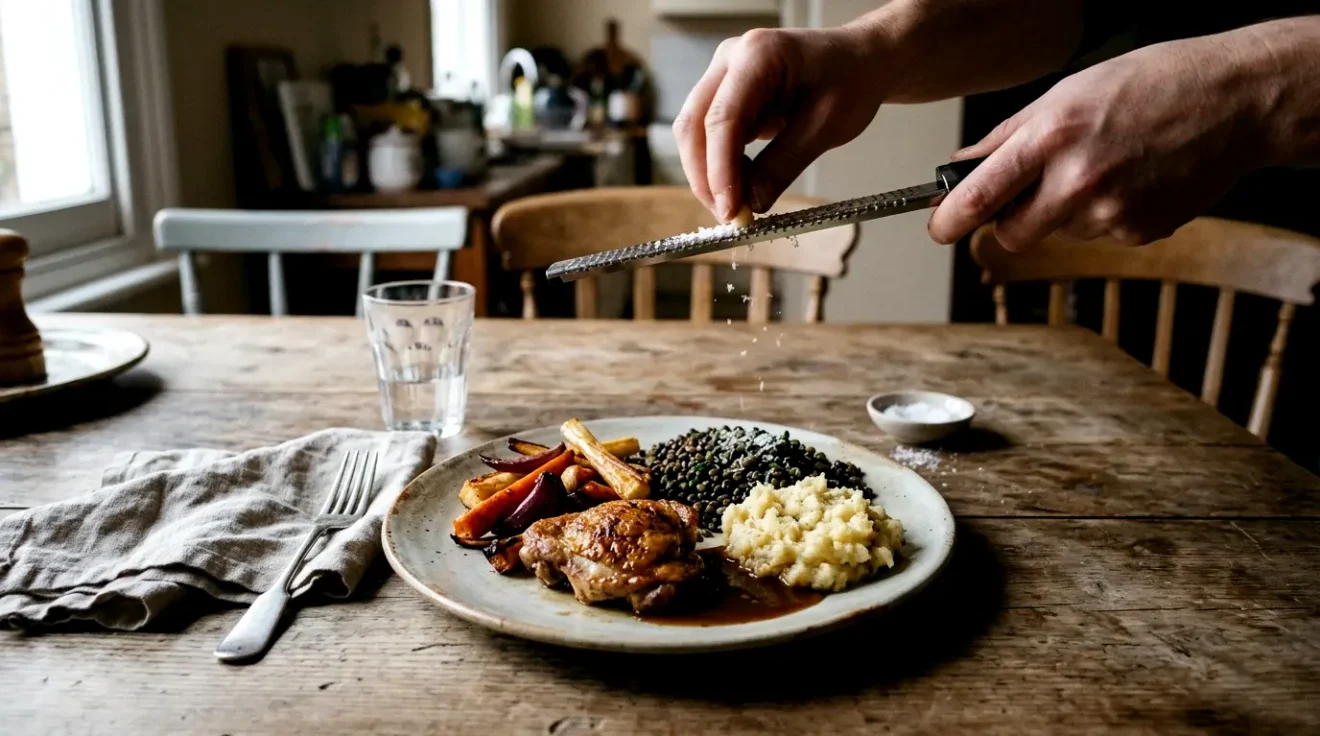
Visual completeness matters because eating is not only about nutrient composition. A plate with distinct components, appealing textures and a satisfying sauce may feel more familiar than an otherwise adequate but sparse-looking meal.
However, appearance is not a substitute for nutritional adequacy. A generous portion of low-energy vegetables alone may not compensate for a substantial reduction in a meal’s protein or calories. Check the combination as a whole.
This approach works for mixed meals, but some of the easiest flexitarian dinners are those designed around plant ingredients from the beginning.
Chickpeas, Lentils or Tofu: Which Base Fits Your Plant-Based Meal Best?
Choose chickpeas when you want a substantial base for roasting, grain bowls or tomato-based dishes; lentils for soups, braises, salads and savoury fillings; and tofu for stir-fries or meals built around a strongly flavoured sauce. Unlike replacing meat in an existing recipe, this decision starts with the plant ingredient and builds the entire dish around it.
Starting with the plant base removes the expectation that an ingredient must imitate meat. A chickpea traybake does not need to resemble roast chicken, and a lentil soup does not need to reproduce the texture of mince.
Chickpeas pair naturally with cumin, lemon, tomatoes, garlic and roasted vegetables. They are useful for Mediterranean-inspired bowls, warm salads and spiced traybakes.
For a simple preparation, drain and rinse canned chickpeas, pat them dry, toss with a little oil and spices, and roast until heated through and lightly crisped. Serve with roasted vegetables, a grain and a lemon-based dressing.
Lentils work particularly well with earthy herbs, onions, carrots, stock and savoury gravies. Their texture makes them useful when the dish needs body and depth rather than a browned exterior.
Try simmering green or brown lentils with onions, carrots, vegetable stock and thyme until tender. Finish with a little acidity, such as lemon juice or vinegar, and serve with potatoes or wholegrain bread.
Tofu suits soy, ginger, garlic, chilli and other bold seasonings. It is particularly convenient in stir-fries, noodle bowls and rice dishes where a firm ingredient can be browned before being coated in sauce.
For an uncomplicated method, drain firm tofu, remove excess moisture, cut it into pieces and fry until golden. Add a soy, ginger and garlic sauce towards the end so that the seasoning coats the browned surface.
Convenience is another useful consideration. Canned chickpeas and lentils need little preparation, while dried pulses are often economical per cooked portion but require more planning and cooking. Dried beans must be prepared and cooked appropriately for food safety; follow reliable cooking guidance for the specific variety, particularly kidney beans.
Tofu is usually sold chilled in supermarkets, although availability and price vary. Shelf-stable pulses can therefore be a practical fallback when fresh shopping options are limited.
These ingredients also differ in flavour absorption. Chickpeas retain a recognisable taste and firm interior. Lentils can integrate closely with stock and seasoning. Tofu may taste mild on its own, so browning and a well-seasoned sauce are especially valuable.
A suitable base makes cooking easier, but a complete dinner still needs enough energy, variety and complementary ingredients to feel satisfying.
Key takeaways before building your plate
- Start with a substantial plant protein source and an appropriate starchy component, rather than treating vegetables alone as the entire meal.
- Choose ingredients according to how they behave when cooked: chickpeas for firm texture, lentils for body and tofu for browning.
- Consider flavour, fat and portion size alongside protein, especially when increasing high-fibre foods gradually.
How Can You Build a Plant-Based Meal That Feels Complete Rather Than Like a Side Dish?
A satisfying plant-based meal combines a meaningful protein source, an energy-providing food, vegetables, some fat and distinctive seasoning. Start with beans, lentils or tofu and pair them with rice, potatoes, bread or another suitable starch. Then add vegetables, a flavourful sauce or dressing and enough food to meet your appetite and nutritional needs.
The common mistake is to begin with a vegetable and assume that adding more vegetables will turn it into a complete dinner. Roasted cauliflower, for example, can be delicious, but a small plate of cauliflower alone may lack the substance expected from a main meal.
Instead, reverse the order of planning. Decide on a protein-rich base and starch first. Then choose vegetables that complement them.
For example, build a chickpea bowl with brown rice, roasted peppers, spinach and a lemon-tahini dressing. The chickpeas provide protein and fibre, the rice contributes energy, the vegetables add variety, and the dressing supplies fat and flavour.
Another option is a lentil and mushroom stew with mashed potatoes and steamed greens. A tofu stir-fry with noodles, broccoli, sesame oil and ginger offers a different texture and flavour profile using the same basic framework.
This does not mean every individual meal must contain every food group. The NHS Eatwell Guide describes the balance of food groups across a day or week, rather than prescribing a rigid composition for every plate.
Its guidance identifies beans, peas and lentils as useful alternatives to meat because they provide protein and fibre. Starchy foods also form an important part of a balanced eating pattern.
Before cooking, use four practical questions:
- Protein: Can you identify the beans, lentils, tofu or other protein-rich food that anchors the meal?
- Energy: Is there an appropriate portion of rice, potatoes, bread, pasta or another energy-providing ingredient?
- Richness: Does the meal include a suitable source of fat, such as olive oil, nuts, seeds or tahini?
- Flavour: Is there enough acidity, seasoning, savouriness or textural contrast to keep it enjoyable?
These questions are a planning tool, not a validated test of nutritional adequacy. Individual requirements vary, and a satisfying meal can take many different forms.
Portion size also deserves attention. A small serving of lentils may not supply the same energy or protein as the meat portion it replaced. Larger servings of pulses, grains or other ingredients may be appropriate depending on the overall dish.
However, suddenly serving very large portions of beans can cause digestive discomfort. Increase fibre-rich foods progressively, drink adequate fluids and consider combining modest pulse portions with other protein sources while adjusting.
A complete plant-based meal does not need to look like a vegetarian imitation of a roast dinner. It simply needs to function as a meal in its own right: substantial, enjoyable and compatible with the rest of your eating pattern.
For your next shopping trip, choose one familiar meal, one plant protein you enjoy and a simple way to combine them. Cook it, assess whether it satisfies you, and repeat or adjust it the following week. A sustainable flexitarian routine grows through meals you genuinely want to make again.
Do you have to follow a fixed number of meat-free days to be flexitarian?
No. Flexitarian eating describes an approach that emphasises plant foods while allowing some animal products. There is no universally prescribed number of meat-free days. You can begin by reducing portions, changing one regular meal or introducing more plant-based dinners over time.
Can you eat fish, eggs and dairy on a flexitarian diet?
Yes. Flexitarian eating can include fish, eggs, dairy and occasional meat. The British Dietetic Association recognises these foods within flexitarian patterns. Their inclusion does not remove the importance of dietary variety or balanced overall intake.
Do you need expensive meat substitutes to start eating less meat?
No. Canned beans, chickpeas, dried or canned lentils, eggs and other familiar foods can support reduced-meat meals without requiring specialist products. Prices depend on the shop, preparation method and portion size, but using ordinary cupboard ingredients can make the transition more convenient.
Is a flexitarian diet suitable for someone who dislikes tofu?
Yes. Tofu is only one option. Beans, lentils, chickpeas, nuts, seeds and suitable animal foods can all contribute to a varied flexitarian eating pattern. Choose protein sources you enjoy and can prepare confidently rather than relying on a single substitute.
Should you take vitamin B12 supplements when reducing meat?
Not automatically. People who still consume adequate amounts of foods containing vitamin B12 may meet their needs through their diet. Those excluding animal products need reliable sources such as fortified foods or supplements. If you are unsure whether your intake is sufficient, particularly if you have additional nutritional requirements, seek advice from a GP or registered dietitian.